The Sony FE 20-70mm f/4 G is one of those lenses that doesn't get nearly the attention it deserves. Its focal range alone sets it apart from almost every other zoom on the market, and that's exactly what makes it worth a serious look.
Coming to you from Jacek Sopotnicki, this detailed video breaks down the Sony FE 20-70mm f/4 G from build quality to real-world shooting performance. Sopotnicki covers sharpness at each focal length, and the results are more nuanced than you might expect: at 20mm the center is solid at f/4, but the corners need f/5.6 or f/8 to clean up, while at 70mm the lens is sharp corner to corner wide open. Barrel distortion at 20mm is notable and you'll want lens correction profiles enabled, but at 35mm and 70mm the situation improves considerably. One flaw Sopotnicki flags early is vignetting at 20mm f/4, which is the most significant optical weakness of the lens.
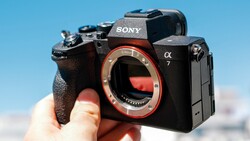
Beyond sharpness and distortion, the lens holds up well in close-up shooting, getting as near as around 25 to 30 cm, and the results at both 20mm and 70mm are genuinely good. Bokeh is usable, and Sopotnicki even took it into a paid portrait session to test it, where it performed respectably at 70mm f/4. Autofocus is fast, quiet, and responsive across multiple Sony bodies including the Sony a7 V, a7 III, and a7 IV. Focus breathing is visible but well controlled, making it a practical option for video work too.
The real conversation in this video is about value. At roughly $1,400 to $1,500, this lens sits in a price range that gives people pause. Sopotnicki points to the Panasonic Lumix S 20-60mm f/3.5-5.6 as the closest competitor in terms of focal range, and notes it comes in at less than half the price. The tradeoff is that the Panasonic is a variable aperture kit lens, and the Sony system versus Panasonic system question matters here since these lenses aren't interchangeable without adapters. What the Sony offers that almost nothing else does is that 20mm starting point. If you've ever shot at 24mm and felt like you needed just a bit more width, that 4mm difference is more noticeable in practice than it sounds on paper. Check out the video above for the full rundown from Sopotnicki.


Join the Fstoppers community for free
-
Post comments and join in the discussions
-
Browse the site ad-free
-
Share your work and get featured in the community
-
Compete in the photo contests for fun and prizes
2 Comments
My favourite standard lens with no significant flaws, light and weather-resistant. It lives on my a7cr to make a very high quality lightweight kit.
Thanks Jacek, I concur! This has been my daily driver for the past year, on the A7RV and now the A7V, and the images are great! I mostly use it for landscape when I'm camping, and either bike riding or hiking it makes for a light, one-lens kit. BTW, it's called a "Lens Hood", not a Shader! ;-)