
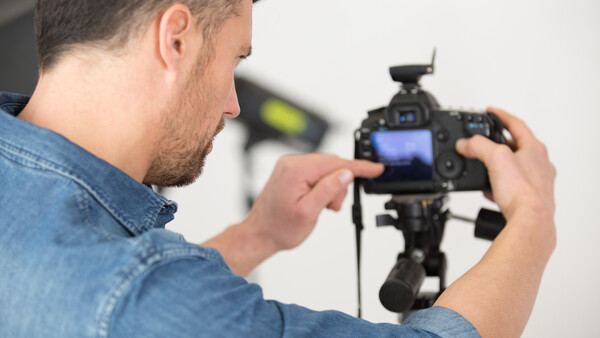
You take a photo. You pull the camera away from your face. You look at the LCD. You squint. You maybe zoom in. You nod, or you frown, or you delete it and try again. Then you lift the camera back up, find your subject again, recompose, and take another shot. Then you pull the camera away from your face.
This is the review reflex, and almost every photographer develops it early. It feels productive. It feels responsible. But it costs you more than you probably realize, and breaking it is one of the fastest ways to improve your shooting.
What the Review Reflex Actually Costs You
The most obvious cost is time. The full cycle of shooting, lowering the camera, reviewing, raising the camera, and reacquiring the scene takes somewhere between three and eight seconds depending on how long you linger on the screen. In isolation, that is nothing. Over the course of a shoot, it adds up to minutes of dead time during which your camera is pointed at your chest instead of at your subject.
But time is not the real problem. The real problem is continuity. Photography, especially of people and events, is a continuous process of watching, anticipating, and reacting. When you drop your eye from the viewfinder to the LCD, you leave that flow. You stop watching your subject. You stop tracking the light. You stop noticing the moment that is about to happen because you are busy evaluating the moment that already did.
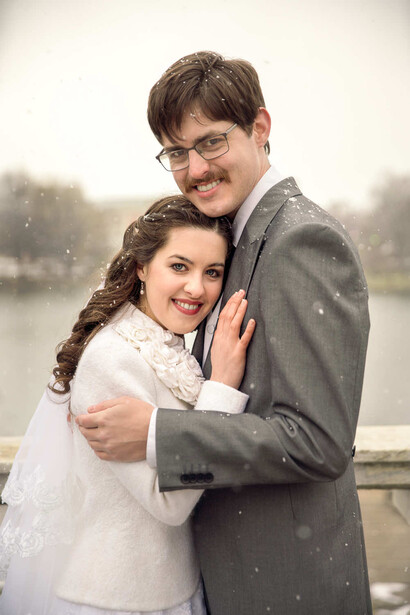
Wedding photographers and photojournalists talk about this constantly because they work in environments where moments are not repeatable. The flower girl does something hilarious exactly once. The bride's father tears up for three seconds. The decisive moment at a protest lasts half a breath. If you are looking at the back of your camera when any of these happen, you missed it, and no amount of reviewing the previous frame will bring it back.
There is also a subtler cost that is harder to quantify: dependency. The more you check every frame, the less you develop the ability to know what you captured without looking. That ability, the confidence that your settings are right and the shot is in the bag, is one of the defining differences between a beginner and an experienced photographer. The review reflex delays the development of that confidence because it substitutes the screen for the skill.
When Checking the LCD Is Actually Smart
Before this turns into a lecture, it is worth being clear about when reviewing your shots is not only fine but genuinely important.
- At the start of a shoot or when conditions change. The first few frames in a new environment are calibration shots. You are confirming that your exposure, white balance, and focus are dialed in. Checking those frames carefully, including the histogram, is smart preparation. Once you have confirmed your settings are correct, the compulsion to keep checking is the part worth breaking.
- After a technically demanding shot. If you just attempted a difficult exposure blend, a tricky off-camera flash setup, or a long exposure on a tripod, checking the result is reasonable. You spent effort setting up something specific and need to confirm it worked before you strike the setup. This is deliberate review, not reflexive checking.
- When shooting tethered or for a client on set. In a studio or commercial environment where the client is watching a monitor, reviewing is part of the workflow. The review process is built into the production.
- When you are learning. Beginners need the feedback loop. If you are still building your understanding of how aperture, shutter speed, and ISO affect the image, checking the LCD after each shot is how you connect the settings to the result. The goal is not to never look at the screen. The goal is to need it less over time as your instincts develop.
Why Mirrorless Changed the Conversation
On a DSLR, compulsive LCD checking made a certain amount of sense because the optical viewfinder showed you the scene but told you nothing about your exposure. You could have your settings wildly wrong and not know it until you checked the LCD. The gap between what you saw through the viewfinder and what the sensor captured was a real uncertainty, and the LCD was the only way to close it.
Mirrorless cameras changed this fundamentally. The electronic viewfinder on a modern body like the Sony a7 V, the Nikon Z6 III, or the Canon EOS R6 Mark III shows you a live preview of your actual exposure. If the image is going to be too dark, you can see it before you press the shutter. If your white balance is off, the viewfinder looks wrong. If you have exposure compensation dialed in, the viewfinder reflects it in real time.

This means the primary reason for reflexive LCD checking on a DSLR, confirming whether the exposure is correct, largely disappears on a mirrorless body. You can also overlay a live histogram in the viewfinder on most current cameras, which gives you the same objective exposure data you used to have to pull the camera away from your face to see. The information that used to require reviewing the shot is now available before and during the shot.
If you are still compulsively reviewing every frame on a mirrorless camera, you are checking work that the viewfinder already showed you. That is the habit worth breaking.
How to Stop
There is no trick to this. It is a behavioral change, and like most behavioral changes, it takes deliberate practice. Here are approaches that work.
- Turn off automatic image review. Most cameras have a setting called "image review" or "auto review" that automatically displays the captured image on the LCD or in the EVF for a set duration after each shot. Turn it off entirely. This removes the passive trigger that starts the cycle. You can still review images whenever you want by pressing the playback button, but you have to make a conscious decision to do so rather than being pulled into it automatically.
- Set a review interval instead of reviewing every frame. Rather than checking after every shot, check after every tenth shot, or every time you change position, or every time the light changes. This gives you the feedback you need without breaking the shooting flow after every exposure. Over time, you can extend the interval as your trust in your settings grows.
- Use the EVF histogram instead of the LCD. If your camera supports it, turn on the live histogram overlay in the electronic viewfinder. This gives you continuous exposure feedback without ever leaving the viewfinder. When you can see the histogram while you shoot, you know whether the exposure is right before you press the shutter, and there is nothing to check afterward.

- Practice shooting with the LCD off. Some cameras have an option to disable the rear LCD entirely during shooting, using only the viewfinder. This is more aggressive, but it eliminates the temptation completely.
- Shoot a personal project with film discipline. Give yourself 36 exposures (the length of a roll of 35mm film) to photograph a subject or a scene. Do not review a single image until all 36 are shot. This exercise forces you to commit to your settings and move forward rather than second-guessing each frame. You will almost certainly find that more of the 36 came out usable than you expected, which is the point: you are better at this than the review reflex lets you believe.
What to Do Instead of Reviewing
The seconds you reclaim by staying in the viewfinder are not empty. They are some of the most valuable seconds in your shooting workflow, because they are the seconds during which you can be watching.
- Watch your subject. The moment after you take a photo is often when the next good photo happens. Your subject relaxes after being aware of the camera. They turn to say something to someone. Their expression shifts. If you are watching through the viewfinder, you catch it. If you are looking at the LCD, you miss it.
- Watch the light. Light changes constantly, especially outdoors. A cloud passes in front of the sun. A reflective surface catches a beam and throws it somewhere unexpected. A person moves into or out of a shadow. These transitions create some of the best photographs, and they are brief. Staying in the viewfinder keeps you positioned to respond.
- Watch the background. One of the most common problems in otherwise good photos is a distracting element in the background that the photographer did not notice. A sign growing out of someone's head. A bright object pulling the eye. A person walking into the frame. If you are watching through the viewfinder between shots, you notice these things and can reposition before the next exposure rather than discovering the problem later in Lightroom.
- Recompose. Instead of reviewing the shot you just took, take a different version. Move three feet to the left. Drop to a knee. Zoom in. Zoom out. Switch from horizontal to vertical. The time you would have spent evaluating one frame can be spent creating an alternative frame, and having options is almost always better than having confirmation.
The Goal Is Trust, Not Asceticism
The point is not to develop some purist disdain for looking at the back of your camera. The point is to build enough trust in your understanding of exposure, focus, and composition that you do not need to verify every frame before you can move on to the next one.
That trust comes from understanding how your camera's settings translate into results. When you know what f/5.6 at 1/250 and ISO 400 looks like in open shade, you do not need the LCD to tell you the exposure is correct. When you know your autofocus tracks reliably in continuous mode, you do not need to zoom in on every frame to confirm the eyes are sharp. When you know the composition works because you saw it clearly in the viewfinder, you do not need a three-second review to validate what you already saw.
That is the difference between intentional review and the review reflex. Intentional review is periodic, purposeful, and driven by a specific question you need answered. The review reflex is constant, automatic, and driven by uncertainty rather than need. One is a tool. The other is a crutch. The goal is to need the crutch less, and eventually to put it down.
If you are still building the foundational understanding of exposure and camera settings that makes this kind of confidence possible, the Fstoppers Photography 101 tutorial covers these fundamentals thoroughly and gives you the framework to trust your settings rather than constantly verifying them.

Join the Fstoppers community for free
-
Post comments and join in the discussions
-
Browse the site ad-free
-
Share your work and get featured in the community
-
Compete in the photo contests for fun and prizes
1 Comment
"When you know what f/5.6 at 1/250 and ISO 400 looks like in open shade, you do not need the LCD to tell you the exposure is correct."
I wonder how many photographers, including professionals, know what settings produce a desired exposure without aid of the camera's light meter, or histogram? I'm guessing very few. Having started photography with a digital camera, I think about what I want to prioritize (a specific aperture or shutter speed) and let the camera do the rest. Then I review the image and its histogram on the back of my DSLR camera and go from there. Reviewing the image is not dead or wasted time. It's time to think about what I've shot and how I can improve the next one. Exposure is just one factor. The angle or camera position is usually the next option. Granted a wedding or wildlife photographer might miss a once-only opportunity, but your subject dictates the amount of time best allocated between shots.
A landscape, nature, product, or still-life photographer would be well served by stopping to think, review and analyze each shot on his camera monitor before shooting the next. Whether it's a few seconds or a few minutes rarely matters. Mountains aren't typically going anywhere in that amount of time. Think before you shoot... and think after you shoot.