
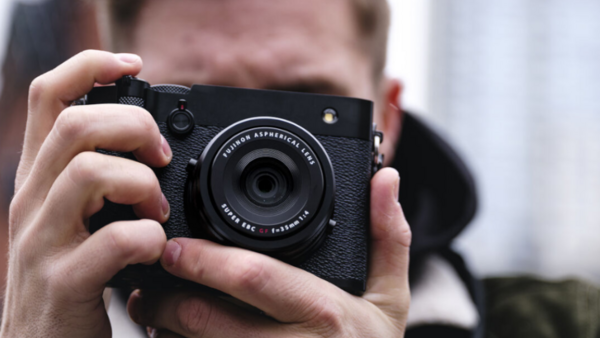
Pick up a Sony a7 V. Now pick up a Canon EOS R6 Mark III. Now a Nikon Z6 III. All three cameras launched in 2025. All three hit roughly the same resolution. All three offer comparable autofocus performance, similar video capabilities, equivalent build quality, and nearly identical ergonomics. They are, for most practical purposes, the same camera wearing different logos.
This is the dead end the camera industry has been speeding toward for years. When every full frame mirrorless body delivers 90 percent of the same features at 90 percent of the same price, what remains to compete on? Brand loyalty and marginal spec advantages, neither of which constitutes a sustainable business strategy in a market that has contracted by two-thirds since its 2012 peak. About 6.61 million interchangeable-lens digital cameras shipped in 2024. The casual buyers are gone, absorbed by smartphones. What remains is a concentrated pool of enthusiasts and professionals who increasingly cannot tell the major systems apart. Of course, lenses remain a differentiator, but even those are reaching a point of extreme competency for all but the most devoted enthusiasts and professionals.
The logical response to this situation is not to build a better spec sheet. It is to stop competing on the spec sheet entirely. The most interesting cameras of the last 18 months understood this. They did not try to win the feature war. They opted out of the war altogether, choosing to compete on axes where they would face no real competition. The results were some of the strangest and most compelling cameras we have seen in years.
Competing on Format, Not Features
If you cannot beat Sony and Canon at their own game, change the game. Fujifilm understood this better than anyone in 2025, and their answer was not to build a better full frame camera. Their answer was to make full frame irrelevant.
The Fujifilm GFX100RF is a 102-megapixel medium format camera with a fixed 35mm f/4 lens and a body that weighs just 735 grams. That weight is lighter than Fujifilm's own GFX 50R body without any lens attached. For $5,599, you get a sensor 1.7 times larger than full frame, a leaf shutter that syncs with flash at any speed, a dedicated Aspect Ratio Dial offering nine different frame shapes, including panoramic formats like 65:24, and machined aluminum construction that feels like it belongs in a museum case. What you do not get is a lens mount, autofocus points scattered across the frame for subject tracking, or 8K video. The GFX100RF is not trying to do everything. It is trying to do one thing: deliver medium format image quality in a body you can carry all day, and it does that thing better than anything else on the market.
The strategic brilliance here is that you cannot compare the GFX100RF to an a7 V. They are not playing the same game. Sony's camera wins on versatility, autofocus sophistication, and video capability. Fujifilm's camera wins on sensor size, portability relative to its format, and the intangible pleasure of using a purpose-built tool. These are different products for different photographers, which means Fujifilm carved out a market segment where Sony cannot follow without building their own medium format system from scratch.
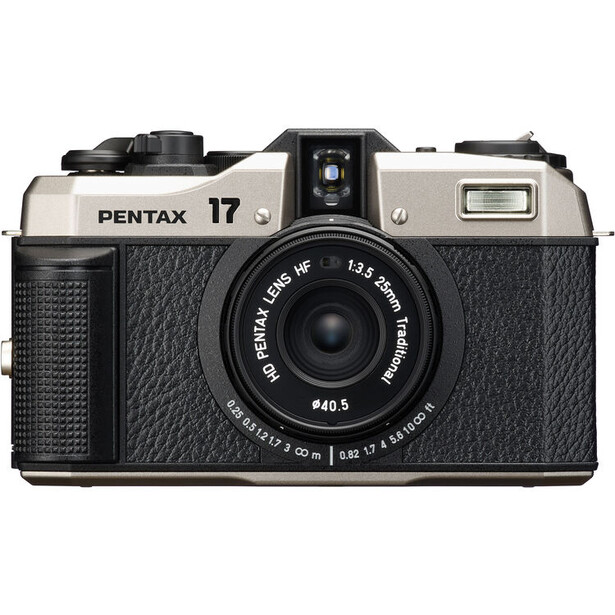
The Pentax 17 competes with nothing because nothing else occupies its category. There is no spec sheet to lose on when your competitors are used cameras from the 1970s and expired film stocks. Ricoh identified an audience that the digital arms race had completely abandoned: photographers who wanted to slow down, who found creative liberation in constraints, who were tired of chimping and pixel-peeping and endless post-processing. That audience turned out to be larger than anyone expected.
Competing on Experience, Not Capability
Format changes are one escape route from the spec war. Another is to reject the premise that more capability equals a better camera. Two of 2025's most divisive releases took this approach, building cameras that were deliberately less capable than their competitors and positioning those limitations as features.
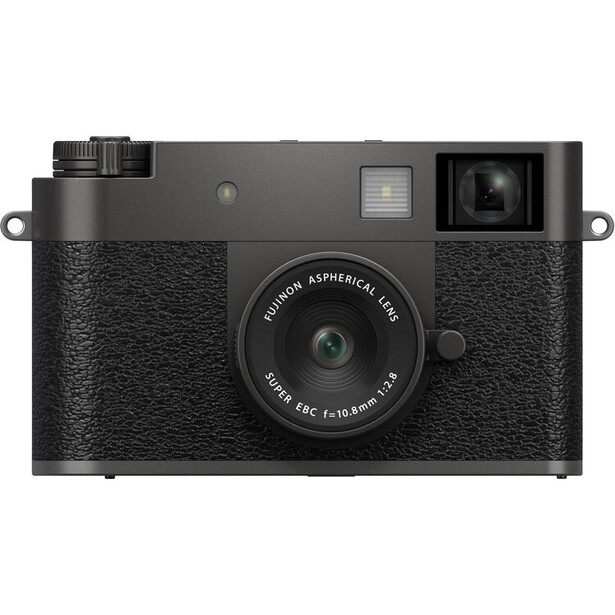
The Fujifilm X Half uses a Type 1 sensor, smaller than Micro Four Thirds, with a 3:4 vertical aspect ratio inspired by half-frame shooting. In an era when smartphone manufacturers brag about computational photography and camera companies trumpet 40-megapixel resolutions, Fujifilm shipped a product optimized for Instagram stories. The X Half does not shoot raw files. The resolution is modest. The controls are simplified to the point of being rudimentary. By every conventional metric, this is a worse camera than options costing half as much.
That assessment misses the point entirely. The X Half is not competing on image quality. It is competing on feeling. The target buyer is not a photographer looking for the best tool. It is someone who wants to enjoy taking pictures again, someone who has been ground down by the endless optimization of modern camera systems and wants permission to stop caring about sharpness and dynamic range. The X Half hit number one on Japan retailer Map Camera's monthly rankings and stayed there, succeeding not despite its limitations but because of them. Fujifilm understood that "fun" is a product attribute that does not appear on spec sheets but nonetheless drives purchasing decisions. You can count me as one of those users who has a blast using the camera.
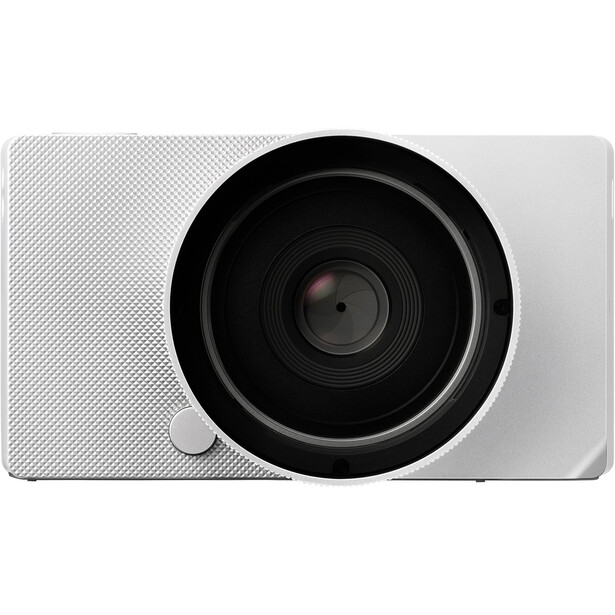
But Sigma was not building for the spec-sheet audience. They were building for people who find modern cameras intimidating, people who want fewer menu options rather than more, people who believe that constraints breed creativity. This is a small audience, but it is an audience that Sigma has cultivated across multiple generations of unconventional products like the fp and SD Quattro series. The BF will never sell in volume. It exists to signal what Sigma stands for and to build brand equity that pays dividends when those same shooters consider Sigma lenses for their main systems.
What This Means for the Market
The camera industry is fragmenting, and that fragmentation is healthy. For years, the major manufacturers converged on a single template: full frame sensor, DSLR-derived ergonomics, ever-expanding feature sets, prices climbing toward $3,000 and beyond. This template served professionals and serious enthusiasts well, but it left enormous gaps in the market. Photographers who wanted simplicity had nowhere to go. Photographers who valued character over clinical sharpness were told to adapt. Photographers who found joy in constraints were treated as eccentrics.
The path forward for the industry is not better specs. It is better segmentation. Canon has been rumored to be developing a retro-styled body paying tribute to the AE-1 era. Ricoh has announced that the GR IV Monochrome is in development. The manufacturers who thrive will be the ones who understand that a camera trying to please everyone ends up pleasing no one, while a camera built for a specific vision attracts passionate buyers who do not cross-shop on price.
Finding Your Axis
The question for photographers is no longer "which camera has the best specs?" The specs have converged to the point of irrelevance for most shooting scenarios. The question is now "what kind of photographer am I, and who is building for me?"
If you want medium format portability, Fujifilm built the GFX100RF. If you want to rediscover film, Ricoh built the Pentax 17. If you want to remember why photography is fun, Fujifilm built the X Half. If you want radical simplicity, Sigma built the BF. None of these cameras will win a specification comparison against a Sony a7 V. All of them offer something the a7 V cannot provide.
The shrinking market forced this reckoning. When you cannot grow the pie, you carve out defensible slices.





Join the Fstoppers community for free
-
Post comments and join in the discussions
-
Browse the site ad-free
-
Share your work and get featured in the community
-
Compete in the photo contests for fun and prizes
6 Comments
Great article. I'm not sure it's a dead end technologically speaking, but how much better can you really make the cameras now to justify upgrading or changing over.
Fuji has come out with some odd models the last 12-18 months, and even it's standard models seem to be getting divisive features. But they are still selling a lot of them and getting a lot of attention.
There needs to be another innovation like Sony brought with it's AF on the A7iii.
Where there's stagnation, it seems marketing is no longer the answer. It would not surprise me to see Sony of all the brands bringing in a subscription model at some point with different tiers for early access to the minor upgrades that get everyone hooked on the fansites. And the regular users will get nudged by use of long waiting lists and low availability.
Years ago, I decided that instead of buying "off the shelf" personal computers, I would call those services that offered to customize a PC build selecting the key components (memory, drives, graphics, etc.) I wanted. I got what I wanted and what I needed. I wonder if the camera makers would consider the same business model, where one could pick what they want and what they don't want? Such a model may require a complete change in manufacturing but it is enticing.
Ricoh had sort of this idea with the GXR series, with swappable sensors and mounts/built-in lenses that attached to a sensorless body:
https://upload.wikimedia.org/wikipedia/commons/6/68/Ricoh_GXR_IMG_5351…
The problem today is that the connection between the sensor and body will drastically cut down performance, considering how much data is being moved that requires as close to real-time processing as you can get. There's a reason most everything performance-related is soldered to one circuit board these days.
Let's face it: digital photography technology is mature.
It's time to read "Crossing the Chasm" and "Inside the Tornado" again. Geoffrey Moore had the technology adoption life-cycle all figured out in the 1990s.
It seems at least a few camera makers have read Moore!
I have been doing film first till the digital came about some what late with the T2i but a few point and shoots with those telephoto extending lenses. But what very few of todays photographers remember or know about is the software on a computer that makes the image was back then very very bad and for the most part one had to use a makers SW. That is where I came in for it was no longer capture and be done now everyone was editing but the Pro's worked for big company's with deep pockets and could afford Adobe PS and Lr at the $800 for each and each full update. Those were the days for the hobbyist and a reason for a point and shoot getting what was nothing more a image in auto mode with a digital camera.
Then the big puzzle comes along Sony came out with a mirrorless camera with great following mainly du to including Capture One for only $20 or $30 and then the A7M2's came with IBIS and a lot of extra on the camera. The deal that went wrong was it was still the paper world magazines that photographers had subscription mainly those big guys had and the hobbyist went to book store and yes not all camera stores stocked the new cameras, then there were many camera stores.
I was having a blast with just the A7SM1 till 2017 with the A7RM2.
But still no mirrorless in other brands all I ever heard all the time was the menu was bad and needed work. My thoughts were it is your camera and if used enough you should know it.
Enough about all that from my seat in front of a computer looking back and seeing what is now a WALL of no progress coming and the use of cell phones and more use of film cameras as well as newer point and shots is just look back at the old point and shoots hardly and noise and great colors still mostly. But my old Fujifilm WP Z also does video, have one in each car used as "dash cam" for those times i can not stop and get out.
My point about the wall, the wall is for the Pro's to worry about I an other hobbyist live and use what we have and are used to. The other point is it is no longer the camera but the "Software" that makes the image. Ask yourself when you got your camera and since have you ever ever used Auto mode or even know know the functions it has, I did more Auto mode with my A7SM1 than one would think of because it has two levels and the camera would say Manual Mode is the only setting hey you paid for it all. I have watched many YouTuber video where the photographer only uses Manual so what is all the screaming for new settings.
what ever happened to the pano function on the A7 dial or the on camera apps on the mod 1's and 2's like the "Digital Filter" for the manual mode photographer really.
1. film days lenes saved for my Sony Camera yes no AF but just a twist of the dial....
2. 2006 point and shoot captured faces in USS Arizona oil, went to a SD card and went to Camera store to get prints just like one would with film.
3. A7RM2 can do night capture.
4. Even the A7M3 still does a great image capture
Just learn your camera and buy a book about it showing all features with photos. A camera/lenses are for ever and never "CHEAP" low cost/ less expensive but have the greatest builds of their time and time just rolls on and on and low cost gets lower and lower and SW just keeps getting better!!
There are still many specs and capabilities and features that would be immensely useful, that no camera manufacturer has made yet. So I don't think that specs have truly topped out. It's more a matter of yes, there are specs that photographers need ..... but they would not be cost-effective for camera makers to implement.
No matter how much we need something, the camera makers are not going to make it for us unless they can profit handsomely by doing so. And that kinda sucks because there are still certain types of images, in certain types of conditions, that we miss from time to time .... and certain specs would get those shots for us.