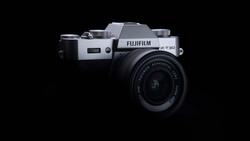
The Fujifilm X-T30 is eight years old, costs a fraction of what newer cameras do, and this photographer just chose it over every modern alternative. That's not nostalgia talking; there are real, specific reasons the X-Trans III sensor still holds up against cameras released this year.
Coming to you from Jason Row of Rowtography, this candid video follows Row's return to Fujifilm after nearly two years shooting Sony exclusively. He pairs the Fujifilm X-T30 with the Fujinon XF 23mm f/2 WR and takes the whole setup out before sunrise in Newcastle for a walk around the Quayside. The images he comes back with make a strong case. His main Sony kit, a Sony a7R V, stays in the bag for serious work, but for the kind of shooting where you want to move fast and think on your feet, he argues the older Fuji simply wins. The X-Trans III sensor, which first appeared in cameras like the X-T20 and X-T2, renders color and sharpness in a way Row describes as having a softness that reads closer to film than to the clinical output of more recent digital cameras.
Row's reasons for originally leaving Fujifilm are worth understanding before dismissing this as a simple homecoming. His Fujifilm X-H2 had a shutter button failure mid-trip through Europe, which forced him to trigger the shutter through the touchscreen for the remainder of the journey. On top of that, he felt the 40-megapixel X-Trans V sensor was too much resolution for an APS-C body and that the image rendering had moved in a direction he didn't like. Those aren't small complaints. So his return isn't blind loyalty; it's a deliberate decision based on what the older hardware actually does better for his specific use case. He also addresses why he skipped the obvious alternative: the X100 series. Second-hand prices on the Fujifilm X100F and newer models have been inflated by social media attention, making them poor value. The X-T30 with a prime lens cost him two to three hundred pounds less and still accepts interchangeable lenses.
There's also a deliberate constraint built into how Row set this camera up. He specifically chose a body without a flip-out screen. That single decision changes how you shoot. You have to get low to get the shot. You can't just angle the screen; you commit to the composition physically. He also hints at a future experiment worth watching for: adapting a vintage Minolta 35-70 MD lens to the X-T30, something he explored first on the a7R V and found surprisingly impressive. He's also considering a direct side-by-side comparison between the X-T30 and the a7R V shot in APS-C mode at matching resolution, which would be a genuinely useful real-world test.
Check out the video above for the full rundown from Row, including the Newcastle images and his take on what the X-Trans III sensor does that newer Fuji bodies simply don't.


3 Comments
This is the same reason I occasionally choose my GH2 over modern cameras. The color science is more pleasing in spite of it's limited features.
was it xe3? or xt30
Hi, Alex. Please review the name of the camera in the text, the camera was an X-E3, not a X-T30. Cheers.