You’ve seen the Sigma 16mm everywhere, but the field isn’t a one-lens show anymore. If you shoot on a crop camera and want a wide angle prime that handles low light and tight spaces, the new contenders demand attention.
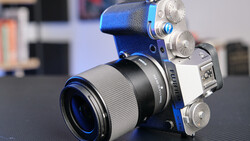
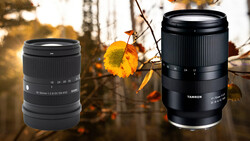
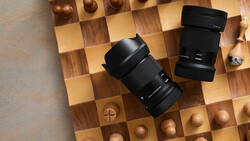
Coming to you from Mark Wiemels, this thorough video sizes up three APS-C primes that hit similar use cases with very different tradeoffs. The veteran is the Sigma 16mm f/1.4 DC DN Contemporary, long treated as the safe pick for reliability and autofocus. The fresh budget play is the Viltrox AF 15mm f/1.7 Air, a smaller, lighter 22.5mm-equivalent that undercuts on price and size. The curveball is the Sirui Sniper 16mm f/1.2, which offers an unusually fast f/1.2 on APS-C without turning into a brick. You get side-by-side sharpness, distortion, flare, vignetting, and multiple autofocus trials, so you can judge more than chart shots.
Build and handling split the trio. The Sigma feels dense and premium with a deep hood and a grippy focus ring. Viltrox goes in the other direction with a compact plastic shell, a polished metal mount, and USB-C firmware updates, which makes it the most packable option in a small sling or on a gimbal that is close to max payload. Sirui sits between them on weight but stands out on style with the blue accent ring and the white or carbon-look finishes, plus a smooth, long-throw focus ring that makes manual pulls look clean in controlled setups. None of that changes your image, but it changes how you carry and use the lens on a daily shoot.
Optics bring the interesting tradeoffs. Viltrox shows the strongest mustache distortion and the heaviest vignette wide open, though it cleans up with correction and still looks crisp in the center. Sigma has moderate barrel distortion that’s easy to fix and stays consistent across the frame as you stop down. Sirui lands with minor mustache distortion and competitive sharpness even at f/1.2, which is the surprise, since you’d expect softness. For color fringing, Sigma and Sirui can show purple edges in backlit branches at maximum aperture; stop down and it fades. Flare control favors Sigma and Viltrox in a straight-on torture test, but preference rules here since many people like a bit of glow around point sources. Bokeh looks clean across the board, with Sirui separating subjects more at typical desk-to-background distances thanks to that extra stop.
Autofocus is where expectations and reality part ways. Walking tests and face swaps look solid on all three, though Sigma snaps the quickest and can show a bit of visible pulsing on abrupt changes. Viltrox tracks smoothly and feels cinematic as it rolls between planes, which flatters on-camera movement and casual interviews. Sirui keeps pace for single-subject walk and talk but falls behind when someone sprints toward the lens; that’s where the motors run out of steam and you’ll miss a run of frames. For everyday clips, family video, travel, and vlogging, the differences fade, and you’ll be limited more by camera AF modes and settings than glass. If you want to see how they look in real scenes, check out the video above for the full rundown from Wiemels.

Join the Fstoppers community for free
-
Post comments and join in the discussions
-
Browse the site ad-free
-
Share your work and get featured in the community
-
Compete in the photo contests for fun and prizes
No comments yet