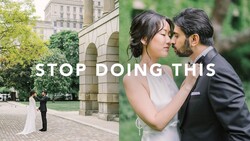
Shooting your first wedding is one of the highest-stakes situations you'll face with a camera in your hands. There's no second take on the kiss, no reshooting the vows, and no recovering a moment you missed because you didn't know it was coming.
Coming to you from Signature Edits, this exhaustive video walks through every stage of a wedding day with photographer Ryan Breitkreutz, who has shot well over 100 weddings across a decade in the industry. He starts well before the wedding day itself, breaking down his client workflow from the initial inquiry through a Calendly-powered booking system that cuts out the endless email back-and-forth. His client call strategy is worth paying close attention to: he's not asking about timelines or logistics on that first call. He's figuring out what the couple actually cares about, and that distinction is what gets him a 90% booking rate from calls. He also covers contracts, deposits, and a six-weeks-out questionnaire system that surfaces details most photographers never think to ask for, like whether the groom plans to sing the bride down the aisle.
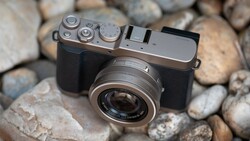
On the gear side, Breitkreutz shoots primarily with the Sony a7 III and leans heavily on the Sigma 35-150mm f/2-2.8 DC DN Contemporary for the bulk of the day. For anyone working with a tighter budget, he suggests pairing a 35mm f/1.8 prime with a 50mm f/1.8 prime to cover most situations. He's direct about why a fast lens matters more than a flash setup for beginners: you can ruin a photo with flash you don't know how to use, but a wide aperture just works. He also makes a strong case for keeping a circular polarizing filter on the lens whenever you're outside, something he admits he didn't discover until eight years into his career. For those who want a solid mid-range flash option, he recommends the Godox V1, and for a budget-friendly alternative, the Yongnuo YN560-IV. His camera bag of choice is the Shimoda Action X25, and he travels with a DJI Mini 3 for venue drone shots when the situation calls for it.
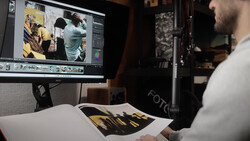
Where this video really separates itself from typical wedding photography content is in Breitkreutz' approach to posing and directing couples. He argues, convincingly, that scrolling through Instagram inspiration doesn't actually prepare you for the wedding day any more than watching cooking videos makes you a chef. His alternative is methodical: pick three or four key shots for each part of the day, then break each one down completely. Not just the general composition, but every detail, where the hands are, which way the feet point, whether both eyes are visible, whether the knees are bent. He applies the same level of analysis to first looks, ceremony positioning, family photo logistics, and reception lighting. He also covers his post-wedding workflow, including culling in Photo Mechanic, using Imagine AI to handle the base edits, and delivering galleries through Pixieset. He's candid about what Imagine does well and where you'll still need to go in and adjust manually.
Check out the video above for the full rundown from Breitkreutz, including his step-by-step ceremony positioning strategy, his three-part first look sequencing method, and exactly how he handles the parts of the day most photographers wing.


Join the Fstoppers community for free
-
Post comments and join in the discussions
-
Browse the site ad-free
-
Share your work and get featured in the community
-
Compete in the photo contests for fun and prizes
1 Comment
So glad I stopped doing this in 1994. 20 years photographing weddings and sometimes it was nice and sometimes horrible. I learned too much about people back then.