Modern lens design has won. A mid-priced autofocus prime from almost any brand will now resolve more detail than the human eye can use, correct its own distortion in camera, and render a background so smooth it looks painted on in post. The result is that a lot of photographs taken in 2026 are technically flawless and completely interchangeable. Character lenses are the deliberate exit from that. They swirl, they glow, they flare in strange colors, and they hand you an image that could only have come from one piece of glass.
There are two paths into this. The first is buying genuinely old glass, adapting a Soviet or German lens from the 1960s onto a mirrorless body and living with whatever haze, fungus, and stiff helicoid that particular copy has accumulated. The second is buying new: a small industry now builds fresh lenses that reproduce old optical formulas on purpose, with modern coatings, calibrated focus, and a warranty. Both are represented below, and we say plainly for every pick which one it is, because that difference matters more than any number on the spec sheet.
The guide is organized by the kind of character you want. Swirl, soap bubbles, glow, and painterly falloff come from different optical designs and do not substitute for one another. Every lens here is manual focus, every one has a real flaw, and we name that flaw in each entry rather than dressing it up as a feature.
At a Glance
- Best Overall: Thypoch Simera 35mm f/1.4
- Best Swirly Bokeh: TTArtisan 75mm f/1.5 Swirly Bokeh
- Best Soap-Bubble Bokeh: Meyer-Optik Görlitz Trioplan 100mm f/2.8 II
- Best for Controllable Effects: Lomography Joseph Petzval 55mm f/1.7
- Best Glow for Portraits: Lensbaby Velvet 85mm f/1.8
- Best for Black and White: Voigtländer Nokton Classic 35mm f/1.4 II SC
- Best Fast Portrait Lens for Leica M: 7Artisans 75mm f/1.25 II
- Best Genuinely Vintage Lens: Helios 44-2 58mm f/2
Best Overall: Thypoch Simera 35mm f/1.4
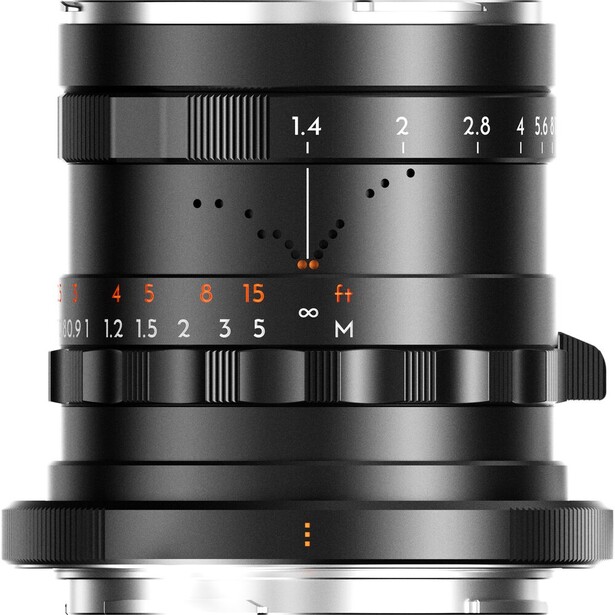
- Mounts: Leica M, Canon RF, Nikon Z, Sony E, Fujifilm X
- Optical design: 9 elements in 5 groups, one aspherical and three high-refractive-index elements
- Aperture range: f/1.4 to f/16
- Aperture blades: 14, switchable between clicked and de-clicked
- Minimum focus: 0.45 m
- Filter thread: 49mm
- Weight: 325.5 g (Leica M version)
- Status: Current production, new
- Price: $369 (B&H)
Most character lenses force a trade: you accept mush in the corners, or a focus ring with the precision of a doorknob, in exchange for a look. The Simera 35mm f/1.4 refuses most of that trade while still producing images that do not look like they came out of a computer. Thypoch designed it as an homage to the Kern Macro-Switar, the Swiss lens built for Alpa cameras, borrowing its color-changing depth-of-field indicator outright, and it stays sharp on the subject at f/1.4 while the background falls away with a gentle, slightly nervous texture that modern glass sands flat.
The hardware is the other half of the argument. This is a new lens in current production, sold with a warranty, available in Leica M plus the four major mirrorless mounts, so you are not gambling on a copy from an auction site. Its depth-of-field scale uses colored indicators that expand and contract as you change the aperture, which sounds like a gimmick until you shoot a day of zone-focused street photography and stop looking at the rear screen entirely.
The honest flaw is the corners. Wide open, the edges go soft and the vignette is heavy enough that you will be lifting the corners in raw processing on any evenly lit scene. Maximum magnification is 0.10x, so this is not a close-up lens despite the 0.45 m minimum focus. Neither bothers the photographer who buys a fast 35mm to put a face in the middle of a busy frame at night, which is exactly who this suits. It is a poor choice for anyone shooting flat, detailed subjects edge to edge, and if that describes your work, buy a corrected modern prime from our budget and third-party lens guide instead.
It delivers the same combination in the field: strong central resolution wide open, low distortion, a vignette that needs correcting, and bokeh that is smooth without being sterile. If you want one lens here that you could shoot every day rather than only on the days you want an effect, this is it. Check the current price of the Thypoch Simera 35mm f/1.4 at B&H. Also consider the Thypoch Ksana 35mm f/2 ASPH if you shoot Leica M and want flare rather than speed: it is far smaller at 198.6 g, and its Epoch Coating 84', a deliberate recreation of Olympus Zuiko coatings from 1984, throws a golden flare into backlit frames.
Read our full review of the Thypoch Simera 35mm f/1.4.
What We Like
- Sharp on the subject at f/1.4 without the clinical look
- Superb mechanical feel, with click and de-click aperture modes
- Moving depth-of-field indicators that genuinely help you zone focus
- Available in Leica M plus all four major mirrorless mounts
What Could Be Better
- Soft corners and a strong vignette at wide apertures
- Low magnification, so close-up work is limited
- Expensive by manual-focus standards
Best Swirly Bokeh: TTArtisan 75mm f/1.5 Swirly Bokeh
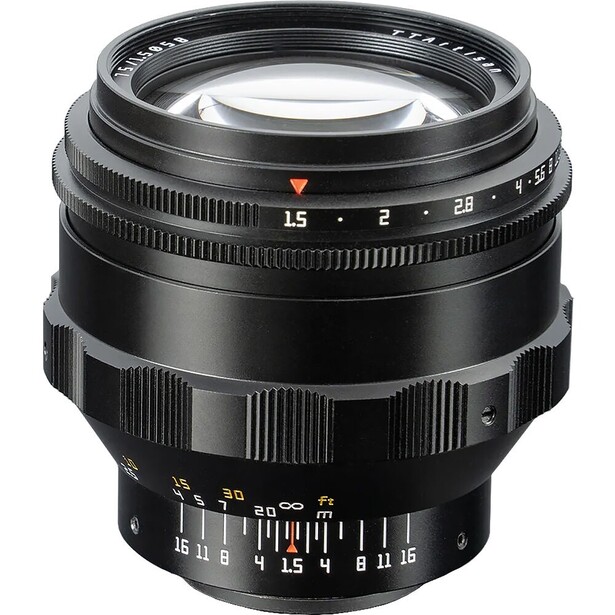
- Mounts: M42 screw mount and Leica M (adapts to Sony E, Nikon Z, Canon RF, Fujifilm X)
- Optical design: 6 elements in 4 groups
- Aperture range: f/1.5 to f/16
- Aperture blades: 13
- Minimum focus: 0.75 m
- Filter thread: 58mm
- Weight: 562 to 669 g depending on mount
- Status: Current production, new
- Price: $289 (B&H)
Swirl is the effect everyone means when they say "vintage lens." It comes from an old design flaw: the lens does not cover the frame cleanly, so out-of-focus highlights near the edges stretch into ovals that lean the same direction and appear to rotate around the subject. The original Carl Zeiss Biotar 75mm f/1.5 is the lens the whole reputation is built on, and a clean one now trades for thousands. The TTArtisan 75mm f/1.5 is a deliberate reconstruction of that formula, six elements in four groups, sold new for a small fraction of the price.
It works, and it works loudly. Shoot a subject at f/1.5 against dappled leaves three or four meters back, on a full frame body, and the background does not blur so much as spin. Foliage, string lights, and wet pavement at night are the classic feeding grounds. The effect drops off fast as you stop down, and the swirl is almost gone by f/2. That is the correct way to think about it: an instrument with one setting, and the setting is wide open.
TTArtisan sells it primarily in M42 screw mount, a deliberate and slightly odd choice. There is no native mirrorless mount, so you buy a cheap M42 adapter for whatever body you own, which is how the vintage crowd already works and lets one lens serve a Sony, a Nikon, and a Fujifilm body from the same bag. The build is aircraft aluminum with metal caps, and the 13-blade diaphragm keeps highlights round rather than turning them into stop signs when you stop down. TTArtisan's own documentation notes it will not adapt to Nikon F DSLRs.
Its flaws are the flaws of the original. It is heavy at well over half a kilogram, central sharpness at f/1.5 is decent rather than impressive, and on an APS-C body the swirl is mostly cropped away, which makes this an expensive route to a mildly soft portrait lens. Buy it if you shoot full frame and want the most recognizable vintage effect there is from a new lens with a warranty. Check the current price of the TTArtisan 75mm f/1.5 Swirly Bokeh at B&H.
What We Like
- Among the most pronounced swirl available from any new lens
- M42 mount adapts to essentially any mirrorless body you own
- 13 rounded blades keep highlights circular when stopped down
- Solid metal build at a genuinely low price
What Could Be Better
- Heavy, and long for a 75mm
- The effect largely disappears on APS-C, and from about f/2 on full frame
- Only moderately sharp wide open, with no lens data recorded
Best Soap-Bubble Bokeh: Meyer-Optik Görlitz Trioplan 100mm f/2.8 II
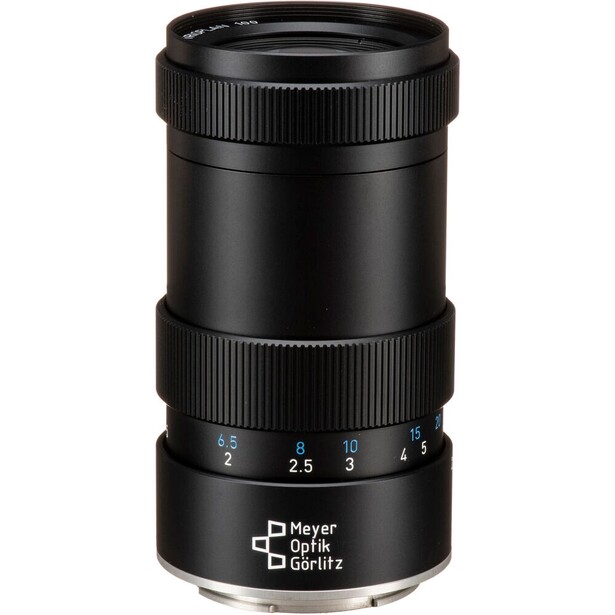
- Mounts: Canon EF, Canon RF, Nikon F, Nikon Z, Sony E, Fujifilm X, Leica L, Leica M, Leica R, Pentax K, MFT, M42
- Optical design: 3 elements in 3 groups, classic Cooke triplet
- Aperture range: f/2.8 to f/22
- Aperture blades: 15 steel blades
- Minimum focus: 0.9 m
- Filter thread: 52mm
- Weight: 320 to 390 g depending on mount
- Status: Current production, new
- Price: $999 (B&H)
Soap-bubble bokeh is the opposite of what every modern lens is engineered to produce. Instead of a soft, evenly filled disc, an out-of-focus highlight from the Trioplan 100mm f/2.8 II arrives as a bright ring with a hollow, dim center, like a floating bubble. Put a hundred of them behind a flower in backlit grass and the background stops being a background and becomes the picture.
The three-element Cooke triplet is the whole trick. Uncorrected spherical aberration concentrates light at the edge of each highlight disc, a defect a modern designer would spend years eliminating and which Meyer-Optik has preserved on purpose. The Mark II adds what the 1950s original never had: coated Schott glass for better color neutrality and contrast, a 15-blade steel diaphragm that keeps the bubbles perfectly circular even stopped down, and a 0.9 m minimum focus close enough to make the effect work on a flower. It ships in an unusually wide range of mounts, from Canon RF and Nikon Z through Leica M and plain M42.
The catch is that this is a very specific tool, and it is not cheap. With three elements and a deliberately uncorrected formula, sharpness at f/2.8 is respectable but never remarkable, contrast is low, and the rendering wants strong backlight to come alive. Shoot it into flat light with a plain background and the images just look mediocre, because the bubbles depend on small, bright, distinct specular highlights behind the subject that no amount of aperture will conjure if they are not there.
Used as intended, on flowers, water, holiday lights, and portraits in dappled woodland, it produces images no other lens in your bag can imitate. Anyone whose portrait work needs one lens to cover everything should look at the safer options in our portrait lens guide first. If you already know the effect you want, check the current price of the Meyer-Optik Görlitz Trioplan 100mm f/2.8 II at B&H. Also consider the Meyer-Optik Görlitz Primoplan 58mm f/1.9 II for the same house rendering at a normal focal length, with a swirling, watercolor falloff instead of hard-edged bubbles.
What We Like
- The soap-bubble rendering the effect is named for, from a new lens with a warranty
- 15 steel blades keep highlights circular at every aperture
- Coated glass and better contrast than the vintage original
- Sold in a dozen mounts, including Canon RF and Nikon Z
What Could Be Better
- Expensive for a three-element lens
- Low contrast and unremarkable sharpness wide open
- The effect needs backlit specular highlights or it does nothing
Best for Controllable Effects: Lomography Joseph Petzval 55mm f/1.7

- Mounts: Canon RF, Nikon Z, Sony E
- Optical design: 4 elements in 3 groups, Petzval design
- Aperture range: f/1.7 to f/22, stopless, plus five shaped drop-in plates
- Minimum focus: 0.7 m
- Filter thread: 67mm
- Status: Current production, new (preorder at Lomography, estimated to ship October 2026)
- Price: $599 (Lomography)
The Joseph Petzval 55mm f/1.7 puts its swirl on a dial. A chrome bokeh control ring sets the effect across seven levels, from a light twist that barely separates the subject to a heavy, painterly vortex, and Lomography's focus coupling stops that ring from shifting focus as you turn it, so you can focus first and adjust the effect afterward. Launched in July 2025, it has taken the place of the Petzval 55mm f/1.7 MKII in Lomography's lineup, and the company says its swirl is just as intense.
The formula is a modern reworking of the portrait lens Petzval calculated in 1840, four multi-coated elements in three groups inside an anodized aluminum barrel. The design keeps the center sharp and leaves field curvature uncorrected, so out-of-focus highlights near the frame edges smear into curved streaks that wheel around the subject. There are two aperture systems: a stopless iris from f/1.7 to f/22, and shaped plates that drop in at the rear of the lens, five of which come in the box. The plates use a new size, so sets from Lomography's earlier Petzvals will not fit.
The rest of the redesign is aimed at video. The focus ring turns through 180 degrees and carries a Mod 0.8 gear for follow-focus systems, all three control rings are stopless, and the gear positions match across the series' five focal lengths, so you can swap lenses without recalibrating a follow focus. A built-in 1/4-inch support steadies the lens when you pull focus on a rig. We have not reviewed the Joseph Petzval 55mm f/1.7 at Fstoppers. Lomography's Q&A for the lens concedes that with a subject more than 20 m away, and depending on the aperture, you may still see minimal focus breathing between bokeh levels 1 and 7.
It suits portrait photographers, wedding photographers, and filmmakers who want one lens that can produce a genuinely strange frame on demand and then dial back to something usable. It is not a documentary lens and not a landscape lens, and it needs texture behind the subject, because a plain wall gives the bokeh ring nothing to swirl. If you want an even older look without a bokeh ring, the Lomography Daguerreotype Achromat 64mm f/2.9 uses Chevalier's 1839 design, rendering soft focus at apertures wider than f/4 and sharp, contrasty detail from f/5.6, and it sets the aperture with drop-in Waterhouse plates instead of an iris. It ships in Canon EF and Nikon F mounts, so a mirrorless body needs an adapter. Check the current price of the Lomography Joseph Petzval 55mm f/1.7 at Lomography.
What We Like
- Seven-level bokeh ring that no longer shifts focus as you turn it
- Stopless rings and a Mod 0.8 focus gear built for video rigs
- Native Canon RF, Nikon Z, and Sony E mounts, no adapter needed
- Five shaped drop-in aperture plates in the box
What Could Be Better
- Focus may still breathe slightly between bokeh levels 1 and 7 on subjects past 20 m
- Aperture plates from earlier Lomography Petzvals do not fit
- The stopless aperture ring has no clicks to count by feel
Best Glow for Portraits: Lensbaby Velvet 85mm f/1.8
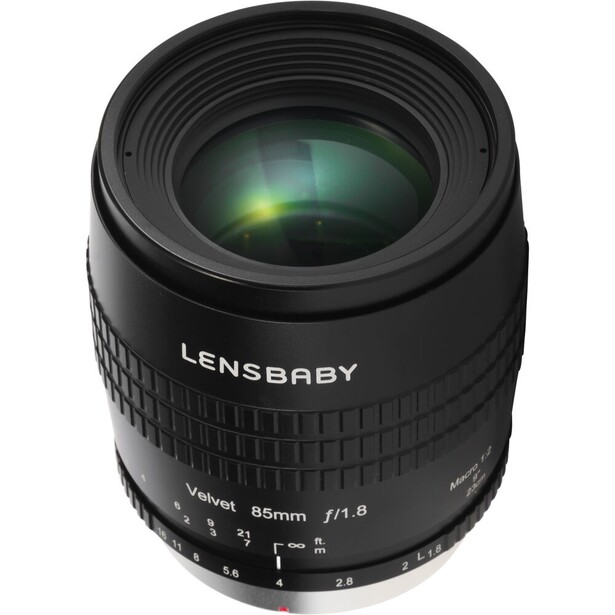
- Mounts: Canon EF, Canon RF, Nikon F, Nikon Z, Sony E, Fujifilm X, Pentax K
- Optical design: 4 elements in 3 groups
- Aperture range: f/1.8 to f/16
- Aperture blades: 12 curved
- Minimum focus: 0.23 m, for 1:2 macro
- Filter thread: 67mm
- Weight: 530 g
- Status: Current production, new
- Price: $374.96 (B&H)
Glow is a different animal from swirl. Rather than distorting the background, the Velvet 85 bleeds light out of the highlights and across the frame, so a portrait at f/1.8 has a sharp underlying image wrapped in a soft luminous haze. Skin looks like it was lit through silk. Old Hollywood cinematographers got this with a fog filter, except here it happens in the glass, which means it survives grading and never reads as a plug-in.
What makes it more useful than a soft-focus filter is that the effect sits on the aperture ring. The glow is strongest at f/1.8 and dissipates as you stop down, and by roughly f/4 the lens behaves like a conventional, quite sharp 85mm portrait prime. You can shoot the same subject at f/1.8 for a dreamlike frame and at f/5.6 for a clean one without changing lenses. Lensbaby keeps it in the current lineup alongside the Velvet 28 and Velvet 56, in seven mounts covering DSLRs and every major mirrorless system.
It also focuses absurdly close. Minimum focus is 0.23 m for 1:2 magnification, so the same lens that does hazy portraits will fill half the frame with a bee or a wedding ring while still glowing, and the techniques in Fstoppers' Mastering Macro Photography tutorial transfer directly. That crossover is why the Velvet 85 tends to stay in bags long after the novelty lenses have been sold on.
The problems are handling and focus. At 530 g of solid metal, and physically extending as you rack it out toward its macro range, it is a dense lens to hang off a small mirrorless body, and the long, slow manual throw that makes it precise for macro makes it sluggish when a subject moves. Focusing wide open is hard for the same reason the images look good: the glow lowers contrast, and low contrast is what focus peaking struggles with, so expect misses until you learn to focus on the sharp core rather than the halo. Check the current price of the Lensbaby Velvet 85mm f/1.8 at B&H, and if 85mm is too long for your space, the Lensbaby Velvet 56mm f/1.6 does the same thing wider.
What We Like
- The glow is controlled by the aperture ring, from dreamy to clean
- 1:2 macro at 0.23 m from the same lens
- Seven mounts, covering DSLRs and mirrorless
- All-metal build that holds up to real use
What Could Be Better
- Dense at 530 g, and it extends physically as you focus close
- Low contrast wide open makes accurate focusing genuinely difficult
- Slow focus throw is poor for moving subjects
- No electronic contacts, so no aperture or lens data reaches the file
Best for Black and White: Voigtländer Nokton Classic 35mm f/1.4 II SC
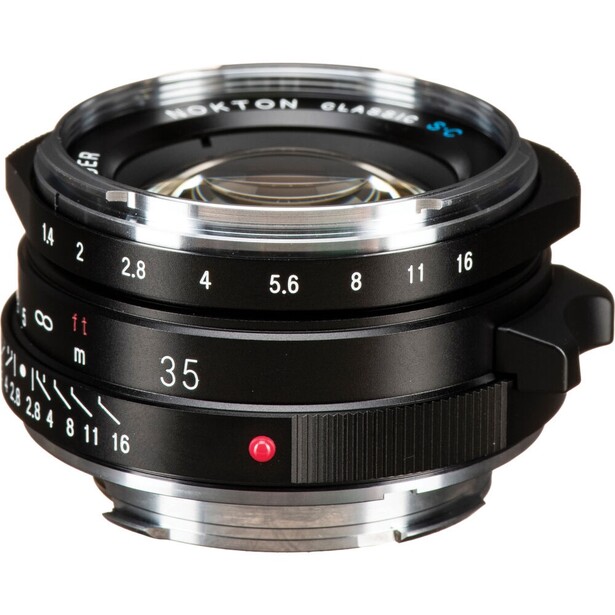
- Mounts: Leica M (VM), adaptable to mirrorless
- Optical design: 8 elements in 6 groups, single coated
- Aperture range: f/1.4 to f/16
- Aperture blades: 10
- Minimum focus: 0.7 m
- Filter thread: 43mm
- Weight: 189 g
- Status: Current production, new
- Price: $599 (B&H)
Character does not have to mean spectacle. The Nokton Classic 35mm f/1.4 II SC makes no bubbles and no swirl, and at first glance its files just look slightly wrong: a little less contrasty than they should be, highlights blooming faintly, flare appearing as a soft veil rather than a hard ghost. Convert them to black and white and the reason becomes obvious. The single-coated glass holds detail in the highlight shoulder instead of clipping it, and the tonal separation through the midtones is what film shooters spend years trying to reproduce in Lightroom.
Cosina sells this lens in two versions, and choosing between them is the entire decision. The MC is multi-coated, more contrasty, and more modern in its handling of backlight. The SC is single-coated, and it is the one to buy if you shoot into the sun, work in high-contrast street light, or process in monochrome. The Mark II design added an abnormal partial dispersion element to reduce field curvature and astigmatism, so focus is more accurate across the frame while the classic rendering survives intact.
It is also tiny. At 189 g and 28.5mm long, this is the smallest and lightest lens in the guide by a wide margin, and on a Leica M or an adapted mirrorless body it disappears.
The weakness is precisely what you asked for. Wide open at f/1.4 the SC is soft and low in contrast, with visible glow around bright edges, and anyone expecting clinical results from a modern f/1.4 will hate it for the first week. Focus shift is present as you stop down, which matters on a rangefinder and less on mirrorless. It is Leica M only, so mirrorless shooters need an adapter. For the street and documentary photographer shooting black and white who wants frames that look like Tri-X, none of that registers as a problem. Check the current price of the Voigtländer Nokton Classic 35mm f/1.4 II SC at B&H.
What We Like
- Single coating yields film-like tonality and veiling flare
- Only 189 g and 28.5mm long
- Mark II optics fix field curvature without killing the character
- Superb Japanese mechanics at a mid-range price
What Could Be Better
- Soft and low-contrast at f/1.4, by design
- Focus shift as you stop down
- Leica M mount only, so mirrorless shooters need an adapter
Best Fast Portrait Lens for Leica M: 7Artisans 75mm f/1.25 II
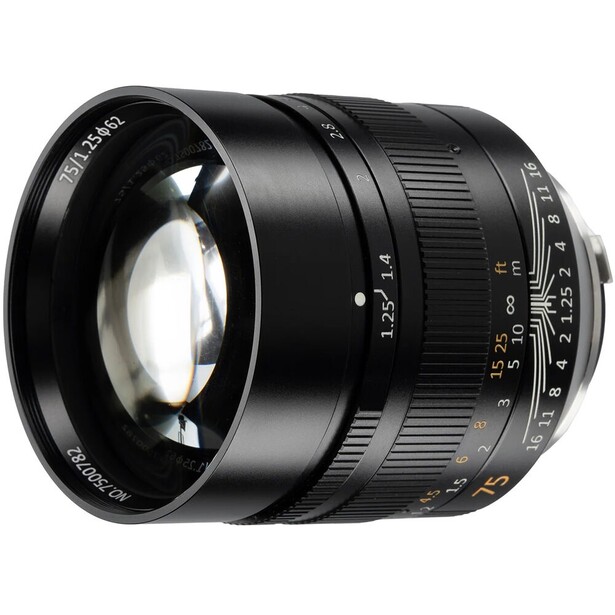
- Mounts: Leica M
- Optical design: 7 elements in 6 groups, with one ED and one high-refractive-index element
- Aperture range: f/1.25 to f/16
- Aperture blades: 12 rounded
- Minimum focus: 0.8 m
- Filter thread: 62mm
- Weight: 514 g
- Status: Current production, new
- Price: $469 (B&H)
Leica's own 75mm f/1.25 Noctilux costs more than a used car. The 7Artisans 75mm f/1.25 II matches its focal length and maximum aperture for a rounding error of that price. It is not the same lens optically, but what it produces wide open is a portrait rendering with a razor-thin plane of focus and the lowest optical vignetting of the fast M-mount 75s in side-by-side comparisons, so highlight discs hold their circular shape further toward the corners before they truncate into cat's eyes than they do on the rivals. That last part is unusual for a lens this fast, and it is the main technical reason to want it.
The Mark II is a genuine redesign rather than a cosmetic refresh. 7Artisans reworked the optical formula for higher contrast and lower chromatic aberration wide open and shaved roughly 85 g off the first version, taking the lens from unpleasant to merely substantial on an M body. The barrel carries luminous markings on the distance and aperture scales, a detail almost nobody else includes and one you will appreciate the first time you shoot a dim reception.
Be honest with yourself about the operating experience before you buy. This is a rangefinder-coupled 75mm at f/1.25, so depth of field at portrait distance is measured in centimeters and a rangefinder patch is a crude instrument for placing it. 7Artisans ships calibration tools in the box precisely because copies can arrive out of adjustment, and ours did: when we reviewed the lens on a Leica MP, it arrived uncalibrated and the first assignment came back very nearly all out of focus. Our reviewer spent the better part of a day dialing it in. Once it was right, the results justified the trouble, with sharp, contrasty files and a smooth transition out of focus that our reviewer described as almost painterly on portraits.
Adapted to a mirrorless body with focus magnification, most of the focusing anxiety evaporates and you are left with a very fast, very affordable character portrait lens. On an M body, budget a day for calibration before you shoot anything that matters. Check the current price of the 7Artisans 75mm f/1.25 II at B&H, or consider the 7Artisans 50mm f/1.1 for the same house rendering at a normal focal length for less money.
Read our full review: 7Artisans 75mm f/1.25 II: Sharp Glass Needs Patience
What We Like
- f/1.25 on an M body for a tiny fraction of the Leica price
- Sharp, contrasty files with a smooth, almost painterly falloff into the background
- Round highlights to the edge of the frame, with low optical vignetting
- Improved contrast and lower chromatic aberration versus the original design
- Luminous distance and aperture markings
What Could Be Better
- Our copy arrived uncalibrated and cost us the better part of a day to correct
- The focus plane at f/1.25 is razor-thin and unforgiving on a rangefinder
- Substantial on an M body at 514 g
Best Genuinely Vintage Lens: Helios 44-2 58mm f/2
- Mounts: M42 screw mount (adapts to any mirrorless body)
- Optical design: 6 elements in 4 groups, Biotar double-Gauss copy
- Aperture range: f/2 to f/16, preset mechanism
- Aperture blades: 8
- Minimum focus: 0.5 m
- Filter thread: 49mm
- Weight: approximately 230 g (measured copies vary by factory)
- Status: Discontinued, used market only (produced from 1967 into the early 1990s)
- Price: about $65 to $160 used (eBay)
No guide to character glass is honest without one genuinely old lens in it, and the Helios 44-2 started the current craze. It is a Soviet copy of the Carl Zeiss Biotar 58mm f/2, produced by the million at KMZ, BelOMO, and Valdai from 1967 into the early 1990s and bundled with every Zenit SLR sold behind the Iron Curtain. Because they made so many, they remain absurdly cheap. Because the design does not quite cover the frame cleanly, they swirl.
Wide open at f/2 on a full frame body, backgrounds with texture at moderate distance rotate around the subject in a way that is unmistakable, and backlight produces a blue-green horizontal flare that a generation of music-video directors has now used to death. Stop down to f/4 and both effects vanish, leaving a perfectly ordinary and quite decent normal lens. It weighs 230 g and mounts to any mirrorless body with a cheap M42 adapter that is a dumb metal tube and cannot really go wrong.
Now the honest part, and it is why this is the last pick rather than the first. Every one of these lenses is at least three decades old and was assembled to a Soviet consumer standard. Sample variation is enormous, so two copies can render noticeably differently, and any given one may arrive with haze, element separation, fungus, oil on the blades, or a helicoid stiff with hardened grease. The aperture is a preset design, meaning two rings: one to set your working aperture and a second to open the lens for focusing and then close it back down. There is no warranty, no coating worth the name, and flare control is nonexistent.
Buy from a dealer who inspects and grades stock rather than a random auction, and this is the most fun available for the least money in photography. If you want the same effect with clean glass and someone to call when it breaks, buy the TTArtisan above. For the real thing, check the current price and condition grades of the Helios 44-2 58mm f/2 at MPB.
What We Like
- The original swirl, for less than the price of a filter
- Distinctive blue horizontal flares under backlight
- Light, small, and adapts to any mirrorless body with a cheap M42 tube
- Perfectly competent as a normal lens once stopped down
What Could Be Better
- Huge sample variation, and copies often need cleaning or servicing
- Preset aperture rings are slow and awkward to use
- No warranty, poor coatings, and terrible flare control
How to Choose a Character Lens
Start by naming the effect. "Vintage look" is not a specification, and swirl, soap bubbles, glow, and shaped bokeh come from different optical designs that cannot substitute for one another. Swirl comes from a fast double-Gauss or Biotar formula whose image circle does not quite cover the sensor, so it needs full frame and a busy background at middle distance to appear. Soap bubbles come from an uncorrected triplet and need small, bright specular highlights behind the subject. Glow comes from residual spherical aberration and needs nothing but an open aperture. Decide which frame you want to make, then buy the formula that makes it.
Sensor size is the spec people underestimate. Almost every effect here lives at the edges of the image circle, which is exactly the area an APS-C or Micro Four Thirds sensor crops away. A Helios 44-2 on a full frame body swirls dramatically; on an APS-C body it produces a mild smear you would struggle to point out. If you shoot crop, the effects that survive are glow and Waterhouse-shaped bokeh, because those happen across the whole frame. That single fact should reorder your shortlist.
The spec people overestimate is sharpness. Every lens here is sharp enough for a print, and the one that measures best on a chart, the Thypoch, is not the one that will get the strongest reaction from a viewer. What matters day to day is the mechanics: focus throw, and whether the focus ring is damped or gritty. You are focusing all of these by hand, and a short, stiff throw will cost you more keepers than a soft corner ever will.
Finally, decide between new and old with your eyes open. A new character lens gives you consistent copies, coated glass, a native mount, and a warranty. Genuinely vintage glass costs a fraction of that and gives you a lottery ticket: sample variation is real, haze and fungus are common, and helicoids seize. Buying from a graded dealer like MPB or KEH rather than a private seller removes most of that risk, and the smart move for anyone new to this is to buy a Helios first and find out whether you enjoy manual focus before committing to a Thypoch.
What We're Looking For
We select character lenses on the strength and distinctiveness of the look they produce, the quality of the mechanics you operate by hand, the breadth of mounts available, and honest value against what the effect is worth to a working photographer. Every specification here was verified against the manufacturer's current spec page and a live retailer listing at the time of writing, and every pick was confirmed either in current production or clearly labeled as a used-market purchase. Most picks in our guides come from gear our writers have used and reviewed hands-on; where we have not tested a lens ourselves, we say so in the entry and write from verified specifications rather than implying testing we have not done.
Frequently Asked Questions
Do Character Lenses Work on APS-C Cameras?
Partially. Glow and shaped bokeh work on any sensor because they occur across the whole frame. Swirl and soap-bubble effects live at the edges of the image circle, which an APS-C sensor crops away, so they are dramatically weaker on crop bodies. If you shoot APS-C, prioritize a Lensbaby Velvet or a Lomography Petzval over a dedicated swirl lens.
Can I Autofocus a Character Lens?
No. Every lens in this guide is manual focus only, and none pass electronic data to the camera. Modern mirrorless bodies make this far easier through focus peaking and magnification, and most of these lenses are used at apertures where you would be focusing carefully anyway. Plan on aperture-priority or full manual, with no lens data recorded in your files.
Are Vintage Lenses Safe to Buy Online?
Yes, if you buy from a graded dealer rather than an auction listing. MPB and KEH inspect, grade, and warranty their used stock, so you know whether the glass is clear and the helicoid moves before you pay. Private sales are where the haze and fungus hide. Check for internal haze against a bright light and turn the focus ring through its full travel as soon as it arrives.
Which Character Lens Should I Buy First?
Buy a Helios 44-2 and an M42 adapter for your camera. The outlay is small, the swirl is the most recognizable effect in the category, and a month with it tells you whether manual focus fits how you actually work. If the answer is yes, the Thypoch Simera 35mm f/1.4 is the lens to graduate to.
Fstoppers may earn a commission from purchases made through links in this article. Our picks are made independently by our editorial team.