Canon built the best mirrorless mount nobody else could play in. For years the RF mount's defining fact was not its wide diameter or its short flange distance, it was the closed door: no Sigma, no Tamron, no autofocus glass from anyone but Canon. That door has finally cracked open, but only partway, and knowing exactly where the crack is changes what you should buy. Sigma and Tamron now sell licensed autofocus lenses for RF, and every one of them is built for crop sensors. If you shoot a full frame R body, your autofocus options are still Canon's, at Canon's prices.
That fact shapes this guide. Canon's RF catalog has grown into one of the strongest optical lineups in the business, with genuinely original ideas in it: a constant f/2.8 zoom that runs to 105mm, a 200-800mm superzoom nobody else makes, a macro lens with a ring that lets you dial in the character of your bokeh. It also holds some of the most expensive glass on the market.
We have organized these picks around the job you are hiring the lens to do, and every entry states its real weakness instead of burying it. Where a lens is late in its product cycle or a successor is credibly rumored, we say so. Crop-sensor shooters get their own slots at the end, and those are where the new third-party glass earns its keep.
At a Glance
- Best Overall: Canon RF 24-105mm f/2.8 L IS USM Z
- Best Value Standard Zoom: Canon RF 28-70mm f/2.8 IS STM
- Best Budget Prime: Canon RF 50mm f/1.8 STM
- Best for Portraits: Canon RF 85mm f/1.4 L VCM
- Best for Landscapes: Canon RF 15-35mm f/2.8 L IS USM
- Best Telephoto Zoom: Canon RF 70-200mm f/2.8 L IS USM Z
- Best for Wildlife and Sports: Canon RF 200-800mm f/6.3-9 IS USM
- Best for Macro: Canon RF 100mm f/2.8 L Macro IS USM
- Best for RF-S Crop Bodies: Sigma 18-50mm f/2.8 DC DN Contemporary
- Best Ultra-Wide for Crop Bodies: Tamron 11-20mm f/2.8 Di III-A RXD
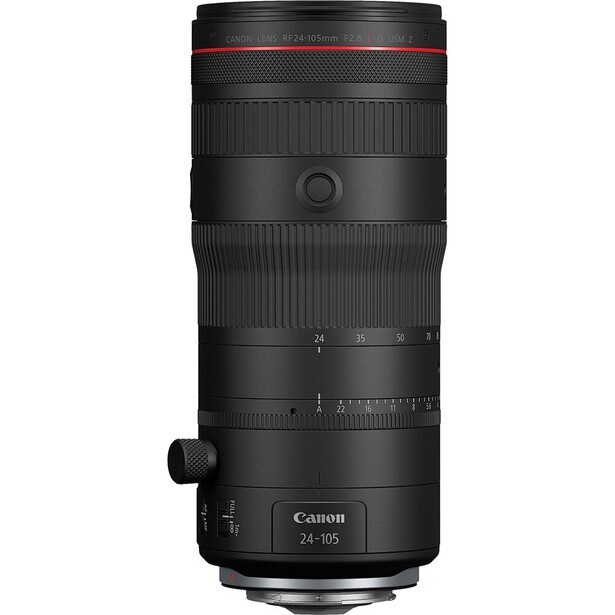
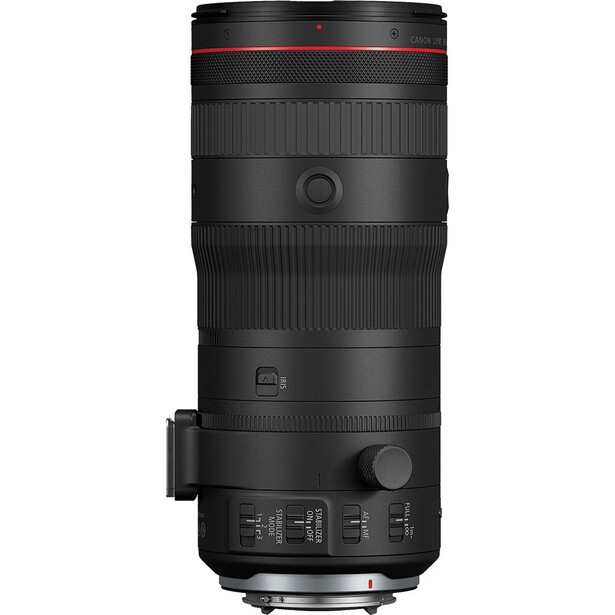
Best Overall: Canon RF 24-105mm f/2.8 L IS USM Z
- Type: Full frame standard zoom, L-series
- Focal length: 24-105mm
- Maximum aperture: f/2.8, constant
- Stabilization: 5.5 stops, up to 8 stops with a stabilized body
- Minimum focus distance: 0.45 m
- Maximum magnification: 0.29x at 105mm
- Filter size: 82mm
- Weight: 1,330 g
- Price: $3,199 (B&H)
Nobody else makes this lens. A constant f/2.8 that runs from 24mm all the way to 105mm collapses the traditional two-zoom kit into one, and the RF 24-105mm f/2.8 L IS USM Z does it without the optical apologies you would expect. Event and wedding photographers are the obvious audience: one lens covers the room-wide establishing shot, the half-length portrait, and the tight detail of a ring, at an aperture that still works when the venue lights go down.
The engineering is more interesting than the focal range. Dual Nano USM motors drive focus, and the "Z" marks it as power-zoom-ready, so the optional PZ-E2 adapter clips on for motorized, repeatable zooms on a video rig. Stabilization runs to 5.5 stops alone and up to 8 stops on a body with in-body stabilization, enough that handheld available-light work at 105mm stops being an act of faith.
Then you pick it up. At 1,330 g it weighs nearly three times what the 28-70mm f/2.8 IS STM below does, and on a smaller body like an R8 it is nose-heavy enough that your wrist will file a complaint by hour three. This lens replaces two lenses and charges you for two lenses, in both money and mass. For a hobbyist shooting a few hours on weekends, it is far more lens than the situation calls for.
If you shoot events for money on a stabilized body, this is the most capable single lens on the mount. Check the current price of the Canon RF 24-105mm f/2.8 L IS USM Z at B&H. Also consider the Canon RF 24-105mm f/4 L IS USM if you want the same range in a lens you can carry all day and can give up a stop.
What We Like
- Constant f/2.8 across a 24-105mm range no rival mount offers
- Up to 8 stops of stabilization with a stabilized body
- 0.29x close focus covers detail work without a lens change
- Power-zoom adapter support for video
What Could Be Better
- At 1,330 g it is heavy, and front-heavy on compact bodies
- Among the priciest standard zooms on any mount
- 82mm filters add real cost to a filter kit
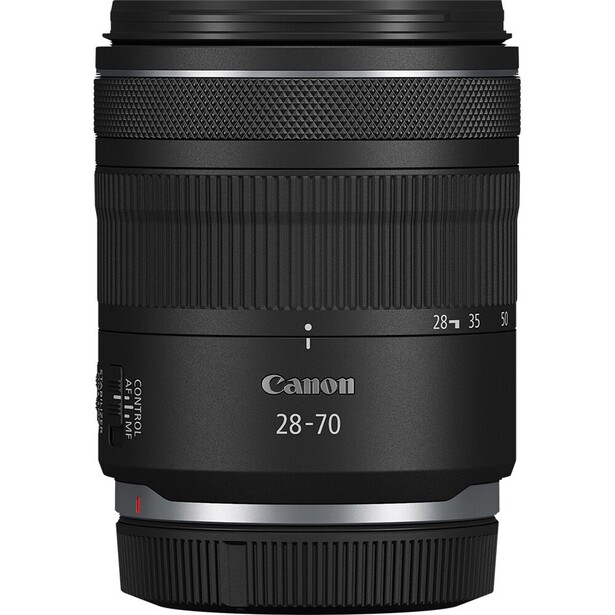
Best Value Standard Zoom: Canon RF 28-70mm f/2.8 IS STM
- Type: Full frame standard zoom, non-L
- Focal length: 28-70mm
- Maximum aperture: f/2.8, constant
- Stabilization: 5.5 stops, up to 7.5 stops with a stabilized body
- Minimum focus distance: 0.27 m (autofocus), 0.24 m (manual focus)
- Maximum magnification: 0.24x
- Filter size: 67mm
- Weight: 490 g
- Price: $1,249 (B&H)
Canon spent years telling full frame RF shooters that a constant f/2.8 zoom meant an L-series lens and an L-series bill. The RF 28-70mm f/2.8 IS STM quietly ended that. It holds f/2.8 through its whole range, weighs 490 g, takes cheap 67mm filters, and costs a fraction of the L zooms. Central sharpness is excellent from f/2.8 through f/8 at the wide end, which is not the compromise the price and the plastic exterior lead you to expect.
The autofocus deserves specific mention, because "STM" has historically been Canon shorthand for slower, buzzier focusing. Not here. The stepping motor is quiet and quick enough to track a walking subject and rack smoothly on video without the audible chatter an on-camera microphone picks up. Stabilization coordinates with a stabilized body for up to 7.5 stops, so R6 III and R5 II owners get real handheld headroom.
The compromises are specific. It starts at 28mm rather than 24mm, and those 4mm matter more than they sound like they should in tight interiors and group shots against a wall. Build quality is honest consumer grade rather than the metal-and-gaskets feel of an L lens, and Canon continues its irritating habit of shipping non-L glass without a hood. Wide-end distortion also leans on the correction profile rather than the optics. None of that changes the verdict: this is the standard zoom most full frame RF shooters should actually buy. Check the current price of the Canon RF 28-70mm f/2.8 IS STM at B&H.
What We Like
- Constant f/2.8 at a fraction of L-series money
- Only 490 g, with inexpensive 67mm filters
- Fast, near-silent STM autofocus that suits video
- 0.24x close focus is genuinely useful
What Could Be Better
- Starts at 28mm, and the missing 4mm bites in tight rooms
- No lens hood in the box
- Consumer-grade build and limited weather-sealing next to an L lens
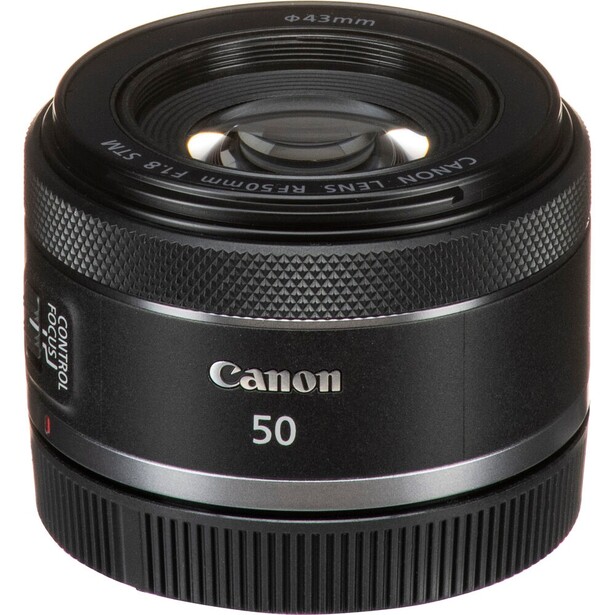
Best Budget Prime: Canon RF 50mm f/1.8 STM
- Type: Full frame prime, non-L
- Focal length: 50mm
- Maximum aperture: f/1.8
- Stabilization: None, relies on in-body stabilization
- Minimum focus distance: 0.30 m
- Maximum magnification: 0.25x
- Filter size: 43mm
- Weight: 160 g
- Price: $219 (B&H)
Every mount needs a lens like this, and RF's is unusually good. The RF 50mm f/1.8 STM weighs 160 g and buys a beginner the single most educational thing in photography: a fast aperture with no zoom ring to hide behind. Put it on an R50 or an R8, walk around for a weekend at f/1.8, and you will learn more about depth of field and framing with your feet than a year of reading teaches.
It is also better than it needs to be. The 0.25x maximum magnification at 0.30 m minimum focus means you can fill the frame with a coffee cup or a flower, which the old EF nifty fifty could not do. Stopped down to f/2.8 or f/4 it sharpens up across the frame. On an APS-C body it becomes an 80mm equivalent, a legitimate portrait length for the price of a decent dinner.
Wide open it is a characterful lens rather than a clinical one, with visible corner softness and some fringing on high-contrast edges. There is no stabilization, and on the unstabilized bodies where it most often lives (the R50, R100, and RP have none of their own) you are relying on shutter speed alone. It also breathes noticeably when focusing, which video shooters will see on a focus pull. Check the current price of the Canon RF 50mm f/1.8 STM at B&H. If you are still choosing the body it goes on, our beginner camera guide covers the RF bodies worth pairing it with.
Read our full review of the Canon RF 50mm f/1.8 STM.
What We Like
- The cheapest way into a fast prime on RF
- 160 g, so it never gets left behind
- 0.25x close focus outperforms the old EF version
- Doubles as an 80mm equivalent portrait lens on crop bodies
What Could Be Better
- Soft corners and visible fringing at f/1.8
- No stabilization, on bodies that often have none either
- Noticeable focus breathing for video
Best for Portraits: Canon RF 85mm f/1.4 L VCM
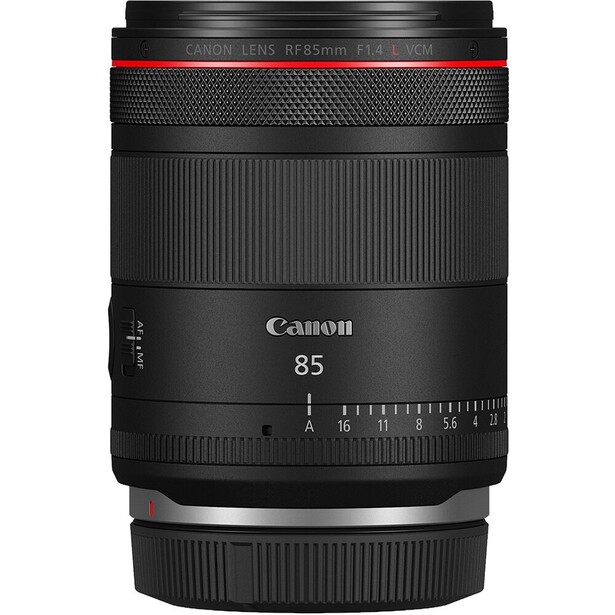
- Type: Full frame prime, L-series
- Focal length: 85mm
- Maximum aperture: f/1.4
- Stabilization: None, relies on in-body stabilization
- Minimum focus distance: 0.75 m
- Maximum magnification: 0.12x
- Filter size: 67mm
- Weight: 635 g
- Price: $1,649 (B&H)
Canon's VCM primes are the most quietly strategic thing the company has done on RF. The RF 85mm f/1.4 L VCM is the portrait member of a family that shares a 67mm filter thread and near-identical dimensions with its 20mm, 24mm, 35mm, and 50mm siblings, so a filmmaker can swap between them on a gimbal without rebalancing anything. Voice coil motor focusing is fast and, more to the point, silent and linear, which is what a focus puller and an autofocus algorithm both want.
For stills it is simply an outstanding portrait lens. At 635 g it is a little over half the weight of the RF 85mm f/1.2 L, and it gives up less than the f/1.2 badge implies. Wide open at f/1.4 it separates a face from its background with the smooth falloff that made 85mm the default portrait length in the first place.
What you give up is stabilization. There is no optical IS in the lens, a deliberate choice tied to the VCM line's compact size, which means R8, RP, R50, and R100 shooters are handholding an 85mm on shutter speed alone. On an R5 II or R6 III with IBIS it is a non-issue. The 0.75 m minimum focus distance is also long, so tight beauty crops mean changing lenses. Check the current price of the Canon RF 85mm f/1.4 L VCM at B&H, and see how it stacks up against the wider field in our portrait lens guide.
What We Like
- Beautiful f/1.4 rendering with tidy, round bokeh
- Lighter and far cheaper than the RF 85mm f/1.2 L
- Shares 67mm filters and a form factor with the other VCM primes
- Silent, linear focusing that video work depends on
What Could Be Better
- No optical stabilization, which stings on non-IBIS bodies
- 0.75 m minimum focus distance is restrictive for tight crops
- Still L-series money
Best for Landscapes: Canon RF 15-35mm f/2.8 L IS USM
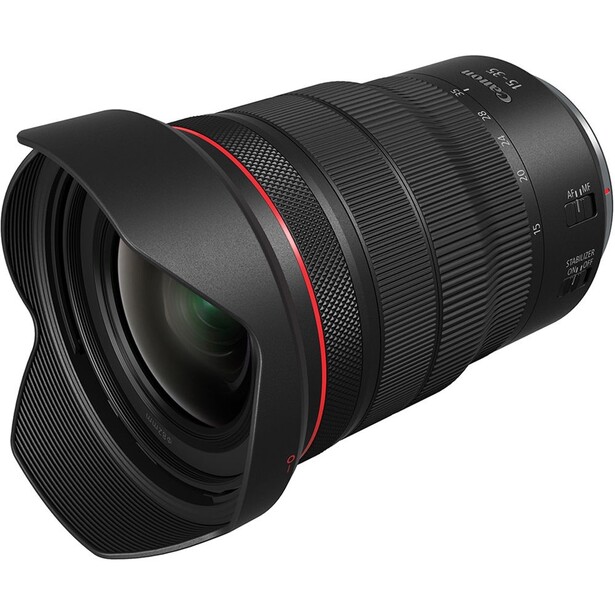
- Type: Full frame wide angle zoom, L-series
- Focal length: 15-35mm
- Maximum aperture: f/2.8, constant
- Stabilization: 5 stops
- Minimum focus distance: 0.28 m
- Maximum magnification: 0.21x
- Filter size: 82mm
- Weight: 840 g
- Price: $2,399 (B&H)
Fifteen millimeters is the number that matters. The classic fast wide zoom, on every mount that has one, is a 16-35mm f/2.8, and the extra millimeter at the wide end of the RF 15-35mm f/2.8 L IS USM shows up in a real composition far more than the arithmetic suggests. It is the difference between fitting the whole foreground rock in the frame and stepping backward into the water. The front element still takes conventional 82mm screw-in filters, so a polarizer and neutral density kit work without a holder system.
The constant f/2.8 and 5 stops of optical stabilization make it a night-sky and interiors lens rather than a daylight-only one. Astro shooters get f/2.8 at 15mm, a serious light-gathering combination for the Milky Way, and 0.28 m close focus lets a foreground object loom the way wide angle landscape work depends on.
Two honest caveats. At 840 g you never forget it is in the bag on a long hike, and the 82mm filter thread makes a good polarizer an expensive purchase of its own. More importantly, this is one of the older designs in the RF L lineup, and Canon is credibly rumored to be moving its L zooms toward VCM focusing. A refresh would not make this lens worse, but if you are price-sensitive, watch for discounts. Optically it remains the wide zoom we would take up a mountain. Check the current price of the Canon RF 15-35mm f/2.8 L IS USM at B&H. Elia Locardi's Photographing the World 4: Advanced Landscapes is the tutorial we point people to for the composition and processing side.
Also consider the Canon RF 14-35mm f/4 L IS USM if you shoot on a tripod and would rather go a millimeter wider in a lighter lens than have the extra stop.
What We Like
- 15mm wide end goes past the usual 16-35mm f/2.8 standard
- Constant f/2.8 makes it viable for astro and interiors
- Takes standard 82mm screw-in filters despite the wide angle
- 5 stops of stabilization for handheld low light
What Could Be Better
- 840 g is heavy for a hiking kit
- 82mm filters are expensive to buy into
- An early RF L design, with a VCM-era successor plausibly coming
Best Telephoto Zoom: Canon RF 70-200mm f/2.8 L IS USM Z
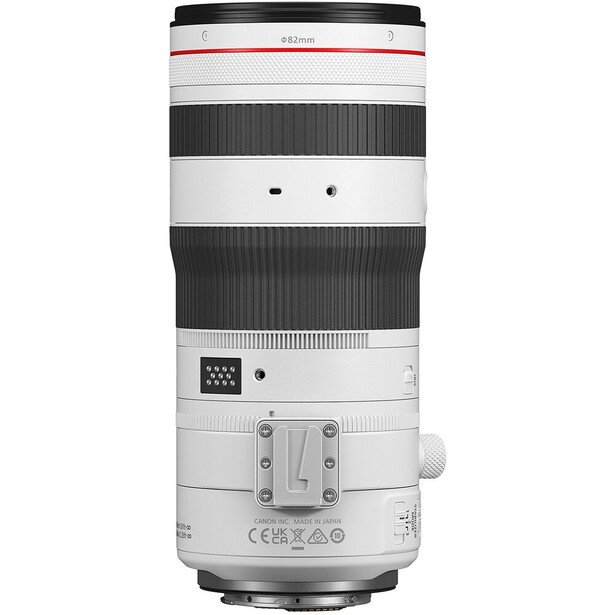
- Type: Full frame telephoto zoom, L-series
- Focal length: 70-200mm
- Maximum aperture: f/2.8, constant
- Stabilization: 5.5 stops, up to 7.5 stops with a stabilized body
- Minimum focus distance: 0.49 m at 70mm, 0.68 m at 200mm
- Maximum magnification: 0.3x at 200mm
- Filter size: 82mm
- Weight: 1,110 g (black, excluding tripod mount)
- Price: $3,099 (B&H)
The original RF 70-200mm f/2.8 was a clever lens with two infuriating flaws: it extended when you zoomed, and it would not accept Canon's teleconverters. The RF 70-200mm f/2.8 L IS USM Z fixes both. Zoom and focus are entirely internal, so the barrel never changes length, which matters for gimbal balance, for rain housings, and for anyone who has watched dust get pumped into a lens on a windy sideline. It also takes the RF 1.4x and 2x extenders, becoming a 280mm f/4 or a 400mm f/5.6 when you need reach.
It focuses to 0.68 m at 200mm for a 0.3x maximum magnification, which is remarkable for a 200mm f/2.8 and lets it double as a detail and product lens. Like the 24-105mm above, it accepts the PZ-E2 power zoom adapter for controlled video zooms.
What it does not do is stay small. The internal zoom design means a fixed 199mm length whether you are at 70mm or 200mm, and at 1,110 g before you add the tripod ring, with an 82mm filter thread, it is a serious object to hang off a strap for eight hours. If bag space matters more to you than teleconverter support, the older Canon RF 70-200mm f/2.8 L IS USM collapses far shorter and remains a legitimate choice. Check the current price of the Canon RF 70-200mm f/2.8 L IS USM Z at B&H.
What We Like
- Fully internal zoom and focus, so the barrel never moves
- Works with the RF 1.4x and 2x extenders across the range
- 0.3x close focus is exceptional for a 70-200mm
- Power zoom adapter support for video
What Could Be Better
- Always 199mm long, even at 70mm
- 1,110 g, and 82mm filters
- More expensive than the extending original
Best for Wildlife and Sports: Canon RF 200-800mm f/6.3-9 IS USM
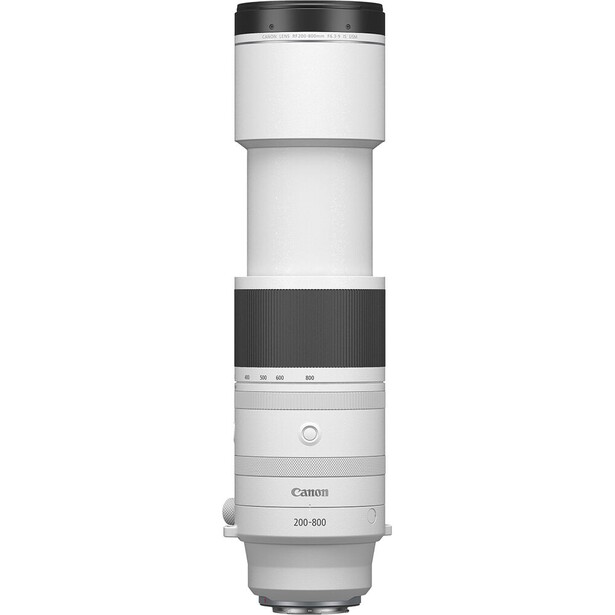
- Type: Full frame super telephoto zoom, non-L
- Focal length: 200-800mm
- Maximum aperture: f/6.3 at 200mm to f/9 at 800mm
- Stabilization: 5.5 stops
- Minimum focus distance: 0.8 m at 200mm
- Maximum magnification: 0.25x at 200mm
- Filter size: 95mm
- Weight: 2,050 g
- Price: $2,149 (B&H)
Reach is the wildlife photographer's entire problem, and the RF 200-800mm f/6.3-9 IS USM solves it for less than a 500mm prime costs to insure. Eight hundred millimeters in a hand-holdable, stabilized lens simply did not exist at this price before Canon built it. It accepts the RF 1.4x and 2x extenders at every focal length, which takes it to a frankly absurd 1,600mm if you have the light for it.
It behaves better than the spec sheet reads. The 0.25x maximum magnification at 200mm means it doubles as a long macro for dragonflies and butterflies that will not let you approach, and Nano USM focus is quick enough to catch a bird leaving a branch. The tripod collar rotates, and its foot carries both 1/4"-20 and 3/8"-16 sockets, though there is no Arca dovetail machined into it, so a gimbal head still wants a plate.
The price of that reach is light. At 800mm you are shooting at f/9, and f/9 is dim. On a bright bird in good sun, fine. In woodland at dawn, which is where a lot of wildlife actually is, you will be pushing ISO hard and leaning on your body's noise performance, and autofocus on lower-end RF bodies gets sluggish as the aperture narrows. Check the current price of the Canon RF 200-800mm f/6.3-9 IS USM at B&H.
Also consider the Canon RF 100-500mm f/4.5-7.1 L IS USM if you shoot in lower light and would trade 300mm of reach for a brighter aperture and L-series build.
Read our full review of the Canon RF 200-800mm f/6.3-9 IS USM.
What We Like
- 800mm of reach for a fraction of super-telephoto prime money
- Extender compatible at every focal length
- 0.25x close focus at 200mm doubles as an insect lens
- Rotating tripod collar with standard 1/4"-20 and 3/8"-16 sockets
What Could Be Better
- f/9 at 800mm demands good light or high ISO
- Autofocus slows noticeably on lower-end bodies
- 2,050 g and 314mm long is a two-hands lens
Best for Macro: Canon RF 100mm f/2.8 L Macro IS USM
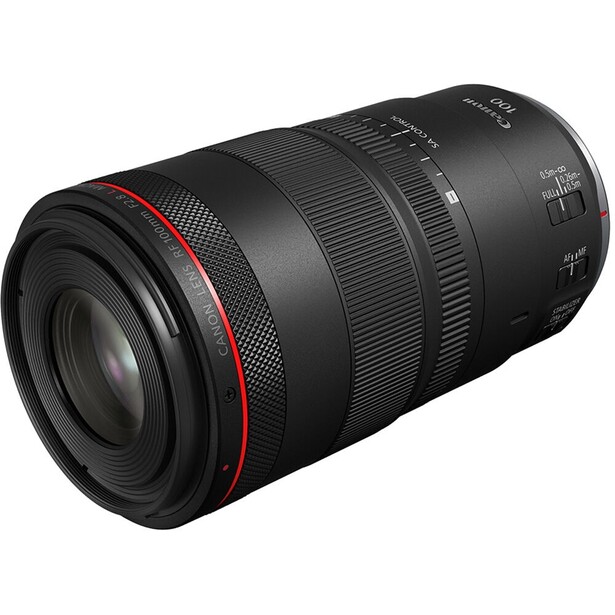
- Type: Full frame macro prime, L-series
- Focal length: 100mm
- Maximum aperture: f/2.8
- Stabilization: 5 stops, falling to 2 stops at 1.0x magnification
- Minimum focus distance: 0.26 m
- Maximum magnification: 1.4x
- Filter size: 67mm
- Weight: 730 g
- Price: $1,349 (B&H)
Most macro lenses stop at life size. The RF 100mm f/2.8 L Macro IS USM keeps going to 1.4x, projecting the subject onto the sensor 40 percent larger than life. In practice that is the difference between photographing a bee and photographing a bee's eye. Dual Nano USM keeps focus fast enough that it doubles as a 100mm portrait lens.
Its distinguishing feature is the spherical aberration control ring, a third ring on the barrel that introduces spherical aberration in either direction. Turn it one way and foreground bokeh softens while the background tightens; turn it the other and the effect reverses. It is a genuine optical control rather than a filter effect, and for flower and portrait work it gives you a look no other Canon lens does.
The limitation is one every macro shooter learns the hard way: stabilization collapses up close. The lens is rated at 5 stops in normal use but only 2 stops at 1.0x magnification, because at extreme close range the dominant shake is your body swaying forward and back, and no optical system corrects for that. At 1.4x you are on a tripod and a focus rail, or you are on flash. Working distance at maximum magnification is short enough that lighting the subject without shadowing it takes planning. Check the current price of the Canon RF 100mm f/2.8 L Macro IS USM at B&H. If the technique is new to you, our Mastering Macro Photography tutorial covers the lighting and focus-stacking workflow this lens is built for.
Also consider the Canon RF 85mm f/2 Macro IS STM if you want half life-size close-ups and a portrait lens in one cheap package.
What We Like
- 1.4x magnification goes beyond life size without tubes
- The SA control ring is a real optical bokeh control
- Doubles as an excellent 100mm portrait lens
- 730 g and 67mm filters keep it manageable
What Could Be Better
- Stabilization falls to 2 stops at life size
- Short working distance at maximum magnification complicates lighting
- L-series pricing for a specialist lens
Best for RF-S Crop Bodies: Sigma 18-50mm f/2.8 DC DN Contemporary
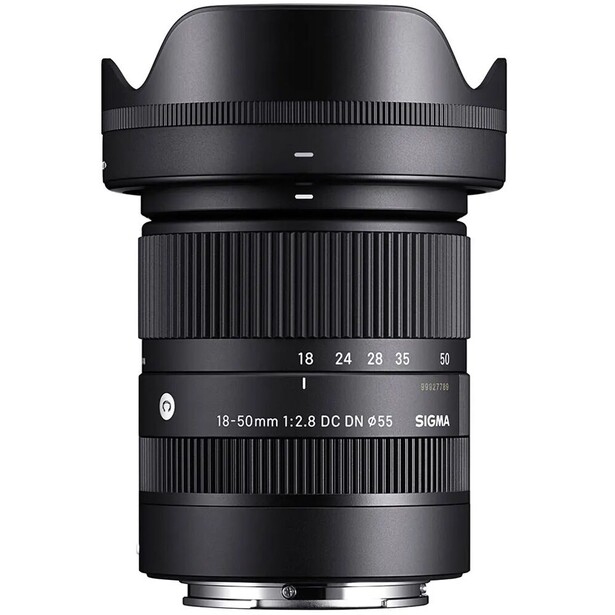
- Type: APS-C standard zoom (29-80mm equivalent)
- Focal length: 18-50mm
- Maximum aperture: f/2.8, constant
- Stabilization: None
- Minimum focus distance: 0.121 m (wide), 0.30 m (telephoto)
- Maximum magnification: 0.36x at 18mm (1:2.8)
- Filter size: 55mm
- Weight: 300 g (RF mount)
- Price: $609.99 (B&H)
Here is the lens that broke the seal. Canon licensed Sigma and Tamron to build autofocus glass for RF but restricted them to crop sensors, and the Sigma 18-50mm f/2.8 DC DN Contemporary was the first to land. For anyone shooting an R7, R10, R50, R50 V, or R100 it changes the system: a constant f/2.8 standard zoom weighing 300 g, covering a 29-80mm equivalent range, for a small fraction of what any full frame f/2.8 zoom costs. Before this, the honest answer to "what fast zoom should I buy for my R10" was that there wasn't one.
The optics justify the enthusiasm. It focuses to 12.1 cm at the wide end, close enough to be useful for food and detail work, and it holds up well into the corners by f/4. At 69.2mm wide and 74.5mm long, it disappears on a small body in a way no L zoom ever will.
Two things to know before you buy. It has no optical stabilization, and among Canon's crop bodies only the R7 has in-body stabilization, so on an R10 or R50 you are stabilizing nothing at all and need to mind your shutter speed. And there is still no third-party autofocus glass for full frame RF, so treat this strictly as a crop-body solution. For R7 and R10 owners it is the first lens we would add. Check the current price of the Sigma 18-50mm f/2.8 DC DN Contemporary at B&H.
What We Like
- Constant f/2.8 in a 300 g package for RF-S bodies
- 12.1 cm close focus at the wide end
- Cheap 55mm filters and a genuinely compact barrel
- Costs a fraction of any full frame f/2.8 zoom
What Could Be Better
- No stabilization, and most RF-S bodies have no IBIS either
- 50mm is a short long end for portraits
- Carries a price premium over the same lens in other mounts
Best Ultra-Wide for Crop Bodies: Tamron 11-20mm f/2.8 Di III-A RXD
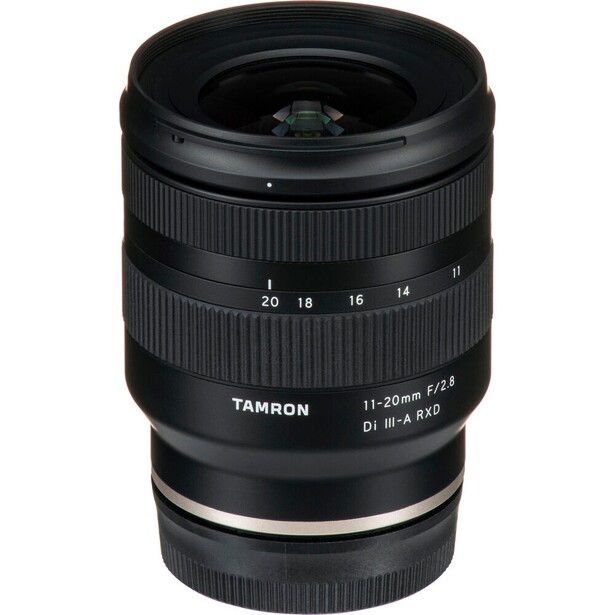
- Type: APS-C ultra-wide zoom (18-32mm equivalent)
- Focal length: 11-20mm
- Maximum aperture: f/2.8, constant
- Stabilization: None
- Minimum focus distance: 0.15 m (wide), 0.24 m (telephoto)
- Maximum magnification: 0.25x at 11mm (1:4)
- Filter size: 67mm
- Weight: 340 g (RF mount)
- Price: $599 (B&H)
Tamron's first RF lens is the one crop shooters had been asking for. Canon's own ultra-wide option for APS-C is a slow variable-aperture zoom, and the Tamron 11-20mm f/2.8 Di III-A RXD answers it with a constant f/2.8 across an 18-32mm equivalent range, in 340 g, with dust and moisture resistance and a fluorine-coated front element that shrugs off spray. For interiors, astro, and landscapes on an R7 or R10, it is the obvious wide lens.
The close-focus behavior is what makes it fun rather than merely useful. It focuses to 0.15 m at 11mm for a 1:4 magnification, so you can put the lens almost against a foreground object and still hold the whole background in frame. The RXD stepping motor is quiet and quick, and at 84.2mm long it does not unbalance the small RF-S bodies it was designed for.
The weak points follow from the design. There is no stabilization, so on an R10 or R50 handheld video at 11mm relies entirely on electronic correction. Barrel distortion at the wide end is significant and corrected in software rather than in glass. And 20mm is a short long end, making this emphatically a second lens rather than a walkaround. Pair it with the Sigma above and an RF-S body suddenly has a serious two-lens kit for less than one full frame L zoom. Check the current price of the Tamron 11-20mm f/2.8 Di III-A RXD at B&H.
Also consider the Canon RF-S 10-18mm f/4.5-6.3 IS STM if you want stabilization, a wider 10mm end, and a lighter, cheaper lens, and can live with the slow aperture.
Read our full review of the Tamron 11-20mm f/2.8 Di III-A RXD.
What We Like
- Constant f/2.8 across an 18-32mm equivalent range
- 340 g with weather-sealing and a fluorine front coating
- 0.15 m close focus enables dramatic near-far compositions
- Cheap 67mm filters
What Could Be Better
- No stabilization, which hurts handheld video
- Heavy barrel distortion corrected in software
- 20mm long end makes it a specialist, not a walkaround
How to Choose a Canon RF Lens
Start with the question that decides everything else: full frame or RF-S. Canon's crop bodies (the R7, R10, R50, R50 V, and R100) accept every RF lens ever made, so a full frame L zoom mounts and works perfectly, just with its field of view multiplied by 1.6. The reverse is not true in any useful sense, because an RF-S lens on a full frame body forces the camera into a cropped mode and throws away most of its resolution. If you own a crop body but expect to move to full frame soon, buying full frame glass now is the cheaper path.
Then understand the third-party situation, because it is the biggest structural difference between RF and every other mount. Canon has licensed Sigma and Tamron to make autofocus lenses for RF, and as of mid-2026, every one of those lenses is APS-C. Crop shooters finally have real, affordable choices, while full frame shooters pay Canon's prices or go manual focus with the likes of Laowa, TTArtisan, and Voigtlander. RF therefore lacks the price-suppressing competition that keeps Sony E-mount glass honest, a dynamic our third-party lens guide digs into.
The escape hatch is EF. Canon's Mount Adapter EF-EOS R puts two decades of EF lenses, Canon's and Sigma's and Tamron's alike, on an RF body with full autofocus and stabilization, and the used EF market is cheap precisely because everyone is migrating away from it. An adapted EF 70-200mm f/2.8 or 100mm macro performs closely enough to its RF counterpart that the price gap is hard to argue with.
Optical stabilization also matters more on RF than people assume, because Canon's cheaper bodies (the R8, RP, R50, R100) have no in-body stabilization at all, so a lens without IS on one of those bodies means no stabilization anywhere in the system. The spec that quietly matters most, though, is the filter thread. Canon's VCM primes all share 67mm, so one good polarizer covers an entire prime kit, while the 82mm and 95mm threads on the big zooms turn a filter set into a costly decision of its own.
Finally, watch the product cycle. Canon is credibly rumored to be shifting its L zooms toward VCM focusing, and the long-serving RF 24-70mm f/2.8 L IS USM is the lens most likely to be replaced soon, with a wider or faster VCM successor repeatedly rumored for 2026. That is why this guide's standard-zoom slots point at the 24-105mm f/2.8 Z and the 28-70mm f/2.8 IS STM instead. If your heart is set on the Canon RF 24-70mm f/2.8 L IS USM, it is still an excellent lens, but buy it at a discount rather than full price.
What We're Looking For
We weigh optical performance across the frame, autofocus speed and quietness, stabilization (with attention to whether the body a lens will live on has any of its own), size and weight in a bag you actually carry, filter cost, and value against the alternatives on other mounts. Every specification here was verified against Canon's, Sigma's, and Tamron's current spec sheets and live retailer listings at the time of writing, rather than carried over from a dated review. Where Fstoppers has tested a lens hands-on, its review is linked inside that lens' entry. Where no review link appears, the entry was built from verified specifications and the lens' documented optical design, and we say so rather than imply testing we have not done.
Frequently Asked Questions
Can I Use Sigma and Tamron Lenses on a Canon RF Camera?
Yes, but only on crop bodies. Canon has licensed Sigma and Tamron to build autofocus lenses for the RF mount, and every lens released under that agreement so far is an APS-C design for the R7, R10, R50, R50 V, and R100. There is still no third-party autofocus glass for full frame RF bodies.
Can I Use My Old EF Lenses on an RF Camera?
Yes, and they work extremely well. Canon's Mount Adapter EF-EOS R passes full autofocus, stabilization, and aperture control through to any EF lens, including third-party EF glass. Because the used EF market is inexpensive, adapting is often the cheapest route to a fast telephoto or a macro on an RF body.
What Is the Difference Between RF and RF-S Lenses?
RF lenses cover a full frame sensor, while RF-S lenses project a smaller image circle sized for Canon's APS-C bodies. Every RF lens works on every RF camera. An RF-S lens on a full frame body forces it into a cropped mode, so you lose most of the sensor's resolution. Buy RF-S only if you intend to stay on crop.
Do I Need L-Series Glass?
No, and the RF 28-70mm f/2.8 IS STM is the proof. Canon's non-L range now includes constant f/2.8 apertures and strong optics for far less than the L equivalents cost. L-series buys weather-sealing, a tougher build, and the last few percent of optical performance, which matters if you shoot for a living in bad conditions and matters much less otherwise.
Fstoppers may earn a commission from purchases made through links in this article. Our picks are made independently by our editorial team.