
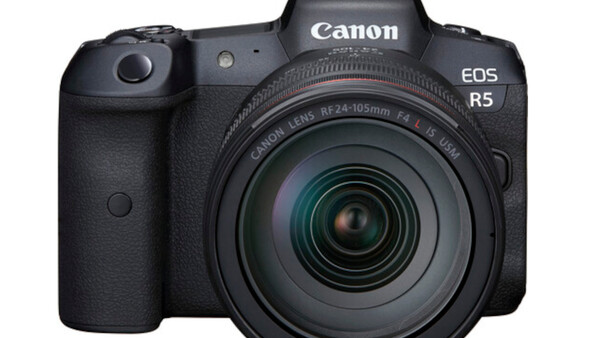
When Canon barred outsiders from its RF mount, critics cried “anti-consumer” and predicted disaster. Instead, the company built a fortress that turned outrage into dominance.
When Canon began tightly controlling access to its RF mount years ago, the photography community erupted in outrage. Canon enforced intellectual property rights against companies like Viltrox, pressuring them to discontinue autofocus RF lenses, while allowing manual-focus and basic third-party options to continue. Critics branded the approach anti-consumer, predicting it would hurt adoption and limit photographer choice in an already competitive mirrorless landscape. Sony, by contrast, had adopted a more open stance toward third-party makers, particularly in recent years, after initially tolerating manufacturers who reverse-engineered E-mount protocols, creating a diverse ecosystem that seemed to benefit everyone. Canon appeared to be building walls around its new mirrorless system.
Fast-forward to 2025, and Canon has captured the largest share of the mirrorless market while maintaining premium pricing on RF glass that faces minimal direct competition. Their lens lineup has expanded to over 30 native RF options, covering everything from ultra-wide to super-telephoto. Professional photographers who initially resisted the switch are now singing the praises of RF image quality and performance. What looked like corporate greed four years ago may have been one of the most strategically brilliant moves in modern camera industry history.
The Outrage That Was
The backlash was swift and brutal when Canon's RF mount restrictions became clear. Photography forums lit up with complaints about Canon's "walled garden" approach, contrasting sharply with Sony's approach toward third-party manufacturers. Sigma had just released their phenomenally successful Art series for Sony E-mount, delivering professional-quality glass at prices that undercut first-party options by thousands of dollars. The Sigma 85mm f/1.4 DG DN Art was selling for $1,300 compared to Sony's $1,950 85mm f/1.4 GM, and early reviews suggested the optical performance was virtually indistinguishable.
Meanwhile, Tamron was establishing itself as the value king with lenses like the 28-75mm f/2.8 Di III RXD, a $849 zoom that performed admirably against Sony's $1,600 24-70mm f/2.8 GM. Professional wedding photographers, always cost-conscious given the gear demands of their trade, flocked to these alternatives. Canon seemed to be ignoring this successful third-party playbook entirely.
The criticism intensified because Canon's early RF bodies weren't strong enough to justify the ecosystem limitations. The original EOS R felt like a beta product with its single card slot, limited video features, and that infamous touch bar that seemed designed by committee. The EOS RP, while refreshingly affordable, screamed "compromise" in nearly every specification. Photographers wondered why they should lock themselves into Canon's expensive lens ecosystem when the cameras themselves felt half-baked compared to Sony's mature offerings. The value proposition simply wasn't there yet.
Protecting the Crown Jewels
A few years later, Canon's strategy becomes crystal clear when you examine their premium RF glass lineup. Lenses like the RF 28-70mm f/2, RF 85mm f/1.2L, and RF 50mm f/1.2L exist with minimal direct competition that would be impossible in an open mount system. Canon has effectively kept autofocus third-party competition out of the premium full-frame segment. These are exactly the products that Sigma and Tamron excel at undercutting with their own interpretations. Historically, whenever Canon releases a $2,700 portrait lens, Sigma responds within 18 months with an alternative that delivers 90% of the performance at half the price. In the RF ecosystem, that competitive cycle simply doesn't exist.
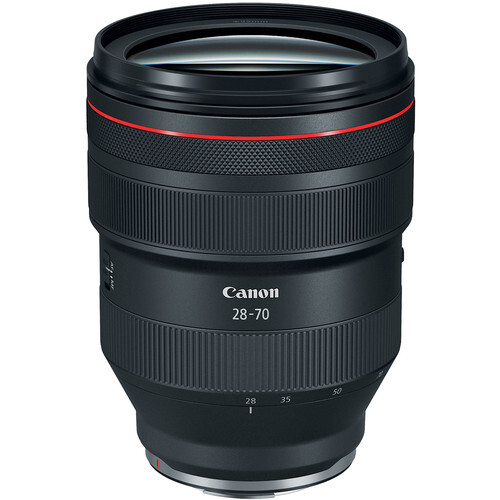
This absence of competition means Canon can maintain premium pricing indefinitely on their halo products. The RF 50mm f/1.2L commands $2,299 because there's literally nowhere else to go for that focal length and aperture combination on RF mount. Professional photographers and serious enthusiasts face a binary choice: pay Canon's asking price or adapt older EF glass, which, while fully functional, lacks the compactness and optical refinements of newer RF designs. Canon has effectively turned every premium lens purchase into a captive transaction.
The psychological impact reaches well beyond the purchases of individuals. Without third-party alternatives creating pricing pressure, Canon controls the entire "aspirational upgrade" narrative within their ecosystem. Every RF shooter looking to step up their glass game must climb Canon's carefully constructed pricing ladder, with no shortcuts available.
Owning the Budget Market Too
Canon's masterstroke wasn't just protecting their premium products but preemptively flooding the budget segment before third parties could establish a foothold. The RF 16mm f/2.8, RF 50mm f/1.8, RF 85mm f/2, and RF 24-105mm f/4-7.1 all deliver solid performance at prices that leave little room for third-party alternatives to gain traction, if they were even allowed to. These lenses aren't groundbreaking, but they're competent and affordable enough to satisfy most entry-level needs and avoid driving people to other systems. Meanwhile, Canon offers unique propositions not available elsewhere at both ends of the spectrum. Consider the RF 28-70mm f/2, which was, until recently, the only f/2 standard zoom full frame lens. At the other end of the spectrum, the RF 800mm f/11 IS STM offers photographers an affordable entry into the world of ultra-long focal lengths.
This strategy essentially weaponized Canon's own product line against potential competition. Where Tamron might typically offer a $400 alternative to Canon's $800 lens, Canon simply released their own $300 option first. They successfully undercut themselves before anyone else could, eliminating most traditional third-party value propositions while maintaining control over the market segment. While some third-party options have emerged, including Sigma's 2023 release of APS-C RF primes, likely under some form of licensing agreement, the third-party presence remains minimal compared to other mounts, with full frame RF lenses particularly locked down.
The Proof in Shipments
The market has delivered its verdict on Canon's RF strategy, and the available data tells a compelling story. Industry analysis suggests Canon maintained the largest share of mirrorless camera shipments in 2024, leading the market while the overall camera industry continued its contraction. Canon didn't just survive the mirrorless transition; they appear to have thrived.
These market gains prove that the RF mount restrictions didn't drive potential customers away as critics predicted. Instead, the approach appears to have driven them deeper into Canon's ecosystem, where every lens purchase generates significantly higher margins for the company. Nikon, despite offering excellent Z-mount cameras and maintaining some third-party compatibility, captured a smaller market share. Sony maintained strong performance, though Canon successfully challenged their early market dominance.
Canon's seamless pivot from DSLR dominance to mirrorless leadership validates their strategic bet on ecosystem control. While other manufacturers struggled with the transition, Canon leveraged their RF mount control to maintain profitability even as unit volumes shifted. Industry analysts suggest that RF camera buyers may purchase additional lenses at higher rates than DSLR buyers historically did, though Canon hasn't released specific data confirming this trend.
The financial impact extends beyond unit shipments to profitability metrics. Canon's imaging division has reported improved operating margins in recent years, with higher per-unit profitability driven by premium RF lens sales and camera pricing. While overall camera market revenue continues declining, Canon's controlled ecosystem allowed them to maintain premium positioning across their entire lineup.
Long-Term Playbook
Canon's RF mount approach echoes their most successful historical gambit: the 1987 transition from FD to EF mount, though with important differences. Canon had once forced FD users to start over entirely; with RF, they avoided repeating that mistake by providing seamless EF compatibility through adapters. That earlier FD transition completely abandoned backward compatibility, leaving users with no adapter option. Professional photographers faced an all-or-nothing choice: stay with manual focus FD systems or buy into a completely new electronic mount.
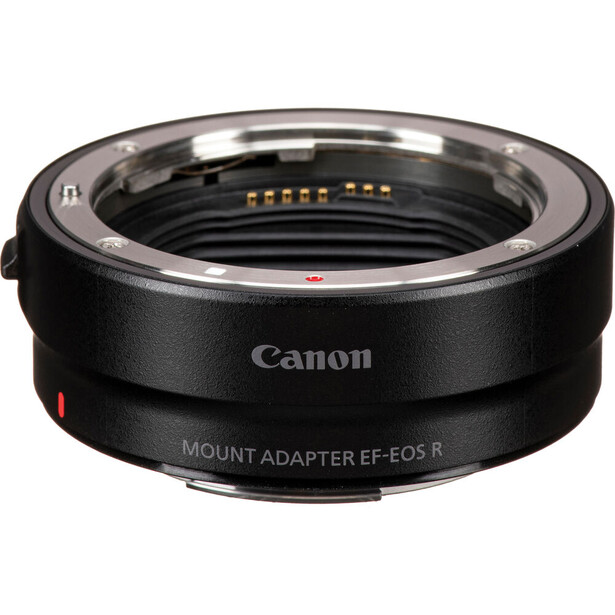
The RF transition proved notably gentler. Canon's EF-to-RF adapters maintain full functionality, including autofocus and image stabilization, allowing photographers to use existing glass without meaningful compromise. This backward compatibility reduced transition friction significantly, enabling photographers to adopt RF bodies while gradually building RF lens collections. In fact, my EF lenses perform better on my EOS R5 than they even did on my 1DX Mark II.
However, significant risks remain. Younger photographers entering the market may gravitate toward Sony's more open ecosystem, especially as social media amplifies the value-conscious mindset of content creators. Canon also faces the ongoing challenge of innovation pace: if they fail to deliver compelling new RF lenses regularly, the locked ecosystem becomes a liability rather than an asset. The strategy only works as long as Canon's first-party glass remains genuinely superior to what competitors might offer.
Conclusion
Canon was accused of walling off the garden when they began controlling RF mount access. Critics predicted market share losses, user defection, and ecosystem stagnation. Photography influencers proclaimed Sony's third-party friendly approach the obvious future. The consensus was clear: Canon had made a strategic error that would cost them dearly.
In hindsight, it may have been the construction of a remarkably profitable fortress. With minimal competition for their high-margin premium glass and a comprehensive stable of budget lenses that preempted third-party alternatives, Canon transformed a widely reviled approach into one of the most successful plays of the mirrorless era. The company didn't just survive the transition from DSLR to mirrorless; they maintained strong profitability while commanding premium pricing across their lens lineup.
Canon's approach validated a broader principle about premium market positioning. While critics focused on the anti-competitive aspects, Canon demonstrated that many photographers actually prefer integrated ecosystems over competitive diversity. Professional users gravitated toward Canon's promise of optimized performance through controlled integration. The peace of mind from single-vendor responsibility often outweighs cost savings from third-party alternatives. Having the momentum of being a longtime market leader helped too, of course. You can't make this play without that.
Whether this fortress can withstand changing market dynamics and generational shifts in photographer preferences remains to be seen. The photography industry's ongoing evolution toward video content, social media integration, and mobile-first workflows may favor different priorities than traditional still photography, but Canon has done a great job of filling out the budget end of their offerings as well. I certainly wouldn't bet against them.
Canon has turned criticism into cash flow. The RF mount restrictions generated higher margins and deeper customer relationships than open systems typically allow. While the photography community initially revolted against Canon's closed approach, the market ultimately validated their strategy through purchasing behavior that speaks louder than forum complaints. The broader lesson extends beyond camera gear to any industry facing ecosystem decisions. Canon demonstrated that controlling the entire customer experience can generate superior profitability even when it attracts criticism. Sometimes, building walls creates more value than tearing them down.



Join the Fstoppers community for free
-
Post comments and join in the discussions
-
Browse the site ad-free
-
Share your work and get featured in the community
-
Compete in the photo contests for fun and prizes
54 Comments
The strategy always made sense… for Canon’s benefit. In 2018, I gave little credence to those who suggested it would backfire on them in the near future. However, their locked-off strategy was then and is now anti-consumer, and if they continue it forever (10+ more years) then I think it will hurt them as prices continue to rise and the segment continues to shrink. However, given they already acquiesced for 3rd party lenses on APS-C, I think they will do the same for full frame when the time is right. If I were to put my business hat on, I agree that Canon played this right. But as a photographer, as a consumer, Canon has definitely lost some “brownie points” in my book. Time will tell if that was a worthwhile exchange.
Due to this decision, I have switched from vocal and happy Canon user to "do not buy" stance. Greed should not be rewarded since its my choice to vote with my wallet. So i do and suggest other to do so as well.
What ever is good for them , is not necessarily good for us consumers. Like adobe, I find them to be annoying company. ( Canon user here )
They are clearly afraid of other lens companies.
It seems that Canon is moving to a videocentric marketing strategy and Sony and Nikon may be doing the same. As a stills photographer and not into video, I don't know if videographers need or desire the wide variety of lenses as those who take images. If that's true, we may see less number of lenses being produced, except for those ideally made for video (e.g. VCM lenses). The company that produces them will sell the video cameras to be used with those lenses.
As an event pro shooting Sony FE, I value highly the wide array of 3rd-party lenses, not just for price/value, but also variety. I have nine Samyang primes, one Samyang zoom, two Tamron zooms, and one Sony zoom. The Samyangs are very good to excellent, if not class-leading, they're well-priced and generally smaller and lighter than most of the competition. Also, there are some interesting and unusual lenses available, such as Laowa's 12-24 shift zoom, which is particularly suited to real estate and other architectural work. Canon would have to offer some very compelling advantage - e.g. global shutter in a $2000 body - to overcome this.
As a Canon DSLR shooter for 10 years, I begged Canon for many years to bring ECF (Eye-Controlled Focus) to its digital cameras (after debuting it in the Elan 7 and EOS-1 film bodies), and by the time they finally got around to it, I'd migrated first to Micro Four Thirds and then Sony FE, where eye-detect AF largely obviated the need for ECF.
I mean, I am a Nikon shooter so wouldn't typically be picking Canon anyway, but if say all my gear was stolen tomorrow and I had a hefty insurance cheque to start from scratch Canon would be instantly disregarded because of this stubbornness.
I would most likely re-buy into the Sony system simply because the lens options are so varied and that all these exciting Sigma launches recently support Sony but not Nikon or Canon.
That said, if RF is selling, I guess good for them, but I think that is more based on Canon brand loyalty than anything else. I don't think too many users are looking at Canon and being like: "I want to buy into the platform with the least lens options!"
In theory I don't like it, but as a Canon shooter (photo and video), the reality is I simply don't like 3rd party lenses. I don't like the color inconsistency between brands, the differences in how sharpness or bokeh is rendered, and the fact that every firmware upgrade can brick a lens. In addition even Sony handicaps 3rd party lenses when it comes to burst rate and autofocus.
For basic commercial work I use a 24-105 f/2.8. The only one to exist is made by Canon and it defines a lot of my workflow. It's brilliant for both photo and video work, and it matches their set of VCM primes perfectly so if I want some variety, I can cut together with either photo or video and not worry about color or rendering matching up.
For a lot of shooters, you really don't need that many lenses. They just need to work, and canon lenses work. Reliability makes me money, so the conversation is definitely overblown in how I use my gear.
I don’t need a lot of lenses but the ones I have, Canon don’t make those.
The bottom line, and the reason so many people are upset about this, is either for super niche things like the Sigma 14mm f/1.8, or people on a budget who want lenses brighter than f/7.1.
Canon kinda has a philosophy of "If you want bright lenses, get L lenses or get bent"
If a lens isn't f/7.1, f/8, or f/11, it'll be crap build quality. The Nikon 50 and 85/1.8's are great examples of this where you can have L-quality build in lenses that aren't exotically bright.
Agree. I used canon from 1989 until last year. Bailed for two reasons. Firstly, the rf series is too limiting, and secondly, just ridiculously expensive. I can now buy medium format lenses for less
If hadn’t already spent a lot of money on Canon gear, I would probably buy Sony instead, precisely because of Canon’s policy of restricting access to its RF mount. For now, I make do using EF lenses with an adapter. If/when I decide to buy an RF lens, it will definitely be a second-hand one. There are plenty of used RF lenses in excellent condition on the market. In this way I am not rewarding Canon for their aggressive marketing strategy, and I am getting my lenses for less money.
While it might be true that Canon’s own lenses are better than third party versions, I think customers should still be able to choose for themselves. I dislike any company that puts profit before the needs of its customers.
As a photographer who doesn’t own Canon stock, their choices regarding third party lens support was my primary driver to buy an A7RIV. Sony’s now taken over as my primary system, and I’m 4 deep in their cameras at the moment. It could’ve been an R5, but it wasn’t. I can take photos using other systems that I simply can’t with RF. And those are photos I want and need to take.
Did I immediately sell off all my Canon gear and swap like-for-like with Sony? No. Because there are plenty of EF to E adapters: they were the OGs in adapting EF lenses after all. But rather than relying on one as a crutch to fill gaps I used it to transition. Now the only EF mount lens I have left is Sigma’s 105mm F1.4
I’m a photographer and consumer, not a shareholder or a brand partisan, so I go where the tools are. And my Canon gear got passed on and passed down to my wife and kid.
La Salamadra wrote:
"I can take photos using other systems that I simply can’t with RF. And those are photos I want and need to take."
YES! Exactly!
Canon refuses to make many niche lenses for their RF mount, and they also refuse to allow anyone else to make those lenses. So what, then, are Canon users supposed to do when they need certain types of autofocus lenses that Canon does not make? It is like Canon is literally forcing us to migrate to other camera brands because the lenses we need simply do not exist in the RF mount.
It’s not even just niche lenses, up until recently they seemed to forget that fast primes wider than 50mm should exist. Or that F/1.4 was an aperture people might want (without shelling out F/1.2 money).
Six or seven years on they finally have some options, but sadly they’re not exactly stellar for astro work due to being optimized for video use.
Which is baffling coming from a company that put out the EOS Ra at the beginning of its mirrorless run and who was a prime choice for astrophotography for many years. Albeit, more often than not the lenses people were using for astro didn’t say “Canon” on them.
At any rate, I’ve got no complaints with what I’ve got now, what with the GM options and the generational run Sigma has going on. I guess I do have one complaint, but it truly is niche: I’m still waiting on Sigma to release a full frame 10mm F1.2, so I can buy 2 and do 180° rectilinear time lapses 😂
Well if your big thing is astrophotography, then Canon's policies shouldn't hurt you much, because it is only a ban on autofocus, and I don't think autofocus is necessary or even preferred for astrophotography, so manual-focus-only lenses should be exactly what you need for your niche, and Canon is just fine with all of the 3rd party lensmakers making MF lenses for their RF mount. Right?
Negative. AF isn’t the concern, it’s optical aberration corrections and aperture. Stars are extremely demanding of optical formulas.
If you want to do wide-field astro with the cleanest possible stars, and the lenses that let in the most light, you’re more than likely going to end up with a Sigma lens at some point if you’re ok with a chonky lens. Or a Sony GM lens if you’re willing to trade more astigmatism for (significantly) lighter weight. The manual focus options currently are significantly slower, suffer worse optical aberrations, or both.
That said, I’m a fan of AF wide angle lenses when it comes to using camera-driven focus bracketing for sharp astro landscapes from min to infinity.
This is very much in line with what Apple has done with the MAC. Apple, by tightly controlling their hardware, has been able to ensure an above average reputation for a quality product that meets the needs of the artistic (i.e not necessarily computer oriented) user. They also have created an image of a "professional" product that serious amateurs will aspire to.
Not quite the same. Apple decides on the internal components which generally means a more stable system but at a price. Limiting third party lenses does not make for a more stable and reliable Canon system, just a lack of choice for the consumer and people do complain about the quality of non-L RF lenses. L mount and E mount prove third party lenses are more than reliable, cost effective alternatives. Also, Apple do get criticised for their specs and charging a premium for at time of purchase only upgrades. Apple using ARM chips has been a ‘genius’ move in recent years, especially eliminating the overheating issues they used to be plagued with.
Apple benefits from pairing specific hardware with their software. It's very optimized but it can be limiting for users who want full control over their OS. Their computers are also way overpriced compared to equally powerful PCs. The choice is up to the individual, I suppose, but I think a lot of people are overpaying for something they don't need.
Well yes of course Canon's policies work well for Canon. There was never any doubt about that, because they make such decisions based on what will result in the greatest income / profits for their company.
But I don't care about how Canon does as a company. I care about ME!
Hence, I evaluate Canon's proprietary policies on how well they work for me and my needs, not on how well they work for Canon. And for me the policy about no autofocus for the RF mount from 3rd parties does not work well. So that is why I bought a Sony mirrorless body, and why I am shifting away from Canon and toward Sony.
It's good for canon. For now. It's really bad for consumers. lack of competition is always bad for consumers. I'll never consider Canon products as long as they keep up this lens mount lock down. They could have had my business when I moved to mirrorless but I found out about their lens mount being locked and stayed with Nikon.
It is anti-consumer. Just because Canon is still making money doesn't mean it benefits photographers.
There's a reason the L Mount alliance is widely praised.
Their strategy drove me to Sony.
Me too!
Good one. I can't help but notice the surely intentional, tongue-in-cheek congratulating backhandedness to Canon for their locked mount ff shenanigans. Love it.
It's so funny to read this because this morning on the Metro I was thinking of a marketing piece: congratulating Canon for staying as locked up as it is. It's done a very good jon in creating new customers for L mount and especially Sony.
Like others have mentioned, I am no longer in Canons lens jail because I took the money that would usually go to them and invested in an S9, the nearly true successor to the m62 with full frame and open gate capabilities, AND ibis (!) And I am flabbergasted by the clarity of images I'm getting out of the s9 compared to anything I was able to do on that noise reduction hobbled sensor in the r62. Man i hated that camera.
So yep, good job canon. I am now looking at every single sigma lens as an option and it's going to be amazing to pick one of these things up. I can't say that I trusted third-party lenses absolutely, but I can say options are good.
I just used the S9 as a secondary body on my shoot over the weekend. The clarity is freaking fantastic, that sensor is doing real work.
At the end of the day, Canon has turned into Apple. And as a Mac user Apple is the OG of customer / user hostile shenanigans. Liquid glass.. sure 😁👌🏾 Greedy minds think alike.
Sigma is L-mount alliance, so technically its a first party option for the S9 😜
No, Sigma is still third party by not being Panasonic but they also make the same lenses in E mount and you wouldn’t call them first party E mount lenses. L mount is just an agreement between certain camera companies to use the same mount, that’s all and Sigma make lenses for that mount.
talk about samantics…
What is an S9? And what is an m62? And what is an r62? If these are camera models, I am not familiar with them. It would really help if you said the manufacturer's name along with the model. Like Canon 5D Mark 4, and so forth. I think I completely agree with your comment, but I am not totally sure because I do not know what S9, m62, and r62 are.
Before I moved from Nikon F to Nikon Z I took a long look at Canon RF but their rabid attitude to 3rd party lens and their #1 market position put me off so Nikon Z it was (and yes they are also anti 3rd party lens but i know the system and my workflow is tuned to Nikon).
The obvious problem with Canon is they only have certain lenses and if you want something they don’t make you are out of luck. Sure if you want any of their L 24/35/50/85/135 or 24-70 and 70-200 zooms (as the main examples) and are a wedding/portrait photographer, you are sorted but companies like Sigma and Tamron offer so many other lenses in L and E mount beyond just the ‘workhorse’ focal lengths. If Canon don’t make it, tough luck. Also Sigma and Tamron make lenses at much lower prices too. Own a Canon and you have to pay the Canon tax, no other choice. Sorry but to claim Canon locking down their mount is ‘genius’ is quite the hyperbole. Maybe genius only for Canon in terms of keeping their users paying the Canon tax.
I am a budget gear hobbyist. Currently using the Canon RP, purchased good used condition for $400. Shooting with various vintage lenses via adapter; Nikon , Pentaz, Konica, etc. Seldom pay over $100 for a lens (50mm F2), etc, and sometimes find a great bargain. Just this week I bought the Nikon 35mm F2 for $20. (fair condition). Earlier this year I bought (Full frame coverage, new in box) the Koah Artisan 55mm F1.8 for $50.
Perhaps not everyone's strategy, but there are other options
Since my first encounter with RF camera/mount i was taken back how odd and unintuitive it all is to looong time Canon shooters. So thats strike one. Strike two is ... locking RF mount. I actually prefer 3rd party lenses opposed to Canons overpriced 1.2 offering that is just too expensive to justify quality it gives and their lower tier is just ... meh. I am at stage of my life that instead of buying into RF system, i have gone and explored other systems and so far love it. Still i use my old EF system for commercial work.
Strategy has worked ... into alienating old users that were once their steady stream of income and frequent customers for all things Canon. Out of all my friend, only me and one other friend still use Canon, and only EF stuff. I dont know one person that went into RF, at least personaly.
From the article: "Professional users gravitated toward Canon's promise of optimized performance through controlled integration."
Rather like a computer/phone company we've all heard of...
Google... cough... android
It's the same ploy that basically every big tech company uses. The whole article feels like it was written for shareholders rather than users. Users don't care about Canon's profit margins. They want a better user experience and the freedom to chose whatever lens they want. The article even admits that Canon is able to raise prices because of limited choice. Discouraging competition is always bad.
As part of my job I had to haul a large DSLR around, in 2017 for an upcoming roadtrip/vacation I wasn't about to haul a beast around, Having been a Canon user since my AE-1, I looked to see if there was anything similar in digital, - there wasn't, and so I bought a little Canon P&S. That little SX 260 HS rekindled my interest in photography for personal enjoyment, but I felt that the quality of images while good wasn't great and there was no RAW option, I started looking around. I already owned some Canon glass, but it was also large and heavy and Canon didn't offer a decent small and light camera. Sony had introduced their mirrorless APS-C cameras, I could get the image quality I wanted in a small light kit. I have been a Sony shooter since then. Canon made mistakes, so has Nikon, Sony and others. Looking forward to what happens next.
The Canon RF 28-70 F2.8 RF and RF 16-28 F2.8 lenses are a great choice for full-frame photography, both in terms of price and, above all, weight (travel photography).
However, it's true that a system as closed as the RF doesn't benefit customers.
Never reward a company for scummy actions like this. The restrictions are purely designed to push customers into paying more than they otherwise need do.
Imagine how you would feel if Canon decided that their new cameras would only allow you to to trigger canon branded flashes.
This behavior is largely a response to the success of 3rd party lenses offering similar quality for much less money, and rather than competing on price, they decided to just cripple the competition.
Buying into any restrictive ecosystem like that, will only put you in an increasingly worse situation as the more invested you become, the more you have to lose.
This exploitative behavior sadly took off due to some success in the IOT industry where a company will sell a IOT hub and accessories, and then when users become invested, e.g., installing numerous smart lights, smart switches, and various other devices, the company then announces a change that they will no longer be able to offer free cloud services and you will now need to pay a monthly fee to continue controlling your devices. This is always done strategically where they wait for tales to level off as they know it will drive off new customers. But existing customers will now be faced with a sunk cost dilemma, where they now need to decide if they should pay to continue using their "smart" devices, or let them become digital paperweights and need to spend a lot in replacing all of the hardware.
Canon is doing the same with their cameras, and it will only increase from there if they continue to be rewarded for anti-consumer behavior.
Canon has temporarily gained market share mainly through brand loyalty of EF-mount hobbiests who transitioned to RF-mount by way of adapting EF lenses. As a former Canon pro user, I have switched entirely to Sony E-mount. Sony cameras are multiple generation ahead of Canon and the extensive lens ecosystem is unmatched by Canon.
The irony is the Canon EF marketshare was built on third party lens support. If Canon wants to be the Apple of photography, good luck to them. I'm a PC and Linux user who is now a happy Sony user too.
All this talk of Canon being ‘anti-consumer’ is way off the mark. In our society no one forces anyone to buy anything. Canon isn't a monopoly. Consumers have the option to buy from many other companies or simply choose to buy nothing at all. Reading these comments is ample proof that some people don’t like Canon restricting 3rd parties and have moved on. Some don’t care and stay or make their initial buy-in. One of the things that many people glaze over when posting these comments is that Canon provided users with the best, most complimentary and cost-effective method of using fantastic glass on the RF mount by making adapting EF so seamless – and that includes 3rd party EF. Because of this integration I am enjoying shooting with optics I would never be able to afford otherwise. EF glass is an absolute bargain. Canon gave users a huge gift there. Now of course someone is going to come along and point out some specific 3rd party lens they ‘need’ which isn’t covered by EF or RF, but I see claims of not being able to make use of the largest collection of lenses ever made for a mount more of a technically evasive argument than a sensible one.
From Merriam-Webster:
anti-consumer
adjective
an·ti-con·sum·er ˌan-tē-kən-ˈsü-mər, ˌan-tī-
: not favorable to consumers : improperly favoring the interests of businesses over the interests of consumers
anti-consumer practices
As someone who worked at a physical, in-person camera shop within the last five years, I had plenty of chances to chat with customers (normies, not people who hang out in camera website comment sections like us) who owned a Canon DSLR, then bought into RF mount not realizing it was a walled garden.
I got to be the lucky one to try and explain to them that “no, Canon doesn’t make a 20mm F1.8, only Nikon and Sony do, although Sigma has a new 20mm F1.4… but Canon doesn’t allow Sigma lenses anymore” or “no, Canon’s only 50mm F1.4 is the one from 1993, and you need to buy this adapter for it to work. Or you can buy the better Sigma version from ten years ago, but you’ll still need to buy the adapter” or “congrats on your new R100, sorry they only make a kit lens but you can buy one of these full frame lenses. Or buy this adapter and use a lens from 15 years ago.”
Lemme tell you: they didn’t feel lucky or blessed. Mercifully, Canon has plugged a few holes in the intervening couple years, but just recently and just barely.
I’m incredibly fortunate in that I’m a complete nut job and I own or have owned almost every system, and that the desire to experience every camera and lens possible has inoculated me against succumbing to an abusive relationship with any brand.
Oh, and because I got off track: it would be nothing but upside for consumers if they got access to all of Canon’s RF lenses AND all the third party options. The only one the restriction benefits is Canon and they’re following the dictionary definition to the letter.
The claim does not rely on canon forcing anyone to buy, instead it relies on a more insidious tactic.
What they have done is introduced a horrible police late in the game because they likely knew that if they did it early, it would drive people away, thus they introduce it after a user base has been established.
People have experienced these issues with a number of IOT products over the years where they wait for customers to invest more heavily into the ecosystem thus they have much more to lose if they choose to not accept an anti-consumer policy.
If a customer buys a $50 hub and 1 or 2 cheap devices that connect to it, and then the company introduces a monthly fee, then that customer will likely just cut their losses and ditch the product.
On the other hand, if they delay the scummy policy for a much longer time, and draw those users further into the ecosystem, and now they have all of their lighting, and a number of appliances being managed by that hub, and now the company introduces the scummy policy, now the user is less likely to ditch the system because they invested many thousands of dollars into it.
Canon is simply copying that business model. Draw people in, wait until the existing consumer base levels off in size and stabilizes, then hit them with a scummy policy.
A person with an entry level camera and a kit lens can more easily switch ecosystems than someone who has integrated a professional workflow into a camera ecosystem with potentially tens of thousands of dollars invested into it. Those users lack the time to easily switch, in addition to a switch carrying a severe financial penalty, thus they are more likely to accept being cheated, and will find a way to excuse or rationalize it to cope.
If Canon was confident that their lenses were the best combo of value and performance for their cameras, then they wouldn't need too restrict 3rd party lenses. The only purpose for such restrictions is to either restrict superior competition from competing with your product, or if your product is of a similar quality and price, then you restrict the competition so that you can freely price gouge without risking your customers move to a 3rd party.
Think of it like HP printers and the scummy ink restrictions (which allowed them to drastically increase prices).
Sony pulled this exact same stunt with the Hell Divers 2 video game on PC. When it launched they stated "No one will need to create a Play Station account in order to play Hell Divers 2". A few months in after it sold like hot cakes on PC they demanded every one create a Play Station account to continue playing the game. Not only that but they sold the game in countries the PlayStation network is banned in which means the people in those countries that bought the game on PC were completely unable to play the products they paid for. Of course there was major backlash around this and it took significant community effort but Sony did eventually reverse the decision. Why did they do this? to boost Play Station account numbers for Share holders and farm customer data to sell. There was no practical consumer facing reason for them to do this. This practice is 200% anti consumer.
I shot Canon for 10 years. I moved on. I'm not being "technically evasive". I was with you right up until you started impugning my character.
Thanks.
This article is making it easier for me to make my next buying decision: I won't.
When I found that all my wonderful FD lenses (almost all Canon originals, many second hand) weren't going to fit on the next generation of Canon bodies I looked elsewhere and ended up with a nice Panasonic M43 and a no-name adapter. Obviously, there was a x2 crop factor, so this made little sense for all the wide angle lenses, but it was a good move overall.
When Canon came out with a range of mirrorless full frame bodies I thought it might be an idea to try to get an adapter for my lenses and go with one of them, so that all my lenses could be used the way there were intended to be used.
Now, with this input on what they are doing, I am officially giving up on that idea. I might still decide to try something with someone else's full frame mirrorless body - it might as well have in-body stabilization and auto focussing - if there is such a thing out there somewhere, but it now is a low key option rather than a project.
I recently read about some gadget that you could put in the film path of a regular 35mm camera, but the review was rather negative. But it reminded me of my first idea back when digital photography became useful - provide a digital back for cameras with a removable back (data backs were quite an idea at some stage ...) That could have been a good way, but it never happened.
Don't waste your time on anything that attempts to "digitize" a film body. Horrific waste of time and money. But there are quite a few mirrorless bodies with IBIS and AF so that's definitely possible. And you will likely be able to use your old lenses, too. Just look for a system that has the adapters you need. For example there are multiple adapters available to mount Canon FD lenses to the Sony E mount.
I found a clip on YouTube about a gadget that is supposed to drop into the film position of an old body. Predictably, that was one of those errors of evolution ...
No, I was hoping - back then - that a camera that can accept a data back could also be fitted with just that, but with a sensor, maybe a bit of IBIS, an SD card and maybe more battery than the default (good, say, for an A1, but not needed for a T90, for instance.)
But I realize that "that train has left the station" a very long time ago. (But I also dreamed of a record player for vinyl that would read out the groove with a laser and therefore not touching it ... apparently there was a prototype once, but it was decided that there would be no market for such a device ...)
(came by here again, fixed a typo: "A11" -> "A1")
Honestly if you want to continue using your FD lenses on a modern full frame body then Nikon might actually be your best bet. you can easily adapt FD lenses to the Z mount. This started with the Zf and is now available on most of their current Z mount cameras but you can use a lot of the auto focus feature IN manual focus. For example, if you want face an eye detect well you got it. You get the same AF box and it will track faces and eyes then turn green when the subjects face and eyes are in focus while manually focusing. This can also be used along side peaking if you want. The Zf has pretty good IBIS and so does the the Z5ii so all your FD lenses will be stailized. The Z5ii is basically a cheaper Zf with a few more features in a more comfortable and button rich body. You might check out nikon's options and see if you like'em.
As the RF lens mount is either Canon's second or is it third mirrorless lens mount, I've steered well clear of Canon products.
I still find it amusing how Canon's marketeers can trumpet their latest innovation, which most competitors have had for years, if not decades.
The lock out was designed to enable Canon and its user base to pay for Canon playing catch up.
At least their second. The M mount cameras, which weren't bad, were purposely handicapped from the start with idiotic restrictions on the size of the lenses. Few quality lenses, and one glaring omission was a high-quality standard zoom. The mount is dead, of course.