
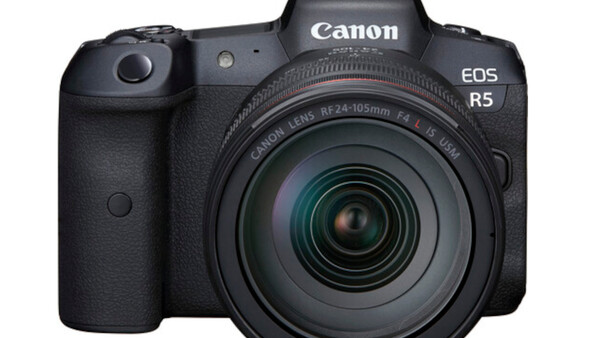
When Canon barred outsiders from its RF mount, critics cried “anti-consumer” and predicted disaster. Instead, the company built a fortress that turned outrage into dominance.
When Canon began tightly controlling access to its RF mount years ago, the photography community erupted in outrage. Canon enforced intellectual property rights against companies like Viltrox, pressuring them to discontinue autofocus RF lenses, while allowing manual-focus and basic third-party options to continue. Critics branded the approach anti-consumer, predicting it would hurt adoption and limit photographer choice in an already competitive mirrorless landscape. Sony, by contrast, had adopted a more open stance toward third-party makers, particularly in recent years, after initially tolerating manufacturers who reverse-engineered E-mount protocols, creating a diverse ecosystem that seemed to benefit everyone. Canon appeared to be building walls around its new mirrorless system.
Fast-forward to 2025, and Canon has captured the largest share of the mirrorless market while maintaining premium pricing on RF glass that faces minimal direct competition. Their lens lineup has expanded to over 30 native RF options, covering everything from ultra-wide to super-telephoto. Professional photographers who initially resisted the switch are now singing the praises of RF image quality and performance. What looked like corporate greed four years ago may have been one of the most strategically brilliant moves in modern camera industry history.
The Outrage That Was
The backlash was swift and brutal when Canon's RF mount restrictions became clear. Photography forums lit up with complaints about Canon's "walled garden" approach, contrasting sharply with Sony's approach toward third-party manufacturers. Sigma had just released their phenomenally successful Art series for Sony E-mount, delivering professional-quality glass at prices that undercut first-party options by thousands of dollars. The Sigma 85mm f/1.4 DG DN Art was selling for $1,300 compared to Sony's $1,950 85mm f/1.4 GM, and early reviews suggested the optical performance was virtually indistinguishable.
Meanwhile, Tamron was establishing itself as the value king with lenses like the 28-75mm f/2.8 Di III RXD, a $849 zoom that performed admirably against Sony's $1,600 24-70mm f/2.8 GM. Professional wedding photographers, always cost-conscious given the gear demands of their trade, flocked to these alternatives. Canon seemed to be ignoring this successful third-party playbook entirely.
The criticism intensified because Canon's early RF bodies weren't strong enough to justify the ecosystem limitations. The original EOS R felt like a beta product with its single card slot, limited video features, and that infamous touch bar that seemed designed by committee. The EOS RP, while refreshingly affordable, screamed "compromise" in nearly every specification. Photographers wondered why they should lock themselves into Canon's expensive lens ecosystem when the cameras themselves felt half-baked compared to Sony's mature offerings. The value proposition simply wasn't there yet.
Protecting the Crown Jewels
A few years later, Canon's strategy becomes crystal clear when you examine their premium RF glass lineup. Lenses like the RF 28-70mm f/2, RF 85mm f/1.2L, and RF 50mm f/1.2L exist with minimal direct competition that would be impossible in an open mount system. Canon has effectively kept autofocus third-party competition out of the premium full-frame segment. These are exactly the products that Sigma and Tamron excel at undercutting with their own interpretations. Historically, whenever Canon releases a $2,700 portrait lens, Sigma responds within 18 months with an alternative that delivers 90% of the performance at half the price. In the RF ecosystem, that competitive cycle simply doesn't exist.
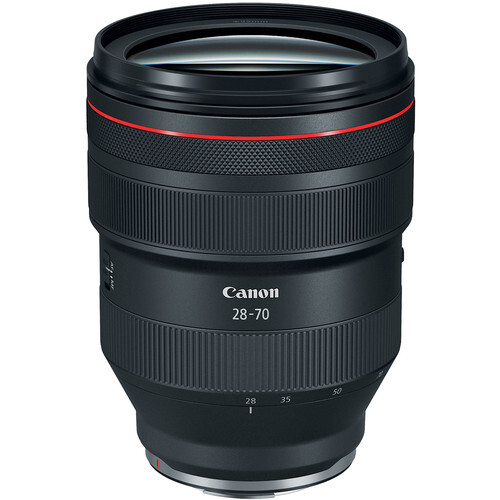
This absence of competition means Canon can maintain premium pricing indefinitely on their halo products. The RF 50mm f/1.2L commands $2,299 because there's literally nowhere else to go for that focal length and aperture combination on RF mount. Professional photographers and serious enthusiasts face a binary choice: pay Canon's asking price or adapt older EF glass, which, while fully functional, lacks the compactness and optical refinements of newer RF designs. Canon has effectively turned every premium lens purchase into a captive transaction.
The psychological impact reaches well beyond the purchases of individuals. Without third-party alternatives creating pricing pressure, Canon controls the entire "aspirational upgrade" narrative within their ecosystem. Every RF shooter looking to step up their glass game must climb Canon's carefully constructed pricing ladder, with no shortcuts available.
Owning the Budget Market Too
Canon's masterstroke wasn't just protecting their premium products but preemptively flooding the budget segment before third parties could establish a foothold. The RF 16mm f/2.8, RF 50mm f/1.8, RF 85mm f/2, and RF 24-105mm f/4-7.1 all deliver solid performance at prices that leave little room for third-party alternatives to gain traction, if they were even allowed to. These lenses aren't groundbreaking, but they're competent and affordable enough to satisfy most entry-level needs and avoid driving people to other systems. Meanwhile, Canon offers unique propositions not available elsewhere at both ends of the spectrum. Consider the RF 28-70mm f/2, which was, until recently, the only f/2 standard zoom full frame lens. At the other end of the spectrum, the RF 800mm f/11 IS STM offers photographers an affordable entry into the world of ultra-long focal lengths.
This strategy essentially weaponized Canon's own product line against potential competition. Where Tamron might typically offer a $400 alternative to Canon's $800 lens, Canon simply released their own $300 option first. They successfully undercut themselves before anyone else could, eliminating most traditional third-party value propositions while maintaining control over the market segment. While some third-party options have emerged, including Sigma's 2023 release of APS-C RF primes, likely under some form of licensing agreement, the third-party presence remains minimal compared to other mounts, with full frame RF lenses particularly locked down.
The Proof in Shipments
The market has delivered its verdict on Canon's RF strategy, and the available data tells a compelling story. Industry analysis suggests Canon maintained the largest share of mirrorless camera shipments in 2024, leading the market while the overall camera industry continued its contraction. Canon didn't just survive the mirrorless transition; they appear to have thrived.
These market gains prove that the RF mount restrictions didn't drive potential customers away as critics predicted. Instead, the approach appears to have driven them deeper into Canon's ecosystem, where every lens purchase generates significantly higher margins for the company. Nikon, despite offering excellent Z-mount cameras and maintaining some third-party compatibility, captured a smaller market share. Sony maintained strong performance, though Canon successfully challenged their early market dominance.
Canon's seamless pivot from DSLR dominance to mirrorless leadership validates their strategic bet on ecosystem control. While other manufacturers struggled with the transition, Canon leveraged their RF mount control to maintain profitability even as unit volumes shifted. Industry analysts suggest that RF camera buyers may purchase additional lenses at higher rates than DSLR buyers historically did, though Canon hasn't released specific data confirming this trend.
The financial impact extends beyond unit shipments to profitability metrics. Canon's imaging division has reported improved operating margins in recent years, with higher per-unit profitability driven by premium RF lens sales and camera pricing. While overall camera market revenue continues declining, Canon's controlled ecosystem allowed them to maintain premium positioning across their entire lineup.
Long-Term Playbook
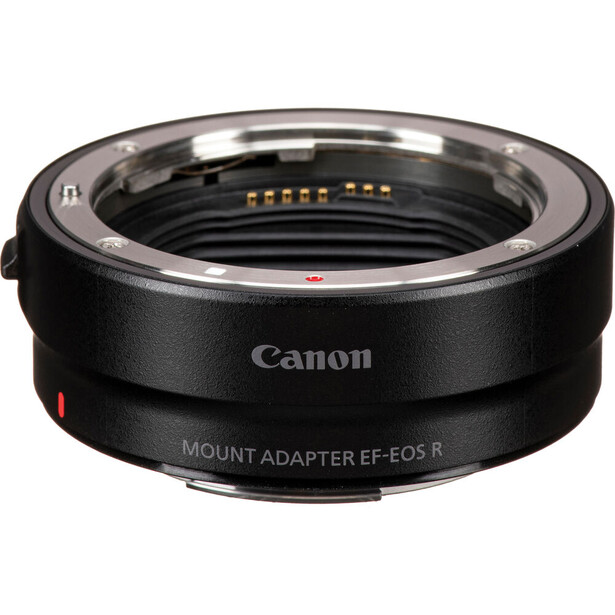
Canon's RF mount approach echoes their most successful historical gambit: the 1987 transition from FD to EF mount, though with important differences. Canon had once forced FD users to start over entirely; with RF, they avoided repeating that mistake by providing seamless EF compatibility through adapters. That earlier FD transition completely abandoned backward compatibility, leaving users with no adapter option. Professional photographers faced an all-or-nothing choice: stay with manual focus FD systems or buy into a completely new electronic mount.
The RF transition proved notably gentler. Canon's EF-to-RF adapters maintain full functionality, including autofocus and image stabilization, allowing photographers to use existing glass without meaningful compromise. This backward compatibility reduced transition friction significantly, enabling photographers to adopt RF bodies while gradually building RF lens collections. In fact, my EF lenses perform better on my EOS R5 than they even did on my 1DX Mark II.
However, significant risks remain. Younger photographers entering the market may gravitate toward Sony's more open ecosystem, especially as social media amplifies the value-conscious mindset of content creators. Canon also faces the ongoing challenge of innovation pace: if they fail to deliver compelling new RF lenses regularly, the locked ecosystem becomes a liability rather than an asset. The strategy only works as long as Canon's first-party glass remains genuinely superior to what competitors might offer.
Conclusion
Canon was accused of walling off the garden when they began controlling RF mount access. Critics predicted market share losses, user defection, and ecosystem stagnation. Photography influencers proclaimed Sony's third-party friendly approach the obvious future. The consensus was clear: Canon had made a strategic error that would cost them dearly.
In hindsight, it may have been the construction of a remarkably profitable fortress. With minimal competition for their high-margin premium glass and a comprehensive stable of budget lenses that preempted third-party alternatives, Canon transformed a widely reviled approach into one of the most successful plays of the mirrorless era. The company didn't just survive the transition from DSLR to mirrorless; they maintained strong profitability while commanding premium pricing across their lens lineup.
Canon's approach validated a broader principle about premium market positioning. While critics focused on the anti-competitive aspects, Canon demonstrated that many photographers actually prefer integrated ecosystems over competitive diversity. Professional users gravitated toward Canon's promise of optimized performance through controlled integration. The peace of mind from single-vendor responsibility often outweighs cost savings from third-party alternatives. Having the momentum of being a longtime market leader helped too, of course. You can't make this play without that.
Whether this fortress can withstand changing market dynamics and generational shifts in photographer preferences remains to be seen. The photography industry's ongoing evolution toward video content, social media integration, and mobile-first workflows may favor different priorities than traditional still photography, but Canon has done a great job of filling out the budget end of their offerings as well. I certainly wouldn't bet against them.
Canon has turned criticism into cash flow. The RF mount restrictions generated higher margins and deeper customer relationships than open systems typically allow. While the photography community initially revolted against Canon's closed approach, the market ultimately validated their strategy through purchasing behavior that speaks louder than forum complaints. The broader lesson extends beyond camera gear to any industry facing ecosystem decisions. Canon demonstrated that controlling the entire customer experience can generate superior profitability even when it attracts criticism. Sometimes, building walls creates more value than tearing them down.




Join the Fstoppers community for free
-
Post comments and join in the discussions
-
Browse the site ad-free
-
Share your work and get featured in the community
-
Compete in the photo contests for fun and prizes
54 Comments
"The lock out was designed to enable Canon and its user base to pay for Canon playing catch up."
Your explanation is the best I've read. Until now, I hadn't understood why Canon had released the R mount, and what their explanation was, when other brands had continued with theirs. And really, on an optical level, R-mount lenses aren't superior to others (which was what Canon argued at the time for the existence of the R mount).
I came from a Canon APS-C DSLR and continued with a Canon full-frame mirrorless. Currently, the R mount is still closed.
If I had to decide again now, I would definitely switch to Sony. Their full-frame cameras are all stabilized, and you have access to many more lenses (from different manufacturers). In fact, with aps-c I always have used Tamron 17-50 F2.8 non stabilized. And now, I probably will try with Tamron 28-75 F2.8, 540 gr weight, and not with Canon 24-70 F2.8 900 gr.
I got tired of Canon's nonsense and did switch so Sony. Never looked back.
I am in the process of doing the same thing. I still use the Canon DSLRs I have had for many years, but bought a Sony mirrorless and a cheap lens for it. I will not buy any more lenses for Canon, and when I have money for lens purchases they will be lenses that work with the Sony mount. The only reason I am switching is because of Canon getting all proprietary about autofocus lenses for their mirrorless mount. When Sigma and Tamron make awesome lenses for Sony and Nikon, but not for Canon, then you know it's time to abandon Canon.