
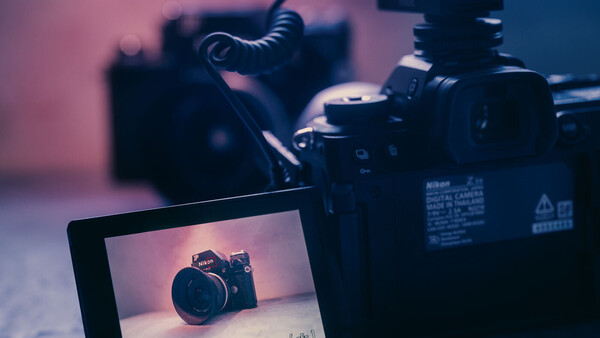
I love Nikon cameras. I've been using them since I bought a secondhand EL2 in 1984. I've owned more Nikon cameras than I care to remember, and just last month, I acquired an F from 1972. So this isn't an anti-Nikon article, nor am I arguing that Nikon makes bad cameras. Quite the opposite. I’m a bit of a fanboy, if I’m completely honest.
Nikon makes some of the best cameras in the world. But there’s something that has been bothering me for a while: I think Nikon has forgotten about the photographer.
The company has become very good at making cameras that do everything. Photography, video, vlogging, streaming, and content creation are increasingly packed into the same body. I understand why. The market has changed, video is enormously important, and there is a huge audience for cameras that can handle both stills and motion.
Nikon's acquisition of RED only reinforced its ambitions in professional video. Its recent attention has leaned heavily in that direction, from cinema lenses to updates for the Nikon ZR. From a business perspective, that makes perfect sense.
But as a photographer, I don't necessarily want my stills camera to do everything. Sometimes I just want it to be a really good camera for taking photographs.
So where is Nikon's photographer's camera?
The obvious answer is the Nikon Z f, and it is probably the closest thing Nikon currently makes to what I have in mind.
It's beautifully retro-styled, with proper brass dials, a shutter speed control, and an ISO dial. It acknowledges something camera manufacturers sometimes seem to forget: photographers care about the physical experience of using a camera.
And yet, beneath that traditional exterior, the Z f is still very much a modern hybrid.
It offers extensive 4K video functionality, 10-bit H.265 recording, N-Log, and a fully articulating rear screen designed in part with video and content creation in mind. Those are useful features for many people. I simply don't need them.
That's the point. Why does every serious camera have to serve every possible kind of user?
Why can't Nikon make one camera that simply says: “This is for photographers.”
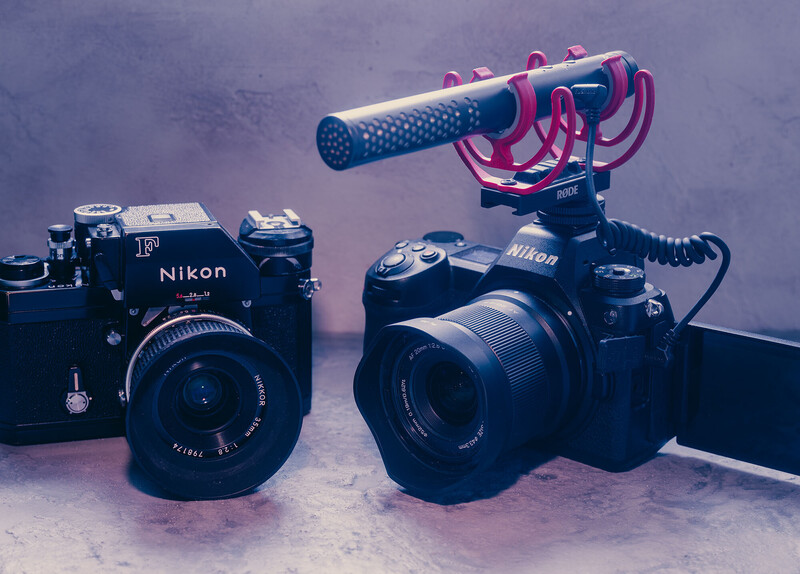
Leica Gets It
This is where I think Leica has been rather clever, and I have a particularly good example sitting on my desk: my Leica M10.
The M10 is a modern digital camera that doesn't shoot video. It has a full frame sensor, excellent image quality, interchangeable lenses, and very little else competing for your attention. I absolutely love it.
It is simply a camera for taking photographs.
After decades of photography, I've discovered that there is something incredibly refreshing about that.
Less Can Be More
One could argue that Leica's digital M cameras are technologically primitive by modern standards. They omit features that have become routine elsewhere, including in-body image stabilization. But they remain highly capable cameras because Leica has been unusually disciplined about deciding what an M camera is supposed to be.
That is the part I think Nikon has missed.
Leica never abandoned film cameras, either. It still understands that there is an audience for cameras built around the act of photography itself rather than around an ever-expanding list of functions.
The broader camera industry seems to operate on the assumption that more functionality automatically makes a camera better: more video modes, more megapixels, more connectivity, more automation, and increasingly more software doing the thinking for you.
Some photographers, myself included, actually want less.
I want to pick up my camera, attach a lens, set the aperture, set the shutter speed, focus on my subject, and take a photograph. That's it. The camera should be a tool, not something constantly reminding me how many other things it can do.
That simplicity makes me want to take photographs.
The Z f Was So Close
That is what makes the Nikon Z f slightly frustrating.
Nikon clearly understands the emotional appeal of a traditional camera. The Z f looks fantastic, its physical controls are satisfying to use, and it draws heavily on Nikon's own photographic history.
It feels like a camera rather than another anonymous box of electronics.
But Nikon still couldn't quite bring itself to make the Z f purely photographic. Underneath the retro styling is another full-featured hybrid system. That makes perfect sense for Nikon's broader market, but it also makes me wonder what the camera could have been if the company had been willing to exercise a little more restraint.
Imagine a Nikon M
This is what I'd like Nikon to make: something deliberately, unapologetically photographic.
Imagine a full frame Nikon with the company's latest sensor and autofocus technology, wrapped in a body inspired by something like the Nikon F2 or even the older rangefinder-style Nikon S cameras. Make it smaller and simpler, in the spirit of Leica's M series, but unmistakably Nikon.
Give me a proper shutter speed dial, an ISO dial, an excellent electronic viewfinder, and either a fixed rear screen or a simple tilting one.
Give me a mechanical shutter. Leave video out entirely. Skip the creator modes and the endless layers of features intended for people who will never use the camera primarily for still photography.
And make it properly. Metal bodywork. Good mechanical controls. Something that feels as though it was designed to last rather than simply to hit a specification and a price point.
I'd buy one.
I suspect plenty of other photographers would too.
Nikon, Give Us a Choice
I'm not asking Nikon to abandon video.
I'm asking Nikon to give photographers a choice.
The company already has the technology, the lenses, the engineering expertise, and one of the richest photographic legacies in the industry. So why not use all of that to make one camera that deliberately does less?
Leica has shown that there is still a market for cameras built around photography rather than content creation. Nikon doesn't need another specification monster to prove what it can do. It needs a camera that remembers what made so many of us love Nikon in the first place. A photographer's camera.
Nikon, if you're listening... Please make one.




Join the Fstoppers community for free
-
Post comments and join in the discussions
-
Browse the site ad-free
-
Share your work and get featured in the community
-
Compete in the photo contests for fun and prizes
93 Comments
And and painted brass for the metal parts. Then you can get that nice worn look after a few years. OM Systems should have done this with their OM3.
Go to Facebook and search for Japan Camera Hunter and scroll down till you find a couple of posts with a brassed Nikon SP.
I agree, My EL2 is black painted brass and after 48 years of use, the brassing is looking gorgeous!
A really good article about Nikon and what we photographers actually expect from Nikon. It’s a little ironic that I “had to” buy a Nikon Z8, yet I haven’t used the 8K feature even once.
It does make me wonder if Nikon might one day go back to its roots and make at least one camera designed primarily for photography. Or will the future of Nikon, like most other brands, be all about hybrid cameras?
Thanks for the comment Den. Nikon, like most brands, are looking at the main market which is content creators.
Hours before this article was published, Nikon announced yet another camera without an EVF, aimed at content creators!
I think it's madness to ignore photographers.
Re that new Nikon camera: The "C" in Z5iiC stands for castrated.
💯
Same here with the Z8 and the 8K. Its a great camera for sure. I have occasionally used the video, but only at resolutions supported by my TV. I see usage for occasional video, but I would really like a photocentric body which is high resolution, full frame and as light weight as possible, and the Z8 is some way away from that.
I'd love it. So would a lot of people. And it will never happen.
The only customers who matter today are "creators" shooting terabytes of video that will be stored in data centers, unwatched, forever.
You, sadly, you are right. I'm tired of being put in the category of "creator" personally, and that's why I've sold a lot of Nikon gear and started investing in Leica. Expensive, but at least they give their customers respect, and sell cameras for photographers.
I have used Canon cameras since 1974. Exchange the name Canon for Nikon in this narrative and you will have my sentiments completely. With the exception of high speed sports almost all of the things that are on the latest and greatest are just complications.
I'll take it even further and submit the Leica M-D is the purest photographers digital cam ever made. No screen, DNG only, adjustments for shutter and iso and aperture on the lens. That's it. No wifi, no BT, just a camera. No demand? This beauty selling for MORE today than when issued 10 yrs ago. I think the ONLY company with the temerity to release a photographer's camera is Pentax. I am excited to see what they're up to with the "reimagined DSLR".
I agree, I was looking for one a few months ago and couldn't find one... so bought a regular M10 and don't turn the screen on. Does the job!
The headline and article mistake "photographer" for "amateur photographer". For working photographers, a weather-sealed body with modern ergonomics is preferable to retro styling (that has no actual function today, but is an aesthetic gimmick). Even video functionality often is something that you simply need for your job assignment, and for which you don't want to carry a second camera.
It's not so much about the retro styling, it's about simplicity. Personally I prefer to hold and use an older camera design like the early Nikons. The smaller form factor make them more convenient for street and travel photography in my opinion. There's no reason they can't be weather-sealed either, OM-Systems manage this. .If you need a camera for both video and stills, you have plenty of choice. I want a stills-only camera. Leica are the only brand offering this today.
I have bought mostly used since 1980, when I bought my first Nikon F2, from KEH. I occasionally by from them, but mostly these days from eBay.
So to me it matters not what is being offered new today, and Leica is certainly out of my jurisdiction. I bought my first Nikon Df in 2021, when the price for an excellent condition, low shutter count example had dropped to half the new price. The Df gives me everything I want in a digital camera. Including no video!
The Df is a fantastic camera, it's still relevant today. 👍
No function? On my Df using either AF-D or AiS lenses, I have dedicated dials for ISO, Exp Comp, shutter speed and aperture. Changes can be made to any nearly instantly. I don't have direct my eyes to the left, push a button, then look at a small window while I turn a dial. I shot SLRs for 40 years, so the "retro" design works beautifully for me. If you started photography with the typical modern design, I understand it is more comfortable for you. But no need to disparage the original design as "aesthetic gimmick".
Are you shooting for a living? If yes, then the possibility to quickly switch between camera presets/user modes is essential, and a dial user interface makes that impossible.
I've been shooting for 40 years for a living, I have yet to use presets and user modes. We're all different.
Use a hammer with no nail puller, because for 40 years "as a professional" all you do is drive nails. My last camera was the D810. Great quality, didn't want to take a loss on selling stuff, but seriously... Did mostly real estate. Inside I wanted one set of settings, outside in high contrast, a completely different group of settings, and then shooting astro photography, yet again. Nikon is STUPID. 4 shooting banks, 4 settings banks, yet no simple, let me set EVERYTHING including playback settings and DEFAULT to my originally programmed settings. Canon got that right, but I didn't want to change everything, but no more money to Nikon. And Video, a must! Not because I shoot a lot of video, but photographing a lightening storm is so much easier in 4k video, then grab the frame I want, AND I also have a video.
Retro dials ARE a gimmick. Being used to it doesn't mean that PASM isn't superior in every way. It is much easier to adjust everything while in the viewfinder. Retro dials pull you out of the viewfinder. Yeah those old dials where the only thing those old cameras had, but cameras made great strides over the decades.
Interesting perspective. I find having no menus, and just a simple physical shutter speed dial, and aperture and focus ring on a lens, is less distracting. I suppose having learnt photography on old simple film cameras, It's second nature now to be looking through a viewfinder while turning the shutter speed dial or aperture ring if necessary.
Even if you're not from the analogue world, this is a skill M shooters learn quickly.
You are right, retro dials are such a gimmick. I made the mistake of getting a Fuji XT-2 with these dials and realized it just forced you to have to leave the viewfinder and fuss around. The dials are for people that want a cool looking camera, not one that is actually useful.
The cameras we have today are so much better than anything from the past when it comes to photography or video. I have never shot any video on my cameras before, but it sure does not bother me to have the ability to do so if I want to. It does not distract from taking photos. Retro style dials distract from taking photos... Kind of weird to complain about a camera having too many function while wanting to have distracting dials.
I'd also consider myself an absolute Nikon fan. I've been shooting for decades, but I can't quite wrap my head around this complaint. If someone raves about the Leica system so much and it offers everything they could ever want, there's really only one solution: sell your Nikon gear, switch camps, and move over to Leica.
Dictating to a company how to design a product based on personal wishes strikes me as very odd. With that kind of philosophy, every camera manufacturer would end up shutting down production. It's simply impossible to cater to every single customer's desires.
I also don't get being upset because a camera has features you don't need—just don't use them, life can be that simple. And again: switch to the Leica camp, and your headaches will go away."
The point is Nikon are missing a huge opportunity with photographers because they decided to only go down the content creator rabbit hole. Many photographers are moving to Leica cameras because of this. Me included. Want to buy a Z6iii?
I use my Z9 … and i‘m very happy! :-)
I have a Z9 also, I bought it for filmmaking. It's the best hybrid camera on the market. I don't just do photography! 👍
I am retro, and I like my cameras that way, too. So the Nikon Df suits me just fine. Only 16MP you say? I have not seen a need for more. I view my shots on a 14" laptop screen,or my auxiliary 27" screen. Even on a 55" TV they still look sharp! Why would I want the larger file sizes of a 45MP camera? 45MP out-resolves most lenses. In any case 16MP is as good as all but the very finest grain films in 35mm, such as Technical Pan.
Pointless whinging. My R5 will do video…I think. I don’t know, I’ve never used it. It must never “get in my way”, because I don’t even remember it has that capability.
Just think how much lighter it would be without all that extra software and that one red button, though. 🙄
Pointless whinging? It's just an opinion based on facts. There are many photographers out there who don't want video and all the AI-driven computer software that gets stuffed into hybrid cameras. A camera can be smaller if it's just made for stills and not video.
With mirrorless, the hardware, for all intents and purposed is the same. If you want to argue that you wished they would spend the R&D money they spend on video on improving software and UI instead, I more than concur.
Not true. Cameras with video are bigger than they would be if they didn't have video. As video keeps getting higher quality, with 8k etc., more space is required to accommodate a thermal management system—cooling fans and heat sink etc. And bigger processors and space for IBIS doesn't help either.
Nikon have a great example. Compare the Z6, which had very basic video, with the new Z6iii, which has 6k and 120bit raw. The Z6iii is bigger because of it.
Again, not arguing, just sharing the facts. 👍
Your mirrorless camera wouldn't even work - i.e. it would have no live view (neither on the display, nor on the EVF) without video functionality. Neither would you have autofocus, real-time auto exposure/exposure metering or real-time auto white balance.
All the video record button does is save the camera's already existing, indispensable, internal video stream to the camera's memory card.
People still don't seem to fully grasp how mirrorless camera technology fundamentally differs from SLRs.
A mirrorless camera is technically/internally a video camera that can save single frames as stills. If you want a "pure photography" camera, you'd need to go back to DSLRs or real digital rangefinders (i.e. Leica Ms).
Of course you can build a mirrorless camera that pretends not to be a video camera, but that would be pure user interface cosmetics.
I'll take a DSLR. The D700 is still a fantastic and relevant camera. If only it were less chunky, it would be a great EDC.
Obviously, there is a market for hybrid photo/video cameras. One segment is the lower-end creator (One Z5ii, a phone and some wireless mic), another is the working photographer with clients who frequently ask for "just one simple unedited video of that speech at the event) They are happy to have some video functionality in their professional photo camera.
And then there are clients who want top-notch quality photos and videos. They would never consider a photographer who does "a bit of video on the side". These photographers need cameras optimised for the act of taking photos (brilliant EVF, haptics that work). If their camera can be switched to video and the video functions don't take away from the photographic functionality, they don't care. I think I have never had my Sony A1II in video mode.
But it's not just Nikon, is it! They're all making ubiquitous all-rounder cameras: Sony, Canon. Perhaps Fuji has nailed it with its X100. That handles like a photographer's camera ought.
Whilst I'm at it, I really struggle with the term 'mirrorless camera' - naming a camera after a feature it doesn't have seems a curious concept. Rangefinder, SLR and DSLR all accurately described their respective camera types by identifying a defining feature. But naming a camera after its non-feature. Sheesh! In twenty years or so time, young photographers will be wondering what on earth this strange category alludes to - and why anyone ever thought a mirror belonged in a camera in the first place.
Let's think of a defining feature that distinguishes these cameras from other categories. How about an EVSLR - Electronic View Single Lens Reflex?
I must go. I have to take my horseless vehicle to the garage for a service.
I agree with the nonsense of mirrorless as a descriptor. But your suggestion of Electronic View Single Lens Reflex isn't quite right, because a reflex camera, whether single or twin, uses a mirror, which is where the "reflex" comes from. And "single lens" was used to distinguish from twin lens, which came before. My suggestion is ILEV: Interchangeable Lens Electronic Viewfinder.
Great comment!
Fuji doesn't get it either the X100VI comes with 6.2K video. There is a large contingent in the Fujifilm community that hope that if there is an X-Pro6, that its a stills only camera. But I fear we're pissing into the wind.
I've considered moving to Leica as well.
I've not used an X1000 series camera but have a lot of respect for them. I agree about taking out video, ll the guys I know who use them are shooting street and travel and don't need the video features. Many have moved to Leica for that reason.
This off topics tangent sounds more fun, so let me add my two penneth worth. What did we get with mirrorless cameras? We got the ability to compose directly off the recording media itself, the sensor. What you see is what you get, sort of. In that sense, it harks back to the old View Cameras. So, how about we call them Sensor View Cameras (SVC)?
The Zf should have required the use of the large dials to adjust Shutter and ISO. Most photographers don't use those dials at all. The dumbest thing about the dials is that one turns clockwise to add light and the other dial turns counter clockwise to accomplish the same task. On the Leica M10, the shutter speed dial and the ISO dials both turn in the same direction to add light.
The more I look at the Zf, the more I realise it's a fashion accessory for "content creators" who like to look cool and retro. It's very disappointing.
This is nuts. Nikon created the Df for photographers, and even advertised it that way. "Pure photography." And it was panned by many, in large part because it had no video. So Nikon responds to that criticism, and creates the Zf, retro like the Df, but includes video. What happens? It gets panned because it does have video. Give me a break.
Give you a break? I would say give photographers a break... from video.
The Df came out in a different time. Nikon hadn't committed to getting serious about video, and didn't have a range of cinema and content creator cameras. They still made cameras for photographers.
Yes. So that's what I use. Along with a bunch of AiS lenses, that also give the tactile feel, and control, that I want.
👌 👍
Your issue with camera gear is pretty much universal to every product. I was thinking about it a moment ago as I was organizing my camera bag after an outing yesterday.... more pockets and zippers than I can imagine what to do with, and enough straps to strangle myself, which always get in the way of simply opening and closing the main compartment of the bag. And when was the last time you could go into a fast food joint, say a place like Taco Bell, and not be besieged with choices? I suspect marketing departments have decided that if a little bit is good, more is better. And most are clueless as to how annoying that can be.
As long as I've got control over shutter, aperture and ISO, I'm happy. My Nikon D800 has video capability, but I've never bothered to look for it. My camera tells you how much I'm into the newest, latest and greatest. It follows my instructions perfectly and that's all I want out of a camera. September 24, 2026... Nikon D800E, 24-120 F/4 lens at 55mm, F/16, 1/20 second, 100 ISO, Induro tripod. One of my quiet places.