

Nikon has released some of the most iconic cameras, including the Nikon F in 1959 and the D1 in 1999, the first digital camera to replace film for working professionals. Occasionally, even the legends miss.
For years, Nikon has been a highly respected camera brand among professional and amateur photographers. Even though Nikon has released some of the most iconic cameras of their time, they have also had a few flops — as one might say, they were not necessarily bad cameras. Some were just ahead of their time, and others simply missed the mark with consumers. Some cameras failed due to timing, pricing, design, or market shifts. These "flops" are still an interesting part of Nikon's willingness to experiment, but they have made mistakes by misreading the market or arriving a little too late. Here are five cameras that Nikon probably doesn't bring up at family gatherings.

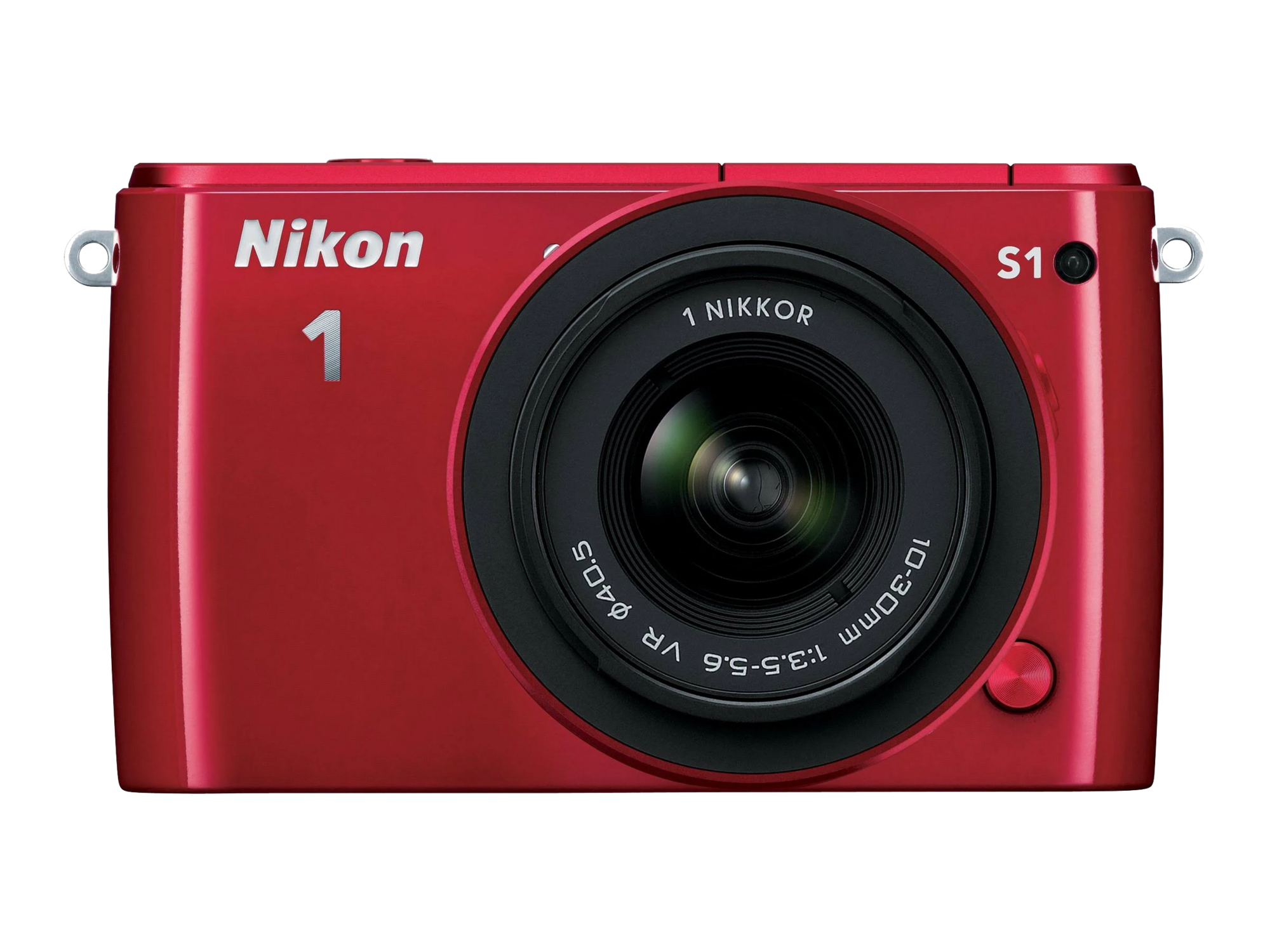

Nikon 1 Series
Before mirrorless cameras were mainstream and Nikon had released the Z mount, there was the Nikon 1 series. Introduced in September 2011, the 1 series was Nikon's entry into the mirrorless world, including the Nikon 1 J1 and the Nikon V1. Sporting a 1-inch CX sensor, the main goal was to create a camera that was stylish, lightweight, and compact as an alternative to a bulky DSLR without sacrificing the ability to change lenses. The cameras were designed for lifestyle and everyday moments; they introduced Motion Snapshot, a mix of slow-motion video and still images. Then there was Smart Photo Selector, which was designed to pick out the best image from a high-speed burst.
Nikon was targeting two audiences with the Nikon 1 series. The J series was introduced to capture beginner and enthusiast photographers, while the V1 series was for photographers who wanted better-quality images than a point-and-shoot camera but more portability than a DSLR. At its release, it was marketed as having the world's fastest autofocus and the highest speed, with continuous shooting up to 60 frames per second. A new proprietary Nikon 1 mount was introduced, but an FT-1 adapter was released, allowing users to use the F-mount on the series. The series included the J1, J2, J3, J4, and J5 for consumers and the V1, V2, and V3 for advanced users. Nikon also introduced the S1 and S2 as entry-level models and included the AW1, a waterproof camera.
Initially, the series was praised for its autofocus speed and 10-megapixel sensor, but criticized for poor low-light performance compared to other cameras available at the time. This was just the start of the demise of the Nikon 1 series. As smartphones improved, the niche for small-sensor, higher-priced cameras began to shrink, and many users were transitioning to cameras in their phones or larger Micro Four Thirds systems. Nikon pulled the plug on the series in July 2018, before the focus shifted to the full frame Z series.
Although the camera was widely considered a failure, the Nikon 1 series had a profound impact on the industry. It was ahead of its time in focusing speed and helped popularize the 1-inch sensor camera, which is today considered the standard in premium compact cameras.
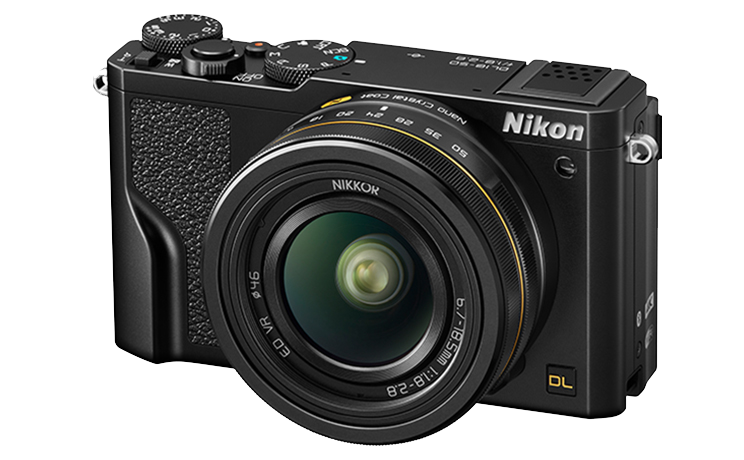
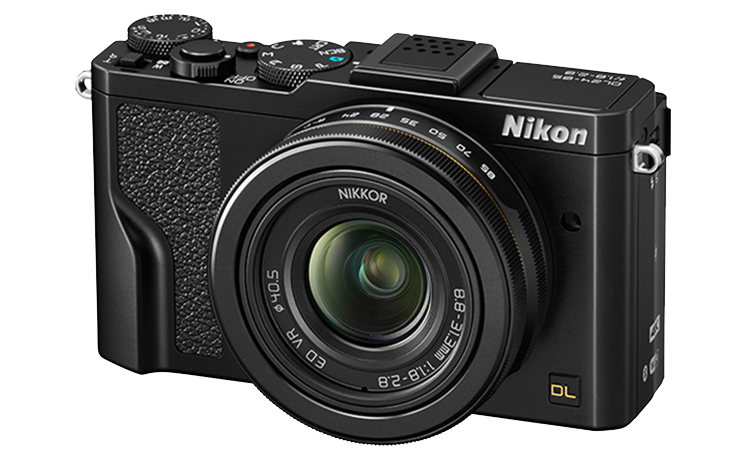
Nikon DL Series
It failed before it had a chance, was never released to the public, and was canceled for several reasons. The Nikon DL Series was aimed at professional photographers needing a small, pocketable "walk-around" camera, as well as high-end hobbyists. Announced in February 2016 with an initial release planned for June 2016, it was ultimately canceled in February 2017 and never brought to market. The primary reason for cancellation was an issue with the camera's integrated circuit for image processing. Due to its delayed release, development costs increased greatly, and the spotlight turned to the decline of compact cameras; it was deemed the series would not be profitable. The delay also allowed other competitors, especially Sony, to gain a foothold on the market.
Nikon announced a trio of cameras: the DL18-50 f/1.8-2.8, aimed at ultra-wide-angle photography; the DL24-85 f/1.8-2.8, a versatile "daily" camera for street photography and portraits; and the DL24-500 f/2.8-5.6, a "bridge"-style camera with a long telephoto zoom for wildlife or travel. Each camera sported the following specifications:
- 20.8-megapixel 1-inch CMOS sensor
- EXPEED 6A image processing
- 4K video recording at 30p
- 20 fps continuous shooting with autofocus
- SnapBridge connectivity, allowing the user to maintain a continuous Bluetooth connection to their smartphone
Despite being highly anticipated in June 2016, the DL Series was dead on arrival due to profitability and technical issues, as well as rising costs. One has to wonder what success these cameras could have had if they had made it to market.
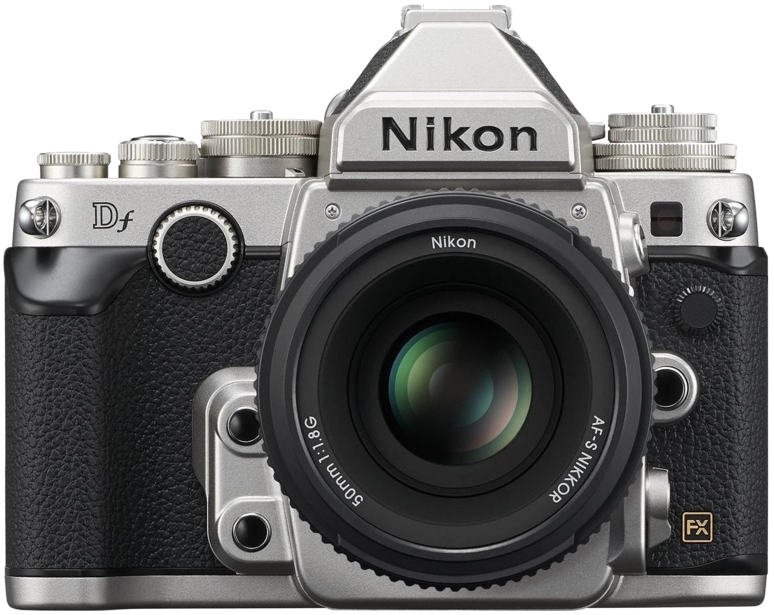
Nikon DF
A camera well ahead of its time in styling, and too early to market for consumers. The Nikon Df was officially announced in November 2013. It was marketed and designed as a camera that bridged the gap between traditional film and digital photography, targeting enthusiasts who appreciated classic aesthetics and tactile controls. The Df represented a blend of old and new. It was to have a retro feel, mimicking the appearance of Nikon's classic FM, FM2, FE, and FA cameras from the 1970s through the 1980s. Instead of a menu-driven camera, it had tactile controls and featured large metal mechanical dials for setting shutter speed, ISO, and exposure compensation.
The Nikon Df incorporated the same 16.2-megapixel full frame sensor as the Nikon D4, the flagship DSLR of its time, delivering excellent low-light photos. It also featured an adjustable meter coupling lever — a first for a Nikon DSLR — enabling compatibility with nearly all Nikkor lenses from 1959 onward, including non-AI lenses. Upon release, it was Nikon's lightest and smallest full frame DSLR, featuring weather sealing and a magnesium-alloy body. Nikon took a big risk by releasing the camera without video functions or a built-in flash, a very bold decision on their part. Initially, the camera received mixed reviews due to the features it lacked compared with competitors.
In the end, the Nikon Df was criticized for its price. Priced at $2,700.00, it was positioned too close to the Nikon D800, which offered a 36-megapixel sensor, while the Df offered much lower resolution, no video, and a simpler autofocus system. Nikon users were torn on the camera's design focus. While it was compatible with almost any vintage Nikkor lens, most concluded it was more aesthetic than functional, and users reported poor handling. Ultimately, it was a very niche camera that alienated some photographers — a perfect example of being released too early to market. In 2025, Nikon found significant success with the Nikon Zf, a new retro-styled camera that was marketed more effectively to photographers and clearly positioned as a stills-focused camera.


Nikon KeyMission
Officially released in October 2016, the KeyMission line was Nikon's entry into the competitive action camera market. Nikon aimed for KeyMission to be an industry leader, especially among high-end consumers seeking a unique perspective, and the lineup was intended to challenge GoPro. Three cameras were released under the KeyMission line:
- KeyMission 360, the flagship model that lets users capture 360-degree 4K video
- KeyMission 170, a camera similar to GoPro
- KeyMission 80, a small wearable camera that captures 1080p video
The initial excitement was strong, and the cameras gained popularity for their exceptional durability, offering waterproof, shockproof, and freeze-proof features without extra housings. However, this hype was short-lived, as Nikon discontinued the lineup just three years after its launch. Several issues led to the discontinuation. The biggest failure was connectivity. The SnapBridge app was plagued by issues; it often refused to connect and regularly lost connection.
The flagship KeyMission 360 often produced noticeable stitching lines where the two cameras joined. The user experience was no better; users often reported it was difficult to set up and that the menus were complex, and Nikon failed to provide timely support or to release app or firmware updates. In the end, the cameras were high-priced in an already competitive and saturated market. Many believed the cameras were a rushed product, among other reasons they were ultimately removed from store shelves.
Nikon Coolpix A
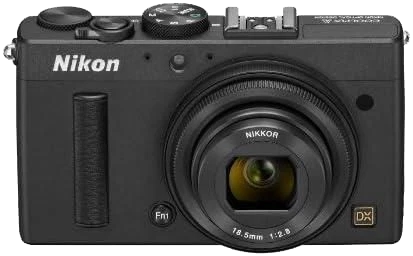
The Nikon Coolpix A was released as Nikon's first premium compact camera, featuring an APS-C sensor, and was announced in March 2013. It also included a fixed 18.5mm (28mm equivalent) f/2.8 lens. Designed for enthusiasts, it offered DSLR-quality images in a pocketable camera featuring a 16.2-megapixel sensor — the same sensor used in the Nikon D7000. Its purpose was to compete in the premium compact camera market. The camera was well regarded for image quality, but its demise was due to several factors.
The Coolpix A faced stiff competition from the Ricoh GR, which was released not long after the Coolpix A, priced $300.00 less than the Nikon; it was also lighter and had a better user interface. Many users were unhappy with the camera's slower autofocus compared to the rapidly evolving mirrorless cameras. Another complaint was the fixed-lens limitation, which made the camera less versatile for a premium model. Because the camera was considered undesirable, Nikon never released a successor to the Nikon Coolpix A.
In the End
In the end, Nikon has always been a well-respected manufacturer in the camera industry and still is. It has also produced cameras that were ahead of their time and released too early, and it has been plagued by software and mechanical issues over the years. Many cameras had their strengths, but users were ready to move on and add them to the archives. Comment below and let me know what cameras you think have fallen off abruptly.


Join the Fstoppers community for free
-
Post comments and join in the discussions
-
Browse the site ad-free
-
Share your work and get featured in the community
-
Compete in the photo contests for fun and prizes
21 Comments
For learning, continuous improvement and progress, you have to be willing to experiment and try. For technical stuff this can often be kept indoors, but for marketing it sometimes has to be out in the open. Kudos to Nikon for not being afraid to experiment and to be willing to accept that experiments can also have negative outcomes! They wouldn't be where they are now if they'd always played it safe. Just imagine what we would all miss out on...
Well, I guess I fit the niche .. lol. I have a Df and it became my main go to!! Had no use for video. In my world as a pro photographer that doesn't mean you're also a Videographer. They are two separate art forms and skill sets that each take years of experience to perfect .. if that's even possible, relatively speaking 🥲
I had a D800 that I used for Landscape imagery or Studio work on a tripod only. It's completely impractical in my opinion, as an off tripod tool simply because of pixel density. Some will argue that point but whatever 🙄 .
My only complaint with the Df given it's usage is that the right side leatherette is loose and coming off. I wanted to get that taken care of although I now have a Zf. Unfortunately, the Df doesn't see much use but it still functions well enough. And th Zf has never seen video usage 😂
If Nikon had put a viewfinder on the J5 it would have been a winner. The lenses were better than good. In my memory it was close to silent. That sensor, by Sony I think, was good enough especially with the fast single length lenses and now even better with modern raw processing software. You could carry a body and 4 lenses all day. I have many outstanding photos taken with Nikon 1 cameras. They were so close to great.
yes, a viewfinder on the J5 would have ben good!
My desire was for a V4. My design for it was: J5 sensor, true selfie screen (like the J5), two multipurpose accessory slots, so for instance you could mount both the EVF and the GPS unit, keep the grip connections, and finally, available in silver finish, too. Unfortunately, Nikon did not consult me.
I wish that Nikon would release a digital S3 with a high MP APS-C to compete with Fujifilm. They already have a great line-up of APS-C lenses and the S3 styling is awesome!
I will always have a place in my heart for the J1. It went with me to many live events, concerts, and festivals. Its appearance was benign, so security never gave it a second look. I had the upgraded telephoto lens, and often constructed DIY diffusers from plastic cups and ice bags. I pushed that little camera to edge of its abilities, and it did not disappoint. It's true that the sensor was challenged in low light. Anything over 800 was grainy beyond repair. However, I attribute that camera to my learning to bring images back from underexposure.
Before I photographed events, I worked them as a bar manager. I had to have something that could be lost, stolen, or damaged. That J1 has seen some stuff. It still has blood on it, and I'm not sure if it's mine. It sits on a shelf now, but I can't imagine that I will ever get rid of it.
And then there was the D600. A project error let the shutter throw lubricant at the sensor, which had to be cleaned each few thousands of pictures. After about a year and half it was substituted by the D610.
I almost added that.
Nikon lost my custom the very second that their proprietary 10 pin socket pushed into the body of my D800 - a well-documented weakness that Nikon refused to recognise and accept responsibility for. Then the rear 'joystick' button went floppy and lost it's tactile feel. That was after having to return my first sample of D800 due to the already acknowledged AF misalignment issue.
In fact Nikon's DSLR AF has never been reliable, even with the AF 'fine-tune' software fudge. With zoom lenses it was hopeless, only allowing barely good enough AF at one focal length setting of the lens.
There was also some weirdness going on with the D800's metering. In that it held a previous reading for a fraction of a second and had a definite tendency to overexposure and blowing highlights.
My experience with the D800 was saddening after being a loyal Nikon user for over 25 years.
I'm now a Sony mirrorless shooter, admittedly with some misgivings over Sony's UI, but at least the AF and exposure metering have been utterly reliable, and as yet none of the controls, buttons or sockets have fallen apart or failed!
The D800 came out 14 years ago - you've been steamed about this for a long time! I've had good results from Nikon autofocus on the D1, D3s, D200, D500, and D5. DSLR autofocus works equally well with primes or zooms in my experience. My Nikon bodies are getting old now and I'm not seeing issues with controls, buttons, or sockets. I'm camera agnostic, shooting autofocus with Minolta, Canon, and Sony as well. Glad to hear the Sony is meeting your needs.
Reviving the DL line right now would be killer.
Yes, it would be!
Thought the same thing. I feel like the Zf carries the same flavor. Honestly, the Nikon DL was a beautiful camera in my opinion. Maybe a little too early as the market blew up when Fuji released the X series around that time and a year or so later and of course it lacked the viewfinder, so maybe that was it?
This was actually a very helpful read. I recently discovered something related to this topic that explained it in a much simpler way and honestly changed my understanding. Glad I found this discussion!카드깡
Thanks!
The D1 was the first factory integrated DSLR for photo journalists. I'd say the D3 was the first digital camera to replace film for working professionals in other fields of photography.
How about the D600. I was given my 1st Nikon in 1980, an FG. I was Nikon for almost 40 years. I purchased several film and digital bodies and many lenses. This was until Nikon Canada refused to deal with the issues I had with my new D600. After a couple of years of hastle I switched to Canon.
Should have added that one!
Your so-called flops are doing quite well in the used market. The Df is only a "flop" to those who are not a part of its target market. For those of us who make up its target market, it was what we dreamed Nikon would make. Just look for articles and videos on the Df - you will find many more praising it than panning it nowadays.
All the Nikon 1 cameras had great IQ, and the last models (V3 and J5) are superlative. The V series could do 40 FPS with continuous AF, and VR, before the Zs came out. 11 different models over an eight year production run does not sound like a flop to me.
Agreed. I think many were just a little ahead if the times.