
After three decades as a professional filmmaker and photographer, I have learned a lot of things. Most of them, I learned the hard way.
So, in today's article I'm going to give you five lessons I've learned over the course of a long career when it comes to what really matters, and what doesn't, when it comes to buying gear.
Workflow Is Way More Important Than Specs
Whenever a new product is announced, we are greeted with a million and one thinkpieces on why you aren't a real artist unless you own one of these cameras, lights, lenses, etc. Usually those hype pieces center around one or two killer specs that seem to prove objectively that the new tool is far superior to the one already in your possession.
And, to be fair, that may actually be true. If you have signed client contracts demanding a 100 MP file and your camera only shoots 24 MP, then you have an objective problem that needs to be solved. If that's not the case, and you're just going for more megapixels because someone like me convinced you more is more in a camera review, then the endless search for specs quite often pays off far less than was promised.
I've lived this reality far more than I wish to admit. I've bought a new camera that, objectively speaking, had far more to offer than my current system. In my mind, this new tool was going to completely revolutionize the way I worked and magically provide me with a much better end result. In reality, what happened, almost inevitably, is that, after trying to force-feed that new tool into my already established workflow, I would discover that having this new tool with all the bells and whistles was actually having a negative impact on my output instead of a positive one.
It's not that the new tool wasn't objectively better than the old one. But, because of the long-established way that I personally like to work, the added benefits of the new tool turned out not to be a significant upgrade over the old way of working. Worse yet, many of these new tools necessitated my having to completely alter my way of working to get the best out of them. So I'd find myself planning my shoots around the strengths of the new camera instead of planning the best shoot I could imagine and picking the camera that best suits my vision. In other words, I'd gotten it backwards — letting the tool determine the shoot instead of the other way around.
Whenever I've done this, the same result ensues. I try to make myself adjust to the new tool for a few months, but then gradually return to the previous way of working, often using the previous tool. And that brand-new shiny toy that was supposed to revolutionize my world just ends up collecting dust on the shelf or being sold on the used market at a steep discount.
The mistake I was making was not in misjudging the quality of the product. The mistake was in prioritizing the specs promised by the new product over the actual reality of my workflow. Cameras will come and go, and workflows will evolve. But certain base characteristics of my workflow are deeply rooted in who I am as a human being. Those characteristics play out as much in my filmmaking workflow as in how I shop for groceries or choose my friends. Some of those personal preferences are just baked in. And, to get the most out of myself creatively, I need to prioritize finding the right tool to fit how I like to work.

Spending More Can Actually Save You Money
This one can be counterintuitive. Oh, how many times have I dropped money on a product that I didn't really need just because it went on sale? Or, how many times did I buy a discount version of a certain tool, figuring it would save me cash, only to be forced to buy that same product again and again because the cheap one I bought kept breaking?
To make my point, take for example my beloved Nikon Z9. The Z9 is Nikon's flagship camera. Thus, unsurprisingly, it's the most expensive toy they make. For years, I never bought the "flagship" of any brand because I didn't think I really needed it. The Z9 was really the first time I invested that kind of money all at once.
But what five years of owning that camera has taught me is that sometimes spending more up front can actually cost you less in the long run. Things like a durable build come into play. The product is built like a tank and is far less prone to trips to the repair shop. But, more importantly than that, because the Z9 is the company flagship, Nikon pretty much gives it everything it's got. What that translates into, in terms of buying power, is that I haven't felt the need to buy a million and one accessories in order to make the Z9 into the "camera I really wanted." Everything I could dream of is already there.
So, while other camera bodies were less expensive, I would often find myself going broke because that lower price tag also came with the hidden requirement that I needed to buy Accessory A or Accessory B to really get it working the way I wanted. By the time I got to Accessory Z, I realized that I had spent three times as much on the cheaper model as compared to what I spent up front getting everything all at once in the Z9.
I realize that I was fortunate to be in a position to spend that much at once to buy quality up front. But the objective numbers over the last five years have shown that I have spent far less on this camera than any other camera — even cameras that were a third of the price up front. Spending more on the top of the line, ironically, saved me money.
Sometimes Going With The Industry Standard Is More Than Just Following Sheep
Okay, this one might be controversial. Let me start by saying that I understand. I am what is commonly referred to as a cheapskate. I don't like overspending if I don't have to. And, in the film industry especially, there is something called the "filmmaker tax." Essentially, everything you buy with the word "cinema" in the title tends to cost 10 times more than it would at a basic hardware store. Quite honestly, it's frustrating. Why in the heck does everybody feel the need to buy this product from Brand X when there are 100 other items on Amazon that do the same thing for a fraction of the price?
And, normally, I am 100% the person who would be saying that. There is, however, one instance where following the crowd can actually be a better buying decision.
I'll give you an example. I just recently invested in a new set of wireless video transmitters and receivers from Teradek. Now, if you know anything about video transmission systems, you'll know that they are, ahem, expensive. Like, really expensive.
Because I like to save money, I'd already purchased a more prosumer-grade wireless video transmission system in previous years, which I have used on a number of films and commercial projects. And those products are great. The problem started to come in as the size and complexity of my sets grew and grew. It's not that my prosumer transmission system suddenly stopped working. But, as that transmission system was suddenly forced to integrate with an expanding number of crew members all running other, more industry-standard systems, the mismatch had begun having a negative impact on efficiency.
The Teradek systems' use of radio frequency technology instead of a packet-based transmission made a huge difference even beyond providing the near-zero-latency transmission my 1st AC needed. Because so many other professional workflows rely on Teradek as a standard platform, it's simply easier to integrate into a workflow with other professionals at that level.
As I said, the prosumer system I had been working with was plenty for one-man-band work or smaller sets. But, as my sets grew, my needs grew. It was no longer just a matter of looking at capabilities in a vacuum. It was considering how the product would work within a professional workflow with teammates not always familiar with my prosumer system. It was figuring out which tools were easier to supplement with rental gear when needed. Because the Teradek is so widely adopted, finding rental units when I need to expand my reach for a particular project, or purchasing used but still compatible units on the secondhand market, makes the integration flawless.
Like the previous category, this did mean that I had to spend more than I would have liked. But, long-term, having a workflow better integrated with the industry standard actually improves efficiency and output.
Newer Does Not Necessarily Mean Better
As someone who writes for Fstoppers and teaches film courses as a side hustle, I get asked what camera someone should buy quite a lot. My standard response is to try to suss out the person's needs before making a recommendation. There is no such thing as a perfect camera — only the perfect tool for a job. So I need to know about the person and use case before suggesting a specific model.
But the second thing — well, really a statement that I always make — is to "buy used." I get that buying a secondhand camera isn't nearly as brag-worthy as buying the hottest new photographic tool in the vlogosphere. Not many YouTubers are making hype videos about some old camera that was released 10 years ago and you found in the bargain bin.
But, cliché as it may sound, a camera is just a tool. And a hammer doesn't stop being able to drive nails just because it's old. As stated before, newer cameras do often come with new bells and whistles that are objective improvements. But what does any of that matter if you don't use any of the new features?
The vast majority of core features of camera gear haven't really advanced that much in the last decade as to make older cameras unusable. Again, sure, things like autofocus speed, resolution, etc. have improved. But basics like being able to generate a high-quality 4K image (or a base 24 MP still) can be done with good technique and most any camera body you can find these days. In real-world use — not hypothetical lab tests — getting these baseline specs doesn't have to cost a lot of money and doesn't require an upgrade every time a new model is released.
Some of the best, if not most of the best, value tools in my kit are ones that I bought either secondhand or as older models purchased at a clearance price just after the newer models were released. These purchases may not have been worthy of a full brag article. But they are the tools that actually get used day in and day out in my professional workflow. And, because I was willing to forego the newest toys to focus on the ones that fit the base needs of my workflow, I was able to improve my output for far less money than obsessing over having the latest and greatest.
If you're looking to sharpen your skills to get more out of whatever camera you're using, The Well-Rounded Photographer: 8 Instructors Teach 8 Genres of Photography is a great place to start.
Minimize To Maximize
Sometimes less is more. It's a cliché, but that's only because it's true. I have a good 40 to 50 pairs of sneakers. I only have two feet. Why in the heck do I need that many pairs of shoes when only about five or six of those pairs get any kind of regular use?
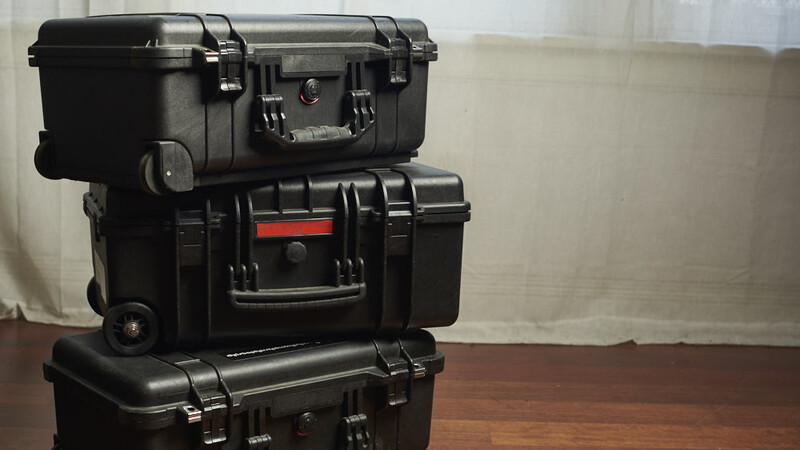
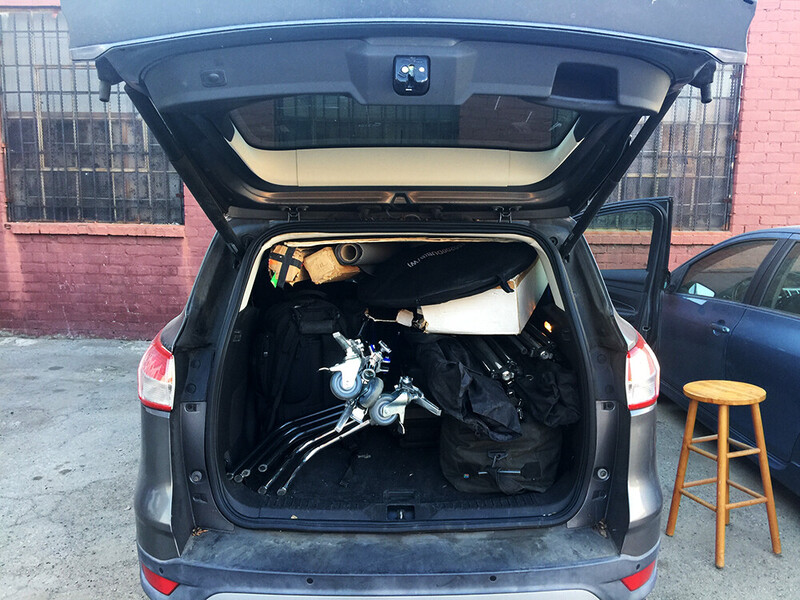
Recently I did a bit of reorganizing in my office. Instead of keeping a plethora of pre-packed camera cases, I decided to, instead, build out a rolling workstation with drawers. What was happening with my pre-packed camera cases is that I was constantly having to unpack and repack them depending on specific job needs. So my idea of having the camera bag always ready to go was actually adding an additional step prior to every shoot. Instead, I decided to split up job categories into separate drawers — rigging, monitoring, audio, etc. — and just pull what's needed. Now, I have a series of empty Pelican cases, and each gets built with only the required components for that particular job, with tools pulled from the workstation. This has kept my office cleaner and has allowed me to carry less weight to set since I'm only packing what I need.
But, of course, this reorganization has also had a second side benefit. By centralizing the important components inside that workstation, it's become clear how many tools I've invested in over the years that didn't even rank inclusion and have instead been relegated to various storage spaces throughout the house.
It's not that those items didn't live up to their specs. It's that, in the grand scheme of things, I can only use so many tools at the same time. If I were to do an inventory of everything that didn't make it into that main depot, it would represent thousands of dollars in money that didn't need to be spent.
True, I had high hopes for all of those items when I bought them, and I didn't intentionally waste money. But the new centralized system makes things visibly clear. Sometimes, less is more.




1 Comment
Really great points, I've experienced most. "Minimizing to maximize," is definitely my favorite