
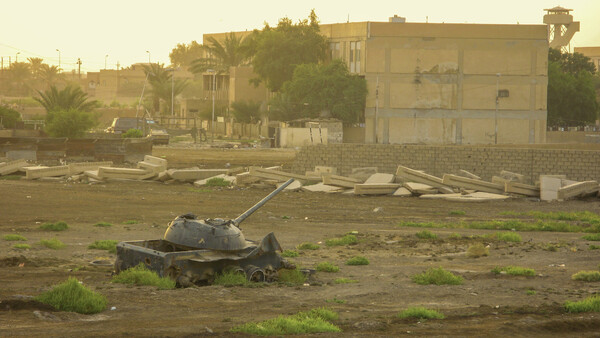
War teaches you how to see. Not in an artistic sense, but in a survival sense. Every detail is information, and every flicker of movement becomes a decision. I didn’t realize it at the time, but that constant scanning and forced situational awareness rewired the way I perceive everything. I went to war with a rifle and a camera; only one still shapes how I see the world today.
The Camera I Carried and the Things I Couldn’t Unsee
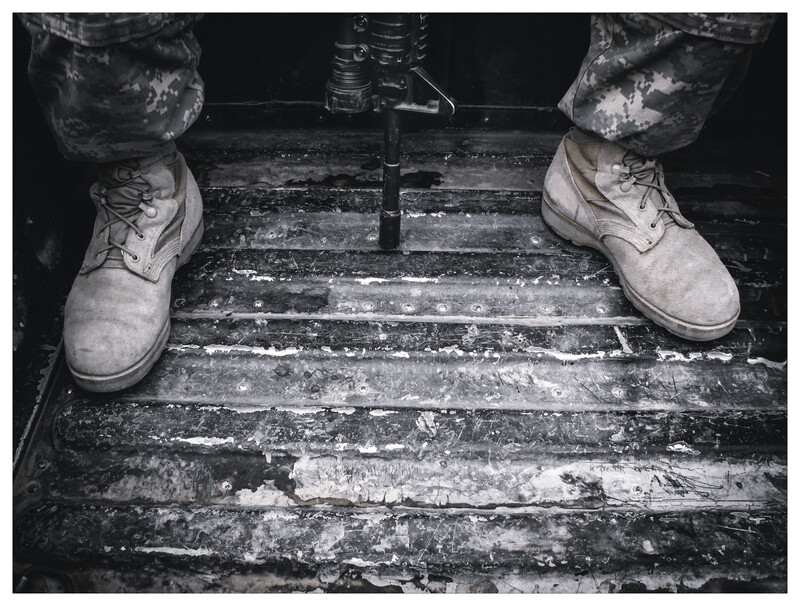
A nineteen-year-old signed the dotted line at seventeen, devoting the next eight years of his life to the United States Army, a lifelong dream. The inevitable finally came in 2007; it was my time to go, and Iraq was the destination. I traded the college textbooks for a rifle, an unissued piece of gear: the Canon PowerShot G7, a pretty pocketable camera for that time. I put it in my cargo pocket and took it everywhere.
Photography served as both a means of escape and a tool for documentation. Documenting a time in American history that was filled with decisive decisions—not everyone agreed with them. For me, I was called to do a job, complete it, and return home in one piece. A twelve-hour shift, six days a week, takes a toll on both the body and mind. You need an escape, and that Canon PowerShot G7 was just that—an escape from reality. Day in and day out, it was merely the same.
Trained to Notice Everything
Hyper-awareness, the most essential skill in a war zone, remains a defining characteristic in photography even today. You're trained to notice the smallest of things, such as people's behavior and a small, insignificant bag of trash on the ground, which could all spell danger. With this, I was unknowingly being trained for both my duty and photography.
This was the turning point at which I began to notice light, color, and stories in my photography.You can always find something to photograph if you let yourself see and practice seeing without a camera in your hand. Taking the time to study the mundane and what you see as unimportant is what you were looking for. The thing that seems merely unimportant has a story to tell, whether it is the subject of the image or a piece that supports the story. All that training has trained my eye to look deeper into my environment while I'm out making images.
Patience, Timing, and Trusting Your Gut
In a combat zone, hesitation is dangerous—but so is rushing. The same holds for photography as well. I don’t remember who said it, and it doesn’t matter. Slow is smooth, and smooth is fast. Taking the time to do things correctly, rather than rushing, ultimately leads to greater speed and efficiency. Rushing often results in mistakes, which then, in turn, require time-consuming corrections. Whether it was a combat zone for me or out in the field creating images, this stands true. Rushing into the field behind the camera, knowingly making mistakes, leads to less efficiency and, at the same time, requires time-consuming corrections afterward. If you take the time to correct these mistakes when shooting, you will have less time to fix them in front of a computer or have to discard the image completely.
At times during my time in a combat zone, patience was needed. It was waiting for the right time, after observation, and then moving at the correct time. Photography is the same. It involves observing a scene, studying the details, making decisions on settings, and then choosing the right moment to click the shutter. Learning to read the room and the environment helped me spot danger, and ultimately, for my photography, has allowed me to read the body language of a subject to capture more of the story than they may be telling in words. I became more aware of my surroundings, but I also learned that trusting my gut feeling—I was usually right. If it walks like a duck and quacks like a duck, it's more than likely a duck. I have intertwined that into my work as a photographer. It's weird. People ask me how I come across my subjects. Well, it's my intuition.
What 'Meaningful' Actually Looks Like
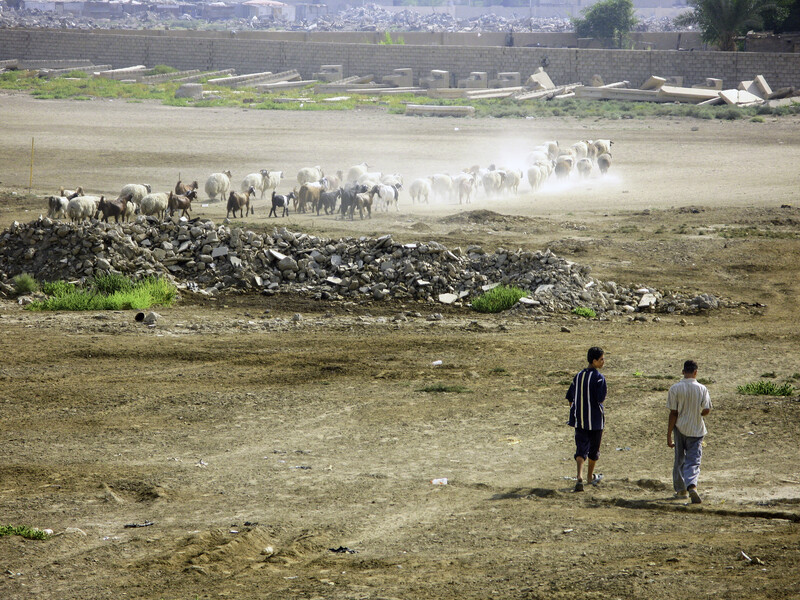
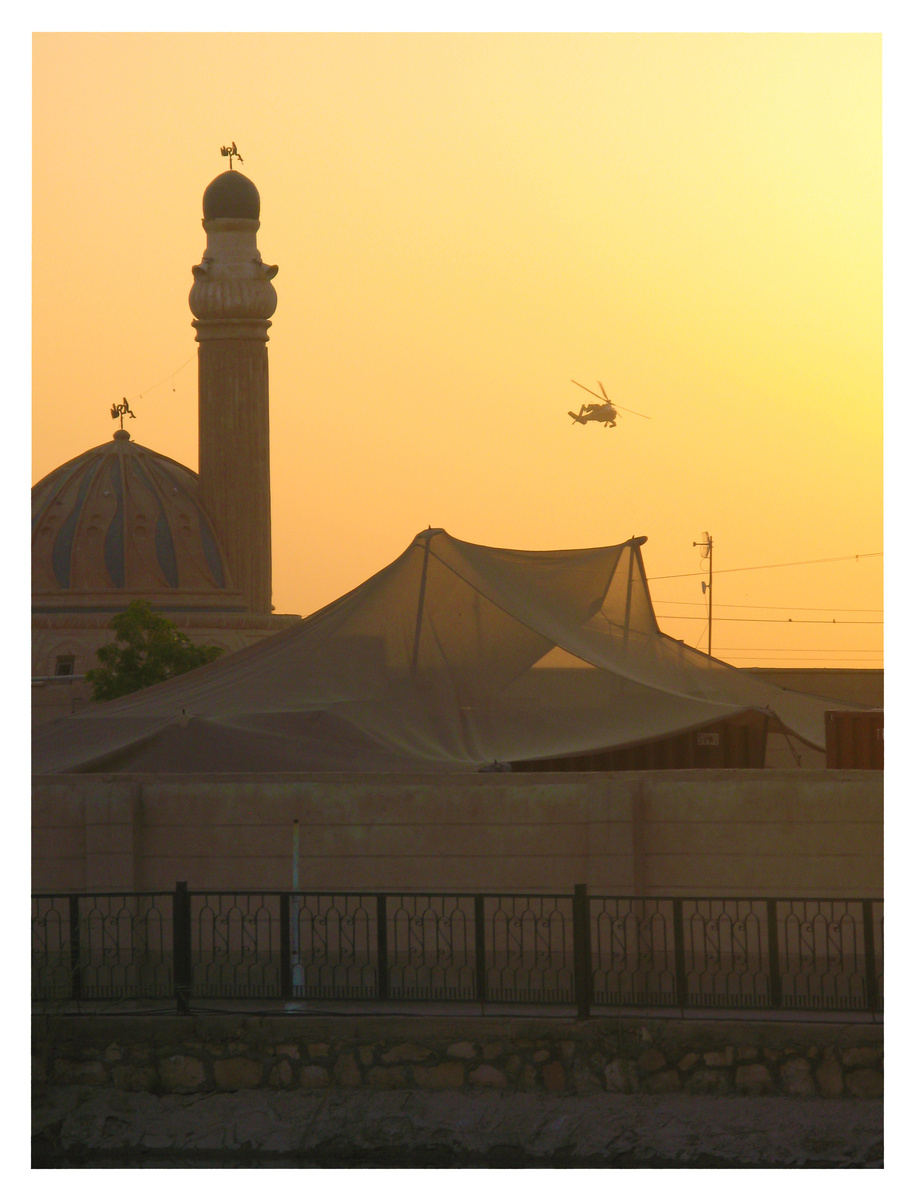
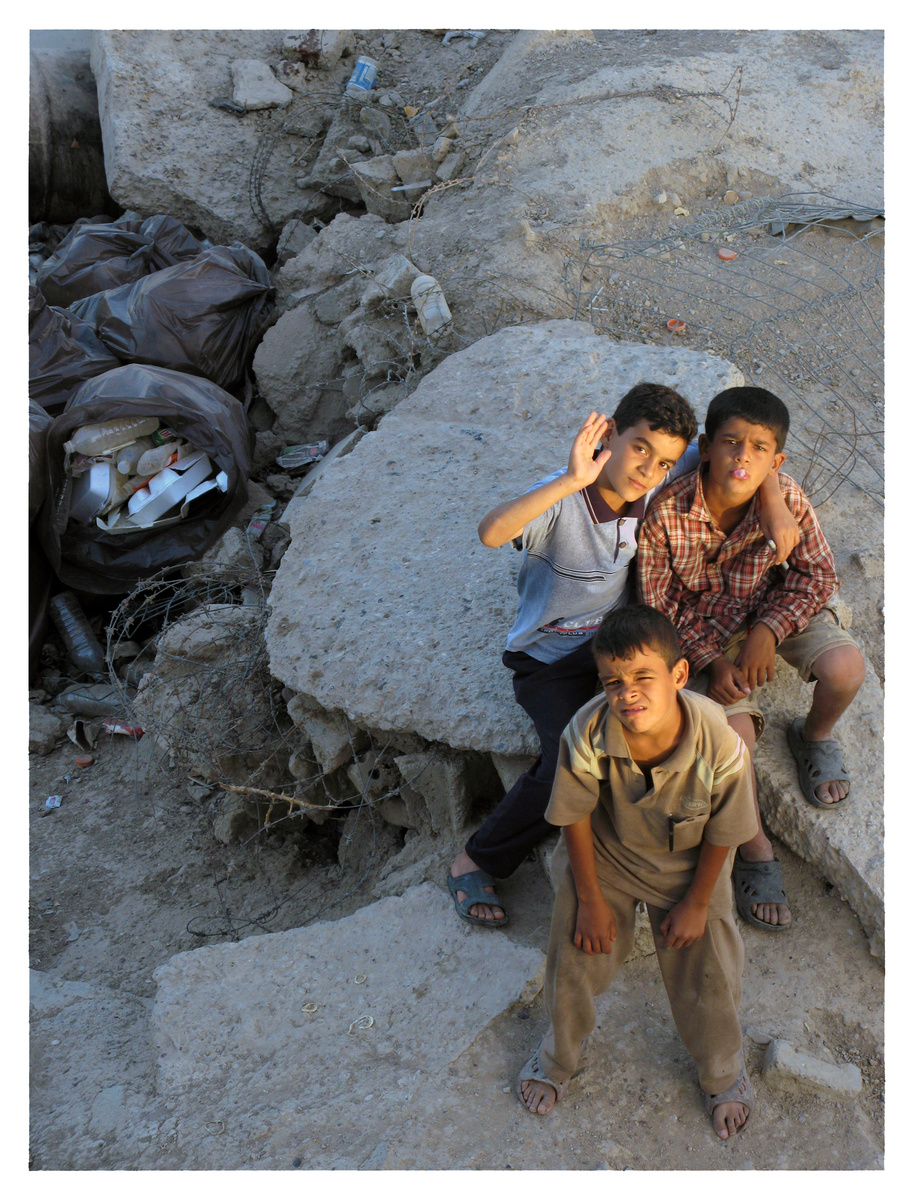
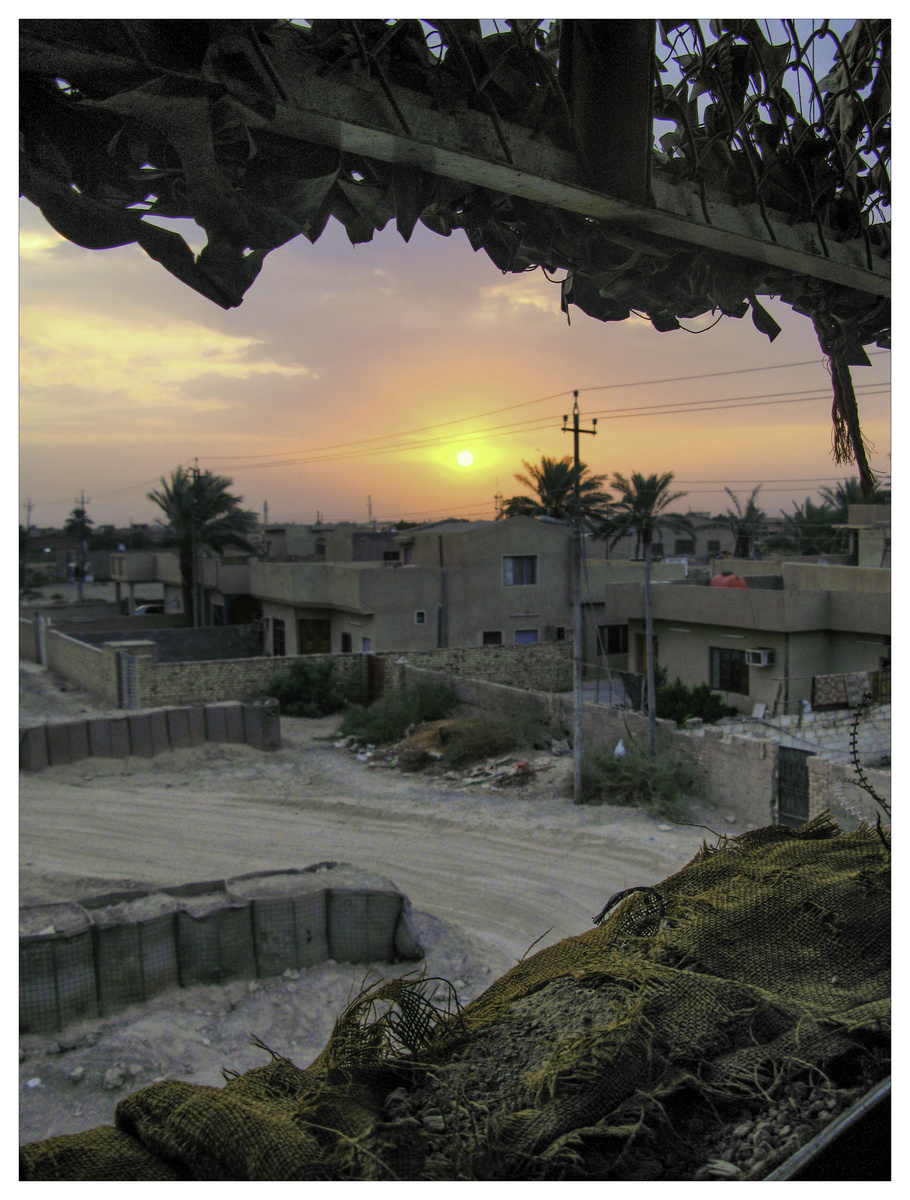
When one thinks about war, it often draws thoughts of explosions, destruction—and that’s the truth. It went far beyond that for me. I photographed the people and property that got caught up in the tide of war. It was the quiet aftermath of war that I captured in photographs. Meaning goes far beyond the obvious; it digs deeper into the story that is there, waiting to be told. My work in Iraq was about the things I could photograph, and I was present at the time. I spent a significant amount of time on the perimeter of a base pulling security. I had a bird's-eye view of the environment. Mostly, it was kids coming up asking for things that they wanted from American soldiers. I started to learn that these interactions were meaningful in a way, and I began to photograph these kids.
This has always carried over to my work and continues to do so. I photograph the small towns of Iowa and the Midwest. I am drawn to subtle moments that stand still, as well as the unnoticed places and people. I quickly learned that meaningfulness doesn’t have to scream. It is the moments that are missed because we don’t take the time to find the meaning every day. I found these moments every day in Iraq—the normal.
The Invisible Baggage and Creativity and the Journey to Recovery
The beast of the invisible baggage can lie dormant for years after one's return. A long journey lay ahead, and my baggage had slowly accumulated over the years until the moment it all came to fruition. A time came, and the long fight ahead was PTSD, major depressive disorder, and anxiety. This changed how I saw the world after a year-long deployment in a war zone. Photography has played a crucial role in helping to manage these diagnoses. Photography is not the cure, but a way to cope regularly. Creativity and photography have become a means to express the feelings I experience through art and the image-making process. Photography was always there in the forefront, well before my time in the military. What I didn’t know was that photography would be a way to cope with the scars of war, long after I had left.
 A World of Contrast: Chaos and Quiet in the Frame
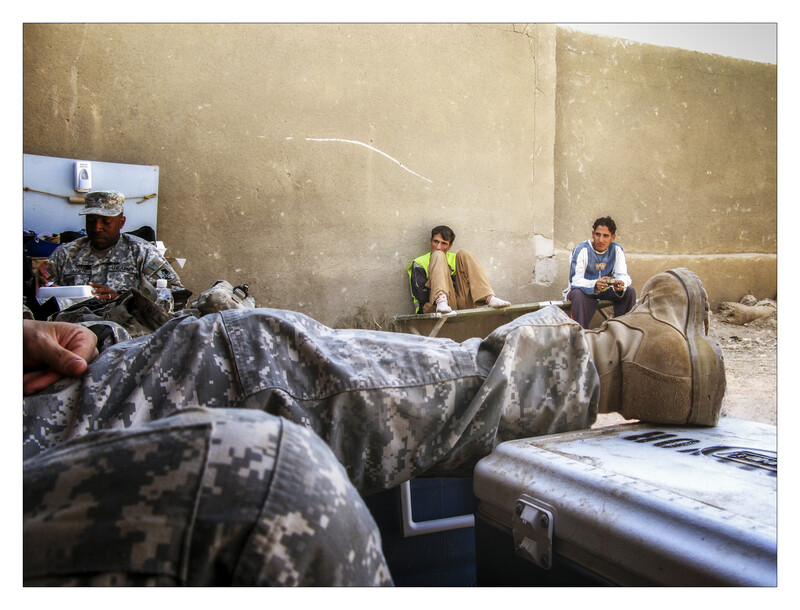
In war, contrast is everywhere. Explosions and silence, day and night, life and loss—and the list can go on. The moments of chaos were later followed by moments of silence. Whether it was the morning sun rising over the horizon or the morning prayer at the mosque, it could be heard. I was drawn to the quiet moments, the moments of beauty that you surrounded yourself with in a war zone; you just had to seek them out and find the good in the bad. Later, this would influence my photography, as I was drawn to empty spaces, long shadows, and calm places. I am a firm believer that the environment and the moments in life shape our style as photographers, as well as the subject matter that we start to photograph.
The Unsayable and the Unseen
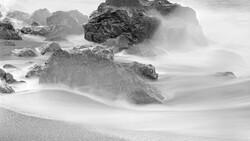
The moments I captured taught me one thing: the real power isn’t in what's obvious; it's what's hinted at. What you may see as unimportant or nothing important happening is the moment you should be clicking the subject. I recently stumbled across a folder of images on an old hard drive from my deployment, and these images are in this article. I looked at the photo, and the more I studied it—after initially believing the theory was just a snapshot documenting my time—I started seeing the moments at that time I clicked the shutter, which I had thought were unimportant, actually became essential moments. I hadn't realized it at the time, but it took eighteen years to recognize the importance of these moments.
Iraq also taught me that silence is never empty. In war, silence is never good. There is more than likely something just around the corner, and silence becomes dangerous. In photography, silence isn’t just about what's there; it’s about what might be beneath the surface—the moment around the corner. You start to read body language, empty chairs, soft light—all as potential carriers of meaning. Silence in a photo isn’t “nothing happening.” It’s tension, waiting, memory, or emotional weight.
Photography as Peacework
It's been eighteen years since I had boots on the ground in Iraq, but it's still there in everyday life and the times I pick up my camera. It is evident in my compositions, particularly in the way I frame isolation and seek stillness in my images. Photography became more than a craft; it became a way to cope and express my emotions. Images have become conversations—in what I saw then and how I see now.
The Frame That Still Follows Me
I didn’t become a photographer because of Iraq; I was already in the early stages of becoming one. Iraq made me realize the importance of photography—and that moment, and well beyond, in the years to come, unbeknownst to me. It became a way to cope and take me away from the real world and the everyday emotions that had become overwhelming. I couldn’t explain them with words, but rather with images, leading to moments of mental calm and peace, where I could express these emotions without needing to verbalize them. The old pictures still linger—not because of what they show, but because of what they made me remember. Like many, I too came back from war with scars, but I also came back with a frame, and I’ve been filling it ever since.

Join the Fstoppers community for free
-
Post comments and join in the discussions
-
Browse the site ad-free
-
Share your work and get featured in the community
-
Compete in the photo contests for fun and prizes
7 Comments
Nice article and story Justin. I hope you manage to fill that frame.
Thanks!
So many questions.... but first, thank you for your service to the country. You would have thought that persistent war throughout the 20th century would have taught all the nations' leaders of today that nothing ever good comes from starting one. You would think as a human race we'd have learned to become more civilized. Wars just seem so ridiculously unnecessary. But at the same time, I have the upmost respect for veterans who go and do the job asked of them, even when it doesn't appear to make a lot of sense.
I'm wondering though if the person you are now, with your military experience and all you know now would tell your 19 year old self to make a different decision with regard to volunteering for the military? It's always seemed so backwards to me that teenagers get to go fight, without having had the life experiences for even thinking much about what they're doing. I'm sure we'd have less war if presidents, members of Congress, and all their rich friends were the ones having to give up their yachts and crawl through swamps in enemy territory. Thanks again... I sincerely hope you put the war in proper perspective and don't allow it to wear you out. Talking and sharing our stories is good. They can pick up where photos leave off.
If I could go back in time, I do it all over again.
Your article is much more than just about photography. A heart rending journey of nearly 30 years of your life and the trials and tribulations associated with your life. Photography can heal because it may make us think more deeply about our ideas and visions of life. I hope that your life's journey brings you peace and prosperity. Thanks for a great article.
Your welcome and thanks for taking the time to comment
Justin, thank you for your sacrifices. I am one of many that served in Vietnam. I, too, have many memories that were less than pleasant. My time in-country taught me a kind of stoic resilience that is seemingly absent in those that haven't experienced the ugliness of war, and ironically, many are lacking the kind of loyalty that we had among our crews, even decades later. Since those dark days, my camera has become even more important to record the real beauty in our environment, and to help me re-center myself after those times. Even though I've been home for decades, there are still things that I learned to see in a very different light, and that has helped me to be more "present" in the moments when my camera is calling me. Three things have helped me to heal; time, photography, and the non-judgmental love of my dogs.