
The infamous red dot. I am sure that at any given time in a photographer’s career, amateur or not, there has been a dream of owning a camera known for its excellence, sleek design, and quality that rises above other brands. Once, that dream became a short-lived reality.
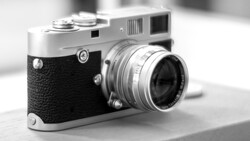
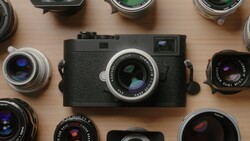
Leica is synonymous with sleek design, engineering, and image quality. Years ago, I dreamed of having a Leica—or at least using one for more than a few moments. Over the last twenty years, I’ve had a few times when I had one in my hand but never to shoot with. I finally received a chance to make my dream a reality. I was allowed to use a Leica for the first time, not knowing what I would be given. Anything would make me happy. To my surprise, inside a brown cardboard box was a Leica M11 Monochrom and a Leica Summicron-M 35mm f/2. I didn’t want this article to be a review; I wanted it to be about the allure of Leica.
The Build-Up
Waiting for the camera to arrive was like waiting for Christmas morning as a child. The suspense was about to kill me, but I had some lingering doubts in my mind. Getting my hands on a Leica was like meeting someone you look up to, only to find out they are not the person you thought they were. I had the lingering thought that Leica would be the same—that it wouldn’t live up to the hype everyone talked about. Was it all in their heads that it was a Leica, or was it amazing because they paid a premium price, which justified their purchase?
With plenty of years behind the lens and managing a camera store for about seven years, I’ve had plenty of camera brands in my hands. One had escaped me for years—Leica.
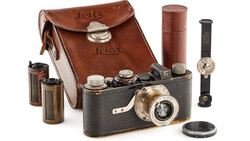
Leica has always had an allure with photographers, and it may be for the wrong reasons for some. It’s not about owning a Leica camera unless you are Daniel Craig or Brad Pitt and countless other actors. Some people see it as a status symbol, but Leica is more than that. Leica has stood the test of time because it builds cameras that prioritize vision—not all these buttons and menus that distract from the image-making process. They have focused relentlessly on simplicity, precision, and the tactile process of image-making. That’s what I was looking for, but was I about to be let down?

First Encounter
I received a text from my wife saying I had a package. I wasn’t home to instantly run and open it up. All I could think about was opening that box and hopping in the truck to find something to photograph. The time had finally come—I popped open the box and dug through all the bubble wrap to finally find what I had been waiting for. My Leica experience was about to start!
Instantly, I noticed that it had weight, taking me back to my days of shooting film—the camera felt real! Who needs a hammer when you could drive nails with this thing? It was simple, with not a ton of buttons, and I could use it without reading a manual—my most hated thing in photography!
The design—oh, it was sleek. I fell in love with it. I instantly felt all the intention that was put into this camera. You knew that through the design process, nothing was placed just to put it somewhere. This is something that has been lost in most camera designs these days.

Through the Viewfinder
I instantly wanted to take a photo, so I stepped onto our back porch to play around. I didn’t take too long to figure out what I needed to do, except for focusing, which was a challenge at first. Once that was figured out, I was off to the races!
Seeing with a Leica was a unique and freeing experience. I didn’t feel like I was thinking too much on the technical side of photography. It just felt different; I was exploring making images again. Usually, photography feels like the technical side has overtaken the creative side. Now, the tables had turned—it was creative over technical.
I was slowing down and creating images with intention and meaning. I was again looking at exposure, light, and composition. Simplicity at its finest! Shouldn’t we all be doing that with whatever camera we have? Yes!
If you’ve been doing this photography thing for a while, eventually the technical side of things slowly creeps in and takes over. Before we know it, that’s the focus. We forget to slow down and start creating images again.
The more I thought about it, the more I realized what made the Leica feel entirely different from my Nikon. Buttons—all the buttons were gone, and the Nikon felt claustrophobic to use. So many buttons are screaming at you at any given time, with jam-packed menus. After a while, it becomes overwhelming. Leica? Never. I was not distracted by too many buttons and overly stuffed menus.
I remembered to slow down and create images again—it felt wonderful. It reminded me to focus on why I first picked up a camera—to create images.
Surprises and Lessons
I had preconceived notions that Leicas were just overpriced status symbols. For some, that might be true. However, they are truly some of the most well-crafted and thoughtfully designed cameras for the genuine creative photographer at heart. These cameras are made with the creative mind in mind.
A shift in my perspective began, and the more I used the camera, the clearer it became. I was exploring, seeking images to capture—especially in monochrome. I’ve never been a black-and-white photographer, as I’ve always been more interested in color. I then started focusing solely on highlights and shadows, searching for intriguing scenes. It almost became a form of therapy. Again, it changed the way I saw things and how I photographed subjects I usually passed by.
The biggest surprise was that I was using images straight out of the camera, with little to no toning. The vision I had was there, with no editing—or so little. I found I was mainly cropping. Again, a freeing experience, to say the least. I was excited. I was not happy to send it back!
It was like having my old self again. Saying, “Justin, remember, this is why you first picked up the camera.” I can come up with a million words to describe what it feels like to use a Leica, and how it differs from what it feels like for someone who has never used one. Simple and heavenly.

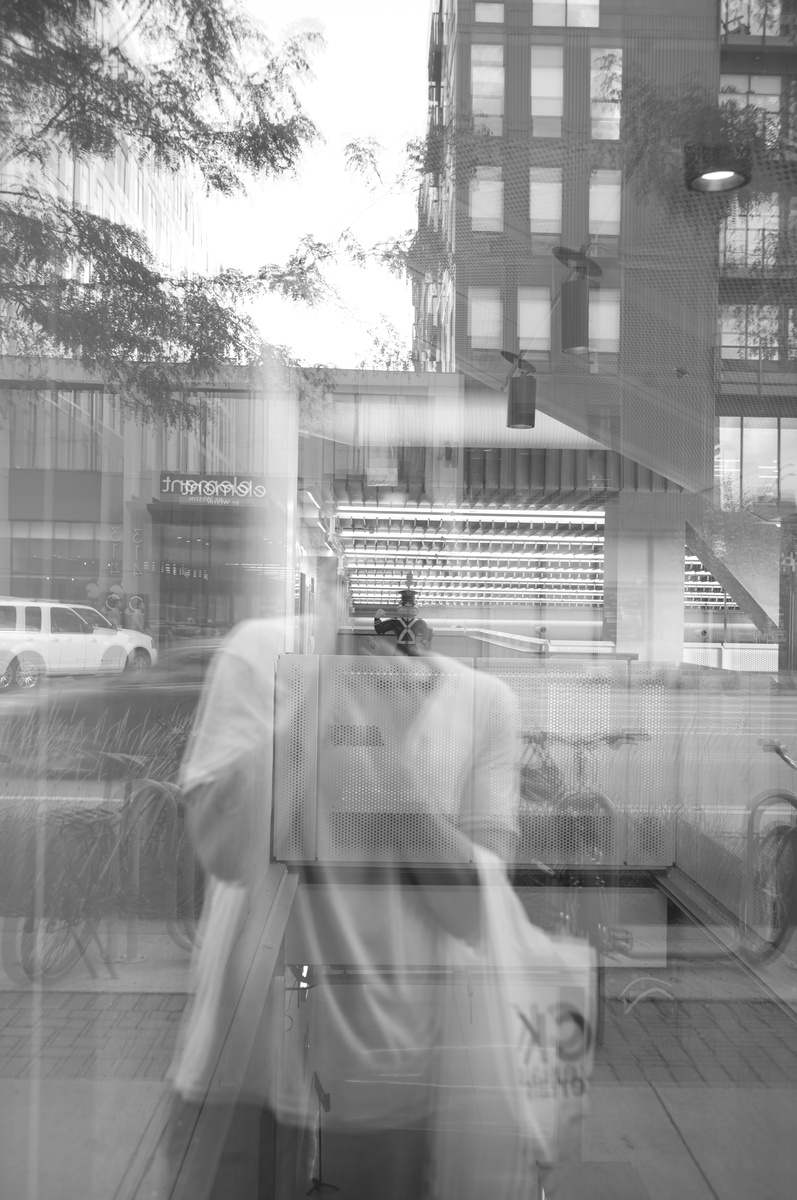
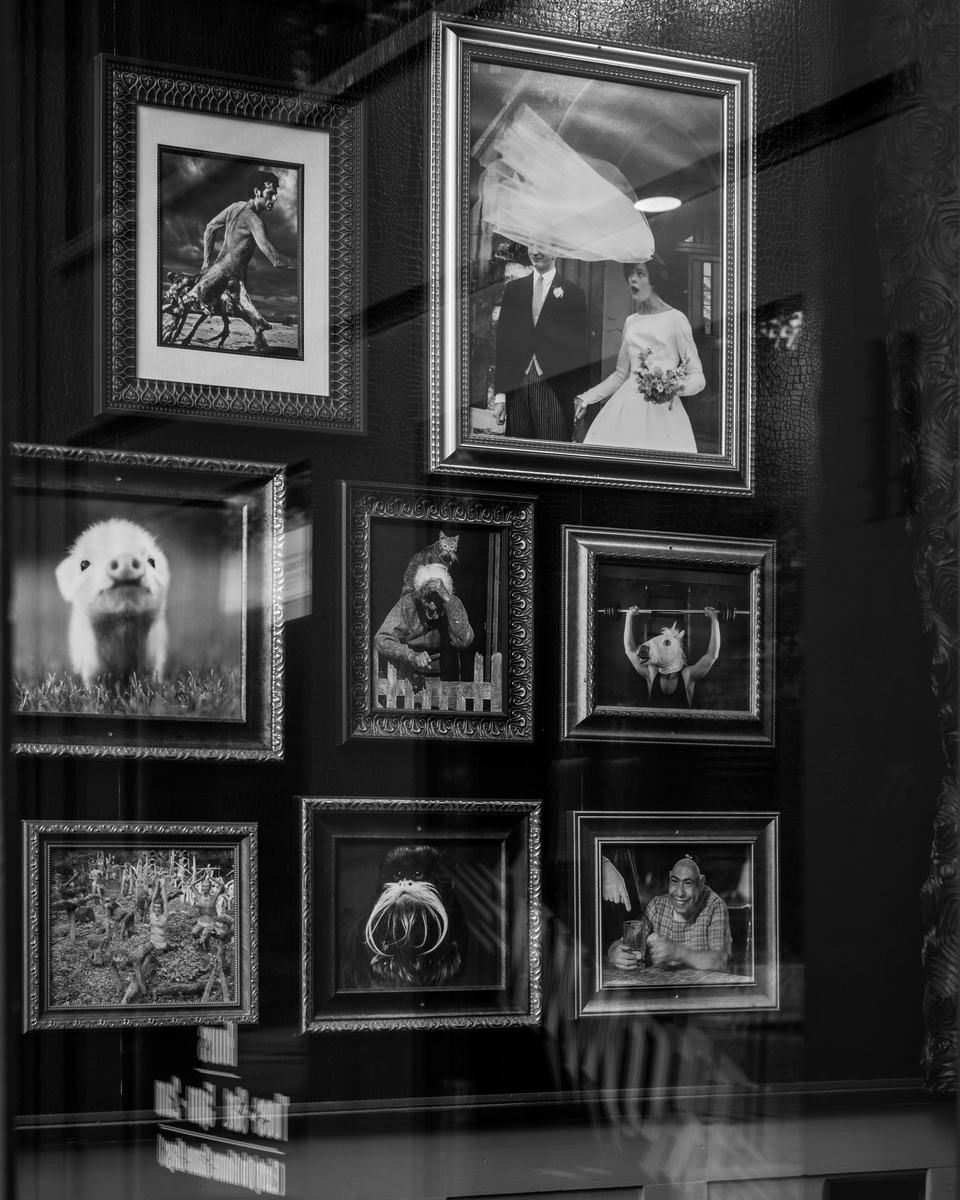
Reflection
It taught me about my process and actually made me remember it. A gentle kick in the butt, a reminder that I need to create images and not fall into the gear abyss. It reminded me to slow down, observe, and enjoy what it is like making images again.
More than a tool, it was a mind-shift I needed. The big picture? The experience reignited my creativity. I started thinking about the images I wanted to create in the future, remembering that I wanted to make fine art, not just document a place. It was about creating fine art in the simple experiences of everyday life.
I don’t have to go to far-off lands to experience these lovely places to create images—they’re literally at my front door. I just need to look. Beautiful photos live in the everyday moments; we need to remember they are there and see them.
In the End
The infamous red dot. What was once, in my mind, a status symbol for the photography world and the ultra-wealthy—an overpriced camera, the Lamborghini of cameras—changed my mind on what a Leica is. Not just a sleek, ultra-designed, and thoughtful camera. Leica isn’t just a camera; it’s a reminder to see and create.

Join the Fstoppers community for free
-
Post comments and join in the discussions
-
Browse the site ad-free
-
Share your work and get featured in the community
-
Compete in the photo contests for fun and prizes
6 Comments
Nice article. Great images
Thank you!
The experience you're describing, Justin, may very well be one that I have to forgo in this lifetime. At a cool $14,000 for the camera and lens, I'd have had trouble justifying that kind of money even in the prime of my career, much as less sort of retired. But the way you talk about it sounds like some spiritual awakening, for which I'm really curious whether I would experience that camera the same way, or just conclude that you're making a big deal out of nothing.
"Leica isn’t just a camera; it’s a reminder to see and create." Well, maybe so... but there ought to be cheaper ways to remember the art of creating an image. Isn't that the root of all photography, especially for the professional? Once we become proficient with camera settings and the technical side, to the point of not giving much thought to it, creativity normally takes center stage as the dominant thought before clicking the shutter... no matter what camera I have in my hands. In fact, my mind is often thinking creatively about a photo composition even when I don't have a camera with me, like sitting here at Wendy's eating a burger wondering how to make an interesting picture. Maybe a good topic for another article... how to see and create without spending a dime. After all, I think it takes time more than gear to be creative. Time to explore; time to imagine; time to dream.
Thanks for your comments! I, too, will have to go for this as well!
Great photos! I decided last year to sell off all of my RF gear, which I turned into a Leica Q3 43 and an older roadster convertible. This article really resonates with me. I've found a love of studying light and shadow and shoot almost exclusively in b&w with a raw for backup incase I want a color version. The ergonomics and simplicity absolutely get the camera out of the way and allow one to just see and create.
Thanks! Leica is a true user experience.