
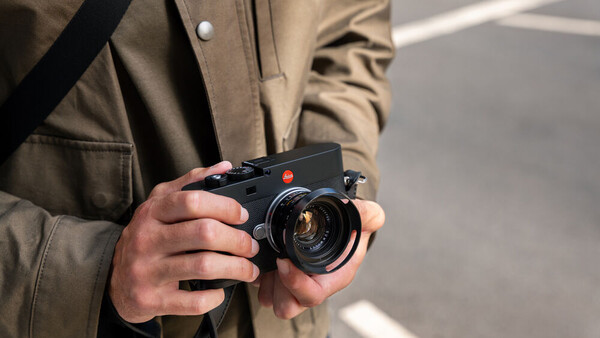
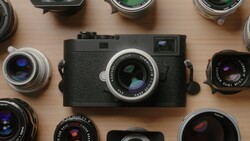
The Leica M EV1 costs $9,000. For context, you can buy a Sony a7C R for $2,999, mount any Leica M lens you want with a cheap adapter, and get in-body stabilization and objectively better specifications across the board, plus autofocus with other lenses. You'll save $6,000 in the process. So the question that Leica needs to answer is simple: what exactly are you paying for?
What Made M Cameras Different
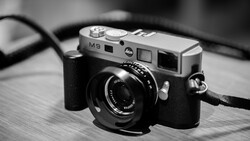
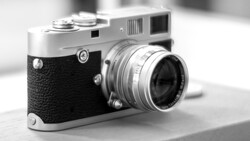
For decades, the optical rangefinder was Leica's moat. It wasn't that the rangefinder justified the astronomical price tag or made M cameras objectively superior to other systems. Rather, it was the only way to get that specific shooting experience. You couldn't replicate that bright-line frame viewfinder anywhere else. You couldn't get that coupled rangefinder focusing mechanism on a Nikon or Canon. The experience was exclusive to Leica, and if you wanted it, you had exactly one option.
Shooters chose M cameras because they wanted that particular tool, not because it offered the best value proposition in photography. The rangefinder created an entire philosophy around shooting: zone focusing, distance estimation, the practice of pre-focusing and waiting for the decisive moment. It demanded a different approach to photography, and people who bought into the M system understood they were choosing a specific methodology over modern convenience. The limitations weren't bugs that needed fixing. They were integral to what made shooting with an M camera feel distinct from every other camera on the market.
The key point here is that the M system existed in its own category. It wasn't better or worse than mirrorless or DSLR systems. It was fundamentally different, and that difference made it immune to direct comparison. When someone complained that an M11 lacked autofocus or cost three times what a comparable Sony did, the response was straightforward: you're missing the point. The rangefinder experience is what you're buying. If you don't want that, buy something else.
The M EV1 throws all of this away. Once you put an electronic viewfinder in an M camera, you're no longer offering something unique. You're just offering manual focus with an electronic viewfinder and focus peaking. And there are dozens of cameras that do exactly that for thousands of dollars less, many of them with significantly better specifications and capabilities. Leica just volunteered to be judged by the same metrics as every other camera manufacturer, and the results are devastating.
Welcome to the Spec War (You're Losing)
Let's talk numbers, because once you put an EVF in a camera, specs suddenly matter. The M EV1 features a 5.76-million-dot electronic viewfinder, a 60.3-megapixel full frame BSI CMOS sensor, manual focus only, no in-body stabilization, a maximum shutter speed of 1/4,000 second mechanically or 1/16,000 electronically, and a 4.5 frames per second burst rate limited to 15 Raw frames before the buffer fills. It has a single UHS-II SD card slot, 64 GB of internal storage, a fixed 3-inch touchscreen, and approximately 237 shots per charge. On paper, these aren't terrible specifications. The problem is what you can get for significantly less money, and the fact that all of these alternative cameras can mount M-mount lenses via simple adapters.
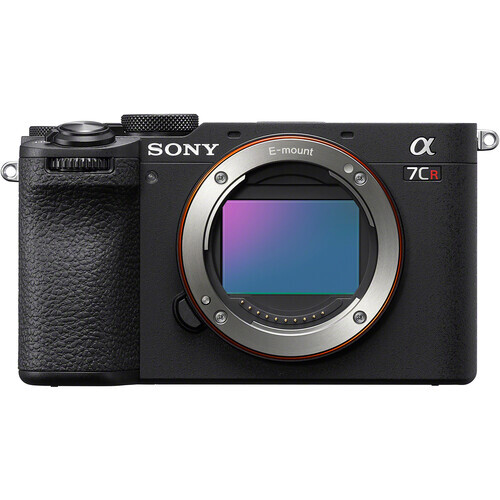
Here's the critical point that destroys the M EV1's value proposition: all of these cameras can mount M-mount lenses via adapters that cost around $100-200. You can even add autofocus with some of them! When you manually focus an M lens on any of these bodies, the experience is essentially identical across all of them. You're looking through an electronic viewfinder. You're using focus peaking to highlight your plane of focus. You're using focus magnification to check critical sharpness. The muscle memory is the same. The focusing method is the same. The final image is the same. The body behind the lens becomes almost irrelevant to the shooting experience when you're manually focusing through an EVF regardless of which camera you're using.
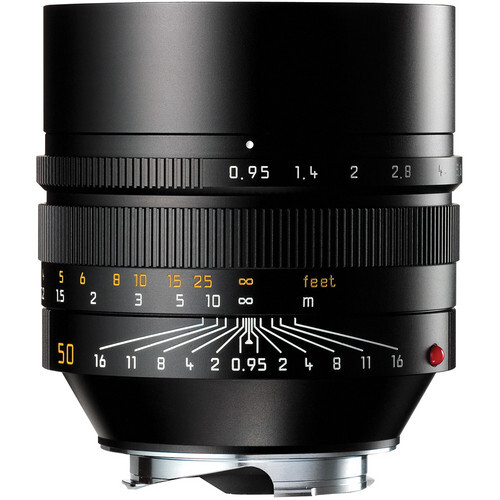
To be fair, the EVF does solve some real problems for M-system users. Ultra wide lenses like a 21mm or 24mm, which are difficult to frame accurately through a rangefinder's projected frame lines, now show exactly what you're capturing. Macro lenses, which often can't couple to the rangefinder mechanism at all, become genuinely usable. Fast lenses like the Noctilux 50mm f/0.95, where the rangefinder's focusing precision can struggle at such shallow depths of field, benefit from focus magnification and peaking. The EVF legitimately levels up the usability of the M mount for certain shooting scenarios. But here's the problem: you still get no in-body stabilization for those handheld macro shots. You still get manual focus only when shooting fast-moving subjects. You still get a modest 4.5 fps burst rate with a 15-frame buffer. You still get a single card slot with no backup for professional work. You still get no professional video capabilities. The EVF fixes the focusing, but you're still paying $9,000 for a camera that's missing features every $3,000 camera includes. And you lose the ability to see outside the frame and anticipate action, one of the biggest selling points of a rangefinder.
So when you're manually focusing a Summilux 35mm f/1.4 through an EVF, why does it matter whether that EVF is attached to a Leica body or a Sony body? The answer should justify a $6,000 price difference, but it doesn't. The Sony a7R V has a demonstrably better electronic viewfinder at 9.44 million dots compared to the M EV1's 5.76 million dots, and it costs $5,700 less while offering autofocus, superior stabilization, faster performance, dual card slots, and dramatically better battery life. The Canon R5 Mark II has the exact same EVF as the Leica but costs $4,900 less and adds 30 fps burst shooting, 8.5-stop stabilization, professional video capabilities, and dual card slots. Even the ultra-compact Sigma fp L with an external EVF undercuts the Leica by $5,700 while offering the same resolution and faster burst rates.
Every single one of these cameras can shoot your Summilux, your Summicron, or your Noctilux with identical manual focus technique. The experience of turning the focus ring while watching focus peaking highlight your subject is the same whether you're doing it on a $9,000 Leica or a $3,000 Sony. Leica just volunteered to be judged on specifications and features in a category where they're objectively outclassed by cameras that cost half as much or less. This was a catastrophic strategic mistake.
The "Leica Look" Costs an Extra $6,000
The inevitable defense of the M EV1's pricing centers on the nebulous concept of the "Leica look." The sensor, the color science, the ineffable quality that makes a Leica file somehow special. This has always been the company's safety net when specification discussions arise, the trump card that supposedly justifies the premium.
The Summilux and Summicron rendering, the bokeh characteristics, the microcontrast, the three-dimensional quality that Leica lenses are famous for, most of this comes from the glass itself. The lens is doing the heavy lifting in creating the "Leica look," and you can mount any M lens on any of these competing cameras with a $200 adapter. The glass doesn't know or care what sensor sits behind it. Your $5,000 Summilux 35mm f/1.4 will render with the same optical characteristics on a Sony, Nikon, or Canon body. The bokeh doesn't change. The sharpness doesn't change. The character of the lens remains identical because the optical formula and the physical construction of the lens elements are what create those characteristics, not the camera body.
My opinion, having looked at countless images from both systems, is that most photographers cannot consistently identify which files came from a Leica versus a Sony when both are shot with the same lens and processed with care. If you're viewing images at normal sizes, posting them on Instagram or your website, making prints that people actually look at from normal viewing distances, or even displaying them in galleries, the differences vanish. And if someone can spot some subtle variation after careful examination, a difference that probably comes down to personal editing choices and minor processing variations anyway, is that worth $6,000 and giving up autofocus, in-body stabilization, faster burst rates, dual card slots, and all the modern features that make professional photography easier?
The honest assessment that no one in the Leica ecosystem wants to acknowledge is this: the "Leica look" breaks down to roughly 80% lens character, 15% editing skill and personal taste in post-processing, and maybe 5% sensor characteristics that are largely replicable. You can access the first two components on any camera system. Spending $6,000 extra for that final 5% is a choice you can make, but let's not pretend it's based on any objective measure of photographic capability.
The Emperor's New EVF
So let's be brutally honest about what the M EV1 actually offers and what it doesn't. The unique optical rangefinder experience is gone, replaced by an EVF that's standard technology in 2025 and has been for nearly a decade. The irreplaceable shooting method that defined M cameras has been abandoned for EVF manual focus with focus peaking and magnification, which is available on literally every mirrorless camera made in the last five years. Exclusive access to M lenses? Adapters exist for every camera system and work flawlessly for manual focus shooting, often with full EXIF data. Superior image quality? Modern full frame sensors from Sony, Canon, and Nikon are all excellent, using similar or identical sensor technology, and in practical use produce images that are indistinguishable from Leica's sensor when printed or displayed. Better specifications? The M EV1 is objectively worse than everything in its price range on every measurable metric, and worse than many cameras that cost a third of its price.
What remains after you strip all of that away? Build quality is legitimate and undeniable. Leica cameras are beautifully made, machined from solid brass top plates and base plates, assembled by hand in Germany, and feel substantial and precise in hand in a way that few other cameras do. But is that worth a $6,000 premium over cameras that are also well-built, just with more aluminum and modern high-volume manufacturing techniques? There's brand prestige, the cachet of the red dot, the statement you make when you pull a Leica out of your bag at a workshop or on the street. Some photographers value that signal, that identification with a particular tradition and aesthetic. The compact size is notable, with the M EV1 maintaining the classic M body dimensions, though the Sony a7C R and Sigma fp L are nearly identical in size. The Leica service network is excellent if you need it, with knowledgeable technicians and a commitment to long-term support. Resale value has historically been strong for M cameras, though one has to wonder if that remains true as the M EV1 undermines confidence in the system's direction and forces potential buyers to question what they're actually paying for.
The harsh truth that emerges from any honest evaluation is that you're paying $6,000 extra for machined brass construction, a red dot on the front, the Leica name on the top plate, and the ability to tell people you shoot Leica. That's fine. Luxury goods exist in every market, and there's an entire economy built around products that cost far more than functionally equivalent alternatives. People buy Rolex watches that keep time no better than a $50 Casio and often worse than a $20 quartz watch. They buy Mercedes cars that get you to work no faster than a Toyota and often with higher maintenance costs and lower reliability. They buy designer clothing that functions identically to mass-market alternatives. Luxury is about more than pure function, and there's nothing inherently wrong with buying something because you appreciate the craftsmanship, the heritage, the brand story, or simply because you want it and can afford it. But be honest about what you're doing and why you're doing it, because at $9,000, it's one of the most expensive accessories in photography, purchased not for what it does but for what it represents.
Who Is This Even For?
The more you think about the M EV1's positioning in the actual market, the more you realize Leica has managed to alienate every potential customer segment simultaneously. Traditional M shooters, the core constituency who have kept the system alive for decades and whose loyalty has sustained Leica through multiple financial crises, bought in specifically for the rangefinder. They loved the optical purity, the mechanical simplicity, the bright-line frames that showed you slightly more than you were capturing, the direct connection to the image that an optical viewfinder provided without any electronic intermediary. These photographers see the M EV1 as a fundamental betrayal of what makes an M camera special, a capitulation to modernity that abandons the core principles of the system. They're not going to buy it. If they wanted an EVF, they would have left the system years ago for any of the numerous excellent mirrorless options available.
The modern photographer who values EVF convenience also wants the features that come with electronic viewfinders in every other camera system: autofocus that works in low light and can track moving subjects, in-body stabilization for handheld shooting at slower shutter speeds, respectable burst rates for capturing action or decisive moments in sequence, professional video capabilities for hybrid shooting, dual card slots for backup and overflow, and battery life that doesn't require carrying four or five spare batteries for a day of shooting. They can't justify spending $9,000 for a manual-focus-only camera with a shallow buffer, single card slot, and mediocre battery life when that money could buy an a7R V with superior specifications across the board and still leave $5,000 for lenses, lights, or travel. They're not going to buy it either.
What about the Leica lens owner who already has $10,000 or more invested in M glass, someone who owns a collection of Summilux and APO-Summicron lenses built up over years? This is perhaps the most logical customer for the M EV1, someone who is already committed to the system and wants a modern body to shoot their investment on. But this customer also has another option that's become increasingly attractive: buy a Sony a7C R or a7R V, get a $200 adapter, and use all their Leica lenses when they want that rendering. The shooting experience with manual focus is essentially identical between the two systems when you're looking through an EVF and using the same focus aids. But crucially, the Sony also gives them access to an entire ecosystem of excellent native autofocus lenses when they need modern AF performance, plus in-body stabilization that makes their unstabilized M lenses suddenly much more versatile, and modern features that expand what they can do photographically. The Sony doesn't lock them into manual focus only. It offers dramatically more capability for less money. It's hard to see why this customer chooses the M EV1 unless they have a principled objection to adapting lenses or place enormous value on native mount compatibility.
The newcomer to Leica, perhaps the most important demographic for the long-term health of any camera system, faces the worst proposition of all. They're attracted to the brand, intrigued by the mystique, inspired by the famous photographers who shot Leica, and ready to make their first investment in the system. They see the M EV1 at $9,000 and naturally do what any informed consumer does: some research. Five minutes on any camera review site or YouTube channel reveals that you can get a objectively better cameras for $6,000 less. That's not a rounding error or a minor premium. That buys you an excellent lens or two (even a Leica lens). Or a second camera body for backup. Or a high-end tripod and support system. Or travel to locations you want to photograph. Or a workshop with a photographer you admire. The newcomer, lacking the emotional attachment to the brand that might override rational decision-making or the sunk cost fallacy of existing lens investments, does the math and buys the Sony. They get their Leica look by adapting M lenses when they want that specific rendering, and they get modern autofocus performance with native lenses for everything else.
The only customer segment left is someone with an effectively unlimited budget who wants M mount native support, doesn't care about autofocus or stabilization or any modern features, values brand identity and heritage over capability, and either hasn't done comparison shopping or has done it and decided the intangibles are worth the premium. This is an extremely small market, probably smaller than Leica realizes or will admit. And it's certainly not large enough to sustain an entire camera line and justify the development costs, especially when you consider that this customer could also just buy an M11 and get the actual rangefinder experience that defines what an M camera is supposed to be.
The M EV1 Undermines the Entire M System
The biggest problem with the M EV1 isn't just that it's a bad value proposition on its own terms, though it certainly is that. It's that by existing as a shipping product that Leica is actively selling and marketing, it undermines the entire M system and raises questions Leica probably doesn't want to answer and certainly can't answer satisfactorily. By releasing a camera that replaces the rangefinder with an EVF, Leica is making an admission whether they intend to or not: the rangefinder wasn't essential. It was optional all along. It was a choice, not a fundamental requirement. And if the rangefinder is optional, if you can have an M camera without one, suddenly every M camera is open to the same questioning. Why does the M11 cost $9,840, nearly the same price as the M EV1, when it offers a rangefinder that Leica themselves just declared negotiable by offering an alternative? What exactly are you paying for when you buy an M11 if the defining feature of the system is apparently disposable?
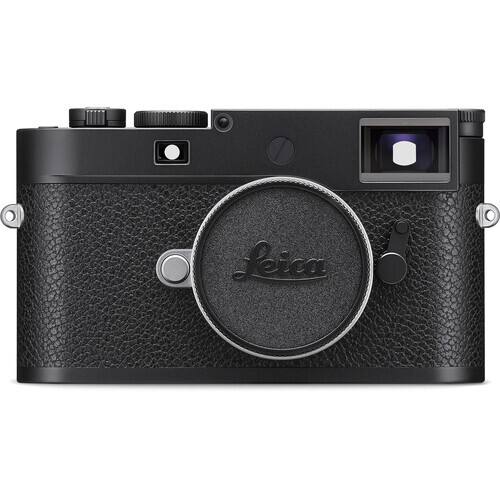
The M EV1 drains that moat completely. If Leica themselves think the rangefinder is negotiable, that you can make an M camera without one and it's still legitimately an M camera, why should anyone pay M prices at all for the rangefinder models? The M EV1 accidentally reveals that M system pricing was always about artificial scarcity and brand positioning, not about the fundamental value of the technology or the optical rangefinder mechanism. Once you admit the rangefinder isn't necessary to the M experience, once you say "you can have an M camera with just an EVF," you open the door to the question of what you're actually paying for across the entire line. And the answers, as we've established through this entire analysis, aren't particularly compelling when you look at specifications, features, or image quality.
There's also a psychological impact here that's hard to quantify but potentially devastating for Leica's brand positioning. Part of what made M shooters willing to accept the system's very real limitations was the belief that they were part of something special, using tools that represented the pinnacle of a particular approach to photography, carrying forward a tradition that connected them to Cartier-Bresson and Capa and Winogrand. The M EV1 suggests that maybe it wasn't that special after all. Maybe the rangefinder was just stubbornness, a refusal to adapt to objectively better technology, an anachronism maintained for brand differentiation rather than photographic merit. Maybe those limitations weren't features or philosophical choices but actual shortcomings that Leica is now acknowledging by offering an alternative that admits EVFs are better for focusing. That kind of doubt, once introduced into the minds of loyal customers, is incredibly hard to dispel.
Leica Needed to Stay in Its Lane
The M system's strength was always that it was incomparable in the most literal sense. You couldn't put it in a specification chart next to a Sony or Canon because it was fundamentally offering something different, operating in a different category entirely. The rangefinder made direct comparison meaningless and deflected criticism about missing features. Someone could argue all day about whether an M11 was worth the money compared to an a7R V, but the discussion would always end at the same place: it's not about the specs, it's about the experience, it's about what you value in a camera. Do you want a rangefinder or not? That was a question with no wrong answer, just personal preference and different approaches to photography.
The M EV1 voluntarily enters a specification war with worse specifications and a higher price than everything it competes against. It's a $9,000 camera competing against $2,000 to $4,000 cameras and losing on every objective measure you can name. Worse EVF than the a7R V, which has the best electronic viewfinder ever made. Same EVF resolution as the cheaper R5 Mark II but without any of the additional features like high-speed burst, stabilization, or professional video. No autofocus in 2025 when even entry-level cameras have sophisticated AF systems. No stabilization when 8-stop IBIS is becoming standard. Single card slot when professionals demand dual slots for backup. Slower burst rates than cameras that cost a third as much. A buffer that fills after 15 raw files when competitors can shoot hundreds. Fewer features across the board. Higher price despite all these disadvantages. The only way this makes sense is if you assign tremendous value to the Leica name and build quality, and even then, you're paying an enormous premium for intangibles that don't show up in photographs.
The M EV1 proves that once you remove the rangefinder, a Leica M is just an expensive camera with missing features. The optical viewfinder wasn't holding the system back or limiting its appeal to a niche audience. It was the entire reason for the system's existence. It was the product, the thing you were buying, the experience that justified everything else. Everything else about M cameras, the manual focus, the compact size, the minimalist controls, the lack of autofocus and video and all the modern features, was in service of that rangefinder experience. Take away the rangefinder and you're left with a very expensive manual focus camera with an EVF, and the market for very expensive manual focus cameras with EVFs is vanishingly small when excellent alternatives cost half as much or less.
Leica just destroyed its own moat, and for $9,000 you can watch them do it in real-time through a perfectly adequate 5.76-million-dot electronic viewfinder that Sony implements better in the a7R V and Canon matches in the R5 Mark II, both for thousands less with dramatically more capability. At least when you're manually focusing your Summilux on a Sony a7R V, you'll have $5,000 left over to buy two more lenses and still come out ahead. Or, you know, you could just switch to one of Sony's excellent native autofocus lenses and enjoy one of the many benefits of shooting with a modern camera system that doesn't artificially limit itself to protect a brand identity that no longer makes sense.
The M EV1 will find some buyers. There are always people with enough disposable income that price doesn't matter, and Leica has built enough brand equity over the decades that the red dot alone will move some units to collectors and brand loyalists. But as a strategic product, as an addition to the M system that strengthens the line and expands its appeal to new customers, the M EV1 is a failure. It sacrifices what made M cameras special without gaining any of the advantages that would justify the sacrifice. It's a camera that makes you wonder what Leica was thinking, whether anyone in product development actually compared it to competitors, and more importantly, what they'll do next. Because if this is the future of the M system, that future looks considerably less compelling than its past.


Join the Fstoppers community for free
-
Post comments and join in the discussions
-
Browse the site ad-free
-
Share your work and get featured in the community
-
Compete in the photo contests for fun and prizes
44 Comments
100% Correct had Leica one upped any manufacture with this M, IBIS, faster shutter or some upmanship on 9.5 EVF see through while still having the rangefinder it would of could of been the bomb. They will sell a shit load of them though
What remains of this report about a camera if I remove all the passages contaminated with $ signs? It's a shame, it could have been an exciting article with interesting background information.
Comparing specs and usability with other cameras is a waste of time. Leicas are jewelry. That's why people buy them. Not about functionality.
"Leicas are jewelry." This is the best summation of Lecias I have heard :-)
Some people - others like me use them for professional use day in day out - heres why
1. lenses swappable across 3 ranges M, SL, and S same architecture.
2. monos are the best in the biz, beats literally everything else - we use this alot
3. IOS Leica FOTOS is better than other Hasselblads, it just works, even on the Leica Insta
4. Build. Unbreakable. Our Original SL has done over 150Km and still gets use for this and that
5. Accessibility. We had to wait 9months for a Hass 90mm 2.5 V lens
6. Form. They just feel right
7. Simplicity, not as simple as Hass but near enough
8. Value. They don't lose much, Hass drop like a stone in comparison.
9. Tons of 3rd party lenses available, even 0.95 TT Artisans are useable
10. Quality of image, its close to Hass, and the 189mp on the SL2 function works where others fail
11. Q3 = SL3 for MP - now M11 with a Q viewfinder? What's wrong with that?
Great analysis. Fully agreed with you. M is the meaning of rangefinder. If the camera no longer has the rangefinder, they should not call it M. Leica should name it as Leica EV1 and treat it as a separate product line. It should target those users always using EVF on their M camera.
The reason I bought the Leica M and lenses is because the shooting experience which I cannot get from other system when I do the street photography. For other genre or shooting at night, I will use the Sony camera and lenses.
Alex is right. When looking at the Leica SL, the sales are no good (my observation only, I may be wrong). It is because there is no different between SL and other camera. (of course other brands are better in all aspects.) Also most of the SL users I know are using Sigma lenses because it has more choice and cheaper.
The reason a camera like this exists is so you don’t have to shoot a Sony. That is the major benefit. These buyers have no interest in Playstation-esque camera designs.
Thank you for the article.
I have always found it very strange to look only at Leica cameras when the main value of the brand lies in its lenses. In my opinion, camera reviews without the context of optics lose a lot. Even the SL3 paired with the Leica 24–90 renders color in a way that feels noticeably different from its competitors.
I have long been planning to invest in a Noctilux 75 or 90, which is completely irrational, but the desire has only grown over time. However, I have concerns that with my rangefinder, precise focus with such lenses is very difficult, even if it’s not really necessary. My APO-Summicron 50 mm with its modest f/2 already creates some challenges. But the EV1 solves this problem. So the principle “one Leica — one lens” can still be followed.
For most photographers, mounting Leica M lenses on other cameras may not be critical. But for working with color and large-format printing, which is what I do, it doesn’t hold up. Because of unique sensor design of Leica M cameras, combined with their lenses, you get smoother tonal transitions, deeper microcontrast, and cleaner color at the edges of the frame. On other cameras — even the SL with Leica’s own adapter — that quality is lost. I see it clearly in my daily work.
But who really cares about that? Very few people. And I’m fully aware of that too.
There is one problem with your theory : the success of the Q series. It has always had an EVF, and is outspec’d by multiple other cameras and systems, yet people love it. This new camera is a Q in drag, but with interchangeable lenses and no AF. Don’t be so sure that people won’t buy it. If you really believe that people only buy Leica for the rangefinder experience, then how do you explain the success of the Q, and the SL for that matter
The Q and SL never tried to tap into the culture, history, and experience of the M mount. It’s like when Ford completely upended the design of the Mustang. Just because they also make the F150, it doesn’t change what they did to the experience and heritage of the Mustang line.
Apples and oranges comparison.. go buy an M, shoot it for 6 months and then rewrite this article once you have the hands on experience to make it worth reading. Adding an EVF option to an already strong lineup does not completely upend the legacy of the rangefinder.
A Tesla is much cheaper and faster from 0-60 mph than a Ferrari, it seats four is cheaper to run and insure has more in car entertainment , but I know which car I admire more and would like to own.
You need to pick a lane- either specs do or don’t matter.
I’ve edited Leica M photos against both Nikon and Canon and can say with 100% certainty your average colorist cannot reproduce Leica color, look, and feel. I can take the same photo with a Leica and a Canon/Nikon, and there is always something different I cant recreate with the Leica photo.. and no I’m not a Leica fanboy, I prefer to carry my R5ii.
There are plenty of reasons to want an EVF on a Leica M body. The way Leica manages autozoom when adjusting focus will make shooting the EVF version significantly easier than most expect. Now- Leica already has a battery life issue and I dont expect the EVF camera to do well in this regard.
I usually really enjoy reading your articles, this one.. worst effort to date.
I also find this quite obvious.
Japanese brands tend to favor a different tonality, aiming for a pleasant look and avoiding colors that might feel difficult or uneasy to the eye. Leica’s uniqueness lies in a different ideology: one that prioritizes naturalism over prettiness. As a result, its files offer greater flexibility when working with color. This is quite typical for European cameras.
I'd love to see an example of this "Leica look." Been reading about it for a long time but have never seen a real example of photos taken in raw and properly processed that show any real differences. Remember, not OOC JPGs which, obviously, will always look different.
I’ll share these 6 photos because we managed to take nearly identical photos in the same location on the same day and I didn’t want to spend hours combing for better comparisons. Obviously different focal lengths were used, but the for judging color and look, this is what I have readily available. These are not our best photos.. they just happened to be fairly close compositions on the same day with the subject cameras.
Unfortunately my wife and I haven’t carried the M11 and R5ii on the same trip yet, so the closest I could share for Leica to Canon color is an SL3.
Cameras used are Z9 with 24-70 2.8, M11-P with 35mm Summilux-M, SL3 with APO 35mm, and R5ii with a 50mm 1.2. All photos are raw original files straight OOC.
https://drive.google.com/drive/folders/1VxTAhYiYKH9yUpPzW86ysv-YkZvFIEe…
Process away!
I took a couple, and while there are initial differences about 10 minutes later the images are pretty much identical save for slight differences when shooting different sensors.
I agree if you have 2 nearly identical images, you can edit any 2 images to look similar.. its a lot harder define a LUT to do that for every image youll ever take.. and the real world use case is that you are not taking identical images with two camera systems to have as a reference. For me its about how hard is it to create the final image I want, and every camera edits differently in post.. as I said below in another post, the differences become more pronounced as you edit hundreds to thousands of photos.
Excellent article, no honest photographer can argue with any of these observations.
You think they'll be stupid enough to buy it ? Of course Ernst, after all it's a Leica.
Just to fact-check: both Canon and Nikon made rangefinders based on the Leica M concept. If you’ve used a Leica, most other cameras—especially the Sonys mentioned—feel like toys in comparison. The M’s form factor is a huge part of its appeal, and this new design stays true to that.
The M system’s rangefinder limits it practically to 28–50 mm lenses, but the new system lets you use wider and longer M lenses more easily. Leica M sensors also use a micro-lens array to correct for their short flange distance and compact design, creating the distinctive “Leica look” that adapters can’t replicate on other cameras.
You also missed a key drawback: on a rangefinder, stopping down doesn’t affect the viewfinder—but on the M EV1, it will. Maybe do a bit more research next time.
Hi, the point is : the people who try to justify themselves for the buying of a Leica will never do it !
Photography is a matter of intention not ease of use, not functionalities, and the brands are trying to explain to us that we need more and more.... Megapixels, stabilisation, battery life, viewfinder definition, high iso, depth of color... It's really a shame that I can produce an image with my Leica M7 and a fully manual 50 mm !
For me, just a look at the Leica menus can explain more than words ! Easy, clear, just perfect !
(I was working with a Sony A7RV for years and much prefer today my D-Lux 8, which is not only a rebranded Panasonic LX100. Leica has added the Leica touch, and this changes everything)
In the studio, when I really want the top image quality, my Fuji GFX100 makes the job !
Interestingly, I had the m11 and GFX, and agree the Leica m system is not studio friendly, because of the off centric viewfinder. But the look and colour accuracy generated from good Leica M glass is better than Fuji - I can see this M-EV1 addressing these issues, in a way that using M glass on an SL cannot, for studio work.
Pearl clutching M traditionalists fainting in the streets - calm yourselves - it's just a Leica M11 with a Q finder - thats it, designed for people like me who love the versatility of the EVF as you can punch in on focus and then see the picture you have just taken without taking the camera away from your eye, and have to go chimping like chumps. Also it will help sell Leica lenses meaning there will be more S/H available and these will be cheaper so thats another bonus. Now take your smelling salts and don't be a ninny nanny when they release the 28mm Q Mono next week (confirmed by mt Rep) as I am sure the same people will no doubt be winging about that too no less. I have been a Pro for 35 years and in that time I have seen many changes in photography - I recall when the M digital arrived for instance.......But there was no social media then....
The bigger issue is people who have likely never seen an M (or even a rangefinder for that matter) in person, let alone ever used one, are feeling empowered to write reviews saying these cameras are out spec’d by every other camera on the market and basically don't need to exist and this move will be the end of the longest running camera design on the market.
The photos that result from our photography sessions are the only thing that matter. User experience? Doesn't matter. Trendiness and "cool factor"? Does not matter. An overall more enjoyable user experience actually does NOT lead to better photos. You know what leads to better photos? Tangible, quantifiable specifications and autofocus capability. Period.
Was with you until your last point. What actually leads to better photos has nothing to do with specs or autofocus and everything to do with the person using the camera.
Sports shooters might disagree. Having excellent AF is critical for them, as is speed.
I meant given the same user, with the same artistic vision and skillset, using different cameras, that the better photos will come from the cameras that have the better specifications.
I thought it was obvious that I meant given the same user, but I suppose it wasn't as obvious as I thought it was. In the future I will try to use even more detailed, precise wording and add extra phrases and sentences just to make sure that no one can misinterpret what I say the way you have here.
Honestly, In my personal experiences, I partially disagree. For sports photography, bird/animal photography, and astrophotography, I think you have a valid point for certain specs, like autofocus, IBIS, rolling shutter artifacts, shooting rate.. For street photography, portrait work, and other slower creative shoots.. I think a cameras color rendering makes a significantly larger impact than raw specs.
Example: Ive shot pics of my dog in my backyard for 9 years.. 8 years with Nikon cameras, and 1 year with a Canon. I cant say its a scientific same day same subject same lens kind of test.. but comparing hundreds of photos in the same setting, I prefer the way the R5ii renders color compared to my former D750, Z6, and Z9. Now to your point, for that specific comparison I cant include the M11 in that test because I cant focus it fast enough to catch my dog in focus.
But back on subject.. after editing more than 50,000 photos in the last 3 years shot between a Z6, Z9, an M11-P, an SL3, and a R5ii from various trips and vacations, there truly is something different to how the Leicas render color, most notably in the greens and browns. Its not something that jumps out at you just looking at one off photos here or there, but editing hundreds of photos from each camera taken on the same day of similar subjects in similar lighting, I find myself spending less time on the Leica photos trying to make the greens and browns look natural. The difference to me at least, is obvious, especially compared to the Nikons. Nikon greens are almost always too blue once you fix white balance. Is that test scientific? Absolutely not.. but I notice the trend when editing that many photos. Is that also something that is personal preference? It 100% is. And honestly if you don’t notice the Leica difference or don't prefer it, by all means don't waste the extra dollar (or $6k) on it.
Ultimately, noticing the Leica difference is more like a curse. I absolutely hate the M11 for its battery life, SD card errors, random lockups, slow wifi performance, gigantic dng files that load and edit colossally slow, just to name a few issues.. but my wife loves what she can do with it and insists on carrying it. If that M11 didn't create some simply aesthetically beautiful photos, I’m the first to tell you, it would have been sold the minute we got back from Tokyo after its first trip out.
For me, Canon color gets close enough. And I get autofocus and by comparison, “cheap” L-series lenses.
If you are shooting RAW, color rendering is not a feature of the camera at all. It is entirely a function of the RAW converter. A RAW converter may convert files from a Nikon differently than it converts files from a Canon, yet it is not technically the camera that determines the converted colors, it is entirely a function of the conversion software.
Whether it happens in camera or in software, the color processing pipeline is defined by the manufacturer and implemented by the RAW converter. Adobe, Capture One, and whatever other converters are not reverse engineering the raw conversion algorithm for every new camera released. This is the same reason people talk about RED IPP3 color processing.. different software, same concept
Sorry, I responded to your comment as you wrote it, not what you meant it to mean - I'm not a mind reader. I would say specs and autofocus can make things easier but more advanced cameras don't take better pictures, it still comes down to the photographer's ability and experience - in the right hands a 20 year old DSLR can still produce great looking photos. Even if you are talking from a technical perspective i.e. sharper, more detail etc, technical aspects aren't the benchmark for for great photos. People are still taking great photos on film cameras for example and they are very inferior in their technical ability compared to modern mirrorless cameras. Some might even say film has a quality that digital lacks.
Sam wrote:
"in the right hands a 20 year old DSLR can still produce great looking photos"
Well of course. One can take great photos with any camera at all. But the objective, for most of us, is not to take a great photo. It is to take as many great photos as possible in any and every situation. It is to get a great ("marketable") photo in any conditions. It is to be able to get a great photo even in extremely low light, when the subject is moving not only rapidly, but erratically and unpredictably, and when there are super bright areas and super dark areas in the scene. To come away from a photoshoot with 20 great photos, when better gear would have yielded 30 great photos, is heartbreaking. We demand the gear that will yield as many marketable images as possible, all other things (such as user ability) being equal.
So now you are arguing it’s to do with the number of photos. I’m struggling to keep up with all the new information you keep adding. Sounds like you are talking about a very specific use case anyway. This conversation certainly has moved a long way from my initial point that the photographer is more important than the camera. Also bear in mind DSLR’s were the pinnacle of technology at one point and successful careers were had using them without the availability of modern mirrorless focusing. Some professional photographers are still using them.
This is nothing new .... if you look over the thousands of comments I have been making, for years here on this site, you will see that I have always said that photographers' objective is to get as many high quality images as possible. This defeats the inane argument that "you can take a great photo with any camera". Of course you can. Duh. But a good photo is not nearly enough when the competition is getting a half dozen great photos with state of the art gear for every one photo that someone gets with some outdated camera.
I photograph the Whitetail Deer rut for the month of November each year. In 2012 I was still using a Canon 50D. In 2013 I upgraded to a Canon 1D Mark 3. In 2012 I got about 300 marketable images of Whitetail Deer during my month long November rut trip. In 2013 I got over 600 marketable images during the same time span. Was I a better photographer? No. Had why skills developed further? No. I shot at the same place for the same amount of time, and I doubled my production. The only difference was the camera body I was using. Better motion tracking autofocus, better ISO performance, and a faster frame rate all combined to fully double my production.
We should never be happy with a great photo if two great photos would have been possible if we had had better gear. Never being satisfied will drive us to accomplish more. Never being satisfied with ourselves and our effort, and never being satisfied with our gear. That is the secret to producing more.
I'm more than satisfied with my gear, it is more gear than I need for my photography. I don't chase technology because I don't feel it benefits me. Constantly needing new gear for more photos and never being satisfied just sounds very bizarre. Are you sure you don't suffer from GAS?
Well of freaking course the photographer is more important than the camera. That point is so obvious and made so many millions of times by so many people that there is no reason to say it because it is so often said already.
I don’t need autofocus for half my work, my favourite lens is a manual focus Zeiss Milvus. It depends on the work you do. Birds in flight will be a challenge with manual focus. And a camera that is a horror to work with will get used less and will hinder the creative proces. So for me ergonomics , userninterface etc do matter.
I understand your opinion and, honestly, somewhat I agree to it. It's a dumb product IMO, but it is also one that allows for people with bad eyesight to use the M system. Other than that, I don't think this camera is specific is the one that undermines the M system due to no rangefinder. There was both a Leica M1 and Leica MDa, of the top of my head, that lack rangefinder while being M system cameras. I think Leica cameras are no priced to reason and, therefore, need not to adhere to strict rules or expectations.
No-one lost their minds when Leica went digital for people who don't know how to expose
We need Nikon to come up with the digital SP with a high res viewfinder, that will give Leica EV1 a run for its money.
The Sony A7CR is as close as you'll get. ;-)