Choosing between flash and continuous LED lighting is one of the more consequential decisions you'll make when building out a studio kit. The gap between the two has narrowed, but it hasn't closed, and understanding where each system breaks down in real-world conditions changes how you spend your money.
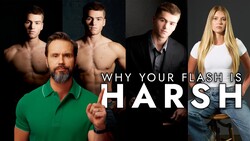
Coming to you from John Gress, this straightforward video makes a direct case for why a flash system still beats LED lighting as your primary setup, even as the technology around both continues to improve. Gress has been shooting with continuous light in his own portrait work for about a decade, so this isn't an argument from ignorance. His core point: location work breaks the LED case fast. Walk into a corporate office and you can't kill the ambient light, which means those uncorrected office fixtures contaminate your shadows with green or yellow casts. Shoot outdoors and you likely can't generate enough LED output to compete with the sun at a practical working distance.
Freezing motion is where the argument sharpens further. Stopping a dancer mid-jump or capturing hair blowing in front of a fan with LED requires shutter speeds up to 1/2,000 or 1/3,200 s, which then forces you toward higher ISO, wider aperture, or both. With flash, Gress points out you can stay between ISO 100 and 500 and use flash duration itself to freeze the movement, arriving at a cleaner file without heavy post-processing. He acknowledges that tools like Topaz Photo AI and noise reduction built into Capture One and Lightroom can recover a high-ISO capture, but each pass through that pipeline adds time and introduces decisions that compound across a full shoot.
There's also a comfort angle that doesn't get enough attention. Gress describes working with a 720 W LED in a 90 cm softbox at arm's length for his own YouTube videos, and how long it took him personally to stop squinting into the camera. If it took him that kind of adjustment, a client who rarely gets photographed is going to struggle even more sitting under a 1,200 W output source a few feet from their face. The shoot gets uncomfortable, their expression tightens, and you're now balancing subject comfort against image quality on a knife's edge. Flash sidesteps most of that entirely.
Gress does give LEDs their due. Product photography without motion, video, hybrid shooting, and color-gel work are all areas where continuous light makes genuine sense. If you already own both systems, use both. But if you're choosing one, his answer is consistent: flash gives you more versatility across more unpredictable situations. Check out the video above for the full breakdown from Gress.



Join the Fstoppers community for free
-
Post comments and join in the discussions
-
Browse the site ad-free
-
Share your work and get featured in the community
-
Compete in the photo contests for fun and prizes
No comments yet