

We finally reached a weird point in photography where sharpness isn't even a goal anymore; it's given. Modern lenses are so good that "tack sharp" is basically a factory setting. And yet, scroll any comment section, and you would think sharpness is a whole sport. Not light. Not timing. Not mood. Just crazy sharp.
Here's the problem: When sharpness becomes a primary metric, our work drifts towards the safest version of itself: clean, polished, technically flawless… and emotionally beige. That's where sharpness turns into a substitute for having something to say, because it is too easy to measure, too easy to praise, and too hard to argue.
I'm not opposed to sharpness; it's essential in genres like wildlife, sports, commercial, and product photography, where detail counts. However, outside these fields, sharpness is often just the starting point. An image can be sharp yet feel hollow, or imperfect yet memorable. Without tension, purpose, or a perspective, increasing sharpness won't improve an image—it will only enhance its emptiness.
Sharpness used to be an achievement. Now it's the default. If one builds their taste, critique, and overall shooting habits around the easiest metric to quantify (sharpness), their photography will drift towards technically flawless yet emotionally bland.

How We Got Here
As technology advanced rapidly in photography, with modern sensors and lenses, sharpness became affordable. No more were the days when you were paying exorbitant amounts of money for sharp lenses. Now, lenses are still a pretty penny these days, but are more accessible than in the past. Editing also began to play a key role in this issue. Software started getting clarity and texture sliders, another way to perceive sharpness in the post-processing era, another area where we take sharpness way too seriously, turning "detail" into a style default.
The culprit of many issues in today's photography world: social media. Social media opened a path for photographers to get their names out there and share their work with a larger audience. Something started brewing: "zoom checks." Pixel peeping and spec validation became mainstream as social media started rewarding photographers with a pat on the back. Photographers received a shot of dopamine, and a new era began. Validation was given based on sharpness, not on the content or intent behind the images.
The result? Compliance. Photography became about conforming rather than being an expressive medium through which we can share our thoughts and ideas with the world. When it came down to it, we didn't raise the bar—we narrowed it.
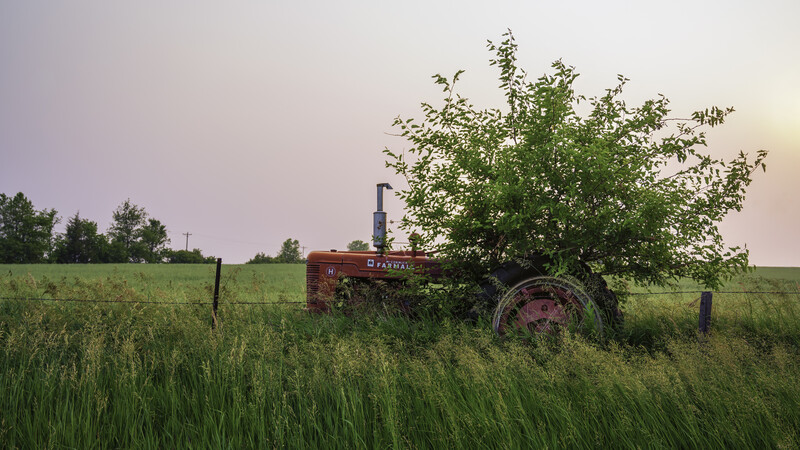
The Beige Effect
Beige isn't ugly. It's just safe. This is the same concept when it comes to sharpness. Sharpness produces photographs that are clean and predictable. This is the goal that became the norm: sharpness. Sharpness does not always create meaning in a photograph. It can't add tension, and it cannot invent the story. Many times, an unsharp image is considered technically imperfect. That can be a true statement, but have we ever looked at an unsharp image and known it was part of the image's emotion? A sharp photo can still be empty of emotion, tension, and story. Too many photographers have taken sharpness and turned it into a personality. Perfection is not personality.
Symptoms of Sharpness Worship
If photography had a court, we could all be charged and found guilty of these symptoms of sharpness worship. We tend to take the technical side of photography and turn it into the personality and style of our work. Sharpness is neither a style nor a personality. Have you ever caught yourself with these symptoms?
- Two Hundred Percent: We have all caught ourselves viewing images at 200% instead of seeing them as photographs. We zoom in and start pixel peeping. Critiquing images pixel by pixel and making choices based on an image that is not sharp at 200% when, in fact, it is a sharp image. Stop zooming in and pixel peeping. What will you gain?
- Hoarding: In the digital age, we are hoarders of digital information. Photographers do the same, but with our "technically good" photographs. We are quick to delete unsharp photos, but we are not when it comes to sharp but lifeless images. We create an archive of technically great images; in fact, it's an archive of images that are full of meaning and stories. We're keeping photographs we dislike because they are technically good.
- Overdoing It: You have seen it, as have all of us. Over-sharpened skin, textures, and edges until it's all crunchy and loud. We are never happy and keep pushing the envelope. We get to a point in editing where it's good, but we feel we can make it a little better by sharpening it further. This leads to over-sharpening.
- Judgment: We pick the sharper image over the image with a better moment. Both of these images can be acceptably sharp; we just decided that, in the moment, sharpness outweighs other considerations, like moments.
What Actually Holds Attention
Many times, we were looking at the technical aspects of a photograph rather than what mattered. We get caught up in the technical side and overlook the emotional and storytelling side. If an image has pull, it's usually because of:
- Timing (moment > resolution)
- Intentional light (even ugly light, used on purpose)
- Tension (something unresolved)
- Composition hierarchy (a clear "why" and "where to look")
- Mood and point of view (the photographer's presence)
In the end, sharpness is the supporting cast, not the lead actor.
When Sharpness Actually Matters
Sharpness is crucial when it supports the purpose. In fine art photography, an unsharp photo can add pull and contribute to storytelling. While sharpness is often necessary, it shouldn't delay us. I would never deliver an unsharp image to a client, but if I have two acceptably sharp images—one slightly sharper than the other—and the other excels in every aspect, I would choose to deliver it because it still maintains sharpness and offers a stronger storytelling element, even if it is just a little less sharp. Here are a few times when sharpness needs to reign king:
- Commercial/product work (detail is the product)
- Wildlife/sports (subjects demand it)
- Certain editorial/documentary needs (clarity for information)
- Large prints where detail is part of the experience
In those cases, sharpness is a tool. In most other cases, it's just a checkbox.
Better Questions Than 'Is It Sharp?'
I have found that the better questions we ask, the better answers we receive. This is the same when it comes to sharpness. With this information, we can begin producing better images and projects. Next time, ask yourself these questions:
- What am I trying to say here?
- If this were slightly soft, would it still work?
- What's the emotional temperature?
- What's the subject—really?
- Is the detail adding meaning…or noise?
The Real Take
It's easy to consume overly clean images, since they offer no friction and are easy to scroll past. Mystery, imperfection, and tension can give images the longevity they deserve. It seems that many photographers these days are embracing imperfection photography; it's a breath of fresh air! Photographers are working with more film, and I have even seen many bring back alternative photography processes. Sharpness is often the final polish on an undecided photograph. Stop polishing. Start choosing.
In the End
Don't get me wrong, sharpness is an important technical element in photography. Too many rely on it as a personality and the one and only metric of a successful image. We need to remember that imperfections are what make photography authentic. Sharpness can be sterile. If sharpness is the most interesting thing in your photo, you didn't take a photograph—you took a test.




Join the Fstoppers community for free
-
Post comments and join in the discussions
-
Browse the site ad-free
-
Share your work and get featured in the community
-
Compete in the photo contests for fun and prizes
9 Comments
Nothing in art or photography is a given, including sharpness. And the appropriate degree of sharpness has been argued since the 1800s. In many cases, it's an art form unto itself, and it factors into every genre of photography. Detail matters... that's essentially what differentiates photography from all other art forms. Besides those that you mentioned, portrait photographers generally strive for sharp detail in the eyes, even with a shallow depth of field. Landscape photographers might argue over whether distant backgrounds should be as sharp as a foreground subject, depending on what looks natural to the human eye. We argue about that all the time. Some of the impact in a photo comes from the photographer's choice of depth-of-field... more than whether the picture is just overall sharp or blurry. Focus stacking or not? Again, another element of photography worth examining. Prints have the capacity to expose technical attributes of a photograph that digital does not. When examining a print, it's common to see it as either over or under sharpened. Tutorials are created and articles written about the subject, as they should be, because proper sharpening is not easy to master. It's not simply a function of buying a sharp lens. That misses the point.
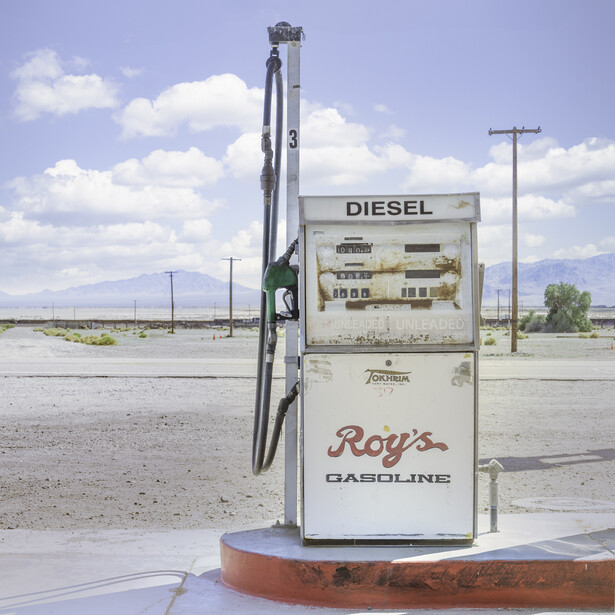
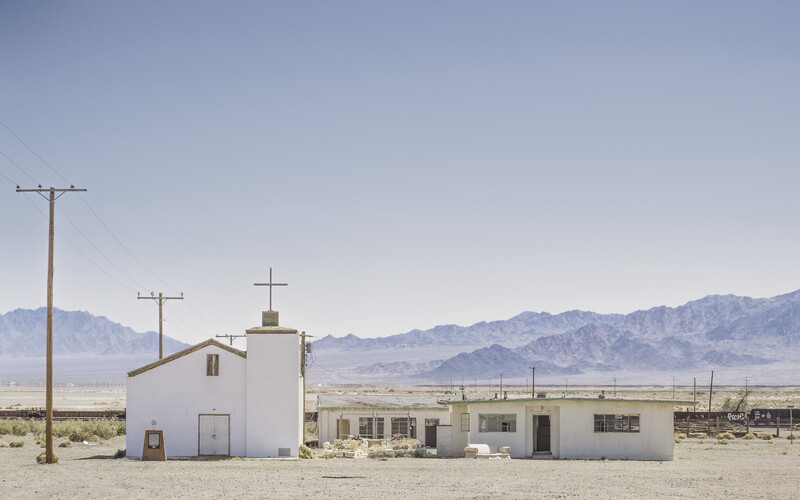
So I would take a slightly different track on this subject. I would devote an entire article to sharpness and detail, and leave impact for a different article. Of course, technical qualities might not guarantee a photo with emotional impact. But neither does a picture that is lacking in sharpness and detail. Emotional impact is a separate and unrelated subject. Your photo of the old gas pump could be a compelling look into history, conjuring all sorts of emotions to one person, while evoking absolutely nothing to another. At least sharp detail and technical polish can be widely appreciated by most photographers, whereas impact and storytelling are entirely subjective. I try to make the most technically superior images possible, and let the viewer decide whether the subject of the photo speaks to them or not. And that part, the viewer response, is not something I can control. All I can do is make pictures worthy of my skills as a photographer, and that includes getting the sharpening right. Don't underestimate polish... it might be more widely appreciated than you think.
I was glad to see this article highlight that certain genres demand sharpness! Macro is another one.
thanks!
“Sharpness is a bourgeois concept” – Henri Cartier-Bresson
The best thing I've done the last two years is buy vintage lenses that are intentionally not sharp. I also don't worry about not having details in the shadows. Both changes have made photography so much more enjoyable.
Love this! It's like photography is going full circle and the things that we chased for years is no longer valid!
This article is AI or AI assisted. It is beige with prefabricated phrases and polished to or by AI standards without any real new notice. It is surfing the same wave as "resolution doesn't matter" and "it's not the gear, it's the photographer".
AI style: "It's not the photographer. It's not the resolution. It's not the sharpness, it's how you apply it."
"At the end," that tells absolutely nothing.
The world is changing and the challenge is to make an art out of the new, not stick in the past. Now a days we watch pictures on a 8K 85" screen at a distance of 1m (something like 3 feet). If you are still watching pictures on an iPhone, then you are late.
"Don't get me wrong:" I have studied AI 50 years ago at the university and graduated with honors. We didn't call it AI, some others did, we called it deep searching, not deep learning. The problem is, there are not enough data. The only data available today is the public Internet. Doesn't matter what model you use: shit in, shit out.
I think most people conflate objects in focus with the sharpness of a lens and with artificial post processing sharpness such as in Lightroom or Capture One. These three things are all very different but "sharpness" is used to refer to all of them.
Artificial sharpening is horrible I agree. I completely turn off noise reduction and sharpening in Capture One and do not use software to sharpen my images. If you turn off NR you won't need post processing sharpness since NR is responsible for softening images to reduce noise. I think instead of the issue of "sharpness", the real issue is the blind pursuit of clean, noiseless images.
I actually find sensor noise in raw images really appealing. I sometimes even set my camera to iso 800 or 1600 over 400 because the texture is much more charming. Either that or I intentionally add film grain to give the image some texture.
Again the real issue is pursuing artificial cleanliness in an image opposed to the sharpness of a lens. These days you don't need NR for images under 3200 iso (and I'm shooting with an A7R IV) which means you have no need for artificial sharpening. Enjoy the natural sharpness of your images and allow them to have noise. Which btw also results in your images having more detail since fine details aren't destroyed by noise reduction or obscured by the artifacts of artificial sharpening such as ringing.
Love this perspective!