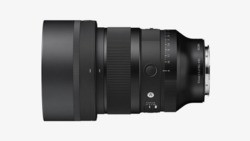
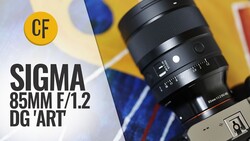
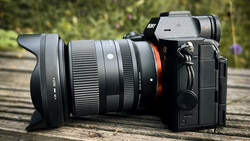
Sony sells a 50mm f/1.2 but has held off on an 85mm f/1.2 for its full frame mirrorless system, and now a third party has stepped in with autofocus and a price that undercuts Sony's own 85mm f/1.4 G Master II. The Sigma 85mm f/1.2 DG DN Art lands as the first autofocus 85mm f/1.2 for Sony E and the first 85mm f/1.2 ever for L-mount.
This lens becomes the longest f/1.2 in Gordon Laing's look at Sigma's growing family, joining the existing Sigma 50mm f/1.2 and Sigma 35mm f/1.2. At roughly $1,600 or £1,300, it runs about a third more than Sigma's own 85mm f/1.4 Art yet stays below the Sony 85mm f/1.4 GM II. Compared with the Canon and Nikon 85mm f/1.2 options, it costs about half. Laing tests the L-mount version on a Lumix S1R II body, since most reviews cover the E-mount edition, and the optical results apply to both.
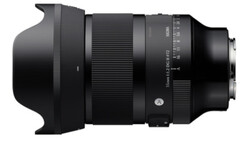
The Sigma 85mm f/1.2 DG DN Art measures 87 by 120mm on L-mount and weighs 905 g. That puts it close in size to the Sony 85mm f/1.4 GM II but roughly 50 percent heavier, something you notice over a long event. Set against the Canon and Nikon f/1.2 models, though, it comes in smaller and about 300 g lighter. Build quality carries the usual Art traits: dust and splash resistance, a rubber gasket at the mount, and assembly at Sigma's factory in Japan. The aperture ring runs from f/1.2 to f/16 with an A position, clickable or de-clicked, plus custom buttons on top and the left side and an AF/MF switch.
Focus lands about a quarter of a second to shift between subjects on the S1R II in AF-C, slower than the best 85mm f/1.4 lenses but roughly twice as fast as Laing's test of the Canon RF 85mm f/1.2, and near silent throughout. Wide open at f/1.2, the center shows strong detail from the start, with slight gains through f/1.8 where it peaks. Corners hold up too, with mild vignetting that clears by f/2 and detail that stays clean across the frame. On the portrait test, backgrounds fall away into smooth bokeh without harsh edges or color fringing, and Laing rates it optically as good as any 85mm f/1.2 he has tested, including ones costing twice as much.
Sigma's f/1.2 trio arrives while the industry keeps circling this focal length as a status piece, and the lesson for anyone shopping is that focal ratio no longer decides which brand you can trust. A decade ago, f/1.2 meant a first-party flagship and a first-party price. The pattern now runs the other way: third parties reach the same optical ceiling, add autofocus, and trim weight, which reshapes how you weigh a system before you commit to it. If you shoot portraits or events on Sony E or L-mount, an 85mm f/1.2 with quiet autofocus opens a door that used to require a Canon or Nikon body to walk through. Owners of other systems, as Laing puts it, keep looking enviously at Sigma's full frame range.
There are third-party limits worth knowing. Sony shooters cap at 15 fps in continuous autofocus and may find stabilization less effective than with native glass, while Lumix owners lose crop with video stabilization. The closest focus distance of 84 cm is the one spec Laing wished were tighter, though most 85mm primes sit in the same range and none of them aim to be macro.
See how the bokeh, sunstars, and focus pulls actually hold up by pressing play on the review above.

Join the Fstoppers community for free
-
Post comments and join in the discussions
-
Browse the site ad-free
-
Share your work and get featured in the community
-
Compete in the photo contests for fun and prizes
No comments yet