

When most people shop for a camera, the first number they look at is megapixels. It is the biggest number on the box, the easiest spec to compare, and the most intuitive to understand: more pixels equals more detail. But megapixels are not the reason your sunset photo has a white, blown-out sky. They are not the reason your indoor portrait has muddy, noisy shadows where the detail should be. And they are not the reason a professional photographer can rescue an underexposed shot in Lightroom while yours falls apart the moment you touch the shadow slider.
The spec that determines all of those things is dynamic range. It is less glamorous than resolution, harder to quantify on a spec sheet, and almost never the headline feature in a camera announcement. But in the real world, where light is rarely perfect and exposures are rarely ideal, dynamic range saves more photos than megapixels ever will.
What Dynamic Range Actually Is
Dynamic range is the distance between the brightest highlight and the darkest shadow your camera's sensor can record in a single exposure while retaining usable detail in both. It is measured in stops. One stop equals a doubling or halving of light.
A modern full frame mirrorless camera typically captures somewhere between 13 and 15 stops of dynamic range at base ISO. That means the brightest tone it can record is roughly 8,000 to 32,000 times brighter than the darkest tone it can still distinguish from noise. An older DSLR from ten years ago might manage 11 to 12 stops. A smartphone sensor typically handles 10 to 11 stops before software processing expands it artificially through computational HDR.
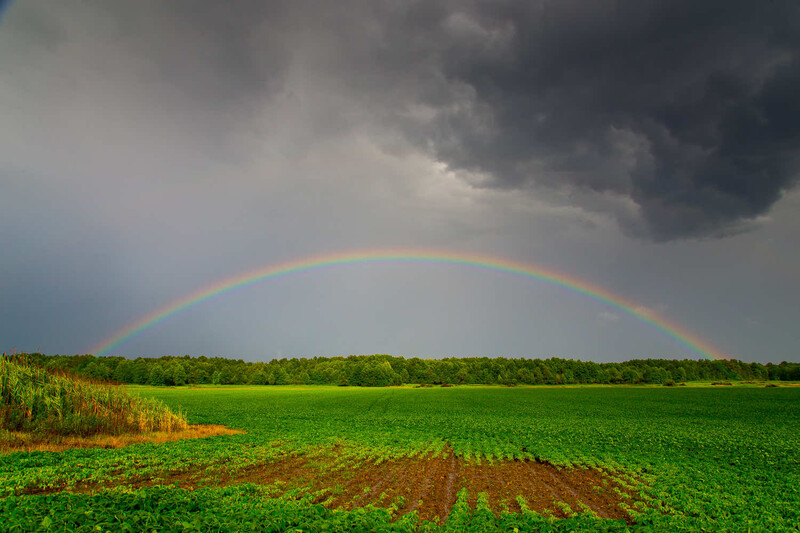
The human eye, for comparison, can perceive roughly 20 stops in a single scene (though not all at once; the iris adjusts as you look around). This is why a sunset that looks breathtaking to your eyes often looks disappointing in a photograph: the scene's brightness range exceeds what the sensor can capture, and something has to give.
Highlights vs. Shadows: They Are Not Equal
Here is a detail that changes how you shoot once you understand it: digital sensors do not treat highlights and shadows the same way.
- Highlights have a hard ceiling. When a pixel receives more light than it can hold, it clips. The value maxes out at pure white, and the original information is gone. There is no data to recover because none was recorded. A blown highlight in a raw file is permanently lost. You cannot pull it back in post-processing because there is nothing there to pull.
- Shadows are different. When a pixel receives very little light, there is still a signal buried there (to a point). Modern sensors, especially those with dual-gain (or dual-conversion-gain) architecture, record that faint signal cleanly enough that you can lift it two, three, even four stops in post-processing and still get usable detail. The image will be noisier than if you had exposed it correctly, but the detail is there. It was captured. It just needs to be revealed.
This asymmetry is why the oldest exposure advice in digital photography still holds: expose for the highlights and recover the shadows in post. A camera with excellent dynamic range makes that strategy dramatically more forgiving, because the shadows it captures are cleaner and more recoverable.
Why This Matters More Than Megapixels
A 60-megapixel sensor that clips its highlights at 11 stops will give you an enormous, incredibly detailed file of a ruined image. The sky is white. The shadow detail is noisy. The resolution is beautiful and completely irrelevant because the tones are wrong.
A 24-megapixel sensor with 14 stops of dynamic range, shooting the same scene, will give you a smaller file where the sky retains color and texture, the shadows lift cleanly with minimal noise, and the final image looks the way the scene actually looked to your eyes. Twenty-four megapixels is more than enough for any print size short of a billboard. Fourteen stops of dynamic range is the difference between a usable photo and a deleted one. That's why the original Sony a7S was such a big deal when it came out.
This is not hypothetical. It is the reason landscape photographers obsess over sensors from companies whose dynamic range performance leads the industry. It is why wedding photographers shooting receptions in mixed light (bright windows, dim dance floors, spotlit cake tables) care more about shadow recovery than about whether the sensor resolves 40 or 60 megapixels. And it is why the megapixel race has slowed in recent years while sensor engineers have focused on read noise reduction, dual-gain circuitry, and backside illumination, all of which improve dynamic range.
What "Highlight Recovery" and "Shadow Lifting" Look Like in Practice
If you shoot raw (and you should), your editing software gives you direct access to the dynamic range your sensor captured. The two most important tools are the Highlights slider and the Shadows slider in Adobe Lightroom, Capture One, or any comparable raw processor.
Highlight recovery pulls bright areas back from the edge of clipping. If the sky is nearly blown but not quite, dragging the Highlights slider to the left can restore cloud texture, sunset color, and tonal gradation that looked lost on the camera's LCD but was actually recorded in the raw file. The key word is "nearly." If the highlights are fully clipped (pure white with no data), no slider will bring them back. This is why exposing to protect highlights matters so much.
Shadow lifting brightens the dark areas of the image, revealing detail that was captured but hidden in the lower end of the tonal range. On a camera with strong dynamic range, you can push the Shadows slider aggressively (+60, +80, even +100) and the result looks natural, with clean detail and minimal noise. On a camera with weaker dynamic range, the same adjustment produces banding, color shifts, and visible grain that make the image unusable. If you want a structured walkthrough of these adjustments and how to apply them without destroying the natural look of your images, Mastering Adobe Lightroom covers the full editing workflow from import through export.
The practical takeaway: a camera with great dynamic range does not just give you better-exposed images out of the camera. It gives you a larger safety net in post-processing. You can underexpose to protect highlights and then lift shadows with confidence, knowing the detail will be there when you need it.
What Kills Dynamic Range
Even if your camera has excellent dynamic range at base ISO, several factors can reduce it in practice.
- High ISO. As you raise ISO, read noise increases and the usable shadow range shrinks. A camera that delivers 14 stops at ISO 100 might deliver only 8 to 9 stops at ISO 6,400. This is why low-light photographers care about both high-ISO noise performance and base-ISO dynamic range: one determines how clean the image is, the other determines how much you can push it in post.
- JPEG compression. If you shoot JPEG instead of raw, the camera applies its own processing (contrast curves, noise reduction, sharpening) and discards the rest of the data. A JPEG file contains roughly 8 stops of tonal information regardless of what the sensor captured. All that recoverable shadow detail? Gone. Shoot raw if you want access to your camera's full dynamic range.
- Underexposure beyond recovery. Dynamic range is not infinite. Even the best modern sensors will produce noisy, banded, unusable shadows if you underexpose by five or six stops and try to pull the image back. The safety net has a limit.
How to Check Your Camera's Dynamic Range
The most reliable source for real-world dynamic range measurements is Photons to Photos, which publishes independent sensor measurements for nearly every camera on the market. Look up your camera model and compare its dynamic range curve at different ISOs. This tells you exactly how many stops of usable range you have at each sensitivity setting, which is far more useful than the manufacturer's marketing claims.
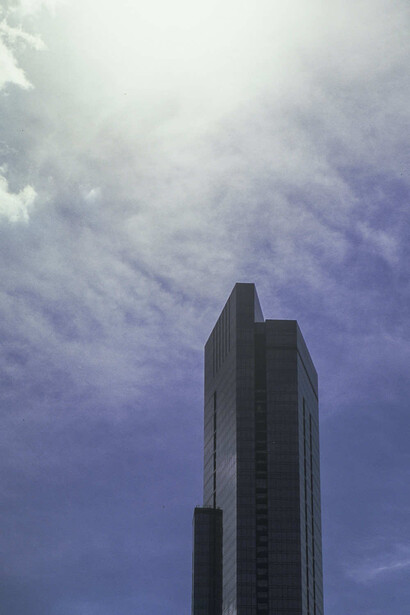
If you are comparing cameras and dynamic range is a priority (landscape, architecture, real estate, wedding), look for bodies that perform well at base ISO and maintain strong range through ISO 800 to 1,600. Those are the ISOs where most real-world shooting happens, and the dynamic range difference between a 12-stop sensor and a 14-stop sensor is enormous in practice.
What This Means for How You Shoot
Once you understand dynamic range, your approach to exposure changes. Instead of trying to get the "perfect" brightness in camera, you start thinking about which information you can afford to lose and which you cannot.
- Protect highlights first. If the scene has a bright sky and a dark foreground, expose so the sky retains detail. The foreground shadows can be lifted in post if your camera has the dynamic range to support it.
- Use the histogram, not the LCD. The rear screen brightness varies with ambient light and display settings. The histogram shows you objective data about where your tones actually fall. If the data is touching the right wall, you are clipping highlights. Pull the exposure back.
- Shoot raw. The dynamic range advantage of raw over JPEG is not subtle. It is the difference between having three to four extra stops of recoverable data and having none.
- Keep ISO low when possible. Every stop of ISO you raise costs you dynamic range in the shadows. If you can use a tripod and a slower shutter speed instead of raising ISO, you preserve more range.
For a deeper understanding of how exposure, ISO, aperture, and shutter speed interact to determine what your sensor captures, our exposure triangle guide covers the fundamentals. And if you are shooting landscapes where dynamic range is constantly tested by bright skies and deep foreground shadows, Photographing the World: Landscape Photography and Post-Processing walks through the field techniques and editing strategies that make the most of what your sensor can capture. If you want to start from the very beginning and build a complete foundation in camera operation, exposure, and Photoshop editing, Photography 101 covers the whole path.
Megapixels determine just how big you can make a print. Dynamic range determines whether the print is worth making.

8 Comments
Dynamic range might be more important than megapixels, or it could be the other way around depending on what you do with your images.
A Nikon D800 DSLR from 2012 has a dynamic range of 14.3 at ISO 100, so for the most part, it doesn't appear that mirrorless has improved anything much since then. If natural light contrast exceeds the dynamic range of my camera, I generally conclude that the picture is not worth taking. I much prefer diffused soft light before getting excited about making the photo. High contrast lighting is not my thing in landscape photography. So just because I can, doesn't mean that I want to.
I also contend that landscape photographers do, in fact, benefit greatly from having more than 24 megapixels if you're selling large prints. Billboards are the least of my concerns since they're viewed from a great distance where detail is not an issue. But for wall artwork in the vicinity of 30x45 to 40x60, good quality and quantity of megapixels make a difference.
According to photonstophotos.net the D800 has 11.42 stops of dynamic range at ISO100. But it is true that not much has happened with that ever since, as the Z9 is even worse, and the Sony A7RV is barely better (11.69). The only camera in the collection with significantly better result is the Phase One IQ4 150MP with 13.33 stops.
https://www.photonstophotos.net/Charts/PDR.htm#Nikon%20D800,Phase%20One…
I was using other articles that point to the 14.3 number, such as:
"Dynamic range, which corresponds to the ratio between the maximum and minimum brightness a camera can capture, was best in the D800. But just barely. The D800E, scoring 14.3 EVs (exposure value), lagged the D800 by an insignificant 0.1 EV. Both cameras would do a great job for landscape photographers who so frequently rely on a camera to preserve details in high contrast images."
https://www.dxomark.com/nikon-d800e-nabs-top-ranking-from-d800/
My understanding is that whatever the number is, that it's about the same for the Nikon Z series of mirrorless cameras, but that the Z series offers lower noise at higher ISO. But at this point, I'd take significantly higher megapixels and resolution for my work in landscape photography and printing, than more dynamic range.
When you sample 14 bits ypur DR is limited to 14 stops. DXO, used highly downsampled images. Each factor 2 downsampling gives you 1 stop DR.
I don't know. Would I prefer the 4x5 (inch) slide film over a 6x7 (cm) negative? It all depends on the dynamic range of the scene. If it fits into the limited dynamic range of the slide film, it would the obvious choice so there is the spacial resolution. If it doesn't, the obvious choice is the more forgiving negative film, even with some loss in the resolution regards.
I agree with all your points. I went A7SM1 in 2014 and used several years for most anything but I was mostly a Astro MW capturer and night time was great till the A7M3 that has ISO Invariance (others had it) few understood it. The key was you could capture in the darkest place at a low ISO getting less noise and a dark image BUT in post just increasing the exposure maxing out at 5 stops in Lrc you get a very very bright image and all details in tacked with clarity. Then if you make it another image in processing you the edit again and just increase exposure you can even get a brighter with great sharp detail.
The two images side by side are with The A7SM1 and Voigtlander HELIAR-HYPER WIDE 10mm F5.6 yes F5.6. but the last was after exposure increasing the third time, just playing.
No one is out at night doing captures of the Grand Canyon seeing all the way to the near bottom and getting stars Sony ILCE-7RM2 and FE 12-24mm F4 G.
But the A7RM5 came out with the best thing that no one mentions except now birders can capture white birds in the full sun brightness in flight or on a nest with a -5 step exposure dial vs a -3 step again ISO Invariance and even the darkest parts can be brought back.
A big thing back in the DSLR days was HDR Bracketing the one reason I went with the A7SM1 is it can do 5 at +/- 3EV and that helps most when doing indoor captures and also capturing a bright outdoors even with sharp trees.
Software today have so many tricks to play with any camera image.
If one want to have a great time Find a A7/R/S mod 1 or mod 2 with the now no longer available Playmemories apps mainly the "Digital Filter" allows you to capture the sky and foreground separately with any camera setting you can think of and get a RAW, Jpeg or both sent to your card and it has presets for sunrise/sets and other things Key is no filters or holder to carry around and all processed in camera and also the ability to edit those images. Fun times for all.
One last thing when I would show people my night images with the A7SM1 they all said I PS 'ed them.
Another thing no one talks about is you now can select your Priority AWB as standard, ambience or White. ever do a capture of a white bird and get a blue tone of the white on the shady side but also helps with night/dark capture getting white with the lights and the ground glow has a blue tint your eye does not see. when it comes to dynamic range and high lights being what you want just an add to think about!
Composition is more important than either dynamic range or megapixels. With respect to the photo of Pittsburgh at the beginning of the article, I kept coming back to it thinking something seemed off. After all, this is a photography site. Am I the only one who does a mental critique of the images shown in the articles? Sometimes it feels they're there just to take up space, especially as they become repetitious.
Anyway, I think the composition in that picture would be improved by shooting from a slightly higher or more forward camera position... something to separate the foreground bushes from the two bridges. Overlapping elements clutter the image. The balance feels off. If you can get higher and aim slightly down, you might be able to cut out some of the sky too. It's like you wanted to show everything... the sky, city, and foreground flowers, but by giving equal weight to all three, there's no particular primary subject, and nothing that really pulls me into the picture.
I realize the comments are uninvited but we're constantly given articles about camera gear, specifications, and comparing this or that, while staring at images that call for critique.
Hmmm, enjoy your wide ranging columns but this one is off the mark. Especially that last sentence: "Dynamic range determines whether the print is worth making." I suppose that's true but the likelihood of dynamic range being a problem is quite small for such a melodramatic statement. Thom Hogan (bythom.com), a photo technology expert, has stated that for quite a while dynamic range hasn't been an issue for the vast majority of photography.
A quick review of DR for full frame cameras at dxomark shows that nearly all of them since the mid 2000 teens have been 14+ stops (Dxomark's calculations). Even now the Nikon D850 (introduced 2017) tops the list and the APS-C Nikon D5600 comes in at 14, brushing against some full frame models. And more to the point you don't have to sacrifice resolution to gain better DR as you'll find little difference in DR ratings between the higher res (45 to 60+ mp) and lower (24 mp) res cameras. So DR is basically a moot point when choosing a new camera.
Hogan provides an excellent overview of dynamic range beginning with its origins, its different definitions and how they impact (and explain) the somewhat different but mostly valid results from different websites--including photostophotons and Dxomark. Again, he points out that with some few exceptions DR has been excellent and excels the capabilities of both printers and displays.
So you may infrequently bump into a DR issue, but it's unlikely with the current range of cameras that you'll find one that could have made a significant difference.