
One issue in the photography community has always lingered, and only tenured photographers seem to grasp it: exposure is a decision, not a setting.
A perfect moment arises when the light suits you, and you have a subject. You raise the camera to your eye, following the advice of countless photographers. You balance the camera’s light meter to achieve that perfect exposure. When you review the photograph you took, it looks flat, dull, and untrue to life. Confusion sets in, and you ask yourself, "What went wrong?" The light meter did its job. The camera didn’t make a mistake; you did, and it isn’t your fault.
A reflective meter in the camera measures reflected light and interprets the scene according to its metering system, generally working toward a middle-tone reference. When you set your settings based solely on this meter reading, you're delegating a creative decision to something that doesn’t have creativity: the camera’s meter.
The Exposure Triangle Taught You the Wrong Lesson
The exposure triangle isn’t wrong; it's a part of the equation for every photograph, yet it’s incomplete. Break down the exposure triangle, and it does one thing: it teaches you the mechanics of photography. We know shutter speed captures action and motion, aperture controls depth of field, and ISO is our sensitivity to light; read between the lines, and you see what is missing. The problem is that it’s taught as the whole of exposure when it's just the mechanics, and students learn what shutter speed, aperture, and ISO do, but never why they would choose one over another.
It’s like teaching someone unfamiliar with vehicles to drive using the clutch, gas, and brake without explaining that they have a destination. The missing half of the exposure triangle isn’t more knowledge; it’s a sequence of decisions that precedes the numbers. Read between the lines: exposure is more than three settings to balance.
For a broader foundation in these controls, see Photography 101.
The Myth of the "Correct" Exposure
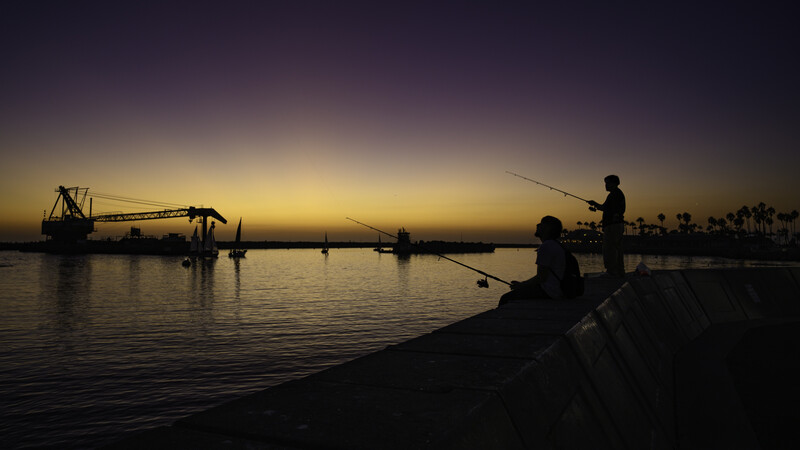
A correct exposure doesn't exist everywhere; the myth needs to die a quick death in the photography community: the perfect exposure. A correct exposure doesn't exist across the board; I can’t grasp why this ever gained traction. I remember early on hearing about the perfect bell-shaped histogram. Is that correct? Yes and no. It holds true only when the histogram matches the photograph you create.
The First Moves of Every Exposure
A photograph begins long before you press a button: what story do you wish to tell? A misty early-morning field can evoke a bright, hopeful, high-key image or a dark, low-key image—each perfectly exposed and reflecting different artistic choices and perceptions of the same light. Remember, the meter's reading isn't an entirely correct exposure.
Exposure Is How You Say It
Shutter speed, aperture, and ISO are three expressive tools, not three numbers to reconcile. It’s not accounting. Each becomes a creative choice in the image-making process and shapes how we want to express the photograph to the viewer. Textbooks present these three as a trade-off, but they represent distinct creative choices.
Shutter speed: It involves deciding how long to expose. At this stage, the photographer can capture or reveal time. We can choose to take a split second of time and freeze it for an eternity, where our eyes can’t. A water droplet or a soccer game freezes in time. We can then head down the other road and collect time. Flowing water turns to silk, and prairie grass turns to a soft flow in the breeze. Neither fast nor slow shutter speeds are correct or wrong; yet again, it’s a creative choice.
Aperture involves choosing where to focus your attention. Wide-open apertures (f/2.8) make the world fall away, creating separation and isolation. This is the choice that guides the viewer’s eye to the area of interest. Stopping down the aperture (f/16) opens up the world. The grass in the foreground becomes sharp, and more of the background comes into focus. At this point, the photograph centers on a place. Relationships and context form. The real question aperture asks, and has nothing to do with the numbers, is: is the photograph about one thing or everything?
ISO: The decision of how far you will go. Higher ISO lets you shoot when the light is disappearing, in the last minutes of the day, or in a dark interior. The cost? Noise. Remember that noise is not always the enemy, which is where many photographers go wrong: a clean file matters; at other times, atmosphere or authenticity does. The question isn’t how much noise I am willing to trade for the shot; it’s a creative answer, not a technical one.
Across these three choices, none of them is about balancing; it's about creative choice. Each one is a decision about what the photograph emphasizes.
Find One You Can’t Move
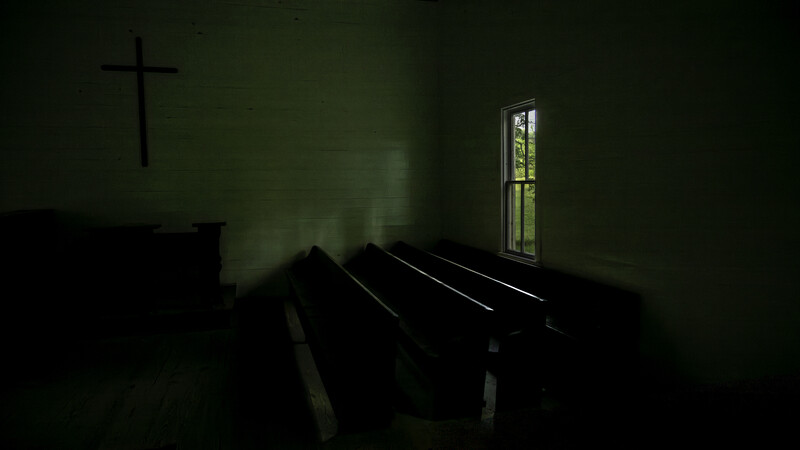
In my approach, every photograph contains what I call a non-negotiable. That could be referring to shutter speed, aperture, or ISO. Choosing the shutter speed allows you to freeze a bird soaring in the sky in a single moment. Maintaining sharp focus throughout the scene depends on aperture settings, while achieving a clean, low-noise image calls for the correct ISO. I begin by identifying the one requirement I am least willing to compromise.
Examples:
Bird in flight: Shutter speed
Portrait with a creamy background: Aperture
Handheld in dim light: ISO
When you find the anchor in your photograph, your exposure stops being a guessing game and becomes intentional. As you grow as a photographer and start making these decisions, you become intentional.
Now, Make the Numbers Work
This is where the exposure triangle finally earns its place, and notice: it took four decisions to get here. The triangle is never wrong; it was just never the starting point. Photographers teach us to consider this the starting point of our images when, in fact, it’s the last step in creating a photograph. If you're at the point where you are choosing the "numbers" for balance, we have solved the equation puzzle.
Start creating a process for you to use in the field. When I photograph a scene, the first question I ask is: What is the photograph about? Which tool expresses depth of field? Aperture. I then decide how much of the image I want in focus. I choose f/8 to f/16 if I want the foreground and background in focus. Do I want less in focus? Then I choose a smaller f-stop, like f/2.8. That expressive choice was made intentionally.
Now, what can I not move? If depth of field is the anchor of the image, aperture becomes the non-negotiable in the equation, and I have chosen f/16. It’s locked, and I will not change it. Shutter speed and ISO are now the only two variables I will change. If I am on a tripod and nothing in the frame is moving too fast, shutter speed is no worry. This lets me keep my ISO low. This means that shutter speed becomes the variable that absorbs the rest for the cleanest file. Whatever gives me the right exposure at f/16 and ISO 100. If it’s a half second or a second, I am not worried because the tripod has that covered. I didn’t reconcile the numbers against each other; I made one creative call, protected it, and let the other two fall into place.
In my method, I choose one non-negotiable variable and build the image around the other two. Which variable is locked changes with the photograph.
This rephrases the beginner’s mindset of getting it right. Right doesn’t always mean the camera’s meter is happy. The meter can give you a technically reasonable exposure that still does not match the image you envisioned. Right is seeing the photograph I envisioned at the beginning. When those two things line up, the exposure is correct, whatever the meter thinks. The meter measures light. You decide what the light is for.
In the End
When it comes down to it, especially if you are using auto or program mode on your camera, you still have choices and don’t have to leave it up to the camera’s meter, even when setting exposure manually. The real problem with using auto exposure modes is that you’re not lazy; you’re handing creative intent to the camera. Once you see exposure as a decision, you can't go back to seeing it as a setting.



Join the Fstoppers community for free
-
Post comments and join in the discussions
-
Browse the site ad-free
-
Share your work and get featured in the community
-
Compete in the photo contests for fun and prizes
5 Comments
ISO is *not* "sensitivity to light" on digital cameras.
Correct. But thats how many people are taught and understand it.
Justin I thought that was a very good analysis of how the exposure triangle should be used creatively rather than to adjust settings for a balanced histogram. The idea of one of the values being non negotiable is brilliant, I think we do this already with focal length, getting that sorted before worrying about exposure. I know using a tripod is considered old school with modern cameras but it sure allows us to experiment with different exposure settings rather than relying on the camera. How do you see the relationship with exposure settings and focal length? Thank you for your article.
Thanks! Thats a good question you propose.
I am old school. I shoot digital, but I have not learned to use histograms. But I have read Ansel Adams.