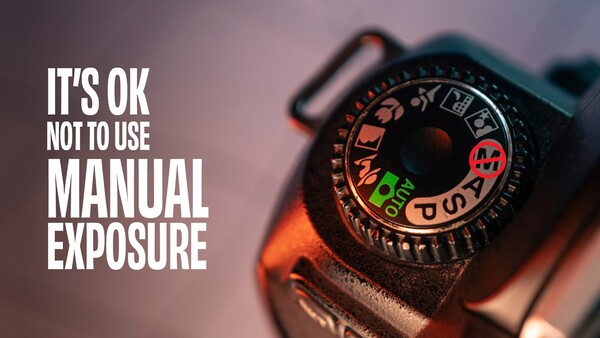
Someone was offered a free camera with one condition attached: they had to commit to learning and using manual exposure. Was it worth it?
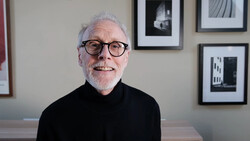
Michael Sladek pushes back on the idea that manual exposure is a required first step, calling it a generational habit left over from a time when there was no other choice. He points to cameras like the Pentax K1000, fully manual with manual focus and manual exposure, as the tools many people learned on decades ago. Sladek is honest about what "learning" meant back then: turning the shutter dial and aperture ring until the meter needle landed in the middle, without really understanding what either setting did. He argues that high technical barrier kept the number of photographers low, since picking up a camera demanded real time and commitment before you could get anything usable. Telling a beginner they must shoot manual, in his view, rebuilds a wall that no longer needs to exist.
Instead of manual, Sladek recommends switching the mode dial off the green auto setting and over to P, or program mode. In auto, the camera makes its own decisions and forces things you may not want, like popping up the built-in flash in dim light no matter what you do. P mode hands you the same fast, automatic exposure calculation while unlocking a control that auto locks away. That control is exposure compensation, which he treats as the whole point. New camera owners are often overwhelmed by the buttons, dials, and menus, and he describes watching first-time shooters at a Nikon event who didn't even know where the shutter button was. Keeping exposure simple frees you to concentrate on composition and on the act of looking through the camera, which is a genuinely different way of seeing than holding up a phone.
Exposure compensation is the piece worth understanding here. On most cameras, it runs from zero out to plus three and minus three; rotate toward plus to brighten the photo, toward minus to darken it, and a larger number moves further in that direction. You get to decide how bright or dark the image is without ever calculating which shutter speed or aperture makes that happen. Sladek makes a point that gets overlooked in the manual-versus-automatic argument: full manual control costs you spontaneity, and while you fiddle with settings, the moment can pass. Automatic modes keep the camera responding instantly so you stay with the scene in front of you.
The deeper trend worth noticing is where serious shooters actually land after years behind a camera. Sladek admits he doesn't use program mode himself; he shoots aperture priority and rides the exposure compensation dial to set brightness exactly where he wants it. That's not a beginner shortcut he outgrew. It's a workflow plenty of working professionals use every day, because semi-automatic modes free up attention for the decisions that separate a good photo from a forgettable one. The camera handles the arithmetic; you handle light, timing, and framing. Seen that way, starting a new photographer in P mode with exposure compensation isn't dumbing anything down. It puts a beginner on the same road an experienced shooter travels, just with fewer variables to juggle at once. If you understand that one dial early, the jump to aperture or shutter priority later feels like a small step rather than a fresh mountain.
Sladek also lands on a broader principle about creative gear in general, comparing the "you must shoot manual" rule to insisting a writer use one specific pen or a cook use only cast iron. People have different temperaments and different ways they like to work, and forcing a single method rarely helps anyone get started. His stated goal is more people picking up real cameras and feeling confident doing it, which is hard to argue with.
Give the video above a look to see exactly how Sladek switches modes on camera and demonstrates the exposure compensation dial in action.

Join the Fstoppers community for free
-
Post comments and join in the discussions
-
Browse the site ad-free
-
Share your work and get featured in the community
-
Compete in the photo contests for fun and prizes
10 Comments
I agree that shooting manual isn’t a must. But what’s the difference between riding the exposure compensation dial versus the shutter speed dial, okay it may take a few more clicks if the light chances quickly. In my opinion when the light changes very quickly (like at concerts) the best way is to shoot manual with auto iso. For landscapes I prefer full manual but aperture priority with exposure compensation also works fine
I literally cannot use any auto mode. It never goes the way I want it to, and I end up turning it off in frustration . Manual mode keeps things locked in place with less actual effort. But, maybe that’s just me.
I am constantly adjusting shutter speeds and then aperture, then, only if in dire need of, the ISO.
Shooting in manual requires the photographer to actually understand what they and the camera are doing, and hopefully, why.
I would think that manual is something that you would work up to if that is your preferred way of shooting. I usually shoot in FV (flexible priority) so I have "flexible" control of the environment and can adjust accordingly. For users just starting out using cameras, I'd have no problem recommending AUTO to start out with... Better to learn composition first and then fine tune your skills by moving into other modes.
Recently I had a conversation with a teen, beginning photog, he asked what I thought he should learn first. My response was composition and learning about proper exposure. After some discussion of the what, why and how of those subjects, I suggested to him that he not try to practice his composition skills and developing knowledge of exposure at the same time. He should put his camera in Auto mode when working on his composition skills, so that he would have a decent photo that would let him focus on did he compose well. And for exposure, to use manual mode and play with aperture, shutter speed and ISO till he understood how they interplay.
I just hanker for proper manual focus, which isn't really manual on any of my (bridge and compact) cameras, despite the "M" switch. One day I'll get me a mirrorless (or perhaps even an SLR) and a proper manual-only lens or two. Then of course I'll miss the flexibilty of a superzoom lens. I can't win.
One of the first things to learn is how a camera measures light and how it responds to that. And what the different metering modes do.
Hello! This is my video, which Fstoppers linked to without notification or request, and then summarized awkwardly with more than a bit of AI vibe about it. Sad face.
FYI - I've received almost no traffic to my video as a result of this post, but Fstoppers has a bit of page clicks, comments and ad views that generate $0 for the person who created the content - me.
I've emailed Alex Cooke, the editor of Fstoppers and "author" of this article asking that he ask permission before linking to my videos. I got no reply from him. Please do better!
For now, embedding turned off for this video. If you'd like to watch the video, please click here - https://youtu.be/_QZ5dSCXeX4
When is Manual not really Manual? When you choose the shutter speed and Aperture, but let the camera choose the ISO. Which I do all the time. Also, I use whatever mode suits the subject matter. There is no wrong answer.
Newspaper and magazines former Chief of Photography here, I used to hire and have up to 30 photographers under my supervision for a nation wide media company, hiring from rookies, recently graduates from universities or photography schools up to pros, Always, Always Always they need to understand and use the cameras in Manual, Is a mental issue, is a brain skill, is the lowest level of comprehension of problem solving in the industry, We used to say "The camera is stupid, the brain is on the photographer never let the camera do anything in automatic" You hill have a hard time growing in the professional arena without the basic training.