
















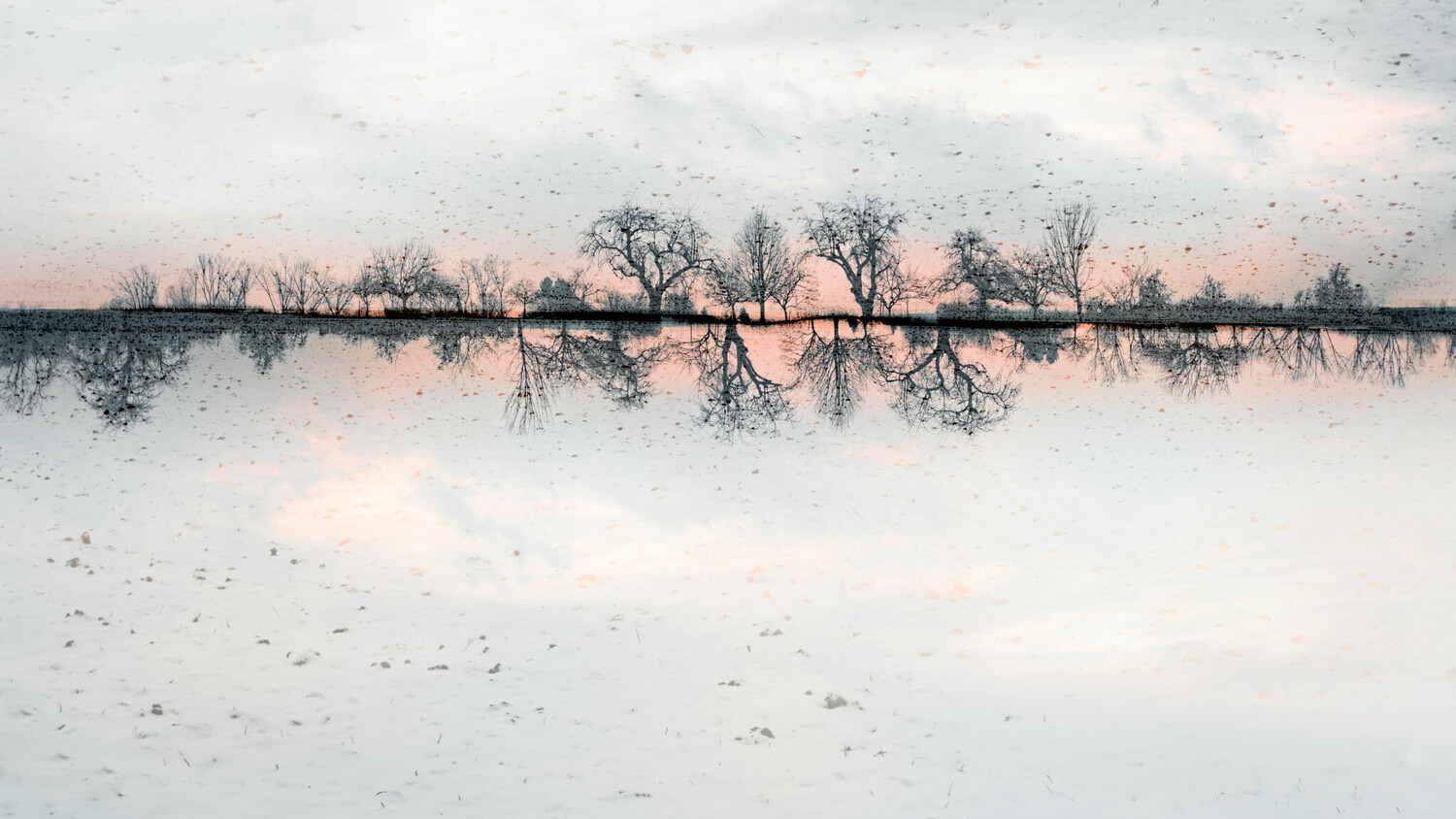
This image is driven by an idea that emerged directly on location: a simple winter scene is transformed through a deliberately applied double exposure into a visual illusion that captivates the viewer. The sparse row of trees on the outskirts of Frankfurt becomes more than just a subject - it turns into a graphic element, mirrored, condensed, and reinterpreted.
Captured on an overcast day in January with my Panasonic GX80 and a consciously chosen prime lens - a characterful vintage lens from Meyer-Optik Görlitz (29mm f/2.8) - the result clearly stands apart from conventional landscape photography. A light layer of snow, the soft midday light, and the tree silhouettes photographed against the sun form the basis of a reduced, almost minimalist visual language.
The defining feature lies in the in-camera double exposure: by deliberately turning the camera upside down, a reflection is created that isn’t actually there. Sky and field merge into a flat stage on which the row of trees doubles as the central compositional element. The subtle reddish tint in the background - gently enhanced in post-processing (DxO PL9) - adds a warm counterpoint to the cool winter scenery.
This image belongs on the wall because it both intrigues and fascinates - it is a photograph that invites not just viewing, but exploration. From a distance, the composition appears calm and harmonious; up close, it reveals an unexpected depth.
It combines an analog feel (through the vintage lens) with modern photographic technique. The restrained color palette integrates seamlessly into a wide range of interiors - from contemporary to classic. This is not merely a decorative landscape, but an artistic statement about perception and perspective.
An image for those who want to experience photography, not just look at it.
Click on the thumbnails below to comment and rate each image.
Click here to learn about the Fstoppers rating system and what each star value means.
No comments yet