
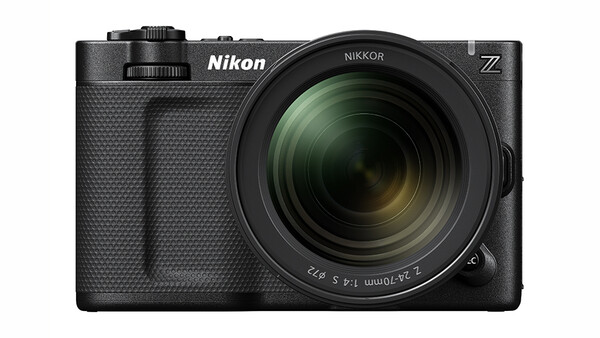
Nikon and RED introduce their first major collaboration of the new era with the pint-sized, video-focused Nikon ZR.
It’s my birthday this week. I don’t say that to try and trick you into wishing me a happy birthday (editor's note: Happy Birthday, Chris!), but rather to acknowledge the perfect timing of this new Nikon announcement, which pretty much cements where all those birthday gift cards will be spent. Today, Nikon has announced the Nikon ZR. While the R designation may confuse some into thinking this is a rangefinder camera for street photography, the Nikon ZR is Nikon’s new video workhorse and the first big milestone in the Nikon/RED marriage.
Recently, they announced that the RED cinema bodies would be available going forward with the Nikon Z mount, which many of us expected. But there was always a question of how the two companies would handle the camera lineup. My bet was on allowing RED to continue to be the top-line cinema camera and build off its existing reputation in the film industry while letting Nikon focus on the hybrid and creator space. Turns out I was right (at least in the early days), and it turns out that the first truly merged Nikon/RED camera would be better than I even expected.
I got a brief chance to get my hands on a pre-production model of the Nikon ZR and put it through a few paces. I did not get to use the camera for an extended time or on multiple projects yet, so I’ll leave the full in-depth review for when I get my hands on a production unit. But in this video, I discuss my first impressions and some of the main reasons you may, or may not, want to put in your pre-order today:
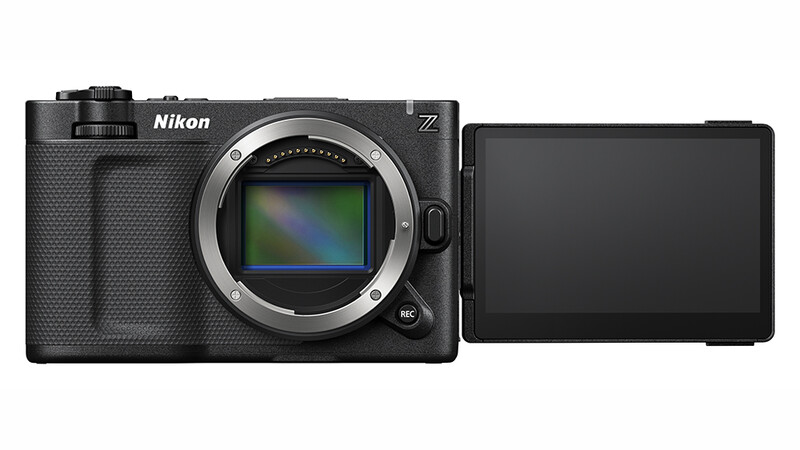
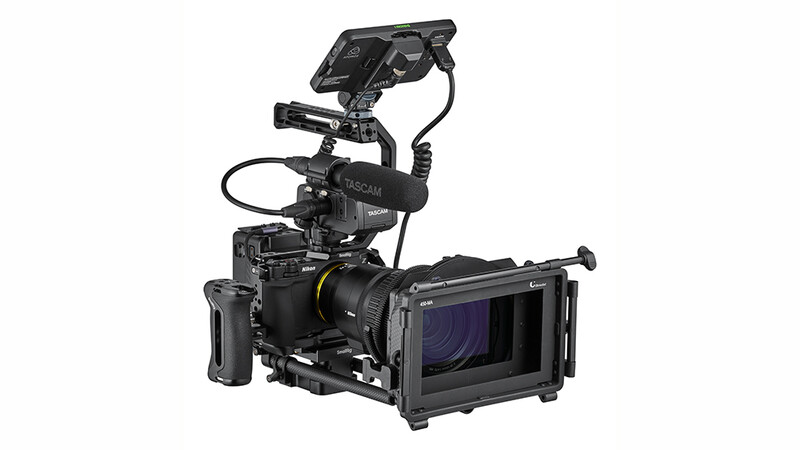
The Nikon ZR is a small, nearly walkaround-sized mirrorless body with a number of significant tricks up its sleeve. There are many highlights, so let’s start with some of the top-line items.
R3D Video Format
RED’s R3D Raw format is well regarded and well known to those in the film, TV, and commercial world. It has been the capture format of an endless list of major projects, which has benefits beyond sheer tech specs. Post houses, colorists, editors, and all manner of industry professionals are used to working with the format. The format is universally recognized and will run easily in any professional NLE. Filmmaking is a team sport, and half the battle can be just making sure everyone’s toys play nicely together.
While I love shooting NRAW video with my Z9, for example, there are certain major NLEs that won’t recognize the files. This means that processing is at least a two-step process (unless you use DaVinci Resolve like I do). By introducing R3D NE Raw files into a Nikon camera for the first time, Nikon shooters will now be able to shoot natively in a universally recognized and respected Raw video format.
I haven’t gotten to fully test files from a production model of the camera as of yet, so I'm not sure what, if any, the specific differences may be between R3D NE RAW and standard R3D might be. I know the files are 12-bit versus 16-bit in something like the Komodo/Raptor, for example. But I have no reason to believe the two wouldn’t function in similar ways.
There are major benefits to R3D files in terms of post-production flexibility, but the biggest silent benefit I see is that it allows industry professionals to see Nikon as a legitimate option because their R3D files will now be able to slot easily into any workflow.
Support for Log3G10 and the REDWideGamutRGB gamut reproduces exposure standards and colors consistent with RED color science, which is important to achieve skin tones and highlight roll-off similar to what you might find in RED’s cinema cameras like the V-Raptor [X] and Komodo-X. It has a dual base ISO at ISO 800 and ISO 6400, but files should be fully adjustable in post just like traditional REDCODE Raw.
By the way, for those who prefer N-RAW, ProRes Raw, or the other formats in previous Nikon cameras, those options will be available as well depending on your workflow.
15+ Stops Of Dynamic Range
If you’re a filmmaker, you know that dynamic range is the name of the game. More than sheer resolution, more than frame rates, dynamic range is what really sets a camera apart from the competition.
Now, I have not personally done any lab testing of the camera files, but Nikon is claiming the ZR will deliver 15+ stops of dynamic range. If that’s verified, that would make it the best dynamic range for video in the Nikon lineup. Pair that with R3D NE Raw and you have a very powerful tandem.
The new codec uses the color science and exposure standards of RED cameras to ensure accurate color matching across cameras, which will come in handy during multicam setups.
Internal 32-Bit Float Audio
32-bit float audio is to audio what Raw is to stills. It has become incredibly popular in recent years for its ability to allow users to dramatically bring up audio levels without greatly raising the noise floor, while offering a buffer against clipping in overly loud scenes. Like Raw video and stills, there is a limit. You should still keep things within reason and strive to get it right on set. But the latitude of 32-bit float has major benefits to filmmakers over traditional recording.
So many benefits, in fact, that some camera manufacturers have started building the option directly into their camera bodies. Well, now Nikon is on that train. The ZR has internal 32-bit float audio. Rather than always needing to bring an external recorder, you can now capture it directly in camera. That is especially important for a camera like the ZR, which is all about portability.
The camera also includes OZO directional audio for dynamic soundscapes with the help of three built-in mics. It allows you to choose between five polar pickup patterns: Front (Super Directional), Front, All Directions, Rear, and Stereo (Binaural).
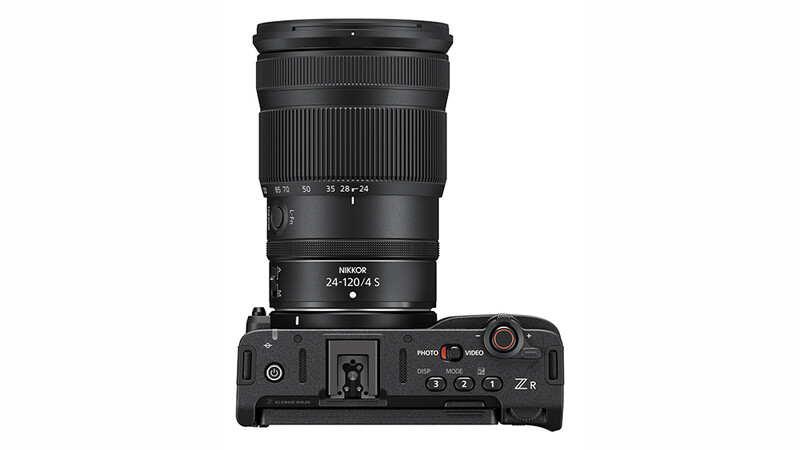
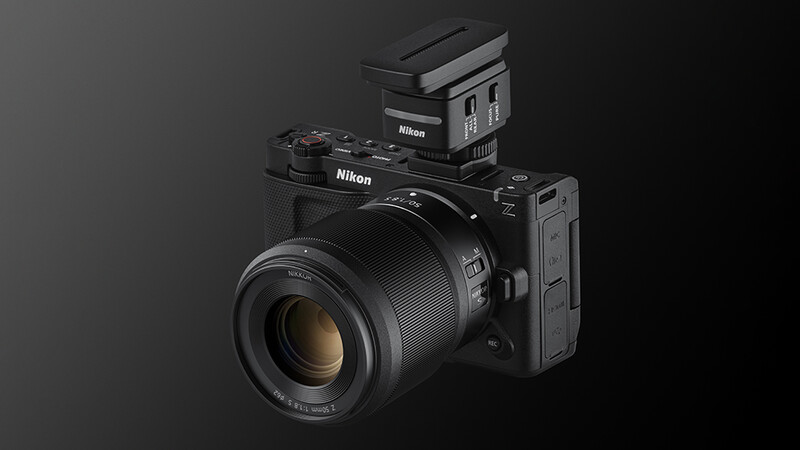
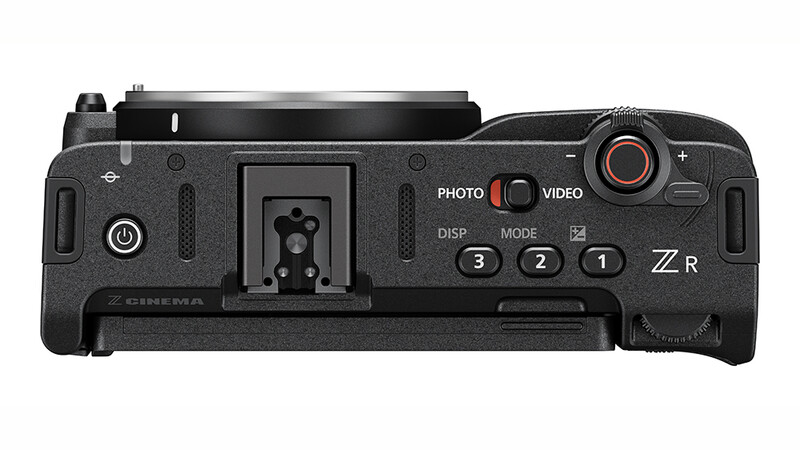
Added to the 32-bit float, the ZR also introduces Nikon’s first intelligent hotshoe. Sony and Canon cameras have had these for a while, but this is Nikon’s first (at least as far as I can remember). A smart hotshoe allows you to connect more accessories, like shotgun mics, without cords. For a camera built for maximum portability, this is a major plus.
Nikon also introduced the ME-D10 32-bit float shotgun microphone compatible with the new digital accessory shoe developed for the ZR.
Small Size
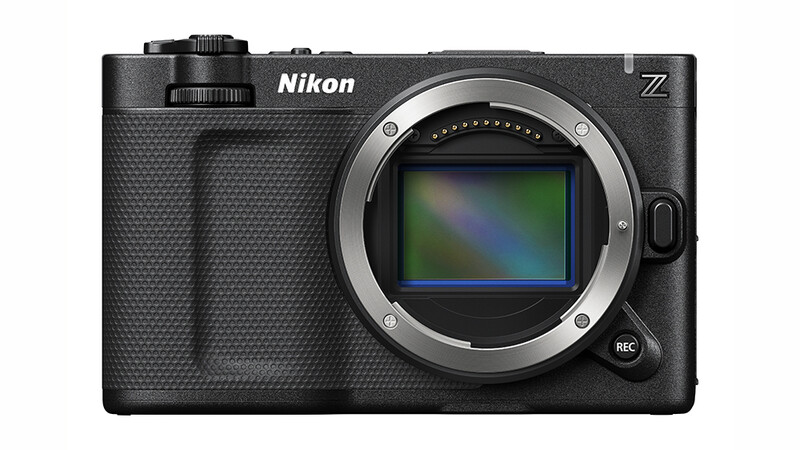
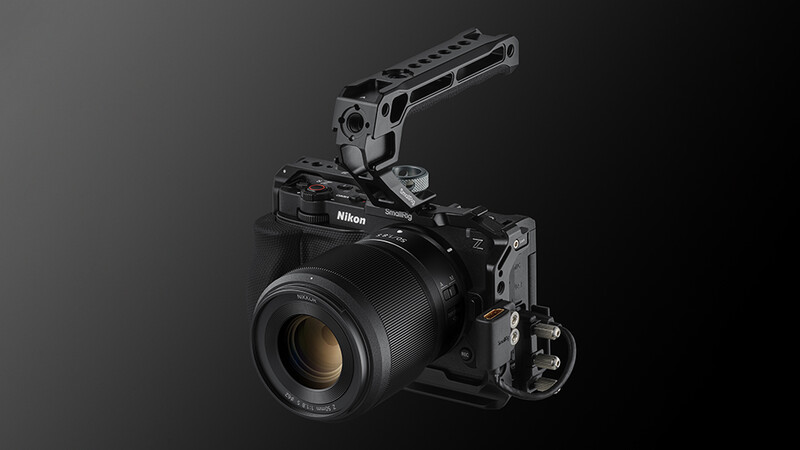
While we are on the topic of size, this is where I should reinforce just how small the ZR is. So small that I keep accidentally typing it as Zf in this article, as if my fingers are confusing it with the pocketable Zf street camera Nikon offers still shooters.
The ZR isn’t quite that small, but it’s just about as small as you’d want a video camera to be. Easily a first choice for gimbal use among the Nikon lineup. The size is even more impressive when you consider some of the features we’ve already mentioned.
Nitpicks
Now, with that small size, there are a few tradeoffs. As I mentioned earlier, while I did get hands on with a preproduction model of the camera, I have not gotten to really put it through a torture test yet, so this is not a full in-the-field review. But there were a few things that come with the territory of a camera this size which are worth mentioning.
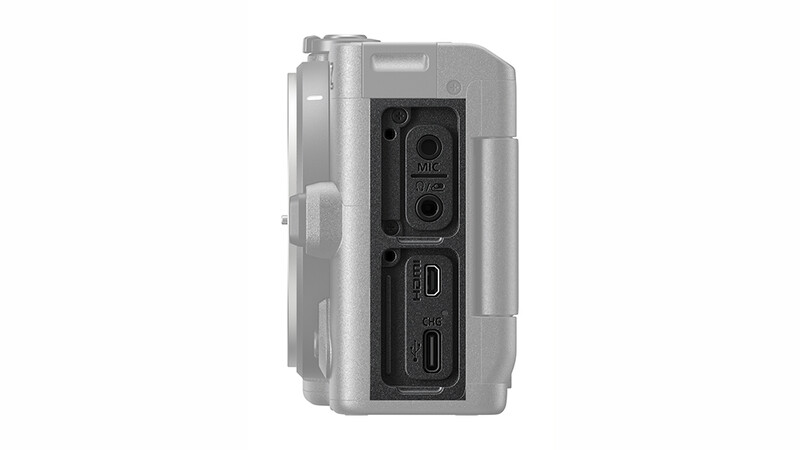
Micro HDMI Port
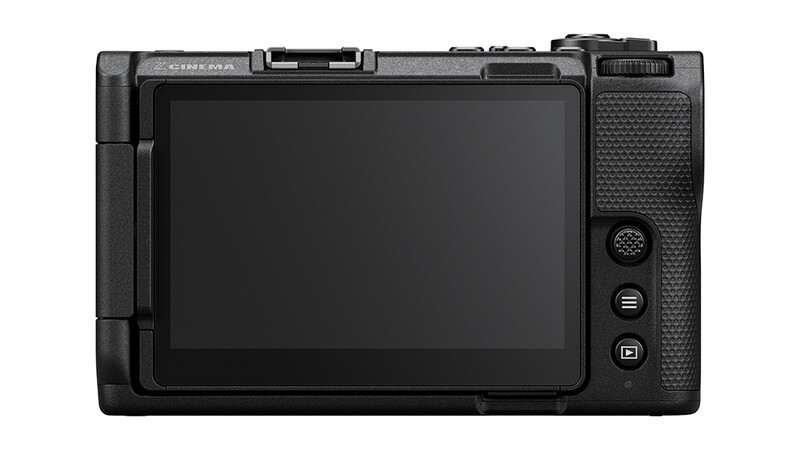
As someone who currently has a camera with a broken HDMI port whose repairs are too expensive to bother with, I definitely prefer a full-sized HDMI port. Now, to be fair, with a compact body like the ZR, this isn’t the camera I’d expect to be using a monitor with at all times. I’d expect to be using the large 4-inch fully articulating LCD screen 99% of the time, and the micro HDMI port should be sufficient for those other limited times.
Card and Battery Slot on the Bottom
Again, not really an issue considering this camera’s primary use case as a small, portable standalone cinema body. But as every filmmaker knows, we love to rig up our camera bodies. No matter how small a camera starts, by the time we get it to set, it can often resemble a tank more than a Toyota.
The ZR would primarily be shot without rigging, I would think. But if you are rigged up, I’d prefer access to the card slot and battery be on the side to ensure I don’t have to take apart my rig (baseplate, rails, etc.) each time I need to change them.
One CF Express Type B. One Micro SD card.
This one falls into the category of not a big issue for me, but perhaps a big issue for some. The ZR uses a CFexpress Type B as its main card slot. This is excellent, as those cards are fast and (relatively) affordable compared to other CFast card types.
The good news is that technically there is a second card slot for those who want it. I’m not a wedding shooter, but I imagine this may be of use to you if you are. The not-so-good news is that the second card slot is a microSD card. So you do have redundancy.
I’ll need to do further testing to figure out if you can still record the full range of file formats (R3D, N-RAW, etc.) to the microSD or if you’ll be limited to MOV. Again, not really an issue in most cases. But for those of you who need redundancy, you already know if this is an issue for you.
But All of This Comes in at Barely Over $2,000
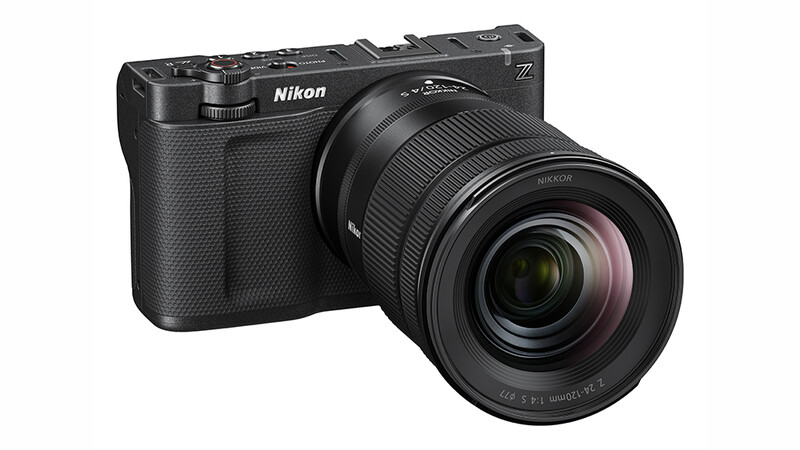
While the three items I just mentioned fall into the “I wish they were different” category, none of them fall into the major issue category for me. Those minor gripes were completely obliterated when I learned that the camera would retail for $2,199.95.
You’re telling me you’re giving me a compact video beast with R3D, 15+ stops of dynamic range, and 32-bit internal audio for 2K? I can live with a micro HDMI port.
Built for Filmmakers
This all comes in a redesigned body with filmmaking in mind. The button layout is significantly different from what you might be used to if you are a Nikon still shooter. There is no EVF, and while this would be a no-go for me shooting stills, when it comes to video, the fully articulating LCD screen should be more than adequate.
The camera preserves all the still camera functionality of a camera like a Zf or Z6 III. But I would say this camera is squarely aimed at the filmmaker/videographer first, as opposed to the still shooter who occasionally does video.
The camera has 7.5 stops of image stabilization (IBIS) and the same exposure monitoring tools as the other upper-tier Z cameras, with waveforms available, focus peaking, zebras, etc. It does not have RED’s famous traffic lights or goal posts at launch—maybe in a future firmware update.
It can connect via Bluetooth for timecode to a device like the UltraSync Blue. This is excellent for me, as I already use that system to sync multiple Z9s to my Zoom F6 field recorder. This means, if you have a similar setup, you can add the ZR without interruption to your workflow and get the same timecode benefits.
You can store and select up to 10 LUTs in camera. The ZR has a new view assist function, which allows you to better dial in and preview your look on set to maximize the end result during production.
The camera includes a preset “Cinematic Mode,” which does basic things like adjust your shutter angle to 180 degrees and your frame rate to 24 fps while applying RED Cine Bias Picture Control for a high-class look straight out of camera.
6K/60 fps
I guess it speaks highly of the camera’s other features that it took me this long to get around to mentioning resolution. The camera shoots in 6K up to 60 fps, or 4K up to 120 fps.
I think this is the perfect range. 6K gives you enough wiggle room to crop or stabilize for 4K while avoiding the massive file sizes of 8K.
Pros
-
R3D files
-
Internal 32-bit float
-
15+ stops dynamic range
-
7.5 stops IBIS
-
Smart hotshoe
-
OZO sound system
-
Small
-
Affordable
-
Cinema-focused design
-
Fully articulating 4-inch LCD
-
6K/60 fps
Cons
- Placement of battery/card slot
- Micro HDMI
Conclusion
From my tone, I think you know where I come down on the camera. It’s been several years since I bought a camera body (aside from a RED Komodo cinema body, whose files are now instantly compatible with the ZR), and I’m pretty excited to add this one to my collection.
It hits so many facets of my existing workflow at a very attractive price point. I’m seeing this as the video version of an “everyday camera.” Not the A cam I’m going to rig up when shooting a feature, but the camera in my kit that will likely get used the most days overall due to its sheer convenience and speed of use right out of the box.
The camera is expected to start shipping in late October 2025 and can be preordered now.



Join the Fstoppers community for free
-
Post comments and join in the discussions
-
Browse the site ad-free
-
Share your work and get featured in the community
-
Compete in the photo contests for fun and prizes
3 Comments
Finally! We have been waiting to see what Nikon does with their acquisition of RED and now we get a glimpse. It will be interesting to see how many of these will be start being rigged up as the next little go pro or destruction cam since the price point is not all that egregious.
I’m curious, how many gigs is 1 min of raw footage at 4k60?
The real test will be how if fares next to its obvious rivals. With the RED association, it needs to be significantly better than the competition after all the hype or it becomes just another choice for videographers. Obvious advantages for existing RED users though.
Definitely. For the price, it's an extraordinary value. I'll need to do the math on the raw footage. But, I suspect its smaller than Komodo files since it's a newer REDCODE RAW format. But, it doesn't seem to lose any of the quality/flexibility in post versus traditional R3D. I'll see when I do a followup test with a production unit.