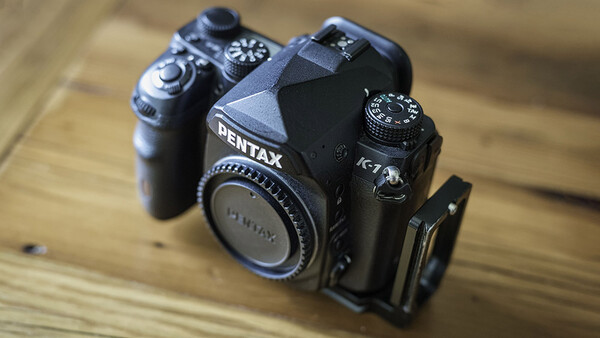
Do you wish your camera could autofocus on stars—without reframing? Good news. The venerable Pentax K-1 DSLR now has Star AF available in the U.S. Autofocusing on pinpoint stars just got a whole lot easier—and you can forget endless pixel-peeping.
Wow, Pentax, Really?
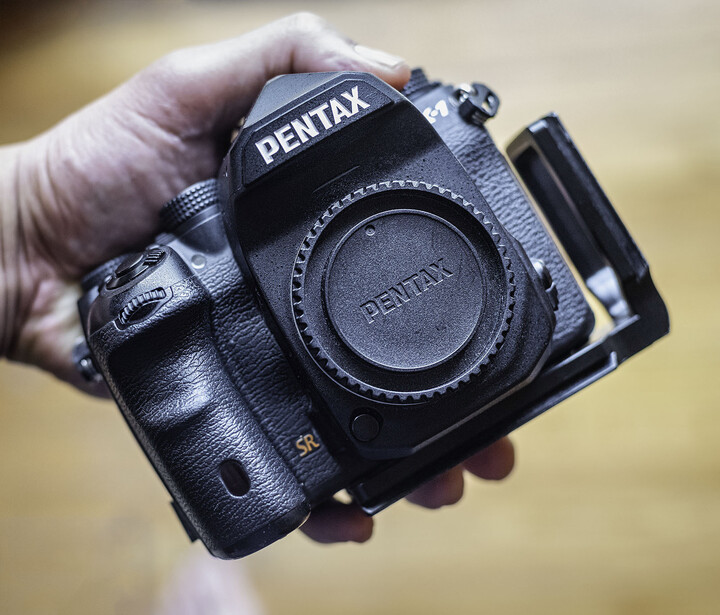
Yes, really. Pentax. A woefully overlooked camera, the Pentax K-1 was introduced in February 2016. It came loaded with features, including some of the most robust weatherproofing you'll ever see, Astrotracer for tracking stars in-camera, a fantastic-looking LED, Night Vision LCD, outstanding image quality, and more. It’s why, even in today’s mirrorless world, the K-1 is still my go-to for night photography. It's a joy to use.
An Even Bigger Surprise
There was something I really didn't expect: new features still being rolled out nearly a decade later! Pentax has rolled out black-and-white modes, expanded Astrotracer (including one that doesn’t need GPS), and now—Star AF. And yet people still ask me if Pentax even exists!
And yes, they're still kicking. And still busy at work, it seems. They rolled out Star AF in the United States this summer.
Why Autofocus for Stars Is Such a Great Feature
When I teach my night photography workshops, I notice that my participants often have a challenging time with focusing on the stars. Manually twisting the lens and zooming in using Live View in the dark can be frustrating for some. Even for experienced night photographers, it can take a while to lock on focus.
With Star AF, the camera locks onto stars automatically. This frees us up to focus on the creative side instead of squinting at tiny pixels and twisting focus rings on our lenses. That’s worth it every time.
What Is Star AF?
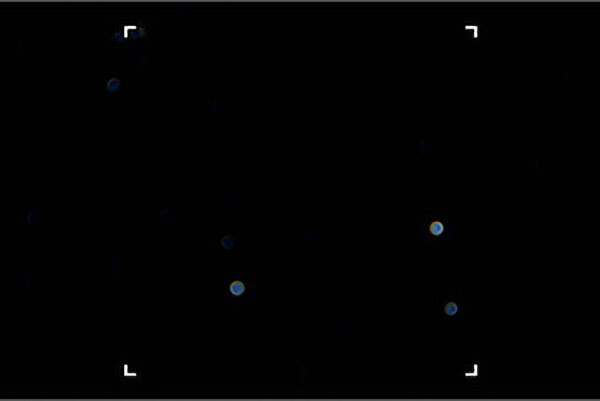
Ricoh says, "Normally, you would pinpoint on a star that is the easiest to bring into focus, then compose the image. With the Star AF, however, you can compose the image first, then focus on stars using the camera’s autofocus system." It’s not instant—expect a few seconds—but it’s far faster and, yes, even more precise than manual focusing.
Other brands have dabbled here: Nikon’s high-end mirrorless cameras have Starlight View, which boosts Live View for easier low-light focusing, while OM System (Olympus) offers Starry Sky AF. The catch? You often need to recompose.
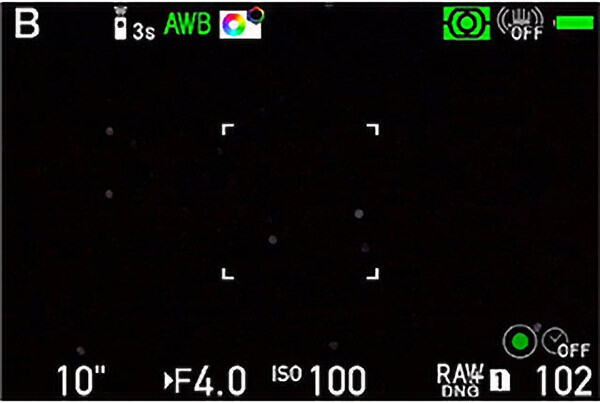
Not so with Pentax. With Star AF, you half-press the shutter, the AF area magnifies, the camera analyzes star points, and when the box turns green—you’re locked in. No refocusing until you change it. Nice. You can read more about how to use Pentax Star AF here.
How You Can Get Star AF
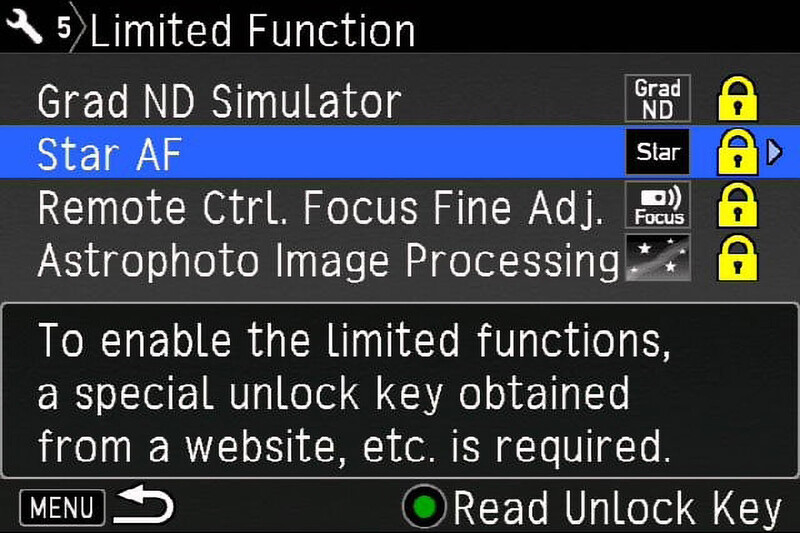
Pentax is charging for this firmware update, so Star AF is not included by simply updating your firmware. You'll have to purchase it as part of the Astrophoto Assist premium function for supported Pentax cameras:
- PENTAX K-1 (with latest firmware update)
- PENTAX K-1 Mark II (with latest firmware update)
- K-3 Mark III
- K-3 Mark III Monochrome only*
(*Please note that this is not available for the K-3/K-3II)
You can purchase the Astrophoto Assist from their website, where it is currently $79.95.
Don't Make the Same Mistakes I Do
Now, I'm going to tell you something that may help you if you don't read the instructions as carefully as I do. The instructions state, "During checkout, please enter the model name and serial number of the product you own that you wish to add the Astrophoto Assist feature to in the customer notes section."
Guess who skipped that step? Yeah. Me. I kept searching for a dedicated field and mistakenly checked out without adding it. Luckily, Ricoh responded to my email by issuing the license key the next day. But do yourself a favor and save the headache—read the instructions carefully.
Wrap-Up
Star AF is one of those features that not a lot of cameras have. Using autofocus for the stars means no peering at Live View and continually refocusing. If you shoot the night sky, Pentax Star AF is worth every penny.
Want More Information?
Of course you do! Check out this video from night photographer Tim Little, who is also an avid user of the Pentax K-1. He goes into great detail about purchasing, installing, and using Star AF.


Join the Fstoppers community for free
-
Post comments and join in the discussions
-
Browse the site ad-free
-
Share your work and get featured in the community
-
Compete in the photo contests for fun and prizes
33 Comments
How in the Oly patents did they manage to pull that off?
Albeit, I can’t bring myself to trust those features, Bahtinov mask all the way
Edit: Karim Hosein, you ok bro? More like Karen Hosein…
It’s amazing to see this tech in a nine year old DSLR.
I’m going to ask two questions, purely out of curiosity.
Why don’t you trust Star AF or other features (Astrotracer, whatever)?
What makes you prefer Bahtinov masks?
Thanks!
I’m a little less amazed by the AF, given that I’m fairly confident its limited proliferation isn’t technological but rather legal and IP related. Maybe I’m old fashioned, but given the field curvature and aberrations you’re going to run into with any AF K-mount lens and the margins for error I’d much prefer taking the extra 5 seconds to see the diffraction spikes to know it’s perfect
I didn’t mention astrotracer, albeit I never could get it to work very well for my K-1. The whole dance required to calibrate the accelerometers and GPS never consistently worked for me. The Type 2 or Type 3 (can’t remember) that I first encountered in the K3 III where it watches the star trail worked better in my experience.
Good job keeping me blabbing, the engagement will hopefully help bring more eyes to the article 😜
Haha! Well, let's keep blabbing then, haha! Next, we can talk about where to find the best falafel and tacos!
Seriously, that makes sense. I still have not used Star AF yet because it's a full moon. I am going to make a point to go out in a week or two and see how it works. However, the reports I am hearing are that it's astonishingly good.
Just so you know, Type 2 and Type 3 Astrotracer are now part of the regular K-1 firmware for both models, so you don't have to do that goofy "GPS dance" anymore.
Mmm, I saw the other modes were added a while back, but my K-1 went to a new home years ago. My remaining Pentax stuff is all film
...which are unlikely to have the firmware update, gotcha. ;)
Hah, yeah. I’ve been giving film astrophotography with my MZ-S and the 31mm Limited a go (tracked of course) but I’m afraid to process the results because I’m sure I’ll have messed them up.
But it’s fun to go old school! I’m not exactly young but I didn’t get into astrophotography until a bit past the webcam era, so even though I grew up with film I never got to experience the “bad old days” of film astrophotography as some people put it 😆
You could have enjoyed stuff like discovering reciprocity failure. Y’know, the longer you expose, the longer you need to expose, haha!
Indeed, hence the need for the tracker!
Or not....since the Pentax K-1 has Astrotracer, where the sensor moves to follow the stars!!
And hey, I managed to bring it back around to Pentax, haha!
Well, if doing digital widefield then tracking isn’t a necessity in my experience. Reciprocity failure necessitates tracking, but my Pentax film gear is just for fun, my “work” gear is all Sony/Sigma. When shooting at f1.2 or f1.4 I don’t find that tracking is needed until you get past 35mm territory.
It really, really sucks that Pentax has dropped the ball over the last 10 years or more. Their DSLRs were feature rich, great build, great ergonomics. I still miss my K-5ii.
Ahhh, how good was that K-5 II shutter sound, right?
I love the K-1. It’s a bizarrely great camera, and it’s a joy to use. I love the features.
But they seem to willfully operate on the margins.
Yet here they are again, creating a really great feature for a nine-year-old DSLR.
If you truly miss it, then why don't you just get another one?
Ok, they say that there's no such thing as a stupid question, but I am about to ask one .....
Wouldn't focusing the lens all the way out to infinity bring the stars into perfect focus? I mean just turn the focus ring until it bottoms out at infinity, right?
While 'infinity' is a spot on your focus ring, in reality 'infinity' is not an exact science. Maybe if your shooting at 24mil (or under, just venturing an experienced guess number). But if you start to actually use bigger lenses out in Astrophotography, then 'infinity' is just a starting point, its not a guarantee of perfect focus. Generally you use MF and the 10x zoom feature on your camera, to dial in very carefully the best you can.
Edit: The article is interesting in the first place, because generally Astrophotographers are taught from birth not to use AF for anything. Focusing on stars is always been tough, because what you get when you actually zoom in on them is not what you expect, they may look like your seeing something that is never in focus, like his first example picture. They don't look good at all zoomed, and only look good at a distance.
The hard stop on your average manually-coupled AF lens is past infinity, same with any electronically coupled lens AF lens (albeit the hard stop is electronic), any MF lens with a hard stop at infinity isn’t likely to be actually correct on the stars as lenses aren’t calibrated on the stars, and the paint marks or hyper focal distance indicators (if they were actually correct) aren’t precise enough in most cases unless you have a lens with an extremely long throw.
And finally: focus changes in many optics based on thermal contraction and expansion. As the night wears on and gets cooler, many optics will lose focus.
In deep sky astro where we increasingly use AF (depending on how down the rabbit hole one goes) the systems are external motors that are computer controlled in a feedback loop with one’s astro camera and software running on a laptop or micro PC. Depending on your optic’s thermal characteristics and how quickly the temperature is changing, you can configure your system to refocus at different intervals, or even every exposure.
Tom, that's definitely not a stupid question. On the surface of it all, you might think that the "infinity" marker means, well, "infinity." But as Robert states, it's not an exact science.
It differs between manufacturers. It differs even among the same manufacturer and even the lens.
Also...which PART of infinity? For example, I had the venerable 14-24mm f/2.8 Nikkor lens (the F-mount version), and its true infinity was on one of the "loops" of the infinity sign, not in the middle. If you were in a hurry, you could put it in the middle of one of the loops, I forget which one, and from there, you would do little micro-adjustments to get the focus nailed.
The rest of what Robert and La Salamandra describe also are factors, but since they described it so well already, I won't bother! :D
By the way, the Irix 15mm f/2.4 manual focus prime lens has a detent for true infinity. And while this has the capability to drift off and require recalibration, I've had mine since 2017, and it's been spot on. It also has a lock, an added bonus. I use this lens with my Nikon D750, and it has always been rock solid for me. Yes, I use very old cameras. Don't laugh...
I use old cameras too! Not because I prefer them, because I don't. But I use the very best gear I can possibly afford, and that just happens to be 10 to 15 year old DSLRs and used marked 3rd party lenses. Nothing but respect for you and your Nikon D750.
Thanks. Both the Nikon D750 and the Pentax K-1 are reliable, have great image quality, and work extremely well for night photography, which is what I mostly do and write about here. Added to that all the lenses. Definitely about finances, as I can’t warrant the expenditure for a mirrorless setup now. While I could get an adapter for my lenses, it seems like I wouldn’t be taking full advantage of the new mount and new glass. But who knows, maybe a used Nikon Z-series camera is in the future one of these years (I purchase most of my gear used).
Fascinating feature. Too bad they're only offering Star AF for the K1 and K3 III models. I shoot a K-70, which I really like for its low light noise, and would love to see Star AF made available for it. Currently, I focus on stars manually like the rest of the world.
Pentax, whaddaya say?
If I had to guess, now that I'm thinking about it, Ricoh/Pentax has not implemented it because it's missing the essential hardware or processing or they might have done it by now. I'm guessing since I don't think the K-70 has Astrotracer either unless you use a separate GPS unit. Or maybe I'm wrong and it can utilize it with the separate unit?!? Let's hope my guess is an awful one and I'm wrong!!
I bought my K1 in Japan, and I live in Canada, looks like the Ricoh websites won't let me purchase it...
And someone told me that it is not available in Australia either. It wasn't available in the U.S. for a while, either. They seem to be doing a slow roll-out.
I’m pretty sure Olympus (now OM or whatever) owns the patents for that technology, like how Ricoh owns astrotracer via Pentax, so it’s proliferation into the US might have less to do with rollout and more to do with licensing or patent law.
Since you have a Japanese K-1 you could try the Japanese website via google translate, since your camera might be region locked to Japan anyway. Although if availability really is based on licensing it’s possible they don’t have access to it either.
Tried the Japan webstore, it requires membership with an address in Japan
Well that’s a bummer, frankly
I emailed Ricoh Canada and Ricoh USA, and I'm waiting for a reply.
Fingers crossed for ya!
I hope it goes well! Good luck!
My Pana GX-85 has been able to do this ages ago, even before Olympus. It's really not that practical in real-world use. Ricoh is unfortunately choking Pentax's development and just milking old tech for whatever they can. I wish Pentax was liberated from Ricoh.
Thanks for this information. I am not familiar with Pana GX-85 or this tech at all.
Out of curiosity, why do you feel Ricoh is holding back Pentax's development? I'm not arguing, just trying to understand their dynamic more. Thanks.