
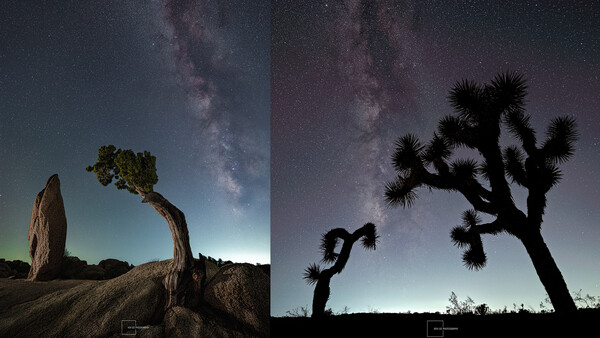
Pentax released Star AF in the United States recently. Of course, I had to kick the tires on it. And yeah, it's good. Really good. I describe my “real-world” experience with it during two night photography trips to Joshua Tree National Park in California to photograph the Milky Way.

What Is Star AF?
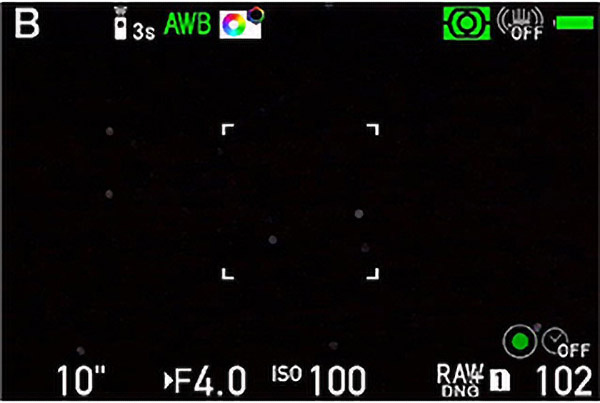
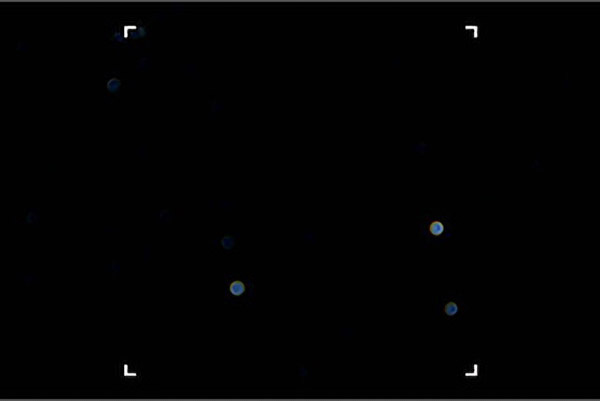
Let's start off by having Ricoh describe it:
“Normally, you would pinpoint on a star that is the easiest to bring into focus, then compose the image. With the Star AF, however, you can compose the image first, then focus on stars using the camera’s autofocus system.”
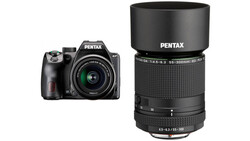
Star AF is available for the Pentax K-1 (both versions), K-3 Mark III, and K-3 Mark III Monochrome only. Other brands have dabbled here: Nikon’s high-end mirrorless cameras have Starlight View, which boosts Live View for easier low-light focusing, while OM System (Olympus) offers Starry Sky AF. As the name implies, it only works with lenses that offer autofocus.
Not having to even recompose seemed like a bold statement. Often, one needs to acquire focus on the stars and then recompose. How would this fare “in real life”? I drove into Joshua Tree National Park on two nights to see how well Star AF would do.
Night One: Using Star AF at Heart Rock
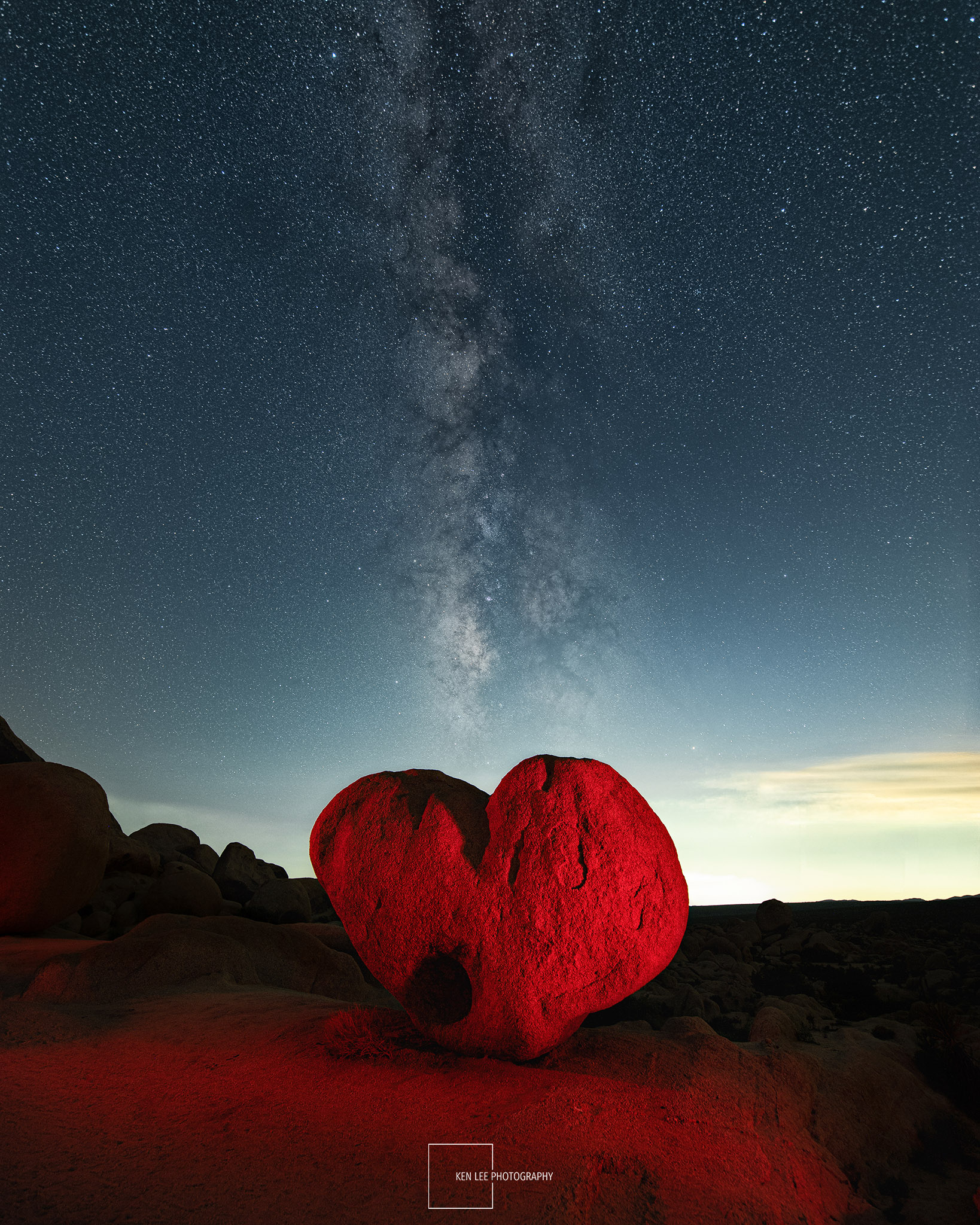
Going to Heart Rock involves an easy 0.75-mile walk from the parking lot. It's even easier when you don't need to carry a bunch of photography equipment and drinks in a backpack.
Arriving shortly after sunset, I began setting up the Pentax K-1 on my tripod, setting it up to get a pleasing composition where the Milky Way would eventually be positioned.
Wow!! It Focuses Already!?!
About half an hour after sunset, during the beginning of nautical twilight, the stars began emerging in the night sky. I decided it was time to test Star AF. To my surprise, even though there were very few stars, it gave a beep and showed green! It was already able to focus on the stars.
I tested it several times, and despite the sky not being fully dark, with only a few stars visible, it still nailed focus, offering that reassuring beep.
But How Accurate Was the Focus?
Using Live View, I zoomed in to check focus, examining the stars between 10x and 16x magnification. Every time, the stars looked solid. I couldn’t manually focus any better than what was already there.
The Milky Way emerged and slowly drifted into position over Heart Rock, just as I had planned. Being able to quickly alternate focus between Heart Rock and the Milky Way made the experience far smoother. When you can focus this quickly without having to recompose, you free yourself up for creative efforts like light painting and perfecting composition.
Night One: Using Star AF at Sky's the Limit Observatory in 29 Palms

I thought the Milky Way would line up beautifully with the observatory at Sky’s the Limit in 29 Palms. I was right.
However, unlike Heart Rock, which was very dark, the observatory grounds have dim red lights lining the pathway and illuminating the area. Would this interfere with Star AF?
Thankfully, not at all. Star AF locked focus several times as I adjusted composition. Again, I verified sharpness by zooming in on the stars in Live View. Perfect focus, every time. And it still only took 5–7 seconds.
Night Two: Using Star AF at Penguin Rock and Juniper Tree
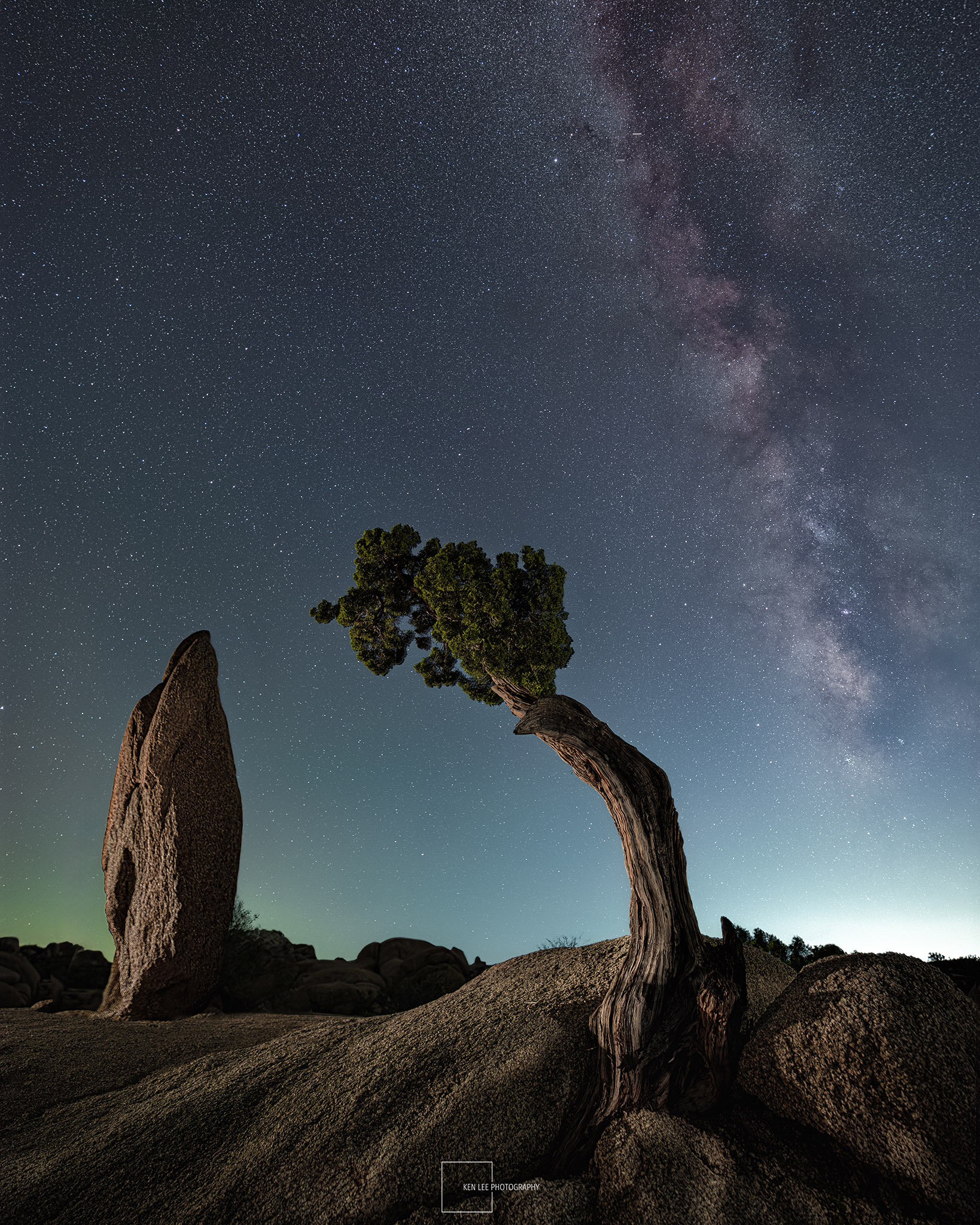
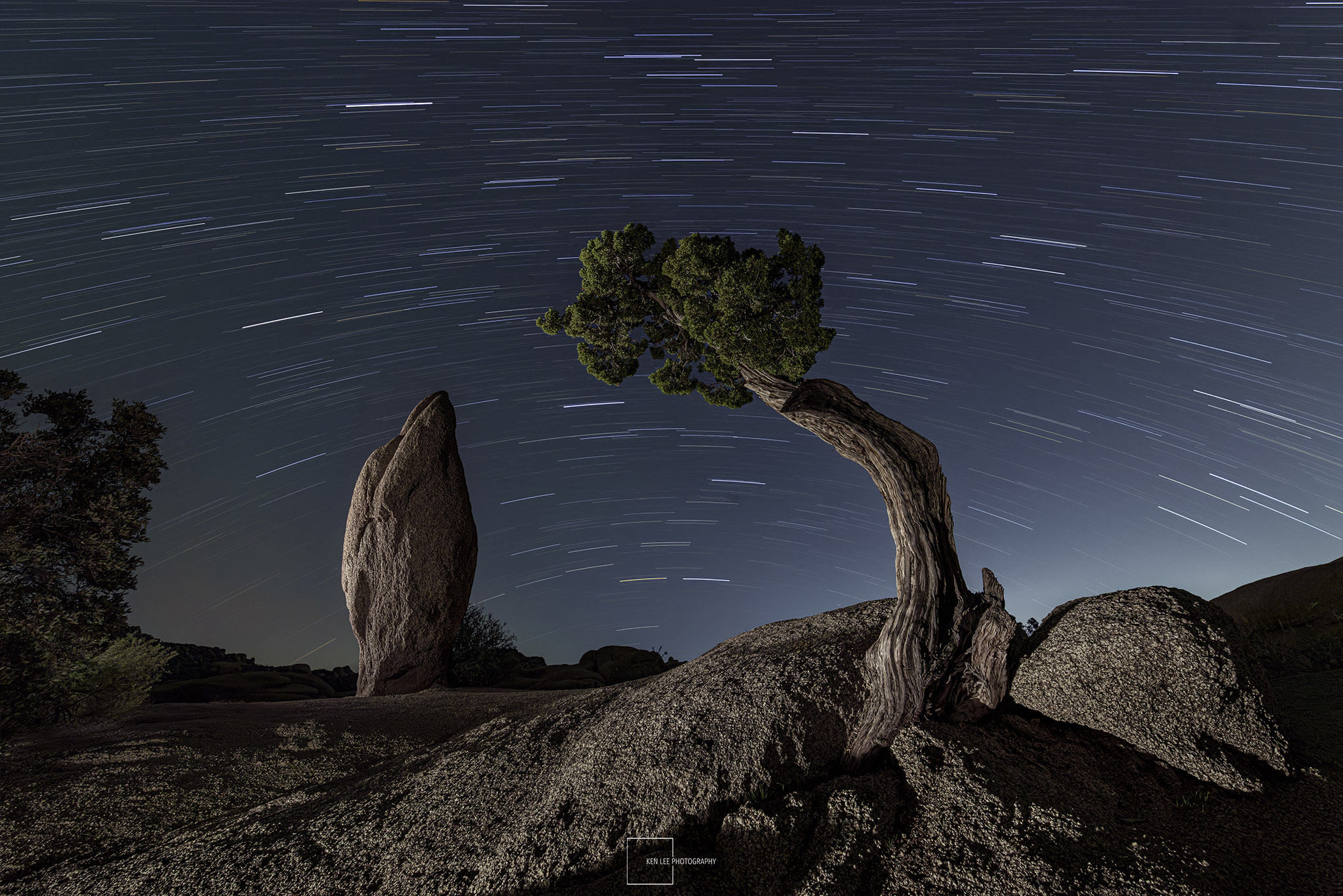
On another beautiful night, I headed to Penguin Rock and Juniper Tree in Jumbo Rocks Campground. This iconic formation features a lone juniper facing off with a tall, free-standing rock. This amazing foreground would be perfect for more Milky Way photos.
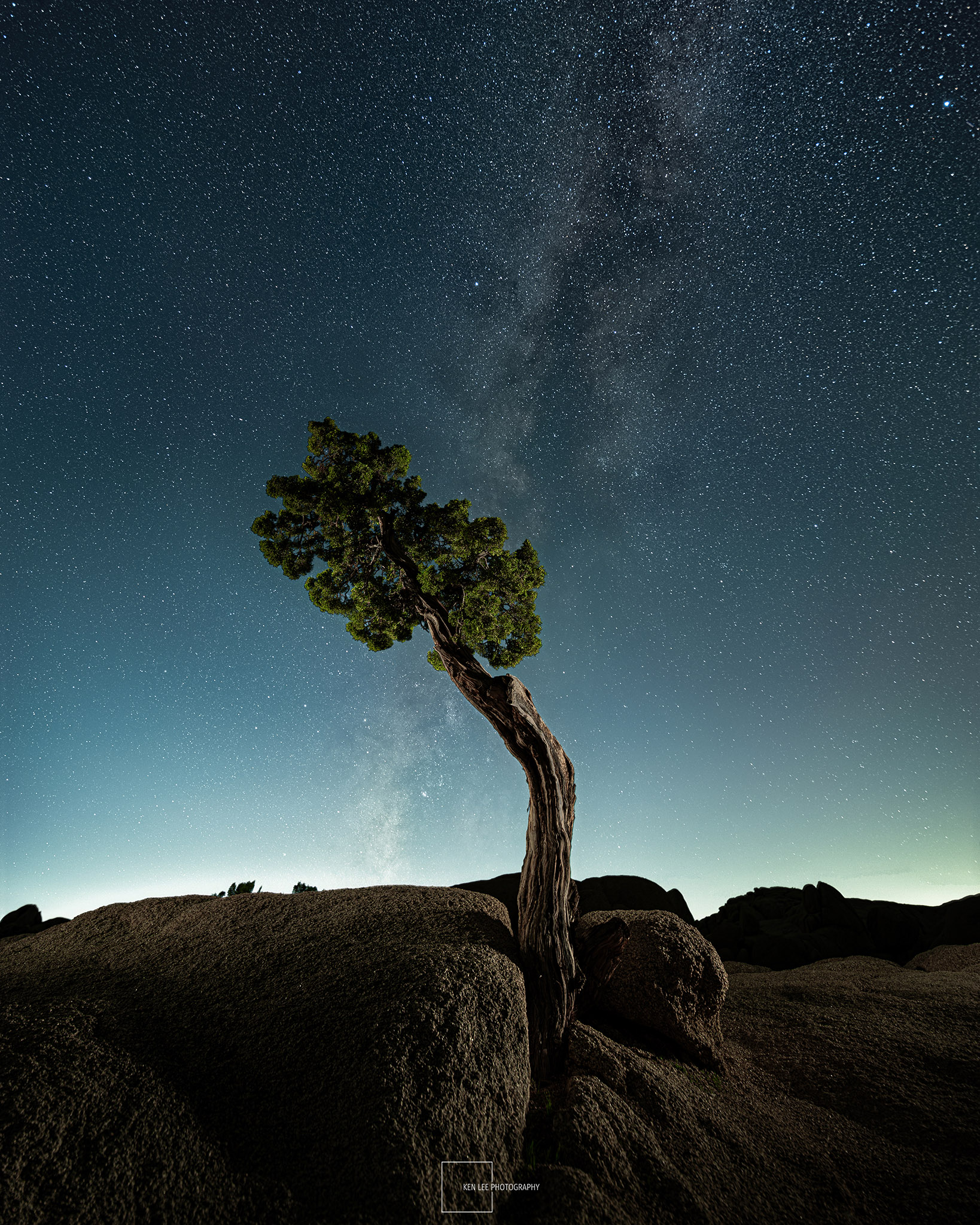
Would Light Pollution From Coachella Valley Interfere With Star AF?
The light pollution here, while not horrible, was more pronounced than the previous night. The stars were fainter but still visible. No problem. Star AF locked on right away, again within 5–7 seconds, with the green light and satisfying beep.
I zoomed in to confirm focus in Live View. Once again, I couldn’t manually improve on what it had already achieved.
In fact, driving home, I realized that during the last several photos, I hadn’t even bothered checking focus anymore. I had unconsciously begun to trust Star AF.
And yes, all of those shots were tack sharp.
Bonus Star AF Tip

The Pentax K-1 and K-3 Mark III have User Modes. These allow you to save your favorite settings for specific scenarios so you can simply turn the dial and be ready (or nearly ready) to shoot. I use User Modes all the time. I have two for full moon photography and two more for the Milky Way.
I saved two User Modes for photographing the Milky Way with Star AF. Every time I select those, the camera defaults to Star AF automatically.
Anytime I can save time and reduce the chance of forgetting a setting, I’ll take it.
Geek Stuff
All photos were taken with a Pentax K-1 and a Pentax 15-30mm f/2.8 AF lens using Star AF. Star AF works with other lens that have autofocus as well. I stacked the photos for the sky using Starry Landscape Stacker (for Mac; Sequator for PC). I also took a low-ISO photo of the earth. I did both to reduce noise. I then blended them together. I used the same setup for the blend, not moving the camera at all, and doing it one after another, as I wanted to best represent what the camera was seeing, only with lower noise.
How Do I Get Star AF?
Star AF is part of a firmware update. However, Pentax is charging for this firmware update, so Star AF is not included by simply updating your firmware. You'll have to purchase it as part of the Astrophoto Assist premium function for supported Pentax cameras:
- Pentax K-1 (with latest firmware update)
- Pentax K-1 Mark II (with latest firmware update)
- K-3 Mark III
- K-3 Mark III Monochrome only*
(*Please note that this is not available for the K-3 or K-3 II.)
You can purchase Astrophoto Assist from their website, where it is currently $79.95. Before doing this, you will need to update your camera to the latest firmware first, or you will not be able to add Star AF or anything else from Astrophoto Assist.
You can read more about getting Star AF on Fstoppers here.
My Thoughts About Star AF
Most camera manufacturers do not offer a feature like Star AF. It's even more unusual when you consider that it's a firmware update for the Pentax K-1, a nine-year-old camera.
Using autofocus for the stars means we don't need to continually squint at Live View and keep refocusing. This is especially true if you want to focus on earthbound subjects and then blend them with your sky-bound subjects. If you shoot the night sky, Pentax Star AF is worth every penny.
Join the Fstoppers community for free
-
Post comments and join in the discussions
-
Browse the site ad-free
-
Share your work and get featured in the community
-
Compete in the photo contests for fun and prizes
7 Comments
These are really nice compositions.
Yeah, were these taken in mad-ahhhhhhhhhh-got-scar?
A little farther west, I think? ;)
Thanks!!
I’ve some fond memories of that ‘Pentax’ (Tamron) 15-30mm lens, what a chonker! While I don’t have it anymore I still have the lens support I built for it. If any wide-angle zoom could’ve used a built-in tripod foot it was that one, hah!
It is such a clunker! Superb lens, but a tank!!
Pentax never bothered opening this software up to Canadians, which is upsetting.