
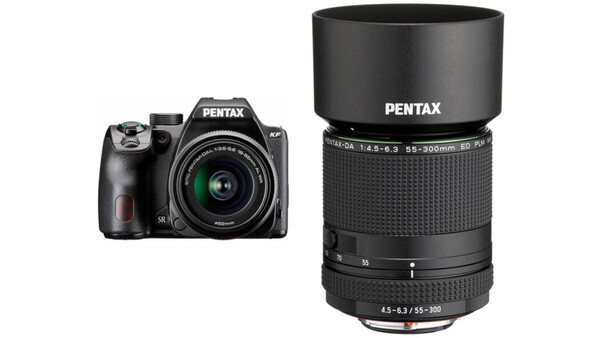
In 2019, while every other camera manufacturer was embroiled in the race to develop mirrorless systems, a Ricoh executive said something truly remarkable: "After one or two years, some users who changed their system from DSLR to mirrorless come back to the DSLR again." He went further, predicting that "the DSLR market is currently decreasing a little bit, but one year or two years or three years later, it will [begin] getting higher."
It's been six years. His prediction, optimistic as it was, didn't pan out. Spectacularly, catastrophically, almost impressively wrong.
But here's the thing: Pentax is still here. Still making DSLRs. Still existing in a reality the rest of the industry abandoned somewhere around 2018. This isn't a story about a company making smart pivots or reading market trends correctly. It's a story about a company that chose a hill to die on and somehow hasn't died yet.
The DSLR Commitment Nobody Asked For
Let's start with the obvious: Canon stopped developing new DSLRs. Nikon stopped developing new DSLRs. Sony abandoned their A-mount DSLR/SLT line to focus entirely on mirrorless. Pentax is literally the only company still all-in on this technology. Not hedging their bets. Not maintaining a legacy line while focusing on mirrorless. All in. Completely committed. The last believer standing.
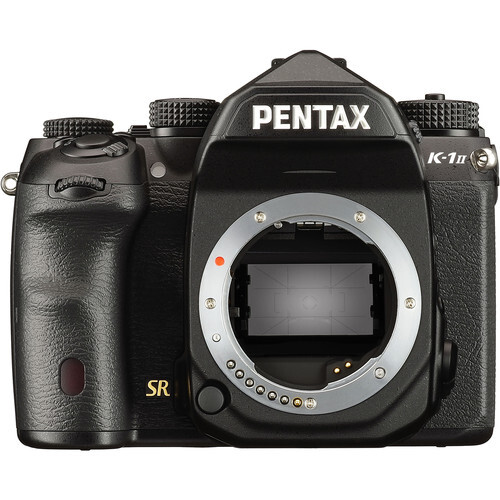
Their current lineup tells the story. The K-1 Mark II, their full frame flagship, launched in 2018. The K-3 Mark III, their APS-C flagship, came out in 2021. A handful of entry-level bodies are still in production. Pentax confirmed in late 2023 that a new APS-C DSLR is in development, though no release timeline has been announced. No public roadmap, just vague assurances that development continues. This is it. This is the fleet.
And here's what makes this so strange: the cameras are genuinely good. The K-1 Mark II has weather-sealing that would make a Canon 5D look fragile, in-body stabilization that works with literally any K-mount lens going back decades, Pixel Shift technology for ultra-high resolution files, and Astrotracer functionality (with an optional GPS unit) that lets you do long-exposure astrophotography without a tracking mount. The K-3 Mark III is built like a tank, shoots 12 fps, and works in conditions that would kill most mirrorless cameras. These aren't bad products. They're excellent products that almost nobody wants.
The market disagreed. DSLR shipments fell to 1.17 million units globally in 2023 according to CIPA data, down 37% year over year and a catastrophic decline from the peak of over 15 million. That number continues to fall. That's not a market; that's a death rattle. But Pentax owns that death rattle now, completely unopposed. They're the last restaurant on a street everybody abandoned. And somehow, improbably, they're still serving customers. Landscape photographers who need that Pixel Shift resolution. Astrophotographers who want Astrotracer. Outdoor shooters who need bulletproof weather-sealing. People with drawers full of K-mount lenses who refuse to start over. It's a niche, but it's theirs. Nobody else wants it. Nobody else is competing for it. And that might be the only thing keeping Pentax alive.
The Ricoh GR: The Thing They Got Right
If you want to understand how weird Pentax's situation is, look at the Ricoh GR III and GR IV. These pocket-sized cameras with fixed lenses and APS-C sensors are everywhere in street photography circles. TikTok photographers love them. This is Pentax/Ricoh's actual successful product, their one unambiguous win in the modern camera market.
The GR proves something important: Ricoh can read the market when they want to. They understand that compact, discreet, no-nonsense design works. They get that photographers want tools that don't draw attention, that fit in a pocket, that do one thing really well instead of trying to be everything to everyone. The GR embodies the same design philosophy Pentax claims drives their DSLR commitment. Simple. Durable. Focused on the essentials. So why does it work for the GR and not for K mount?
The question nobody at Ricoh will answer is this: if the GR works, why not apply that thinking to interchangeable lens cameras? Why not make a GR-style mirrorless K-mount camera that carries over that same ethos? The answer is simpler than you'd think: they already tried.
In 2012, Pentax released the K-01, a mirrorless camera that used the existing K mount. This was exactly what K-mount users claimed to want. A mirrorless body compatible with decades of K-mount lenses. The problem was that keeping the K mount's flange distance meant the camera body had to be awkwardly thick, negating most of the size advantages of mirrorless. Pentax compounded this by hiring designer Marc Newson to create a bizarre, brick-like industrial design that looked more like a concept piece than a working camera. The K-01 sold poorly and was discontinued after about two years.
So when people ask why Pentax doesn't make a mirrorless K-mount camera, the answer is: they did, and it sold poorly. The lesson they learned wasn't "try again with better design." The lesson they learned was "K mount and mirrorless don't mix." Instead, the GR exists in a completely separate universe from K-mount DSLRs, as if they're made by different companies with different philosophies. Maybe they are at this point.
The Film Camera Gambit: Nostalgia as Business Model
Then there's the Pentax 17. The Film Camera Project was announced in 2022, but the Pentax 17 itself was unveiled in June 2024. It's a brand-new half-frame film camera. Not a reissue of some classic model. Not a limited edition nostalgia piece. A completely new design, developed from scratch, with modern manufacturing and a warranty. While Canon is putting AI autofocus in everything and Sony is chasing 100 megapixel sensors, Pentax released a camera that shoots 35mm film.
The Film Project, as Pentax calls it, has a roadmap. First was the compact film camera, which is done. Next is a high-end compact, timeline unclear. Then an SLR model, timeline very unclear. And finally, the dream camera: a fully mechanical SLR.
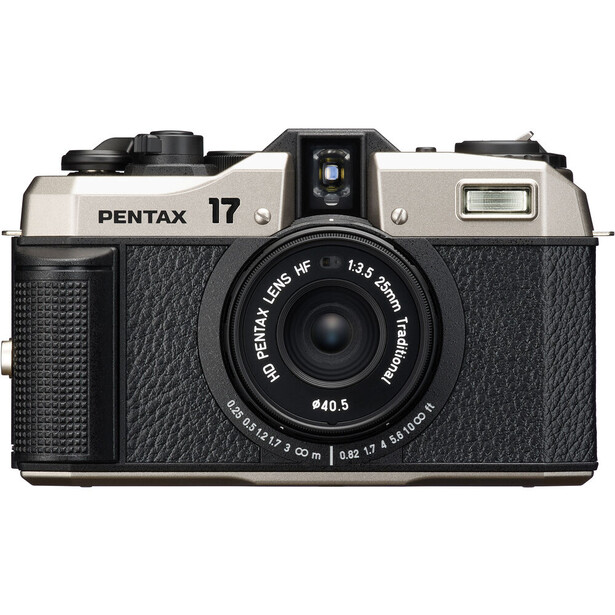
The Pentax 17 is cool. I genuinely respect it. It's charming, well-designed, and fills a real gap in the market. But it's not a business strategy. It's a love letter. They're making cameras for a world they wish existed, not the world that actually exists. And that's been Pentax's problem all along.
The Parent Company Problem and the Mirrorless Question
Ricoh, Pentax's parent company, generates roughly ¥2.13 trillion annually (approximately $13.8 billion) across all its operations. Office equipment, printers, copiers, document management systems make up the bulk of that. The camera division represents a tiny fraction of that revenue. They acquired Pentax from Hoya in 2011, tried mirrorless twice (the tiny-sensor Pentax Q system and the awkward K-mount K-01), watched both fail, and now they're just sort of letting Pentax do its thing. As long as it doesn't lose too much money, as long as it maintains some brand value, Ricoh seems content to let the camera division pursue whatever weird strategy it wants.
Which brings us back to that 2019 quote about photographers returning to DSLRs. This is where everything gets uncomfortable. Pentax genuinely believed people would come back. They thought mirrorless was a temporary fascination, a shiny new toy that would lose its appeal once photographers realized what they were giving up. So why invest $500 million or more in developing a new mirrorless mount? Why build out a whole new lens lineup? Why compete in a space where Canon, Nikon, Sony, Fujifilm, Panasonic, and OM System are already entrenched? Just wait it out. Let the fad pass. Be ready when photographers remember why they loved DSLRs.
Except that vindication never came. Photographers didn't miss optical viewfinders. They didn't come crawling back to the "joy" of SLR shooting. Mirrorless kept getting better. EVFs got sharper, faster, more responsive. Face detection became reliable. Eye autofocus became standard. Battery life improved. The size advantage remained. Every year that passed made the gap wider, not narrower. And Pentax just kept waiting.
By the time it became clear they were wrong, it was too late. They'd already committed publicly to the DSLR future. They'd already told their remaining customers that K mount was the right choice. Now they're trapped. They can't abandon K-mount users, because that's all they have left. But they can't compete in mirrorless without essentially admitting the last six years were a mistake. When you say mirrorless is temporary and DSLRs will bounce back, and then you're proven catastrophically wrong, you can't suddenly announce a mirrorless system and expect anyone to take you seriously. They painted themselves into a corner with their own rhetoric.
The K mount faces significant technological challenges going forward, even as Pentax continues developing new lenses for it. Without major sensor and processing advancements that would require substantial investment, the gap between DSLR and mirrorless capabilities will only widen. Entering the mirrorless market now would require investment Ricoh can't justify for a camera division that barely moves the needle financially. So what's left? They're managing decline, not planning growth. The DSLR commitment isn't vision anymore. It's the only option they have.
Still Here, Still Wrong
So what is Pentax in 2025? It's not a camera company with a future. It's a camera company with a past and a present. The DSLR bet wasn't brave. It was stubborn. They confused their personal preference for market reality. They make genuinely good cameras that genuinely don't matter to most photographers anymore.
There are three possible futures, none of them great. Best case: they limp along for another five to ten years selling DSLRs to the shrinking pool of holdouts and GR cameras to street photographers. They continue firmware updates and service support for existing cameras. The Film Project delivers maybe one more camera. Parts suppliers keep making DSLR components just for them. Ricoh tolerates the low-volume operation because the brand still has value. That's survival, but it's not thriving.
Middle case: Ricoh decides the camera division isn't worth maintaining and sells it off. Someone buys the Pentax name, maybe pivots to mirrorless under new ownership, tries to salvage the K-mount ecosystem or starts fresh. Think OM Digital Solutions taking over Olympus. The brand continues in some form, probably smaller, possibly better managed. Maybe there's a path forward under different leadership without the baggage of those 2019 predictions.
Worst case: parts suppliers stop making DSLR components. Sensor technology available for DSLRs falls too far behind. Ricoh could quietly announce they're "restructuring" the camera division. K mount becomes an orphaned system. The Film Project stops mid-stream. Pentax becomes a brand name on rebadged products or disappears entirely.
Pentax is living proof that you can be great at making cameras and terrible at reading the room. They'll be remembered not for bad products, but for the wrong bet. For believing photographers would return to DSLRs when everyone else saw the truth. For staying loyal to a technology the world abandoned. For thinking optical viewfinders and the "joy" of SLR shooting would matter more than computational photography, silent shutters, face detection, and perfect exposure previews.
In 2019, Hiroki Sugahara expressed his belief that photographers would come back to DSLRs in one or two years. It was optimistic speculation, not market analysis. Six years later, they haven't. The DSLR market didn't stabilize. It collapsed. Mirrorless didn't fade. It won completely. And Pentax is still here, still making DSLRs, still believing.
That's either the most admirable commitment in the camera industry or the most expensive act of denial. Probably both. They chose a hill to die on, and they're dying on it with dignity, making excellent cameras few want. There's something almost noble about being that wrong with that much conviction. But nobility doesn't pay the bills, and conviction doesn't ship units. Pentax bet everything on photographers caring about the same things they cared about. The market said no. And now they're out of moves.
Pentax probably has five to ten more years of inertia. The question is whether that counts as survival or just a very slow ending, or, if they pull off a miracle. No matter what, they'll go down in history as the company that believed so hard in DSLRs that they couldn't see the world changing around them. Sometimes being good at making cameras isn't enough. Sometimes you have to make the cameras people actually want to buy.


Join the Fstoppers community for free
-
Post comments and join in the discussions
-
Browse the site ad-free
-
Share your work and get featured in the community
-
Compete in the photo contests for fun and prizes
92 Comments
"They're excellent products [DSLR] that almost nobody wants." I guess I'm part of the almost nobody category. Having been totally satisfied with a Nikon D800 for over a decade, I would buy a D850 if and when the D800 dies. And, by the way, it appears that Nikon is still manufacturing the D850, although there's some disagreement over whether sales are from depleting stock levels or the camera is still actually in production. Google Gemini AI seems to think the latter. If so, maybe Nikon is hedging their bet on mirrorless.
I'd love to know the percentage of photographers who favor DSLR vs mirrorless. A small study from 2022 points to about 36% who use DSLR. Even though it's outdated research, I would not assume the DSLR to be in hospice care. Even if it is, I'm thankful for choices. 35mm SLR, medium format film, DSLR, mirrorless, whatever... It's great to have different products available for different people. The article makes it sound like virtually every last photographer on the planet has the same needs and priorities, fully embracing the mirrorless camera, but I doubt that is true. It concerns me greatly when leading manufacturers all chase the same incremental technology updates. As if I really care about a few more frames per second or megapixels. Computational features and connectivity are also low on my list of priorities. I'm far more focused on making great pictures today than tomorrow's technology. I believe I'm being realistic about what actually makes a difference in my photography and how camera gear affects that, or maybe I'm as stubborn as Pentax. Either way, I wish them success for their commitment to traditional products.
I am too, honestly. The K-1 was my favorite camera I've used.
I really fail to see what this lingering fuss is over dslrs. If you wish to be stuck up a backwater with minimal IBIS poor low light and autofocus performance and the rest then fine. Technically DSLRs have had their day as the technical problems bringing them up to date to match the functionality of mirrorless cameras would require huge investment to do what mirrorless cameras are already doing, it really makes no sense as the end result would be some bizarre Frankenstein hybrid that few would buy. If on the other hand they still work for you as is then fine. All I really care about are the images my camera produces. To me what’s going on inside the camera is pretty much irrelevant. As I said why people have a thing about having a flapping clunky mirror totally escapes me.
Are you also one of the people who hates the fact that some people out there still enjoy using a manual transmission because the idea that someone could enjoy something old is dumb?
Not about that. Yes, people are still enjoying manual transmissions, but they've long since been supplanted by superior tech, like modern 8 and 9 speed automatic transmissions. Some people still like shooting film and enjoy the smell of stop bath, too. Have at it.
I can understand why a flappy mirror might be anathema to you. You look like you're stuck in the daguerreotype days.
I can't agree with that. There are aspects of DSLR that I do absolutely miss. I have moved on and shoot mirrorless now but there are some pretty significant drawbacks of mirrorless that sometimes really frustrate me.
The first of which is battery duration. My old D800 could go for days on a single battery. With My Z8, I have to swap batteries every 30-45 minutes while shooting aggressively.
Second is the instant-on of DSLRs. My Z8 takes about 3 seconds to go from "sleep" to EV on and ready to shoot. The D850 goes from "off" to ready to shoot in about half a second. In studio I couldn't care less about this, but when I am shooting wildlife, that 3 seconds can sometimes be the difference between making the shot and not. Thus I have to resort to disabling sleep but that chews through batteries even faster.
If you feel you need the most modern technology to produce half decent photos then you have bigger things to worry about. DSLR's still curb stomp mirrorless in battery life too.
“Pentax bet everything on photographers caring about the same things they cared about”
And what exactly was that? Producing out of date cameras?
“The K-3 Mark III is built like a tank, shoots 12 fps, and works in conditions that would kill most mirrorless cameras. ”
12 fps! Hold me back….Pray tell what are these conditions? Some validated evidence supporting that statement regarding weather sealing might be nice. And why do I want a tank like camera?
“and the "joy" of SLR shooting”
Can you explain what ‘joy’ is derived from having a flapping mirror? For me photographic joy is all about the photographic situation be it out in nature doing wildlife or in the studio creating creative images. Not having a mirror flapping around is beyond irrelevant. Or am I missing something!
Eric, some people love their DSLRs, you don't. And life goes on.
You're missing something. The view through the pentaprism, especially outdoors in daylight, is bright and crisp in a way that the best EVF can't match—and the vast majority of mirrorless cameras don't have the best EVF. It seems like only the biggest and priciest flagship cameras get that, and it's the first thing companies cut corners on when you step downward in the catalog.
I personally heavily rely on OVF's when shooting in the dark for stuff like astro photography. It's near impossible for me to focus on stars with an EVF since it introduces so much noise on the monitors that it washes out the stars and makes them blurry. I never know if the stars are in focus.
The Pentax 17 is about $200 too expensive.
Thank yooooou. I've been saying this since the day it launched. it's far too gimped to be costing that much. Half frames and limited controls for $500 is nuts.
Pentax was "dying" 20 years ago when I bought my first one. Filling a niche is a perfectly fine business model. Kudos to Ricoh for giving Pentax leeway to operate in this niche.
By the way, quartz "killed" mechanical watches 40 years ago. Surely nobody buys a mechanical watch these days. (Yes, that was sarcasm.)
Oh man I love both Quartz and mechanical. I love all watches. I never understood the elitest attitudes from watch collectors. If the dang thing is cool and ya gots the money just buy it and wear it. The watches I wear the most are quartz casio and timex watches. Not just because they're "cheap" but because they're friggin cool. The world time with the bracelet (royale with cheese) is my number one go to watch, You can also mod the heck out of it. I'm planning on buying a whole new fully stainless steel case with mineral crystal glass and solid link bracelet for the world time module some time soon. I wear my casio watches far more than more expensive watches. They are also a hell of a lot lighter on the wrist. WATCHES ARE AWESOME.
Personally the thing that's most irritating about Canon and Mirrorless is that in order to "upgrade" to a new body none of the lenses, thousands of dollars over a period of time, will work on the newer bodies. Sure, there is an adapter and I know that - but couldn't the new mirrorless bodies have been built with that built in? Maybe not, IDK, but if the adapter works, then why not just build it in? What I do know is that the secret to great imaging isn't in the camera bodies we buy, or in the lenses. Were it not for the immediacy of digital, required in my commercial work which includes all genres, I would never have changed from completely film since, however ancient the technology of using film must seem, digital still can't match what I can do with a 4x5 film negative... and I have used the very best on a loan to buy program with Leaf digital. And when I deliver a print to the client I have never had one ask which camera I used, and how many pixels it recorded. I am not an executive with Pentax, so I don't know what their business model is like, but I say good for them. I hope it works!
All my Canon EF lenses work seamlessly with my R7, even the old 550EX flash I have since the film days. And the R7 can work also with the old dSLR batteries of the LP-E6 family. And the R7 adds in-body lens stabilization, even for lenses without IS. And I can easily focus at f/8 or higher (eg adding a 1.4x extender to a f/5.6 lens). I may add a full frame RF body in the future.
The small adapter for EF lenses to RF bodies is necessary in order to correct the flange distance (44mm on EF, 20mm on RF), and it's a small additional cost for a person who has Canon lenses since the film days, like me.
I hate equipment discussions among photographers, and here I am letting myself be dragged into one. I will stop now.
The new Mirrorless glass is superior, all of the manufacturers developed adapters to easy the transition.
I really doubt that they are superior. How much sharper can they get? Digital images have the capability of being much, much sharper than film, or even last years iteration of lenses. The question is "how much sharper can the printed image be before it looks fake and plastic?" When the printed image is so sharp that it appears unrealistic, and many cameras can do that now without even being sharpened in the computer, then people doubt its veracity. Do what you want, of course. Can you see on a 20x24 print, for instance, the difference between a 20mp image and a 50mp image? I doubt it. Can you see the difference on a 20x24 print, or even a 30x40, or mural size image between one made with a DSLR lens and the very highest grade mirrorless lens? Nope. Get off the equipment merry go round. Unless you're the crown prince of Brunei, it's going to be a difficult thing to stay up with every little new nuance the camera makers come up with.
I'll say this on the topic of how sharp modern lenses are. The budget options are as sharp if not sharper than DLSR era flagship lenses. it's actually crazy how good they are. Heck even the original Fuji 18-55mm kit lens puts out pro quality results.
My question is now, and has been, how much does a sharper lens actually help? And how far can you go before the images start to look like plastic banana good time rock and roll fakeroonie? I personally think that there are limits. Sometimes the image is so sharp that it is actually displeasing.
Basically, because we are still in a megapixel race, you need sharper lenses to resolve high resolution. There are other reasons I wrote about in a previous comment but F-stoppers deleted my original comment and I don't feel like retyping it. The main reason is resolving high resolution otherwise you get soft and mushy details when cropping defeating the purpose of a high resolution sensor.
The same exact thing I used to say when film was what we had. The lines per millimeter lens resolution got sharper and sharper lenses with more and more lens sharpness. The lenses had much more resolving power than the film had, and indeed more resolving power than was even physically possible with 35mm film. Larger camera image size solved that issue to a degree. Many of us began using large format camera. Images carried detail without fakey looking sharpness. Some of us began processing our film to get too much contrast and then used a process called Contrast Reducing Unsharp Masking to tame the contrast and add perceived edge sharpness. What annoys me about a lot of modern digital work is that the images are too sharp. IMHO there is a limit to how actually sharp an image should be.
The other thing is this. I ever only make photographs with the intention that they will someday be printed; of course most of them won't be but if you think like that then you'll never be embarrassed by the images lack of sharpness. That said, at 24x30 print size, even up to 30x40 or even wall sized murals, contemporary lenses and sensors will render an image that is very respectable.
Modern glass really is superior. It's actually crazy how good the budget options are now. So insanely sharp for the money. Just as sharp if not sharper than flag ship glass from the DLSR era. The lack of distortion for the money is crazy too.
"People with drawers full of K-mount lenses who refuse to start over. " ? LOL, you mean people with a drawer full of K-mount lenses who can't afford to start over. I shoot professionally with a Pentax K-1 and a K-1ii. My clients are very happy with the images. Sure, I would love it if Pentax made a mirrorless version of the K-1, but only if it worked with my drawer full of K-mount lenses with an EVF and had modern focusing. Not something idiotic like the K-01. And I don't need a new dainty little mirrorless body.
Canon and Nikon did it when moving from EF and F to RF and Z, so why not Pentax?
Developing a new range of lenses for a new mount costs lots of money.
Yep. Modern gear is generally more expensive across the board than the DLSR era (in America we also have those dumb tariffs making life even worse), so having to rebuy everything again would be a major PITA
Why they have to follow the masses. I hope they don’t give up and continue producing DSLR’s I like mirror less but shooting with a DSLR is really a photography experience. Mirrorless are lagging, and are heavy and big as well. I have a Pentax K10D and that camera is just 10 megapixel and the output is very good also Pentax colors are amazing and accurate. I hope DSLR’s don’t die
A thoughtful article, as usual.
For me, part of the "joy" in photography is getting well-focused images from my action shots. I get that joy frequently with my R7 and a6400 mirrorless bodies; I got it much less often with my 7D Mark II DSLR.
Pentax may yet have the last laugh, if they can survive long enough and DSLRs follow the same trajectory as film: A few more years of decline, then becoming trendy among those who embrace whatever the establishment ignores, and later by a vocal minority on social media.
They went the way of the Blackberry.
Kind of reminds me of Steve Ballmer's quote about the iphone: "it doesn't even have a keyboard!" Yeah, he kind of misjudged that one.
The K-1/K-1 mkii have GPS built in, they don't need a GPS adapter for Astrotracer. The K3 mkiii does.
I have shot my K-1 in rain, and snowstorms. Sandy conditions and whale watching in a zodiac 4 feet above the sea. Every one is else in the boat had their cameras in plastic bags to keep them from getting wet.
I was able to get shots like this one.
Nice obvious AI image! Very nice AI!
Please explain the reason you believe this image is AI.
You know what they say!! "IF YOU HAVE TO ASK..."
That does not apply here. Please explain why you think this image is AI. Otherwise you're claim is just a baseless accusation with zero substance.
Because it is blue.
What? It's an ocean....with a sky....of course it's blue.
Your level of confidence is in the "born yesterday" category.
What the heck are you even saying? Are you an AI bot?
LEAVE ME ALONE!
Really interesting article, but I disagree with the possible outcomes. I don’t think it’s impossible that Pentax will revisit the mirrorless/K-mount camera. Or come up with a different mount altogether, as they did for the Q, their other mirrorless camera. And by the way I still have and use the K-01, and I love it for it quirkiness and gorgeous colors. One more thing—despite what other commenters have said, I find the slap of a mirror and ergonomics of a Pentax DSLR incredibly satisfying compared to (for example) my Sony a6400, which is just a machine. But then, I’m not a pro.
Pentax will fade into history as their user base passes on. That is the sad reality. The reason nearly every Pentax user gives for using Pentax is that they've always used Pentax. The literal definition of Luddites.
I don't know much about Pentax DSLRs, but if they haven't already, then maybe they should do with the K-1/3 what Nikon did with the D780 and put phase detect AF on the sensor for liveview. I have a D780 as what I consider to be the "ultimate" F mount camera (it can do things that the D850 cannot) and it is brilliant, being both a DSLR and mirrorless camera all in one.
'In 2020, Pentax president Shinobu Takahashi declared that there's "simply no substitute" for SLR shooting. The company launched a whole marketing campaign around "the joy of using an SLR" and how the optical viewfinder lets photographers "sense and capture the light coming through the SLR-exclusive pentaprism."'
I admire their love of the SLR. Truly. I used to adore looking through my viewfinder, composing shots using that exclusive pentaprism to capture light...
Then I was diagnosed with early onset cataracts and rheumatoid arthritis. I have sun sensitivity, joint pain, glasses, and tendinitis in both wrists and some of my fingers. Holding an 8lb rig in adequate outdoor lighting while crouching for shots and trying to see through the viewfinder? Yeah, sure.
Last year, my husband surprised me with a Canon R8. Full frame, articulating LCD screen, and much, much lighter. I've made it heavier with an RF to EF lens adapter ring and a 24mm Sigma art lens, and it's still much lighter than my 7D rig was. Granted I had the battery grip on my 7D, and yes, I've had to compromise battery life, but the fact that I can shoot in low light? Compose my scenes without having to contort my body into painful (for me) configurations? That my wrists and hands aren't aching after shooting for an hour? These things are priceless to me. So yes, I admire Mr. Takahashi's poetry in regards to SLR tech... But for some of us, holding onto that poetry is literally painful.