
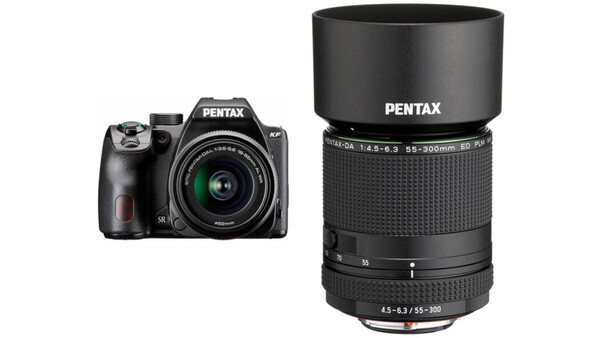
In 2019, while every other camera manufacturer was embroiled in the race to develop mirrorless systems, a Ricoh executive said something truly remarkable: "After one or two years, some users who changed their system from DSLR to mirrorless come back to the DSLR again." He went further, predicting that "the DSLR market is currently decreasing a little bit, but one year or two years or three years later, it will [begin] getting higher."
It's been six years. His prediction, optimistic as it was, didn't pan out. Spectacularly, catastrophically, almost impressively wrong.
But here's the thing: Pentax is still here. Still making DSLRs. Still existing in a reality the rest of the industry abandoned somewhere around 2018. This isn't a story about a company making smart pivots or reading market trends correctly. It's a story about a company that chose a hill to die on and somehow hasn't died yet.
The DSLR Commitment Nobody Asked For
Let's start with the obvious: Canon stopped developing new DSLRs. Nikon stopped developing new DSLRs. Sony abandoned their A-mount DSLR/SLT line to focus entirely on mirrorless. Pentax is literally the only company still all-in on this technology. Not hedging their bets. Not maintaining a legacy line while focusing on mirrorless. All in. Completely committed. The last believer standing.
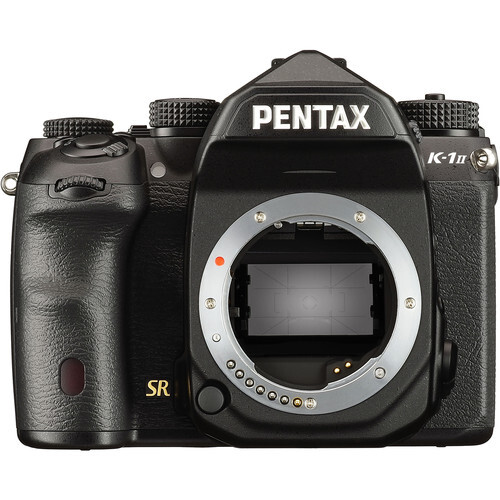
Their current lineup tells the story. The K-1 Mark II, their full frame flagship, launched in 2018. The K-3 Mark III, their APS-C flagship, came out in 2021. A handful of entry-level bodies are still in production. Pentax confirmed in late 2023 that a new APS-C DSLR is in development, though no release timeline has been announced. No public roadmap, just vague assurances that development continues. This is it. This is the fleet.
And here's what makes this so strange: the cameras are genuinely good. The K-1 Mark II has weather-sealing that would make a Canon 5D look fragile, in-body stabilization that works with literally any K-mount lens going back decades, Pixel Shift technology for ultra-high resolution files, and Astrotracer functionality (with an optional GPS unit) that lets you do long-exposure astrophotography without a tracking mount. The K-3 Mark III is built like a tank, shoots 12 fps, and works in conditions that would kill most mirrorless cameras. These aren't bad products. They're excellent products that almost nobody wants.
The market disagreed. DSLR shipments fell to 1.17 million units globally in 2023 according to CIPA data, down 37% year over year and a catastrophic decline from the peak of over 15 million. That number continues to fall. That's not a market; that's a death rattle. But Pentax owns that death rattle now, completely unopposed. They're the last restaurant on a street everybody abandoned. And somehow, improbably, they're still serving customers. Landscape photographers who need that Pixel Shift resolution. Astrophotographers who want Astrotracer. Outdoor shooters who need bulletproof weather-sealing. People with drawers full of K-mount lenses who refuse to start over. It's a niche, but it's theirs. Nobody else wants it. Nobody else is competing for it. And that might be the only thing keeping Pentax alive.
The Ricoh GR: The Thing They Got Right
If you want to understand how weird Pentax's situation is, look at the Ricoh GR III and GR IV. These pocket-sized cameras with fixed lenses and APS-C sensors are everywhere in street photography circles. TikTok photographers love them. This is Pentax/Ricoh's actual successful product, their one unambiguous win in the modern camera market.
The GR proves something important: Ricoh can read the market when they want to. They understand that compact, discreet, no-nonsense design works. They get that photographers want tools that don't draw attention, that fit in a pocket, that do one thing really well instead of trying to be everything to everyone. The GR embodies the same design philosophy Pentax claims drives their DSLR commitment. Simple. Durable. Focused on the essentials. So why does it work for the GR and not for K mount?
The question nobody at Ricoh will answer is this: if the GR works, why not apply that thinking to interchangeable lens cameras? Why not make a GR-style mirrorless K-mount camera that carries over that same ethos? The answer is simpler than you'd think: they already tried.
In 2012, Pentax released the K-01, a mirrorless camera that used the existing K mount. This was exactly what K-mount users claimed to want. A mirrorless body compatible with decades of K-mount lenses. The problem was that keeping the K mount's flange distance meant the camera body had to be awkwardly thick, negating most of the size advantages of mirrorless. Pentax compounded this by hiring designer Marc Newson to create a bizarre, brick-like industrial design that looked more like a concept piece than a working camera. The K-01 sold poorly and was discontinued after about two years.
So when people ask why Pentax doesn't make a mirrorless K-mount camera, the answer is: they did, and it sold poorly. The lesson they learned wasn't "try again with better design." The lesson they learned was "K mount and mirrorless don't mix." Instead, the GR exists in a completely separate universe from K-mount DSLRs, as if they're made by different companies with different philosophies. Maybe they are at this point.
The Film Camera Gambit: Nostalgia as Business Model
Then there's the Pentax 17. The Film Camera Project was announced in 2022, but the Pentax 17 itself was unveiled in June 2024. It's a brand-new half-frame film camera. Not a reissue of some classic model. Not a limited edition nostalgia piece. A completely new design, developed from scratch, with modern manufacturing and a warranty. While Canon is putting AI autofocus in everything and Sony is chasing 100 megapixel sensors, Pentax released a camera that shoots 35mm film.
The Film Project, as Pentax calls it, has a roadmap. First was the compact film camera, which is done. Next is a high-end compact, timeline unclear. Then an SLR model, timeline very unclear. And finally, the dream camera: a fully mechanical SLR.
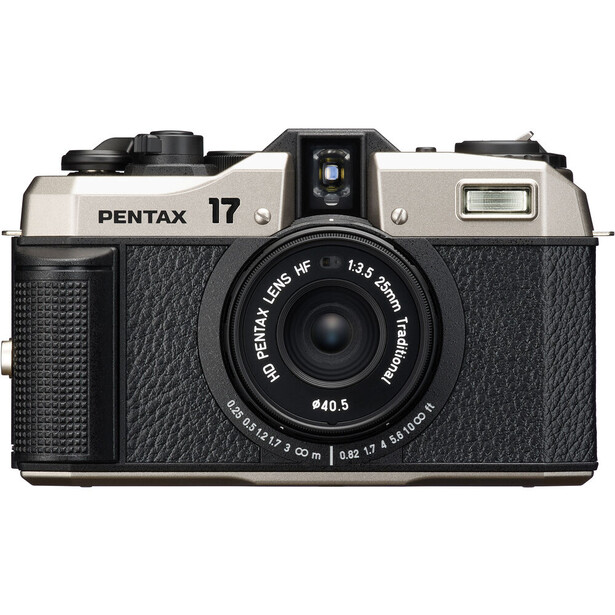
The Pentax 17 is cool. I genuinely respect it. It's charming, well-designed, and fills a real gap in the market. But it's not a business strategy. It's a love letter. They're making cameras for a world they wish existed, not the world that actually exists. And that's been Pentax's problem all along.
The Parent Company Problem and the Mirrorless Question
Ricoh, Pentax's parent company, generates roughly ¥2.13 trillion annually (approximately $13.8 billion) across all its operations. Office equipment, printers, copiers, document management systems make up the bulk of that. The camera division represents a tiny fraction of that revenue. They acquired Pentax from Hoya in 2011, tried mirrorless twice (the tiny-sensor Pentax Q system and the awkward K-mount K-01), watched both fail, and now they're just sort of letting Pentax do its thing. As long as it doesn't lose too much money, as long as it maintains some brand value, Ricoh seems content to let the camera division pursue whatever weird strategy it wants.
Which brings us back to that 2019 quote about photographers returning to DSLRs. This is where everything gets uncomfortable. Pentax genuinely believed people would come back. They thought mirrorless was a temporary fascination, a shiny new toy that would lose its appeal once photographers realized what they were giving up. So why invest $500 million or more in developing a new mirrorless mount? Why build out a whole new lens lineup? Why compete in a space where Canon, Nikon, Sony, Fujifilm, Panasonic, and OM System are already entrenched? Just wait it out. Let the fad pass. Be ready when photographers remember why they loved DSLRs.
Except that vindication never came. Photographers didn't miss optical viewfinders. They didn't come crawling back to the "joy" of SLR shooting. Mirrorless kept getting better. EVFs got sharper, faster, more responsive. Face detection became reliable. Eye autofocus became standard. Battery life improved. The size advantage remained. Every year that passed made the gap wider, not narrower. And Pentax just kept waiting.
By the time it became clear they were wrong, it was too late. They'd already committed publicly to the DSLR future. They'd already told their remaining customers that K mount was the right choice. Now they're trapped. They can't abandon K-mount users, because that's all they have left. But they can't compete in mirrorless without essentially admitting the last six years were a mistake. When you say mirrorless is temporary and DSLRs will bounce back, and then you're proven catastrophically wrong, you can't suddenly announce a mirrorless system and expect anyone to take you seriously. They painted themselves into a corner with their own rhetoric.
The K mount faces significant technological challenges going forward, even as Pentax continues developing new lenses for it. Without major sensor and processing advancements that would require substantial investment, the gap between DSLR and mirrorless capabilities will only widen. Entering the mirrorless market now would require investment Ricoh can't justify for a camera division that barely moves the needle financially. So what's left? They're managing decline, not planning growth. The DSLR commitment isn't vision anymore. It's the only option they have.
Still Here, Still Wrong
So what is Pentax in 2025? It's not a camera company with a future. It's a camera company with a past and a present. The DSLR bet wasn't brave. It was stubborn. They confused their personal preference for market reality. They make genuinely good cameras that genuinely don't matter to most photographers anymore.
There are three possible futures, none of them great. Best case: they limp along for another five to ten years selling DSLRs to the shrinking pool of holdouts and GR cameras to street photographers. They continue firmware updates and service support for existing cameras. The Film Project delivers maybe one more camera. Parts suppliers keep making DSLR components just for them. Ricoh tolerates the low-volume operation because the brand still has value. That's survival, but it's not thriving.
Middle case: Ricoh decides the camera division isn't worth maintaining and sells it off. Someone buys the Pentax name, maybe pivots to mirrorless under new ownership, tries to salvage the K-mount ecosystem or starts fresh. Think OM Digital Solutions taking over Olympus. The brand continues in some form, probably smaller, possibly better managed. Maybe there's a path forward under different leadership without the baggage of those 2019 predictions.
Worst case: parts suppliers stop making DSLR components. Sensor technology available for DSLRs falls too far behind. Ricoh could quietly announce they're "restructuring" the camera division. K mount becomes an orphaned system. The Film Project stops mid-stream. Pentax becomes a brand name on rebadged products or disappears entirely.
Pentax is living proof that you can be great at making cameras and terrible at reading the room. They'll be remembered not for bad products, but for the wrong bet. For believing photographers would return to DSLRs when everyone else saw the truth. For staying loyal to a technology the world abandoned. For thinking optical viewfinders and the "joy" of SLR shooting would matter more than computational photography, silent shutters, face detection, and perfect exposure previews.
In 2019, Hiroki Sugahara expressed his belief that photographers would come back to DSLRs in one or two years. It was optimistic speculation, not market analysis. Six years later, they haven't. The DSLR market didn't stabilize. It collapsed. Mirrorless didn't fade. It won completely. And Pentax is still here, still making DSLRs, still believing.
That's either the most admirable commitment in the camera industry or the most expensive act of denial. Probably both. They chose a hill to die on, and they're dying on it with dignity, making excellent cameras few want. There's something almost noble about being that wrong with that much conviction. But nobility doesn't pay the bills, and conviction doesn't ship units. Pentax bet everything on photographers caring about the same things they cared about. The market said no. And now they're out of moves.
Pentax probably has five to ten more years of inertia. The question is whether that counts as survival or just a very slow ending, or, if they pull off a miracle. No matter what, they'll go down in history as the company that believed so hard in DSLRs that they couldn't see the world changing around them. Sometimes being good at making cameras isn't enough. Sometimes you have to make the cameras people actually want to buy.


Join the Fstoppers community for free
-
Post comments and join in the discussions
-
Browse the site ad-free
-
Share your work and get featured in the community
-
Compete in the photo contests for fun and prizes
92 Comments
This is the voice of experience, and I respect that. I have to point out, though. . . A Pentax K-70 or KF is similar in size to the R8 and also has an articulated screen. The Pentax body is a little heavier, but they have a line of very compact DA Limited lenses.
I find that the OVF provides a bright and crisp view outdoors in the daylight, which is a better experience for me. And in low light? Well. . . I can switch to live view on the rear panel.
Camera companies need to continue selling camera bodies, lenses etc, otherwise they will go out of business. To convince us to keep on buying, they periodically release new models with ever better features; more megapixels, faster frame rates, more autofocus points etc, etc. If we ever became content with what we already have, it would be bad news for them.
Cameras like the Canon EOS-1D X Mark III and Nikon D850 have pretty much reached the pinnacle of what can be achieved with a DSLR. It’s hard to imagine what else they could have done to improve these models. In order to persuade people to keep on spending, the manufacturers brought out new mirrorless models. Of course, this means we also have to buy a lot of new lenses to go with our new cameras (unless we make do with adapters).
The challenge for Pentax now is to keep on releasing new cameras that are even better than current models, with compelling new features that will make us all want trade in our old ones.
The last Canon dSLR could be much better if Canon didn't handicap them when doing live view. You don't get wide area focus or subject recognition etc in a camera like the 6D MK2.
I am pretty certain the 90D and the R7 share the same sensor, but the functionality is very different regarding AF etc.
ok
I support this decision. All camera companies are walking away from DSLR shooters and missing out on having more companies. I use Canon DSLR's and Sigma glass. These tools fit my hands and are easy to use. I tried mirrorless Canon bodies and glass - and hated them. Too small for my big hands, too expensive and some functions were too hard to use. So I sold them all and just stick to my DSLR's. If I was to change in the future it would be to Pentax.
The Nikon D7500 is the last camera I will ever buy. It does everything I need it to do. The images it produces are more than good enough for me. I find my iPhone 16pro is becoming my go to landscape camera. My first Nikon was an F, which I purchased almost 60 years ago.
David Dennis
iPhones are actually really not bad at all for landscape photography. One of the best landscape photos I've ever seen was taken by my buddy at the Denver Airport on an iPhone 4 lol.
Mine is a D3200. I’ll stay with that. If it breaks I’ll buy another.
I don't understand this notion that because they made a mistake, it's too late? Samsung famously ran ads making fun of OLED and claiming LED was superior, and the very next year put out their own OLED TV. Nobody cared, because the TV was a great one. This isn't high school. I don't know of anyone who will hold it against Pentax if they changed course, or even modified it slightly and fixed some of their production decisions. If you're an adult, it won't matter. I've never been a big pentax guy, but I hope they figure it out, because more competition makes the market better for us consumers.
"But Pentax owns that death rattle now, completely unopposed." If only that were true, things might be easier for them. But although Canon and Nikon may have stopped developing any new DSLRs, they're still selling them, and Pentax still has only a small fraction of the now-tiny DSLR market. It's hard to be the last man standing when the other guys won't lie down.
I also think this is misreading the failure of the K-01. It wasn't too big and cumbersome to compete because it was stuck with an empty mirror box. It was a pretty compact camera, and Pentax had some very small lenses for it, and mirrorless cameras have only bulked up in the years since then. What killed the K-01 was the lack of a viewfinder of any kind, and the focus hunting which was especially obnoxious with screw-drive lenses making zrrt-zrrt robot noises. If we imagine a K-02 with a good quality EVF and on-sensor PDAF, well. . . It could be good.
Somebody at Ricoh Imaging might have taken a look at what happened to Polaroid and said for sure we don't want to end up like them. Polaroid scrapped instant film at a time when that product category was dying, and it seemed like an obvious business decision, only for instant film to rebound in popularity shortly after—it's a big money maker for Fujifilm now, of course. The bitterest fate of all would be for Pentax to shut down DSLR production in a way that would be very difficult and costly to restart, and then see DSLRs become the next fad.
I think the vision of Pentax standing up and competing head-to-head for mainstream and pro ILC users is pretty much over. That doesn't mean Pentax is over. They need to differentiate themselves and find the niches that others aren't serving. As you noted, Ricoh Imaging has a genuine smash hit with the GR. Pentax seems to have gotten some success with the K-3 III Monochrome and the Pentax 17. It's not time to close up shop.
Other camera makers produce niche cameras that they know aren't going to be big sellers. Sigma are notorious for that. Fujifilm do it from time to time. Ricoh Imaging can do that too. GR can pay the bills.
We know from public statements that they wanted to start with a simple film camera (the 17) and work their way up to a film SLR. That's probably still in the works. What I think would be extremely cool would be a sibling DSLR, a "hardcore retro" manual-focus DSLR, with the same style and sharing some of those components. I mean, Pentax fans have been asking for a digital K-1000 forever. I'd make it a bit more sophisticated, more like a digital Super Program, but. . . I would absolutely go for something along those lines.
I keep thinking about your sentence, Alex: "They're excellent products that almost nobody wants." Of course, comments by Fstoppers community members is probably not a sound basis for making corporate product development decisions, or maybe it is? According to my informal survey and admittedly reading between the lines of the comments here, roughly 12 people have spoken in support of the DSLR, and 7 in support of mirrorless. It may be true that those who are most loyal to the DSLR are older and less likely to buy new gear of any kind too far into the future, but it's interesting to me that more than half the people here prefer something tangible (more than just nostalgia) about the DSLR. Maybe that's why Nikon continues selling the D850, and hopefully will.
I do understand the temptation to draw conclusions from the data available, but beyond a sample size of <20 being statistically meaningless it’s also nowhere near random or broadly representative of the market. If any conclusions could be drawn from the available anecdotes it would probably be sociological or psychological in nature.
ie: of the types of people who read fstoppers, and among those with an account who are inclined to comment, an article speaking on the decline of DSLRs is likely to elicit more comments from those feeling a need to defend their preference for DSLRs. Many of those who use mirrorless and don’t care about DSLRs aren’t likely to care enough about this article to comment. If they even cared enough to read it. As well, if this same article were posted on DPReview you might see 10 or 30 times the amount of discussion, it might even be a sample size worth considering. But it still wouldn’t be random or representative of the camera market broadly.
In the end, companies go where the money is, and they’re obviously interested in catering to consumers who might buy the newest camera tomorrow as opposed to someone who’s used the same camera for a decade and has no desire or intent to replace it unless it ceases to function. That’s just business.
Having spent thousands of dollars on DSLR bodies and lenses, the performance upgrade to mirrorless is not commensurate with the price, especially with the one glaring flaw that mirrorless has that made it hugely problematic for me when I tried it early on. That being said, the only advantage to mirrorless over DSLR is weight and size to some extent. The rest of the technology could be in any kind of camera but the major manufacturers just forced mirrorless on to the photography world.
I have both. I also have a collection of point-and-shoot that of course, are all Mirrorless. Maybe I was ahead of the curve. LOL.
Pentax is always a name that inspires a lot of engagement, hah.
The Monster AF K-mount to E-mount adapter from a few years back lets me use my “limited” (quotes for emphasis) lenses when the urge hits me to take them for a digital spin, as while I’ve maintained a few Pentax SLRs I’ve long since re-homed the DSLRs.
I broadly agree with the article’s main points. The path Pentax took is obviously not one that’s led to great success if operating revenue is your metric. Ultimately, a business needs to make money to stay in business. My local shop stopped stocking Pentax years ago as it was a growing liability, and I can’t imagine how they’d ever be able to claw their way back to market relevance.
It’s sad, really. My K-1 was one of my favourite cameras because of its feature set, but it was frozen in time. Barely any lens development, the same 36MP sensor that was developed over a decade ago at this point.
The bells and whistles were nice, but not something I’d trade real-time tracking AF, human/animal/bird eye AF, modern ISO performance, no blackout 20/30/40/120 FPS for. 2020’s mirrorless cameras are just too far ahead in too many areas compared to 2010’s DSLRs at this point.
You make reasonable comments. I don't disagree with your previous comment that small sampling sizes from biased communities can lead to false conclusions. I was trying more to raise the question assuming that the DSLR is really dead than assert the answer. I understand that mirrorless 2020s camera specifications outperform 2010s DSLR. What I fail to see is evidence that it makes any difference. And most people make the argument with nothing to show for it. No portfolio or link to a website. Big deal if you can shoot 120 frames per second instead of 20. I honestly can't imagine how that makes any difference. Show me your work.
And, yes, there is no doubt corporations are in business to make money. We're critical of Pentax looking back in time. But it's easy to criticize in hindsight. What about the future? Maybe camera manufacturers should forget developing new cameras altogether since we can make an image solely using AI text prompts. Or abandon dedicated cameras in favor of smartphone or some other eyewear technology that captures still images? Apple Vision Pro on your list of new things to replace mirrorless? If the future of technology and maximizing profits are all that matters, photography as we know it, regardless of DSLR or mirrorless, might become extinct. I may be old... er, but I'm hoping that old fashioned technology which preserves the integrity of photography remains viable for manufacturers to produce the equipment that's keeping the art alive.
I’d suggest that based on the fact all the major players have discontinued the development of DSLRs and DSLR lenses (or never produced them in the first place) that it’s kind of a moot point since the ship has long since sailed.
That said:
Using a personal portfolio as some type of evidence is a red herring in my opinion. Someone’s best work only tells you about how good of a photographer they are, it tells you about when they got the shot. It doesn’t tell you about the photos they couldn’t get or the shots they missed; that is where the difference exists.
Even my K-1 caught a moving subject in focus every once in a while, but for action and wildlife it was frustrating and unreliable compared to my 7DII or my D850/D500. The D850’s 3D tracking AF was a see-change compared to my own D800 or the D810 I used after it. Likewise, those all pale in comparison to the current gen Sony cameras I use for wildlife, which allow me to lock in shots I’d have missed 9/10 times otherwise. For astrophotography nothing on the market gives me the ability to capture (in the dark) what I’m able to capture given the lenses Sigma’s released over the last few years. Fuji/Hasselblad’s 100MP cameras (and to a lesser extent some Sony/Sigma/Leica 60MP cameras) provide a ludicrous amount of detail and dynamic range compared to what I was using a decade ago, which provides so much more flexibility.
Some parts of technological advance can be frivolous or overblown, but there’s tangible advantages in the ability to get more useable photos more often.
A portfolio is a red herring, as an irrelevant distraction? I don't think so. I believe you when you say that new gear gives you more keepers. That's been firmly established by other wildlife photographers. But if you had posted just one really good wildlife shot in your portfolio, I'd understand the context from which you talk about modern camera features. Besides, aren't you ever the slightest bit curious or interested in the photographic work behind someone's comments?
I’m not really interested in using someone’s photographic ability to gate-keep the validity of their ideas/arguments, frankly. Especially on topics that are disconnected from the end results like this one. People can have a reasonable or compelling take on a subject to do with camera equipment or the camera business but also be terrible at photography. If this were a discussion about artistic composition that would be different, but that’s not the topic of the article.
“Your photos aren’t good, ergo I will ignore the substance of your argument” isn’t that compelling a heuristic, in my opinion.
Besides, if you really want to see what the average Pentaxian’s photos are like you can visit PentaxForums and see for yourself. It’s like >70% close-up photos of flowers. I’m going to maybe catch flak for that from some people, but it’s barely an exaggeration.
And you know what? That’s fine. They’re having fun doing what they’re doing, and I’m fine to measure their arguments or opinions on their own merits. Bad photographers can have good takes and good photographers can have bad ones.
The other 30% on Pentax Forum is whatever they see from their front porch rocking chairs
I haven’t been doing photography for very long, but I shoot with a Sony A6000 and a Canon T6i (750D for those of you who still have easily accessible camera shops in your country) and even though the Sony is better in so many ways specs-wise, I prefer the Canon, simply because it’s more fun to shoot with. I’ve spent a few years in the audiophile community, and there are a lot of parallels between the two hobbies. Even though streaming services and lossless audio have removed the *need* for other audio mediums like tape and vinyl, the *desire* for those old ways of listening has remained. Records still sell, CD and cassette players are still being manufactured, and enthusiasts are able to keep the industry alive and developing, even if it isn’t what the average consumer looks for anymore. Pentax will likely need to scale back their operations if they want to survive, but I see no reason to think that they couldn’t live on as long as they’re smart. In audio, the tactile experience of interacting with “outdated” equipment and physical media is a major draw to many people. In the car scene, the experience of physically shifting gears yourself and not relying on electronic aids for everything is what keeps cars like the Mazda Miata in production and demand for old cars high. In photography, for me at least, there’s something about lugging around a big DSLR and making clunky mirror-flappy sounds that never gets old, in much the same way that manually winding the shutter and swapping rolls of film around is for a lot of film shooters. We’re human, and we have emotional and irrational reactions to the things we enjoy. If the camera market really did only care about specs, then DSLRs would be completely dead by now, film would be six feet under, and instant and compact cameras would have never happened at all. In any hobby, specs aren’t everything, and to be frank, people who care only about having the biggest numbers on their “Thing of Preference” and can’t understand why anybody else doesn’t feel the exact same way that they do actively make hobbies like this harder to enjoy and worse overall for everyone involved.
"Be ready when photographers remember why they loved DSLRs."
What's forgotten here is that they/we that loved DSLRs are dying, literally. They aren't coming back.
Six years ago I inherited a Canon 5DSR, 100mm L Macro, 180mm L Macro and a 200mm-40mm L lenses. Just sat in my spare room doing nothing as I was a mirrorless user. A few months into 2025 I decided to go back to a DSLR. I purchased a fine Canon 6D for £200, an EF 17-40mm L for £135 and a Tamron SP 45mm and Tamron SP 85mm for £250 each. My main reason was, after years of mirrorless I craved an optical finder. The OVF is uncluttered, has amazing resolution and contrast and I am actually looking at my subject. The 6D is a small FF camera which is a shade larger and heavier than my 80D. I do miss the focus accuracy and smaller size of my mirrorless, but the aforementioned advantages more than compensate. Oh, and the battery life of DLSR is amazing. With my 6D I can shoot all day on one battery. I can shoot hundreds of frames and not worry about exhausting the battery. The 6D has in-built wifi and GPS and as these features do consume the battery I only switch them on when I need to.
Although my photography won't amount to anything, I enjoy it and feel more engaged with the subject using an OVF.
I had a D700 and thought to myself "You can pull this camera out of my cold, dead hands."
Then I got a D750 and thought the same thing.
Then I got mirrorless R5/R6 and now I have similar thoughts.
While I enjoy the "Through the viewfinder" experience of a DSLR very much, there's no question that each tool that comes out has advancements I hadn't even thought of yet that make my images better. Who knows if we'll be writing articles about the last company to be a mirrorless holdout in the future as we all switch to brain-chip cameras implanted in our temples.
I want Pentax Cameras really bad. The problem is, ever since trump took office, the economy has gotten exponentially worse absolutely destroying any spending power I once had. The insane and ludicrously fast climb of the cost of living has annihilated any extra income. I still use my Nikon DSLR's even though I have a Nikon Mirrorless too.
On the film side I think they kind of shot them selves in the foot with their first new film camera releasing being a half frame camera with limited controls. It's also VERY expensive for what it does. I'd have been more interested if they just released a standard SLR with full controls. The half frame camera should have come second.
Well I am still extremely happy with my Nikon D780. I love the Pentax DSLR's, too.
"Someone buys the Pentax name, maybe pivots to mirrorless under new ownership (...)"
Hoya owns the rights to the Pentax trademark in Nice Class 9, which includes photographic items. Ricoh Imaging uses the Pentax brand with Hoya's permission, i.e. under a brand licence agreement.
Pitch-perfect Pentax epilogue that will be poorly received in the brand forums; explained away as "just an opinion", or "Pentax has survived worse" by delusional Pentaxians.
For a lot of us, mirrorless cameras do not work. EVF with 8-bits per color plane, can barely make sRGB, a horrible real world view in high contrast environments is not for me.
I currently shoot the Canon 1DX MKiii. I would give anything if they would continue the product line to a MKiv. It is a jewel. A precision camera. 16 frames per second. An outstanding optical low pass filter. With a monopod, you dont really need IBIS, just good technique.
I dont think Pentax made a mistake. I think they havent gone far enough into the professional realm. What is needed is professional cameras and lenses. Pentax is capable, but someone is dragging their feet. Simplicity is supreme.
Another issue with EVF's, especially on mirrorless cameras that aren't flagship cameras, is that if you need to shoot in total darkness the EVF and back screen become completely useless. On mirrorless cameras that aren't flag ship cameras they generally have lower quality monitors to drive the purchasing of more expensive models. It makes sense but at the same time it does present this problem. So shooting in the dark becomes a real pain because you are either going to see nothing but grainy blackness or the image on the monitor will have the gain so boosted you can't tell if anything is in focus or not. Optical view finders, naturally, don't have this problem.
… err…an OVF is useful in.. total darkness?
:/
(thanks for the down vote, Chris, I’ll wear it with pride lol)
Yes. it is. I can actually see stars in an ovf so that i can focus on them. In an EVF it's only digital noise on a black background.
As an astrophotographer myself who’s used both DSLRs and mirrorless for ages for wide field and deep sky, I cannot understand how or why anyone could/would use the tiny dim window of an OVF (or EVF for that matter) to try and focus on the stars when back-panel Live View exists.
Mind you, in the comment I replied to you didn’t specify stars, it sounded like you were saying you were checking focus in complete darkness which would of course be impossible.
With most DSLRs going back 12-15 years having Live View and the ability to zoom-in several times to facilitate the most accurate focus on stars I’m not sure why you’ve experienced difficulty. They’ve always shown up perfectly fine on the back LCDs of every camera I’ve ever used, which is dozens at this point.
Most cameras allow you to adjust the preview to either show you an exposure simulation based on your current settings, or they’ll attempt to show a “properly” lit scene regardless of your settings. In the case of complete darkness the latter will crank the gain in an attempt to display anything at all, which will lead to a grainier view. This may also happen if you’re in bulb mode. If using an exposure simulation preview however, WYSIWYG as long as you’re not in bulb. Which is stars on a black sky, but typically on a 3” display with the ability to zoom in 10x or 16x.
YMMV I guess.
I don't think anybody would think negatively if Pentax decided to offer a MILC and an adaptor for the K-mount (as opposed to making the body have a large flange distance built-in just to support a K-mount-only scenario). They waited to see what happened, meh, it didn't turn out that DSLRs made a comeback. Meus malus. Would a caring leader really die on that sword and take out the entire company with them?
I have yet to run into any Gig where they asked me if I had a mirrorless or a DSLR camera. Full frame vs APS-C yes, mirroless NO...
I’ve shot Pentax for decades and love my K1 II and old k20d. I’m also currently adding a mirrorless system, I’m not sure what the cranky nonsense is about. These are all just different tools. Sometimes I enjoy my hand planer, sometimes my power planer. It’s not that deep. I notice many of the comments about DSLR being superior or good enough come mainly for landscape shooters. That makes sense. Mirrorless means nothing for landscape and I’d rather have a K1 outdoors than any other camera. However, for fast moving sports and dynamic portraits where I want focus with shallow DOF on eyes rather than lashes, DSLR sucks. It’s a fight, it takes way more time and gives way less keepers. I prefer eye af for people. I don’t find it romantic to make my job harder. The right tool for the right job. It’s not either or. As far as the future of DSLR? Doubtful. As a long time member over at Pentax Forums I can tell you the main user base is aging fast and not bringing in many new users. DSLR is going to die because young people don’t buy them and the old people that love them already have them. The market is disappearing. If you’re an old fogie with all your dslr’s and old glass you aren’t the market, because you don’t buy anything. Most of the Pentax forums folks are shooting on ancient stuff like k5’s. The old folks can love love love what they like, but if no one buys buys buys, we get no new products. I can’t tell you how many times I’ve heard “I’d love a k1 but my k5 does everything I need”. That nonsense attitude is a large part of what has killed Pentax. Soon the mass of Pentax users will be dead or unable to hold a camera. That’s what will finally kill them. This is the same thing that happened with the transition from film to digital, and holy moly am I old enough to be tired of hearing old people whine about change. I have a workshop full of different saws. I use the right one for the right job. It’s a craft, not philosophy. Why is this the one craft in which people can’t stop peacocking about how their tool is the best tool? No one cares bro. Do what you want to do. DSLR is awesome. Mirrorless is awesome. It’s not a contest.
One of the worst parts of the Pentax universe is Pentax Forums. Every subpar lens gets 8/10, every passable one 11/10. The geriatric core there lives in a denial echo chamber working itself into a frenzy whenever someone posts an AI video on YouTube about a non-existent Pentax camera rumor. Those guys do Pentax the greatest disservice: letting its flaws slide. I don’t want Pentax to fail, but I could live in a world without that lame sycophantic forum lying about how Pentax is competitive in 2025.
Ouch! That hurt.
I think the reputation of Pentax Forums as a home for retired photographers taking pictures of flowers and the view from the porch has some validity. However, there are also some fine and committed photographers there, and they produce some great images. If you read some of the recent polls and responses they put up, you realise that most there also have Mirrorless, compact and film cameras. Pentax cameras are just nice bits of kit. They work well, incredibly robust and do well for most photographic genres.
As Pb Logic above says, FPS, fast tracking AF and subject detection are important for action, wildlife and professional portraits / events - but not for landscape, still life, product, macro, street, environmental portrait, documentary, astro and lots of other genres I haven't thought of. You want the right tool for the job. For most of those genres a DSLR will do fine. The thing is, if you want one there are literally millions of cheap, used ones on the market - because mirrorless has been successful. That makes it extremely difficult to sell a new DSLR and I think that is the big thing that Pentax management failed to take into account. I own a K-1 (used, mint, in 2025 for £700), K-3 III (new in 2022 for £2,000) and K-70 (ex-dem, mint, in 2020 for £300). All 'body only' as I had a collection of lenses for my previous K5, now retired. The main advantage of this setup is, of course, that I can use any of the lenses with any of the cameras.
I use the K-1 for landscapes, astro (built-in GPS) and still life / tripod work. Often that is manual focus using the rear screen and focus peaking, so the VF is actually irrelevant! I use the K-3 III for most other hand-held photography (sightseeing, family, events etc). On holiday I take the K-70 with 18-135 WR and 40mm pancake lens because it is cheap (so less costly if lost or stolen) and it has a built in flash. I like doing a bit of bird photography, and in most cases the K-3 III with 300mm f/4 lens and x1.4 adapter (630mmm FF equiv.) is fine. But BIF is impossible, so might go for a mirrorless at some point - but it probably won't be new!
Oh yes, and I have a Ricoh GR IV with me most of the rest of the time. Mirrorless, fixed focal length, no VF at all and just brilliant for street photography, and any time when carrying a DSLR is impractical. That is my everyday carry.
I appreciate that I am in the minority, but I am the type of user who started on mirrorless when it came out, but in the last 18 months have been moving to DSLR. I started with a Nikon DF, and found it so much nicer to use than my ZF. I caught the bug and after another couple of bodies ended up with a K1 Mark II. I love it more than any other camera I have ever used, and will absolutely be in the queue to pre-order at full price the next full frame camera they release. All cameras can produce good images these days, so for me the emotion of using a camera and the shooting experience is far more important than megapixels or AI features.
I recently picked up a Nikon DF and it’s stellar compared to using the latest mirrorless because you can just make it a box with dials that has wildly good battery life. Doesnt even have video functions at all. It was skewered aggressively by FStoppers but I wonder if your philosophies around it have changed too.
Last year I sold all my pro-level mirrorless and went back to a DSLR. I used mirrorless for five years The main reason I returned to the DSLP was the optical finder I much prefer looking at the subject and not an image of it on a little screen. My chosen DSLR is the Canon 6D. A small, light full frame minimal camera. The colour output is the best I've had and I have had sooo many cameras from every manufacturer (except Pentax digital) it's embarrassing.
Sure, modern mirrorless is better at everything, huge DR, focus in the dark, ridiculously high usable ISO, gadzillion frames per second etc. But wait... Do you actually need all that. Are your pictures actually creatively better? Who is the photographer? You or the camera? With computational methods etc. it seems it's increasingly the camera. The intrusion of AI is making it the panacea for the crap photographer.
DSLRs are no more outdated or obsolete (they're just marketing terms) than water colour painting. That may be a poor analogy but it's still a popular hobby that, unlike photography, takes real Human skill to produce something worthwhile. Some people are just suckers for those marketing terms. People just don't like effort and hard work these days and want a quick easy route to amazing results.
If you're thrilled with mirrorless (or the next gimmick the marketing and engineering teams come up with to make you upgrade) then good for you. I'm sure the shareholders appreciate your kind donation.
The technology in modern hardware and software is really impressive, but I feel this is at the expense of the Human input and the relentless pursuit of the eternal upgrade is masking the real issue with your work: It's not your camera, preset, next upgrade. next fashionable must have, it's YOU.