
While pixel-peepers obsess over sharpness charts and bokeh samples, the smartest photographers know that certain overlooked lens features can help you get that elusive shot. Here are five hidden gems you should look for in your next lens.
The Features That Actually Matter
In the endless debates about lens selection, photographers typically focus on the obvious specifications: focal length, maximum aperture, image stabilization, and overall sharpness. These are certainly important factors, but they only tell part of the story. The difference between a lens that merely takes sharp photos and one that becomes an extension of your creative vision often lies in subtle design elements that manufacturers barely mention in their marketing materials.
Professional photographers and seasoned enthusiasts have long understood that the most critical lens features are often the ones that receive the least attention. These are the details that determine whether a lens performs reliably under pressure, adapts seamlessly to different shooting scenarios, and provides the tactile feedback necessary for precise creative control. The following five features represent the hidden differentiators that separate truly exceptional lenses from merely competent ones.
1. Focus Limiter Switch: The Speed Secret That Eliminates Focus Hunting
Hidden on the barrel of many telephoto, macro, and professional zoom lenses sits a small switch. The focus limiter switch represents one of the most practical innovations in modern lens design, yet it remains criminally underutilized by photographers who could benefit from it most.
This deceptively simple toggle fundamentally changes how your lens approaches autofocus by restricting the range of distances the focusing system will consider. Instead of allowing the lens to search through its entire focusing range from minimum distance to infinity, the limiter creates boundaries that prevent the autofocus system from hunting in areas where your subject simply cannot exist.
The most common implementation divides the focusing range into two or three zones. A typical setup might offer "full range," "3 meters to infinity," and "minimum distance to 3 meters." By selecting the appropriate range for your shooting situation, you effectively cut the lens' search area in half or more, resulting in dramatically faster and more confident autofocus performance.
The benefits become particularly apparent in challenging focusing conditions. When photographing birds against a busy background, setting the limiter to exclude close distances prevents the lens from latching onto nearby branches or foliage. Wildlife photographers working with long telephotos find that focus limiters virtually eliminate the frustrating back-and-forth hunting that plagues these lenses in complex environments.
Macro photographers gain equally significant advantages from focus limiting. When working at high magnifications, the depth of field becomes razor-thin, and even tiny focus adjustments can send the lens searching through its entire range. By limiting focus to the close range, macro photographers can achieve much faster and more precise focusing, especially when working with moving subjects like insects or when making fine adjustments during focus stacking sequences.
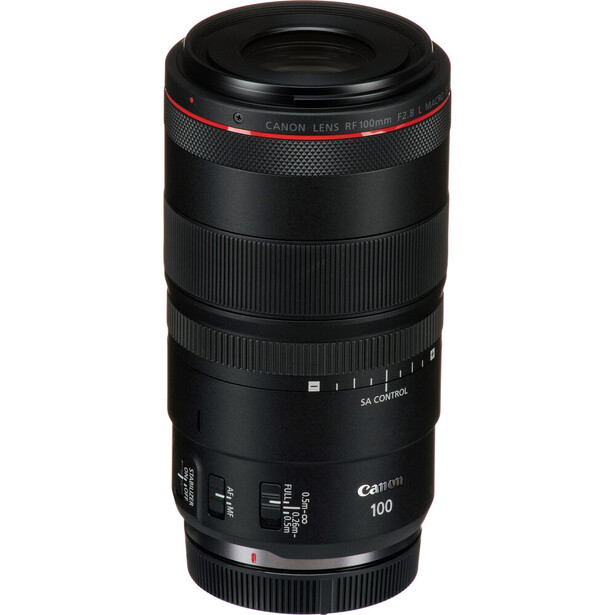
The focus limiter also works synergistically with other autofocus features. When combined with back-button focus and appropriate autofocus area modes, focus limiting becomes part of a comprehensive focusing strategy that maximizes both speed and accuracy. Photographers who master this combination often find they can achieve focus in situations where others struggle, particularly in low-light or low-contrast scenarios where every advantage matters.
Understanding when and how to use focus limiters requires developing an intuitive sense of subject distance and shooting scenarios. The most effective approach involves analyzing your typical shooting situations and identifying the distance ranges where your subjects most commonly appear. Once you establish these patterns, setting appropriate focus limits becomes second nature, transforming a occasionally frustrating lens into a consistently reliable tool.
2. Close-Focus Performance: Turning Any Lens Into a Versatile Creative Tool
The specifications that photographers obsess over when choosing lenses rarely include two of the most practically important numbers: minimum focusing distance and maximum magnification ratio. These seemingly mundane specifications determine whether a lens can adapt to unexpected creative opportunities or forces you to accept compositional compromises that weaken your images.
Minimum focusing distance determines how close you can position your lens to a subject while still achieving focus. Maximum magnification, expressed as a ratio like 0.25× or 0.5×, indicates how large a subject appears on the sensor relative to its actual size. A 0.5× magnification ratio means that a 24mm object will occupy 12mm on a full frame sensor. While these numbers might seem technical and unimportant, they directly impact your ability to fill the frame with smaller subjects and create compelling detail shots.
The practical implications of superior close-focus performance extend far beyond obvious macro applications. Portrait photographers discover that lenses with shorter minimum focusing distances enable them to create striking detail shots of hands, jewelry, or fabric textures without switching to dedicated macro equipment. Wedding photographers find that good close-focus capabilities allow them to capture ring details, bouquet textures, and intricate dress elements with lenses they are already carrying.
Product photographers benefit enormously from lenses that can focus closely while maintaining excellent image quality. A 50mm lens with 0.3× magnification can handle many product shots that would otherwise require a dedicated macro lens, eliminating the need to change lenses for different types of subjects. This capability proves particularly valuable when shooting in time-sensitive environments where lens changes risk missing important moments.
Travel photographers find close-focus capabilities invaluable for capturing the small details that help tell complete stories about their destinations. Market vendors, architectural details, local crafts, and cultural artifacts all benefit from the ability to focus closely and fill the frame. A travel lens with good close-focus performance eliminates the need to carry additional macro equipment while maintaining the versatility required for changing shooting situations.
The image quality characteristics of close-focusing often reveal the true optical quality of a lens design. Many lenses that appear sharp at normal distances suffer noticeable degradation when focused at minimum distance. The best designs maintain excellent center sharpness and reasonable corner performance even at close distances, while lesser lenses might exhibit significant softness, color fringing, or distortion issues that limit their practical utility for close-up work. Autofocus performance at close distances presents another critical consideration. Some lenses that focus quickly at normal distances become sluggish and uncertain when working close to minimum distance. The best close-focusing lenses maintain confident autofocus performance throughout their entire focusing range, with smooth and accurate operation even at high magnifications where depth of field becomes extremely shallow..
3. Aperture Blade Design: The Hidden Factor That Makes or Breaks Your Backgrounds
While photographers endlessly debate the subjective qualities of bokeh, the physical design of a lens' aperture mechanism remains the primary determinant of background rendering characteristics. The number, shape, and construction quality of aperture blades create the foundation upon which all other optical elements build, yet these crucial specifications rarely receive the attention they deserve in lens selection decisions.
The most immediately visible impact of aperture blade design appears in the shape of out-of-focus highlights. Lenses with insufficient blade counts or poor blade shaping transform circular light sources into obvious polygons that can dominate and distract from the intended subject. A seven-blade aperture creates heptagonal highlights that immediately identify themselves as artificial and unnatural. Nine or more blades typically provide sufficient approximation of circular highlights to avoid obvious geometric shapes in most situations.

However, straight blades offer one significant advantage that curved designs cannot totally match: the ability to create dramatic sunstars when photographing bright point light sources. Importantly, odd numbers of blades will create double as many rays at the blade count, while even counts will create the same number. The sharp edges of straight blades cause diffraction patterns that manifest as defined rays extending from bright lights. Architectural photographers and landscape photographers often prefer lenses with straight aperture blades specifically for this sunstar capability, even if it means accepting less ideal bokeh characteristics for other applications.
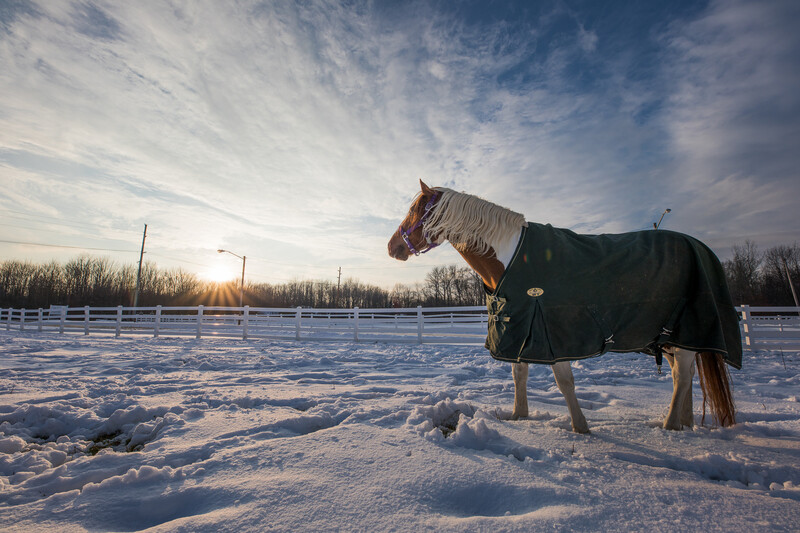
Onion ring bokeh, a phenomenon where out-of-focus highlights display concentric circular patterns, typically results from molded aspherical lens elements. While not directly caused by the aperture mechanism itself, the blade configuration can exacerbate or minimize these patterns. Lenses designed specifically for smooth bokeh often include additional optical corrections and refined aperture geometries that reduce onion ring effects.
The mechanical precision of the aperture mechanism affects both image quality and long-term reliability. Loose tolerances in blade positioning can create slight light transmission variations across the aperture opening, leading to subtle but measurable impact on corner illumination and overall image quality. High-quality aperture mechanisms maintain precise blade positioning throughout their operational life, ensuring consistent performance across thousands of aperture cycles.
Portrait photographers develop particularly refined sensitivity to aperture blade characteristics, as their work frequently involves wide apertures and significant amounts of background blur. A portrait lens with poorly designed aperture blades can produce distracting highlight shapes that draw attention away from the subject, while well-designed blades create pleasing circular highlights that enhance rather than detract from the overall image.
Macro photographers face unique aperture-related challenges due to their frequent use of smaller apertures for increased depth of field. Lenses optimized for macro work often feature aperture designs that prioritize diffraction performance and edge sharpness over wide-aperture bokeh quality. Understanding these trade-offs helps macro photographers select lenses that match their specific working requirements.
The relationship between aperture blade count and optical complexity reveals interesting design philosophies among different manufacturers. Some companies prioritize maximum blade counts for superior bokeh, accepting the increased mechanical complexity and potential reliability concerns. Others focus on simpler, more reliable mechanisms with fewer blades but superior individual blade quality and positioning accuracy.
Video applications place additional demands on aperture design, as smooth aperture transitions during recording require exceptionally precise mechanical control. Cinema lenses often feature specially designed aperture mechanisms with enhanced smoothness and minimal operational noise, characteristics that benefit still photographers as well but rarely receive marketing emphasis in photography-focused lens descriptions.
Professional photographers learn to evaluate aperture characteristics not just through technical specifications but through practical shooting experience with different subject types and lighting conditions. This experiential knowledge allows them to predict how different lenses will perform in specific situations and make informed decisions about when aperture blade design should influence lens selection.
4. Internal Focusing and Zoom: The Stability Factor That Changes Everything
The difference between a lens that extends and retracts during operation and one that maintains constant physical dimensions might seem like a minor engineering detail, but this characteristic fundamentally affects how the lens integrates with your entire photography system. Internal focusing and internal zoom designs represent sophisticated engineering approaches that solve numerous practical problems while introducing their own unique advantages and considerations.
Traditional lens designs achieve focusing and zooming by moving entire optical groups forward and backward, causing the overall lens length to change dramatically during operation. This extension and retraction creates a pumping action that draws dust and moisture into the lens barrel, particularly problematic in challenging environmental conditions. Internal designs reduce this pumping effect by moving smaller optical elements within a sealed barrel, maintaining consistent environmental protection throughout the lens's operational range.
The impact on camera stability becomes immediately apparent when using longer lenses or working with support equipment. A lens that changes length during focusing or zooming continuously shifts the camera's center of gravity, making it difficult to maintain precise positioning on tripods or monopods. Wildlife photographers working with large telephotos find that internal focusing designs provide much more predictable balance characteristics, allowing them to maintain comfortable shooting positions throughout extended sessions. Gimbal stabilizers, increasingly popular for both photography and video applications, perform dramatically better with internally focusing lenses. External extension creates constantly changing balance points that fight against the gimbal's stabilization algorithms, often resulting in jerky motion and increased battery drain. Internal designs maintain consistent balance throughout their operational range, allowing gimbals to operate more efficiently and produce smoother results.
The sealed construction typical of internal focusing and zoom designs provides significant environmental advantages beyond simple dust protection. Rain, snow, sand, and salt spray encounter fewer opportunities to penetrate the lens mechanism when no external extension occurs. Professional nature photographers often cite this environmental resistance as a primary factor in lens selection, particularly when working in challenging conditions where equipment reliability becomes critical.
The optical advantages of internal focusing often extend beyond the obvious mechanical benefits. Moving smaller, lighter optical elements typically allows for faster and more precise autofocus operation compared to systems that must move larger, heavier lens groups. The reduced mechanical mass also enables more sophisticated autofocus algorithms that can make finer adjustments with greater accuracy. Focus breathing, the change in focal length that occurs during focusing, typically shows improvement in internally focusing designs. While not eliminated entirely, internal focusing systems often exhibit less dramatic focal length shifts during focus adjustments. Video applications particularly benefit from minimal focus breathing, as noticeable angle of view changes during focus transitions create distracting visual effects that can ruin otherwise perfect shots.
The engineering complexity required for effective internal focusing and zoom designs typically correlates with higher manufacturing costs and increased optical sophistication. Creating moving optical groups that maintain precise alignment while traveling internally requires tighter tolerances and more sophisticated mechanical systems than simpler external extension designs. This complexity often translates to higher retail prices, but the practical benefits usually justify the additional cost for serious photographers. The weather-sealing integration possible with internal designs often exceeds what manufacturers can achieve with extending lens designs. Sealing a static barrel presents fewer engineering challenges than sealing extension mechanisms, allowing for more comprehensive environmental protection. Professional photographers working in extreme conditions often prioritize internal focusing designs specifically for their superior sealing capabilities.
5. Focus and Zoom Feel and Response: The Tactile Connection That Defines Precision
In an era dominated by autofocus technology, the quality of manual focus implementation might seem like an anachronistic concern, but the tactile characteristics of a lens' focusing ring and its zoom ring often determine whether photographers can achieve their precise creative vision. The difference between a well-implemented system and a mediocre one can mean the success or failure of critical shots, particularly in situations where autofocus cannot match human judgment and precision or you need to change focal lengths quickly.
Focus throw, the total rotation required to move from minimum focusing distance to infinity, represents one of the most crucial manual focus characteristics. Lenses designed primarily for autofocus operation often feature extremely short focus throws that compress the entire focusing range into less than 90 degrees of rotation. While this allows for fast autofocus operation, it makes precise manual focus adjustments nearly impossible, as even tiny ring movements cause dramatic focus shifts. Professional manual focus lenses typically provide focus throws of 180 degrees or more, distributing the focusing range across sufficient rotation to enable precise adjustments. Macro lenses often feature even longer throws. This extended throw allows photographers to make fine focus adjustments during critical applications like focus stacking or precision portrait work. On the other hand, photographers often prefer zoom rings with shorter throws so they can quickly make dramatic focus length changes.
The damping characteristics of the zoom or focus ring determine how smoothly and predictably the mechanism responds to input. Poor damping creates a loose, imprecise feel that makes consistent focus adjustments difficult, while excessive damping can cause the ring to stick or bind during operation. The best implementations provide smooth, consistent resistance that gives clear tactile feedback about focus position and movement direction.
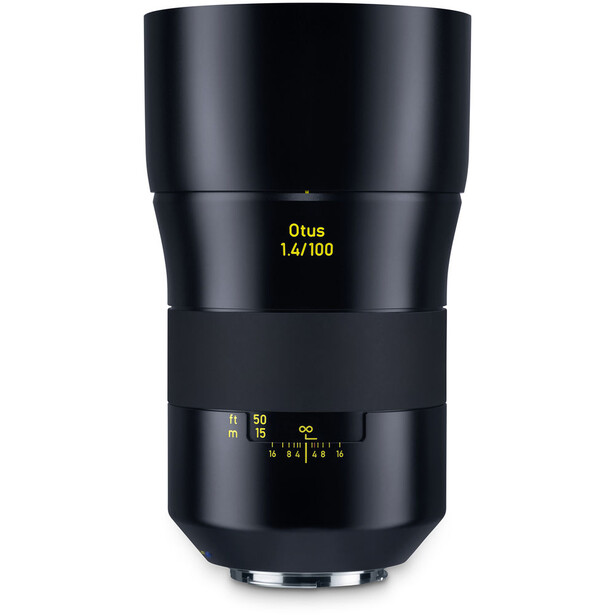
Distance scales, whether physical markings on the lens barrel or digital displays in the viewfinder, provide crucial reference information for manual focus operation. The best implementations include clearly marked distances with sufficient resolution to enable precise focus positioning. Some advanced lenses provide actual displays.
Electronic manual focus override, available on many modern lenses, allows photographers to make manual adjustments even when the lens remains in autofocus mode. The quality of this implementation varies dramatically between different lenses, with the best designs providing smooth, predictable response that feels nearly identical to pure manual focus operation. Poor implementations might exhibit lag, inconsistent response, or interference with the autofocus system.
The physical positioning and size of the zoom and focus rings affects usability across different hand sizes and shooting positions. Lenses designed for professional use typically feature larger, more prominently positioned rings that remain accessible even when using heavy gloves or working in awkward positions. The surface texture and grip characteristics of the rings also impact usability, particularly in wet or cold conditions. Professional photographers develop muscle memory and intuitive understanding of their preferred lenses' characteristics, allowing them to make precise adjustments by feel alone.




Join the Fstoppers community for free
-
Post comments and join in the discussions
-
Browse the site ad-free
-
Share your work and get featured in the community
-
Compete in the photo contests for fun and prizes
12 Comments
excellent article! I should add flare control if i might.
I don't think people are overlooking the aperture blade design/count, given how obsessed people have been with bokeh over the past decade+.
2. Close-Focus Performance
I am so happy that you included this!
For ALL of my reptile and amphibian photography, the ability to focus really close and to yield a high magnification ratio is of the utmost importance. No matter if I am using a 15mm ultra wide angle lens, a "normal" zoom range of 24 to 105mm, or 300 and 400mm telephotos, they all need to be able to focus REALLY close, or the lens is useless for these critters.
"Then you should be using true, dedicated macro lenses."
No, I should not. That is terrible advice. Why? Because true 1:1 macro lenses do not come in many of the focal lengths I need. Where is the 400mm true macro lens? Where is the 24mm true macro lens? Where is the zoom lens with versatile 4x range that is also a true 1:1 macro?
Because macro lenses hardly come in any kind of variety whatsoever, we need our non-macro lenses to be able to focus close enough to be capable of at least 1:0.5 magnification. That is not too much to ask of our zooms and wide angle glass.
This is huge, and really its all about max magnification, not close focus. So many people overlook this and its an erea where a lot of big expensive exotic tele lenses really struggle but the zooms do not. (or at least not as much)
I've actually found myself enjoying my 300 F4 + 1.4 TC over my 500 5.6 in a lot of situations because of this.
What you say about the close focus capabilities of supertelephoto zooms vs supertelephot primes is interesting.
I am now shooting with the Sigma 60-600mm zoom. I don't know the actual specs, but when zoomed all the way out to 600mm, I can focus on something about 7 or 8 feet away. Friends of mine use 600mm primes, and we shoot together often. When shooting warblers (tiny birds) they have to stand way far back from the perches that the warblers land on, because their 600mm primes will not focus close enough for them to kneel 8 feet from the perch like I do. Hence, all of their shots show the warbler so small in the frame, and need to be cropped to get a pleasing composition.
One thing I loved about my big prime that I used to use, the 400mm f2.8 ..... it took tele-extenders wonderfully, and putting the extender on did not increase the minimum focus distance at all! It would focus on something 10 feet away and when I put the 2x extender on it would still focus on that thing that was just 10 feet away. So I could actually get some fairly decent close-up shots of small grasshoppers, butterflies, et cetera, even though I was using a long telephoto prime.
Then when I switched to the Sigma 300-800mm lens, its minimum focus distance was so damn far that I could not do any close-up work at all. That is the one big shortcoming of that lens (in my opinion), was that it couldn't focus on anything closer than 18 or 20 feet. One would think that the 300-800mm zoom range would mean that it was a very versatile lens, but it actually wasn't very versatile at all because it couldn't focus close and it couldn't take teleconverters without a bit hit to image quality.
I'm not entirely sure why this is the case. Someone with more expertise in lens design could explain it better. Typically, exotic tele primes have a maximum magnification of around 0.15x, whereas zooms often reach as high as 0.25x. I think it's one area no one talks about and can be a big shock when someone using a 60-600 buys their first big exotic prime and realizes that shots they could make on the zoom are no longer possible. Getting the big exotics certainly has a ton of benefits, but this is their one Achilles heel if it is something important to the shooter.
As you point out, adding a TC doesn't increase minimum focus. (Because what a TC does is it magnifies the image circle, so really all you are doing is increasing the magnification at a given focus point, so a 2x TC takes a 0.25x maximum magnification lens and makes it a 0.5x). Thus, no matter how you slice it, the zoom will always be better for macro-style work.
I am still very curious why primes seem to be limited in this way, though.
This is such an interesting discussion!
Ryan wrote:
"Thus, no matter how you slice it, the zoom will always be better for macro-style work.
I am still very curious why primes seem to be limited in this way, though."
Ok, so this begs the question, why are there no true macro zoom lenses?
If zoom telephotos are so much better than prime telephotos for focusing close, then why do these optical traits not carry over into true macro with 1:1 magnification?
Exactly, well there used to be. Back in the day, a lot of lenses had a macro mode, which essentially extended the lens by adding a built-in extension tube, but I don't see many of those anymore.
I wonder, though if its less about zoom vs prime, and perhaps more about the physical size of the lens being a limiting factor or maximum aperture. I've noticed, the bigger the lens, the worse the maximum magnification at a given focal length.
for example, the Nikon 300 F/4 has 0.24x but the Nikon 300 2.8 is 0.16x. Both are primes of the same focal length but one is much larger than the other. Meanwhile, the Nikon 120-300 2.8 is also 0.16x and it is similar size to the 300 2.8 (a bit bigger)
That said if you compare Nikon's 600 6.3 to the 180-600 6.3 the prime is 0.15x while the zoom is 0.25x, so I really don't know.
But as a general rule the trend you will see, at a given focal length:
- Bigger the lens, worse the maximum magnification
- Bigger the max aperture, worse the maximum magnification
It seems to me that the lens engineers and manufacturers simply don't think that maximum magnification ratio is of the utmost importance to the majority of the people they will be marketing the lens to, so they just don't bother to engineer close-focusing capability into their optical designs. They think that the people who take it that seriously will have macro lenses for those tasks.
Macro lenses don't do what I need them to do. They don't come in 400mm, 600mm, or 800mm focal lengths. They don't come in ultra wide angle designs*. They don't come in 4x 6x or 10x zooms.
Macro is not some extreme niche that can stand alone as a lens feature. We often want to incorporate macro magnification with other optical qualities, so the existing macro lenses are insufficient for our purposes.
* with only one exception that I know of, the Laowa 15mm f4 Macro Shift. There are a few macro probe lenses on the market, but as far as I know they are only wide angle, not ultra wide angle.
I think the challenge is that the market for them is niche. Imo I wish first party camera makers would return to making good quality, autofocus supporting macro tubes. Many of them used to do that, sorta, but its always been an afterthought. These days if you want a macro tube you are buying it from like Fotodiox or some other budget third party maker. Even if they support AF, its usually extremely slow and buggy.
But if you could pick up a $500 extension tube to stick on say a 600 f/4 that boasts full and reliable connectivity between the lens and the body then you could reasonably turn any super tele into a macro lens.
In the meantime, I guess we just need to keep using TCs for this, but that comes with obvious IQ trade-offs that a macro tube wouldn't.
Ryan wrote:
"But if you could pick up a $500 extension tube to stick on say a 600 f/4 that boasts full and reliable connectivity between the lens and the body then you could reasonably turn any super tele into a macro lens."
I have done things very similar to that. I used to keep an extension tube on my Sigma 300-800mm zoom almost all the time. And I also used one on my 400mm f2.8 quite a bit.
BUT ....... the problem with extension tubes on long telephotos is that they are not very effective. They do not change MDF very much.
Why?
Because the effectiveness of an extension tube is all about its length relative to the focal length of the lens it is used with.
In other words, a 24mm extension tube will revolutionize the MFD of a 35mm or 50mm focal length lens. Because 24mm is so high a percentage of 35 or 50.
But that same 24mm extension tube hardly changes the MFD at all when used on a 400mm or 600mm lens.
So I kept a tube on my long supertelephotos, but it only made a slight difference. Like, if the MFD of my 300-800 was 19 feet, the tube I had on there would get it down to 16 feet or something like that. I'm just being approximate with the numbers because I don't feel like/have time to look things up now. But that minor difference is pretty much what the extension tube did.
To turn a 600mm f4 into an actual macro lens, you would probably need a 200mm or 300mm extension tube, and I don't think any such thing exists, and even if it did, it would turn the lens into such a light hog that it would barely be functional, even on the brightest of days.
Even the little extension tube that I used on my 300-800mm and 400mm f2.8 caused a noticeable loss of light, and also resulted in unwanted, unattractive vignetting.
I would add that, in my very specific use case, having similar filter threads across my set minimizes the number of filters and adapters needed.
Also as an infrared photographer, a lens that doesn’t have hot spots is essential.