When it comes to content creation cameras, there has been no shortage of innovation over the years. Action cameras became more powerful, mirrorless cameras became smaller, and smartphones continued to close the gap. However, 2026 feels different. Every major manufacturer appears to be fighting for the same crown: producing the ultimate camera for content creators.
One company that has consistently been at the forefront of that battle is DJI.
Three years ago, DJI released what would become one of the most influential cameras in the content creation space. The Osmo Pocket 3 arrived with a simple formula: combine a large 1-inch sensor, a 3-axis gimbal, and an intuitive user experience in a pocket-sized package. I picked one up on day one, as I had been a user of the Pocket series of cameras even before they became the Pocket iteration.
The result was a camera that quickly became a favorite of mine and also among vloggers, filmmakers, travelers, and content creators alike.
As someone who has used the Pocket 3 extensively since launch, I can attest to just how capable it has been. It became one of those cameras that was always easy to justify bringing with me, whether I was documenting landscape photography adventures around Ireland, filming YouTube content, or simply capturing behind-the-scenes footage.
Fast forward to 2026, and DJI has returned with not one but two successors.
First came the Osmo Pocket 4, which built upon the foundations of the Pocket 3. Then came something more ambitious: the Osmo Pocket 4P, or Pocket 4 Pro as many are already calling it. However, the launch of the 4P was somewhat disjointed, with it being available on the Chinese market for the last two months and now only becoming available to other regions, with the exception of the USA, as the application for authorization is still pending.
I was fortunate enough to get my hands on a Pocket 4P Vlog Combo over a month before launch and have spent the last several weeks putting it through real-world testing to see whether DJI has genuinely moved the needle forward once again.
If you'd like to see exactly what comes in the Vlog Combo package, I have a complete unboxing video linked here:
Before we dive into the Pocket 4P itself, it's worth looking at how the Pocket series has evolved over the last three years.
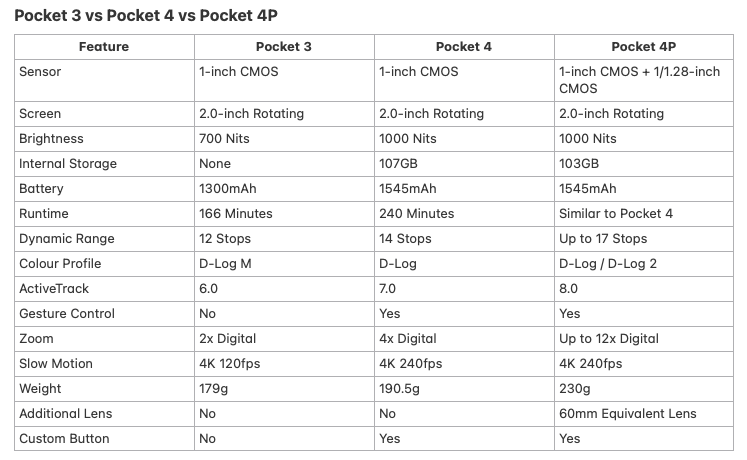
Looking at the specifications alone, the Pocket 4 brought some worthwhile improvements over the Pocket 3. Better battery life, improved tracking, more dynamic range, and significantly improved slow-motion capabilities all represented meaningful upgrades.
However, what became clear very quickly was that DJI wasn't finished, although the release of this camera was teased more than anything, perhaps due to the restrictions in place in the US market. The Pocket 4P promised to introduce an entirely different level of flexibility, and with the global launch event at the Cannes Film Festival, DJI, it seemed, wanted to position this camera as nothing the market had seen before now.
First Impressions
The first thing that struck me when picking up the Pocket 4P was how familiar it felt.
Existing Pocket users will feel immediately at home, I bet.
The touchscreen remains responsive, the menu system is easy to navigate, and the overall shooting experience feels very much like an evolution rather than a complete redesign.
If you'd like to see every setting, menu option, and customization feature available on the camera, I've created a complete menu walkthrough video linked here:
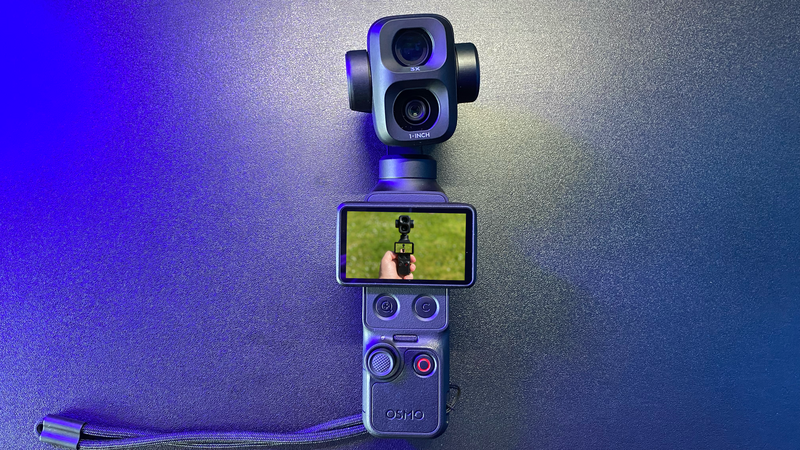
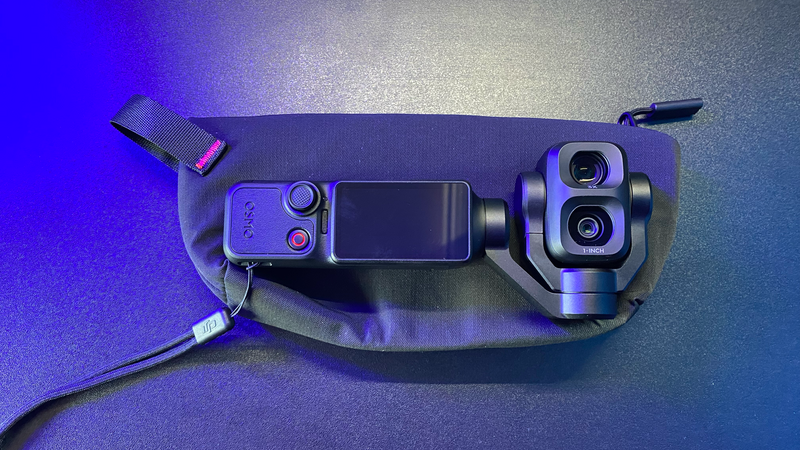
The biggest physical difference is, of course, the dual-lens setup.
For the first time in DJI Pocket history, users have access to both a 20mm equivalent wide-angle lens and a dedicated 60mm equivalent medium telephoto lens.
That single addition changes far more than the specification sheet suggests.
Image Quality
The image quality produced by the Pocket 4P is impressive.
The 20mm wide-angle lens delivers detailed footage with excellent color reproduction and strong dynamic range. Shooting in D-Log 2 provides considerable flexibility when color grading and recovering highlights and shadows during post-processing.
The jump to 17 stops of dynamic range is noticeable in challenging lighting situations, particularly during sunrise and sunset filming, where retaining highlight detail is critical; however, this is currently only available on the 1x lens, which is a waste if I'm honest, as the 3x lens could offer so much more in terms of creativity. Additionally, if you want to then shoot log at the 3x, you need to go into the menus and select this, which is an unnecessary step, I feel; perhaps shifting to standard log from D-Log 2 when you move from 1x to 3x automatically could be added in a software update?
What impressed me most was how much flexibility the footage retained when pushed during editing.
DJI has also introduced false color monitoring, allowing creators to evaluate exposure more accurately while filming, so for those who enjoy color grading their footage, this is a welcome addition that is normally reserved for much higher-end cameras.
A recent update also allows you to have 10-bit HDR as a profile choice, which adds another dimension to the overall versatility, plus there was an exposure shift when changing from the 1x lens to the 3x lens which has also been fixed with this latest update.
The 60mm Lens Changes Everything
If there is one feature that defines the Pocket 4P, it is the dedicated 60mm lens.
Pocket cameras have traditionally excelled at wide-angle content creation.
Portraits, interviews, and subject isolation have always been more challenging.
The 60mm lens changes that immediately.
Subjects stand out more naturally, background compression improves dramatically, and there is noticeably more separation between foreground and background.
For talking-head videos and portrait work, this lens quickly became my preferred choice.
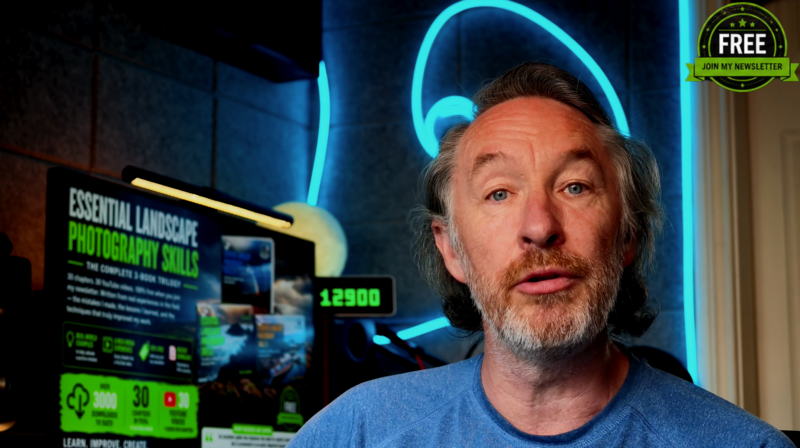
The natural bokeh created by the wider aperture helps produce footage that simply looks more professional. An example is the still from one of my videos below, which hits the brief perfectly. If you want to push portrait work further, Fstoppers' Perfecting the Headshot is a solid companion to this kind of shooting.
Zoom Performance
The Pocket 4P introduces a completely redesigned zoom workflow.
A single press of the dedicated zoom button instantly switches to the 3x camera.
A double press activates lossless 6x zoom.
Holding the button allows continuous zooming from 1x to 12x.
The 6x lossless zoom is genuinely impressive, but let's face it: is it actually lossless?
Even the 12x digital zoom remains surprisingly usable for social media content and smaller screens.
Once viewed on larger displays, image quality degradation becomes more apparent, but that should come as no surprise given the level of digital cropping involved.
Frame Tap: The Unexpected Star
Every new camera tends to have one feature that ends up surprising you.
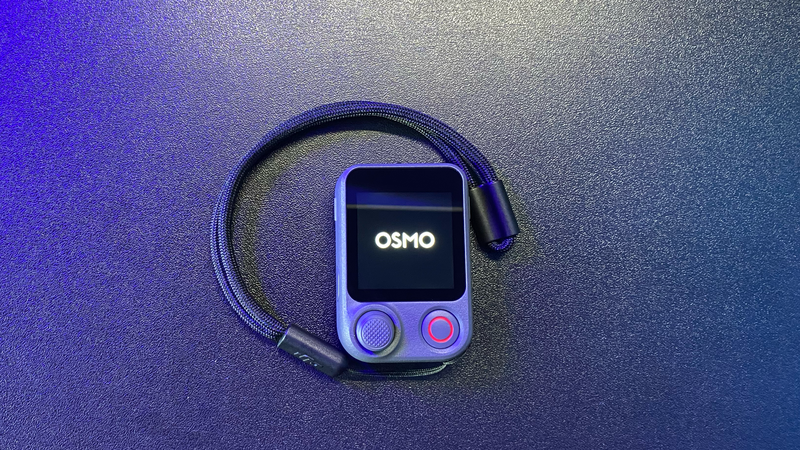
For me, that feature was an accessory, the Frame Tap.
The flexibility this provides is difficult to overstate.
Not only can you remotely monitor framing, but you can also control the gimbal, activate ActiveTrack, adjust zoom, and effectively operate the camera from a distance.
During testing, I used the Frame Tap consistently at distances approaching 30 meters without any issues.
For solo creators, this feature opens up entirely new possibilities, although it doesn't have a built-in microphone if you were wondering.
What surprised me most was how often I reached for it. During testing, I found myself using Frame Tap in situations where I simply wouldn't have attempted the shot before. Setting the camera up on a cliff edge, beach, or remote location and then being able to control framing, tracking, and zoom remotely completely changes how I approach filming. It feels less like an accessory and more like having a second operator standing beside the camera, although it would have been good to have a way to attach it to the camera itself in some way, as it does have the risk of getting lost.
In fact, I dedicated an entire video to testing seven of the Pocket 4P's most interesting features in real-world conditions, including Frame Tap showing some real-world use cases. You can watch that feature test here:
ActiveTrack 8.0
DJI's tracking technology continues to improve with every generation.
ActiveTrack 8.0 is undoubtedly the most capable implementation I have used; tracking remains smooth across the entire zoom range, from 1x through to 12x, plus there is an instant box appearing when it sees a face, and you can activate face tracking with one press of the 5D button.
Whether walking towards the camera, moving across the frame, or filming yourself while hiking, the system consistently maintained lock.
For content creators who work alone, this remains one of the Pocket 4P's strongest features; however, it does still seem to miss regaining subjects if lost in frame, whereas the Pocket 4's ActiveTrack 7.0 doesn't seem to suffer this as much, which is surprising given this is 8.0. Perhaps a software update can resolve this.
Audio Performance
Audio quality remains excellent.
The three built-in microphones produce clear recordings, and DJI continues to provide redundant AAC audio recording as a backup file.
It is one of those features that you may never need, but when something goes wrong, you'll be very glad it exists.
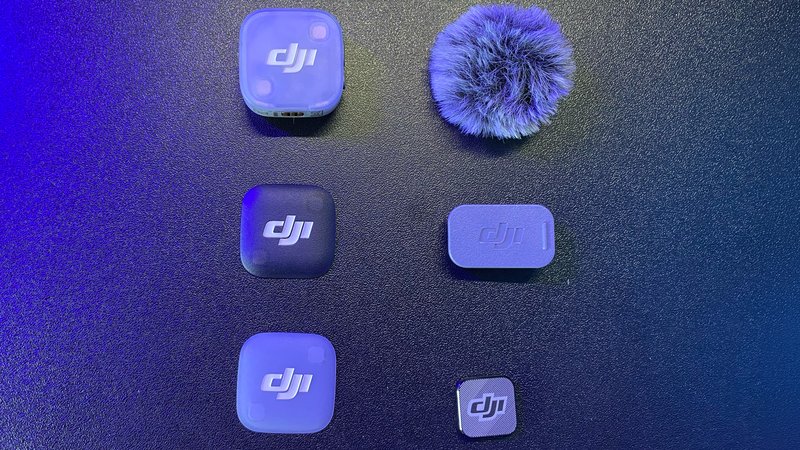
The included Mic Mini 2 as part of the Vlog Combo also performs well. It doesn't have built-in storage, however.
Battery Life
Battery life has improved significantly compared to the Pocket 3.
The move from 1,300 mAh to 1,545 mAh provides noticeably longer recording sessions.
Existing Pocket 3 users will also be pleased to know that the battery extension grip remains compatible with the Pocket 4P.
Not only does this extend battery life even further, but it also helps balance the camera more effectively.
One thing I did notice during testing was that the camera became quite warm during extended use and also while charging. I never experienced any overheating warnings or performance issues, but it was noticeable enough that it is worth mentioning.
Is the Vlog Combo Worth It?
The version I have been testing is the Vlog Combo, and for most creators, this is likely the package that makes the most sense.
While the standard camera is capable in its own right, the additional accessories significantly improve the overall experience. The Mic Mini 2, Frame Tap functionality, and expanded shooting options help unlock much of what makes the Pocket 4P stand out from previous generations.
If you are considering purchasing one, I would strongly recommend comparing the cost difference between the standard package and the Vlog Combo before making a final decision.
For many users, the additional accessories are likely to become part of their everyday workflow.
Pricing
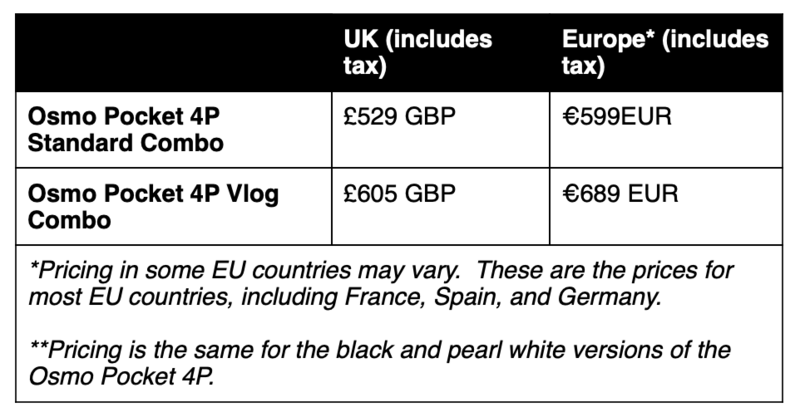
Pricing is another area where DJI appears to have got the balance right. Considering the technology packed into the Pocket 4P, including the dual-lens system, 3-axis mechanical gimbal, improved tracking, D-Log 2, internal storage, and the additional accessories available with the Vlog Combo, it represents strong value for money. Even more impressive is that DJI has managed to keep pricing competitive, with the Pocket 4P launching below several comparable creator-focused cameras currently on the market. Ultimately, value will always depend on how you intend to use it, but when viewed against the feature set and its closest competitors, the Pocket 4P positions itself very well.
What Works Well
The longer I used the Pocket 4P, the more strengths I discovered.
Highlights include:
- Excellent video image quality in all modes.
- The dedicated 60mm lens is the perfect sweet spot for portrait filming while also producing pleasing background separation.
- Strong battery performance overall, even without the battery extension grip.
- ActiveTrack 8.0 performs well across the entire zoom range and feels noticeably smoother than previous generations.
- Frame Tap functionality opens up creative opportunities that simply weren't possible before.
- 4K 240fps slow motion looks fantastic and remains one of the interesting features of the camera.
- D-Log 2 combined with DJI's LUTs provides plenty of flexibility when grading footage.
- False color monitoring is a genuinely useful addition.
- Internal storage removes the worry of forgetting a memory card.
- Excellent stabilization and smooth zoom control.
What Could Be Improved
Despite being impressed overall, there are still a few areas where I think DJI could improve. There is no perfect camera, after all.
- D-Log 2 is restricted to the 1x lens. Given the quality of the 60mm lens, this feels like an unnecessary limitation.
- Profile limitations: D-Log 2 is exclusive to the 1x lens, and the 3x lens cannot use D-Log 2, which complicates post-processing and field use.
- High frame rate issues: There is no log recording available in higher frame rates (120, 200, 240 fps), just standard profiles.
- Low-light mode is limited to specific focal lengths. I would have liked additional flexibility here and to allow users to decide whether the quality trade-off was worthwhile.
- The camera is more top-heavy than previous generations due to the dual-lens arrangement, although the battery extension grip largely resolves this.
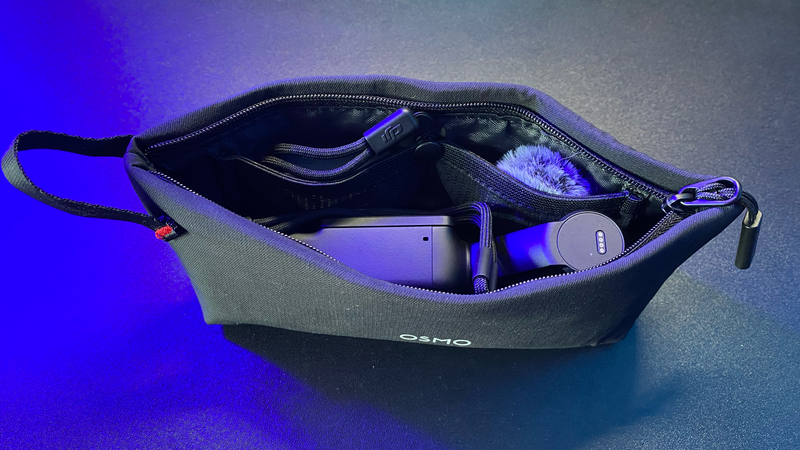
- I am disappointed not to have a camera or gimbal protector; yes, it does have the everyday pouch, but a simple gimbal clamp like the Pocket 4's would have been welcome, or even the hard case that came with the Pocket 3. I feel that the camera is going to get damaged without it, and no doubt there will be a third-party case available for this camera body at some stage, as the need is there.
- There is still no usable manual control over still images despite the camera shooting raw files; I would like to control the aperture, like I can on my DJI drone.
- Vertical video remains capped at 3K rather than matching the 4K capabilities found elsewhere.
- Lens filters are replaceable, but I expected a magnetic system that allowed quicker changes and easier stacking.
- There is still no full 360-degree gimbal rotation, something several competitors now offer.
- Proprietary charging cables for the Mic Mini 2 and Frame Tap feel unnecessary when USB-C could have achieved the same result.
Pocket 3 Owners: Should You Upgrade?
This is perhaps the biggest question many people will have.
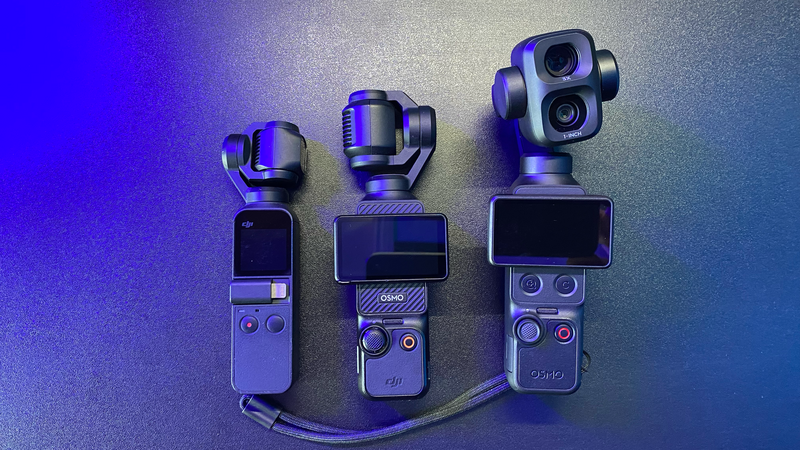
If your Pocket 3 is primarily used for casual filming, family videos, or basic vlogging, then there is a strong argument that you don't need to upgrade immediately. The Pocket 3 remains an excellent camera and continues to produce fantastic results.
However, if you regularly create content, work with clients, produce YouTube videos, or simply want more creative flexibility, then the Pocket 4P begins to make a compelling case for itself.
The addition of the dedicated 60mm lens alone fundamentally changes what this camera is capable of. Combine that with Frame Tap, ActiveTrack 8.0, D-Log 2, improved slow motion, and internal storage, and this feels like far more than a simple iteration.
For me, the biggest difference isn't image quality. The Pocket 3 already looked good.
The biggest difference is flexibility. I've made a video comparing both, which you can watch here:
Who Is This Camera For?
The Pocket 4P appeals to a surprisingly broad audience.
Casual users will appreciate its simplicity.
Travel vloggers will love its portability.
Content creators will benefit from the improved image quality and dual-lens system.
Filmmakers may even find themselves using it as a lightweight A-camera in situations where carrying larger equipment simply isn't practical.
The addition of Frame Tap alone opens up creative opportunities that were previously difficult to achieve with a compact camera and works exceptionally well within the wider Pocket ecosystem.
Final Verdict
After several weeks of testing, I believe the Pocket 4P represents DJI's most complete content creation camera to date, plus there have been additional updates released during this time which add new features and improvements.
The Pocket 3 set the benchmark.
The Pocket 4 refined it.
The Pocket 4P expands it.
What impresses me most isn't any single feature. It's how all of the features work together. The additional lens, Frame Tap, improved tracking, stronger battery life, and D-Log 2 collectively create a camera that feels noticeably more capable in everyday use.
Is it perfect? No.
There are still areas where DJI could improve, particularly around D-Log 2 support, photo controls, and charging solutions.
However, none of those limitations significantly detract from the overall experience.
If you already own a Pocket 3, this is the first Pocket camera that gives a genuinely compelling reason to upgrade.
If you're entering the Pocket ecosystem for the first time, this is undoubtedly the model I would choose.
For content creators looking for maximum flexibility in the smallest possible package, DJI may have produced one of the most capable cameras of 2026.
For existing Pocket 3 users wondering whether the upgrade is worthwhile, I have created a detailed Pocket 3 vs Pocket 4P comparison video, which breaks down every major difference side-by-side. You can watch that comparison here:
If you'd like to see all of the footage, image samples, and field testing discussed throughout this review, you can also watch my complete Pocket 4P review video here:
DJI entered the content creator market years ago with a camera that changed expectations of what a compact camera could achieve.
With the Pocket 4P, they may have just raised the bar again, albeit with a fragmented launch campaign.


Join the Fstoppers community for free
-
Post comments and join in the discussions
-
Browse the site ad-free
-
Share your work and get featured in the community
-
Compete in the photo contests for fun and prizes
2 Comments
Not having DLOG2 available across all lenses and frame rates is a pretty big nuisance to consistent shooting/quality. It's one of those quality of life things with shooting that is just really obnoxious when you can't just shoot the same settings in different modes/lenses/frame rates.
I get why they had to do it.....because the wide is the only LOFIC sensor. But still....
Even auto switching to DLOG when moving from 1x to 3x would work better than having to stop recording and go into menus to change manually !