
On February 17, 2005, Leica Camera AG issued a Verlustanzeige, the notice German stock law requires once a company has lost half its share capital and has to say so to its shareholders. Four days later, it told the market that its banks had partially canceled its credit lines. The fiscal year closed at the end of March on group sales of €92.1 million and a consolidated loss of €18.1 million.
Twenty-one years later, Leica turns over €596 million a year, licenses its name to Xiaomi phones, and is reportedly being shopped at a valuation near €1 billion. The distance between those two paragraphs is almost entirely the work of one man who had never built a camera, never sold one, and had bought his first Leica shares six months before the whole thing came apart.
What Leica Actually Filed in 2005
Leica never filed for insolvency. The popular telling compresses a two-year scramble into a bankruptcy that did not happen. What did happen is that the company's own board said in public that it might.
The warning signs were in the interim numbers. Through the first nine months of fiscal 2004/05, group revenue fell 15.5% to €70.6 million against an operating loss of €5.4 million, and Leica attributed the slide to changes in the photo market and delayed product launches. On February 21, four days after the loss notice, the company disclosed that its banks had partially canceled its credit lines. Management said the reduced facilities did not immediately threaten its ability to pay its bills, which is the kind of sentence a company only writes when someone has asked.
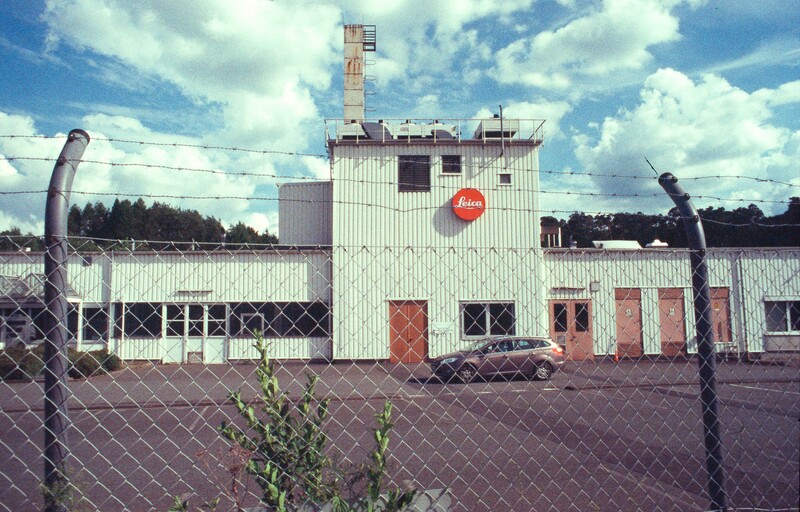
An extraordinary shareholders' meeting was called for May 31, 2005, with two linked items on the agenda: a simplified capital reduction that consolidated the existing shares, followed by a capital increase taking share capital to €15.0 million through 13.5 million new shares at €1 par, offered at €1.70 apiece. Shareholders approved both, and the resolutions went into the commercial register on June 7. Then a group of minority shareholders filed challenge suits against them, and the money froze in place before a single new share was sold.
That was the moment Leica came closest to dying. In July 2005, the two large shareholders, Hermès International and Andreas Kaufmann's ACM Projektentwicklung, said they would not subscribe to the increase until the lawsuits cleared, and the trade press reported the board's warning that without the capital measure the company faced insolvency. Settlement talks with the plaintiffs went nowhere at first, and a deal with four of the five litigants landed on August 5. The offer was fully placed on August 25, oversubscribed by 33.5%, and the increase was entered in the commercial register on August 30, 2005, delivering €22.95 million in fresh capital.
The Buyer Had Never Run a Camera Company
Kaufmann's money came from paper. His family had owned one of Austria's largest pulp, paper, and packaging groups for roughly a century, and by family rule the members were not supposed to run it operationally. He studied German literature and political science and spent years teaching at a Waldorf school. In 2002, he set up ACM as a vehicle for buying and rebuilding companies, and his first two purchases were small precision and optics firms near Wetzlar: Weller Feinwerktechnik in 2002 and Viaoptic in 2003.
Leica came next, and by his own account he expected a slow start. "The key step was when we met with Leica in August 2004 and decided that ACM would acquire 27.4% of Leica. We figured we would study the company for one year," Kaufmann told Film and Digital Times in 2011. "But then, how do the Americans say… 'Oh boy, were we wrong.' Suddenly everything collapsed at Leica. Management, financing, etc." He has described his brothers asking, in 2005, what he had done with their money, and the family stake being reorganized so the risk sat with him.
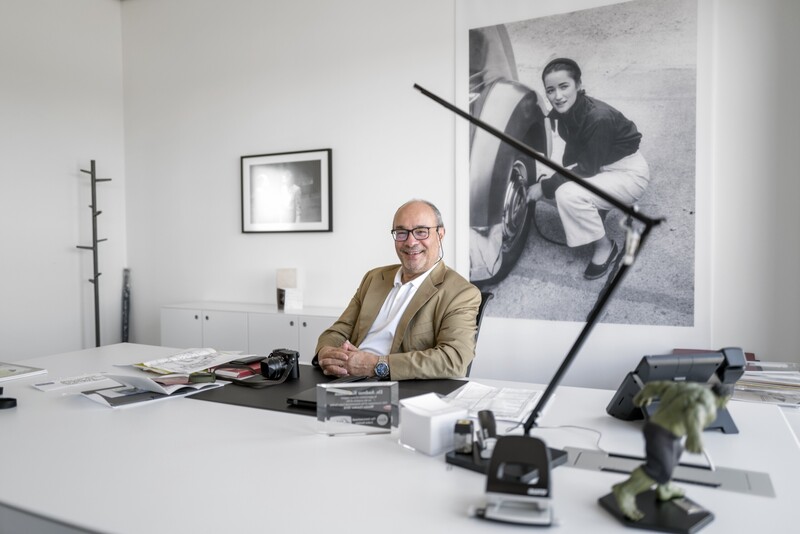
From there, the ownership moved fast. In February 2006, the Austrian foundation behind ACM notified Leica that its voting stake had crossed 50%. In June, ACM put an exchange offer to remaining shareholders. On September 14, 2006, Hermès sold its entire holding, ending an investment that had begun in December 2000 with a public takeover offer that handed it 31.5% of the company. By the end of 2007, Kaufmann controlled roughly 96.5% of the company. A squeeze-out of the last minority holders was approved at €12.15 per share in November 2007, promptly challenged in court, and abandoned in August 2008 when settlement talks collapsed. Leica finally stopped trading publicly in October 2012.
Digital Arrived Late and Shipped Anyway
The strategic problem was simpler than the corporate one. Leica had digital products, but not the ones that mattered to its own customers. The digital business in 2005 ran on the Panasonic relationship, which supplied Leica-badged compacts and put Leica optics on Lumix cameras, plus the Digital-Modul-R, a bolt-on back for the R8 and R9 film SLRs that had only just begun shipping. There was no digital M. The fix was to put a sensor behind the M mount and accept the compromises.
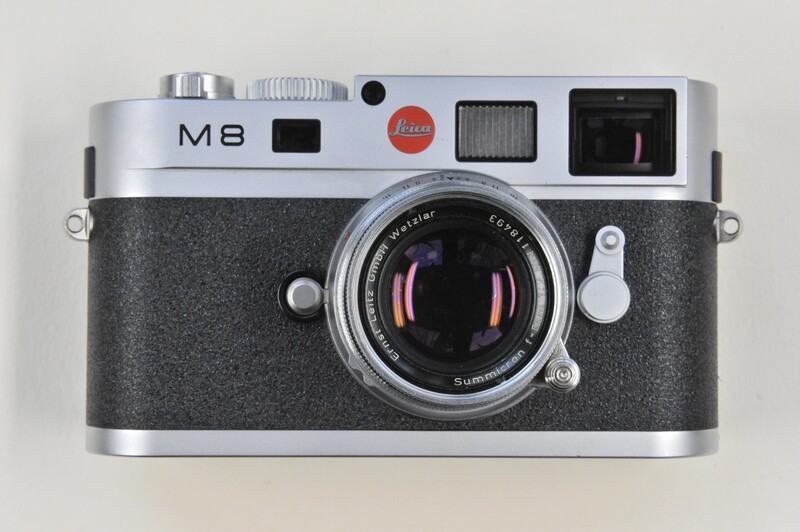
The M8 was introduced on September 14, 2006, two weeks before Photokina, at $4,795 for the body. It used a 10.3-megapixel Kodak KAF-10500 CCD with a 1.33x crop, which meant the classic 28mm reportage lens behaved like a 37mm. Because Leica had left out a strong infrared-blocking filter to protect sharpness, black synthetic fabrics rendered magenta, and the company ended up supplying two free UV/IR screw-in filters to every buyer and to existing owners on request. A revised M8.2 followed on September 15, 2008.
A second deal from the same window is usually told as evidence of that discipline, and it does not hold up. On September 25, 2006, Leica and Jenoptik signed agreements covering 51% of the Swiss large-format maker Sinar. The transfer was conditional, the conditions were never fully met, and on December 13 it was Jenoptik that rescinded, saying it wanted to spare Sinar the damage of an unclear ownership structure. Leica did not walk away from large format on principle either. It bought Sinar outright seven years later, in November 2013.
The recovery had started before the M8 reached anyone. Fiscal 2005/06 closed at the end of March 2006, six months before the camera was shown, and revenue rose 15.9% to €106.7 million with the group loss narrowing from €18.1 million to €9.2 million, on the Digital-Modul-R, digital compacts, and sport optics. Then the M8 landed, and shipping a flawed camera beat shipping nothing: fiscal 2006/07 brought 36.5% revenue growth and the first positive group result of the Kaufmann era, with system-camera sales up 55.5%, which Leica attributed above all to the M8. Fiscal 2007/08 added 7.3% and a €3.0 million net profit. Then the financial crisis knocked 14% off fiscal 2008/09, and in February 2009 the board approved another capital increase at €6.34 a share. The rescue took two injections, not one.
The Prices Are the Strategy, Not the Attitude
The standard reading of Leica's pricing is that you are paying a heritage tax. The M9 arrived in 2009 at about $7,000 for the body when a Canon EOS 5D Mark II with a comparable sensor size cost around $2,700, and the gap looked like brand rent on the M3's silhouette. That reading is not stupid. It is just a description of the outcome rather than the cause.
The record shows a deliberate inversion of how the company developed products. In 2009, Leica put in a process where price came first and engineering answered to it. "In the past, if an engineer had an idea to improve a camera, we might have pursued that with abandon. With our new process, we first make sure that any developments working their way through the pipeline will be ones that will sell at a particular price," Kaufmann explained in a profile by Rhea Wessel. He has also rejected the word most people reach for: "We're not a luxury brand, but we are elite, and price plays a role in how we see products."
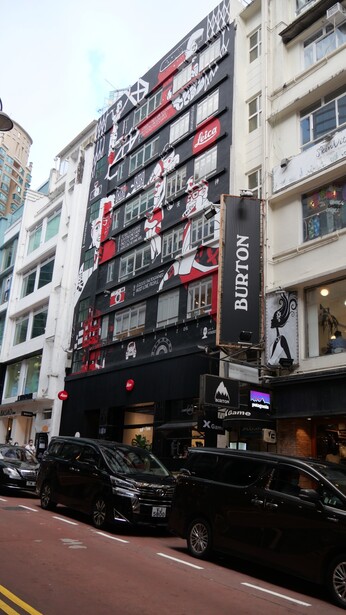
The other half was owning the channel. Before Kaufmann, Leica sold through dealers and had essentially no shops of its own. By early 2012, there were 34 franchised standalone Leica stores and about 50 boutiques across 18 countries, which is how a company with tiny unit volumes captures the margin that would otherwise go to a distributor. Limited editions did the same job from the other direction. The 2010 M9 Titanium, restyled by Volkswagen Group designer Walter de'Silva, sold at €22,000. "We sold out in three days," Kaufmann said. A later Hermès collaboration was reported at roughly €40,000. Those runs are small enough to be rounding errors in unit terms and large enough to reset what a buyer thinks an ordinary M ought to cost, which is the entire function of an anchor price.
It worked on the balance sheet, which is the only test that matters here. The fiscal year ending March 2011 produced record sales of €248.8 million and a net profit of €36.3 million. On October 19, 2011, Blackstone acquired a 44% minority stake from ACM, reported at around €130 million, which put a value of roughly €300 million on the whole company. Six years earlier, that company had been unable to get €22.95 million past a courtroom.
Wetzlar as a Line Item
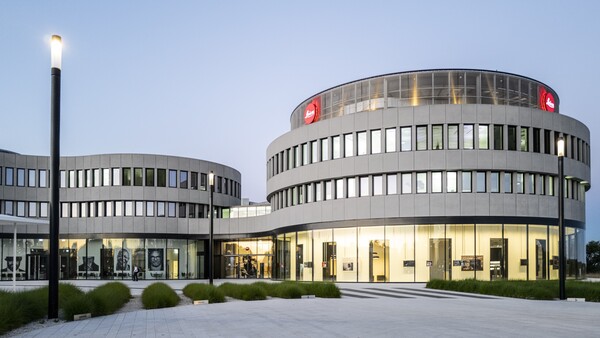
The clearest statement of the strategy is a building. Leica had left Wetzlar for nearby Solms in 1988, and in late May 2014 it moved back into Leitz Park, a purpose-built campus inaugurated on May 23 during the company's centenary year. The architects, Gruber and Kleine-Kraneburg, wrapped the production halls in curved forms that read as lens barrels. The site combined the factory with a museum, an exhibition hall, a flagship store, and a photo studio, and later phases added a hotel and an office tower. The third phase, finished in 2018 and reported at roughly €60 million, was paid for by Kaufmann's Salzburg company group rather than by Leica itself.
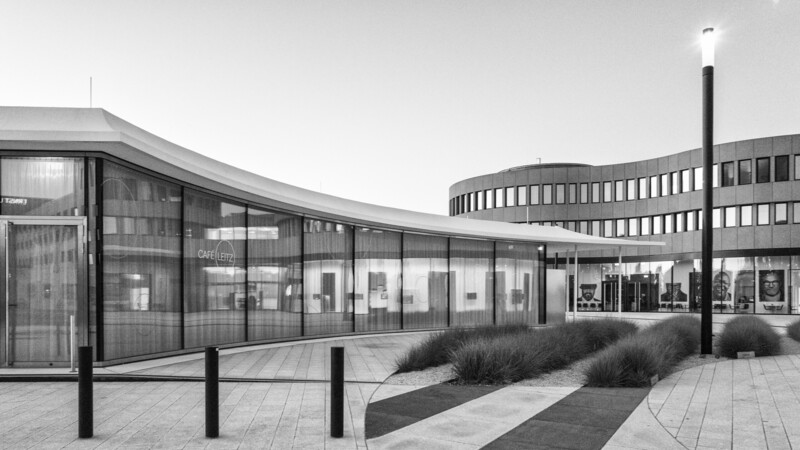
A factory you can tour, buy from, and sleep next to is not a manufacturing decision. It is the same logic as the stores and the editions, applied to real estate: make the brand the product and let the cameras be the proof. The phone partnerships follow from it too. Leica optics on Huawei handsets from 2016, the Sharp-built Leitz Phone in 2021, and the Xiaomi tie-up from 2022 all sell the red dot into volumes Leica could never manufacture itself.
Fiscal 2024/25 closed at €596 million, up 7.6% and the fourth consecutive record, with the Leica Q3 and the SL3 line cited as the drivers. In January 2026, Bloomberg reported that Kaufmann and Blackstone had begun weighing a sale of a majority stake at a valuation around €1 billion, with the Chinese firm HSG and the Nordic buyout house Altor Equity Partners named as possible buyers; by June, HSG was reported to be in advanced talks for Blackstone's roughly 45% and possibly the Kaufmann family's share as well. Nothing has been signed, and Leica has not confirmed the process.
Set that €1 billion next to the sum that nearly did not survive a German courtroom in the summer of 2005. The equity that survived it was €22.95 million, and that was the part shareholders fought over rather than the whole bill: Spichtig told the meeting the restructuring needed about €50 million all in, with the remaining €27 million coming mainly from the banks.
Lead image by Christopher Michel, CC BY-SA 4.0. Source.



Join the Fstoppers community for free
-
Post comments and join in the discussions
-
Browse the site ad-free
-
Share your work and get featured in the community
-
Compete in the photo contests for fun and prizes
No comments yet