
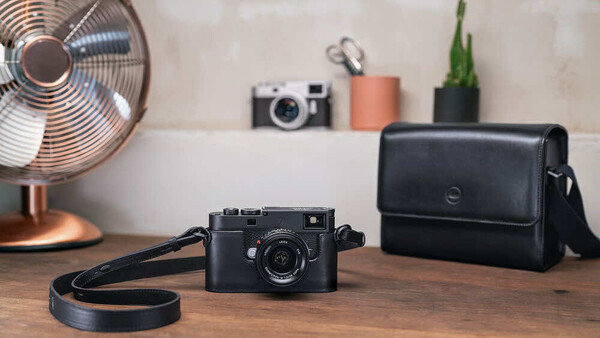
Nobody buys a Leica because of its autofocus. Nobody chooses a Leica M11-P over a Sony a7R V because the spec sheet wins. The M11-P uses a manual rangefinder mechanism that was functionally mature by the 1960s. In any feature comparison against a modern mirrorless camera, the Leica loses on nearly every measurable axis: autofocus speed, burst rate, video capability, lens versatility, weather-sealing, and especially price-to-specification ratio.
And yet, Leica Camera AG just posted its fourth consecutive year of record revenue. In a market where smartphones have swallowed the casual photography market, where tariffs are squeezing margins on imported electronics, where NAND shortages are driving up storage costs, and where Nikon just posted the worst annual loss in its history, Leica grew 7.6% to approximately €596 million in revenue for the fiscal year ending March 2025. The year before, it grew 14%.
The conventional framing is that Leica is overpriced and irrelevant. The financial evidence suggests the opposite: Leica may be the best-positioned camera company in the industry, precisely because it operates by rules the rest of the market does not.
The Luxury Thesis
The camera market in 2026 is under structural pressure from multiple directions. Smartphones have absorbed the casual and some of the enthusiast tier of photography. Import tariffs and supply chain disruptions are increasing hardware costs. AI-generated imagery is depressing the value of commodity visual content. NAND shortages are raising costs across much of the storage chain, including many SSDs and high-performance camera cards photographers depend on. And the resulting competitive environment is squeezing margins for every manufacturer that sells on specifications.
Leica is largely insulated from all of this because it does not sell on specifications. It sells on identity.
This is not a novel observation in luxury economics. Luxury goods tend to be less price-elastic than mid-market goods, meaning that price increases do not reduce demand proportionally. They are less sensitive to economic downturns because the buyers are wealthier and less constrained by budget. And they are less vulnerable to technological substitution because the value proposition is not primarily about capability. A customer choosing between a $2,500 Sony and a $2,800 Canon is making a feature comparison. A customer choosing a $9,000 Leica M11-P is making a different kind of decision entirely, one driven by craftsmanship, heritage, aesthetic preference, and self-expression. The smartphone that "killed" the point-and-shoot market has no effect on this buyer, because this buyer was never making a capability calculation.
The data supports this. While CIPA numbers show the overall interchangeable-lens camera market fluctuating year to year, Leica has grown revenue in each of the last four fiscal years: from €485 million in FY 2022/23 to €554 million in FY 2023/24 (a 14% increase) to €596 million in FY 2024/25 (a 7.6% increase), with continued profitability growth alongside the revenue gains. That growth came across all regions: Europe up 7.6%, Asia up 7.3%, and North America up 6.2%.
What Leica Is Doing Differently
The financial performance alone is notable, but the strategy behind it is what makes the positioning argument.
Leica is diversifying into lifestyle, not just photography. The company now sells watches (the Leica ZM 12, launched in February 2025), sterling silver cufflinks, home cinema projectors (the Cine Play 1 mini-projector), premium spectacle lenses, and a mobile photography app (the Leica LUX, which surpassed one million downloads by September 2025, roughly 15 months after its June 2024 launch). The Zegna collaboration in 2020 produced a capsule collection of camera accessories in woven Napa leather. None of these are high-volume products. All of them reinforce the same message: Leica is no longer just a camera company. It is a luxury imaging brand with cameras at its center, and that distinction changes the economics of everything it does.
This is a fundamentally different business model from Canon, Nikon, or Sony, all of which derive their camera division's value from volume, specification competitiveness, and lens ecosystem breadth. Leica derives its value from brand equity, and brand equity scales differently. A watch does not need to outsell Omega to matter. It needs to make the person who buys it feel like a Leica owner. That feeling is the product, and it transfers across categories in a way that megapixel counts and autofocus point coverage do not.
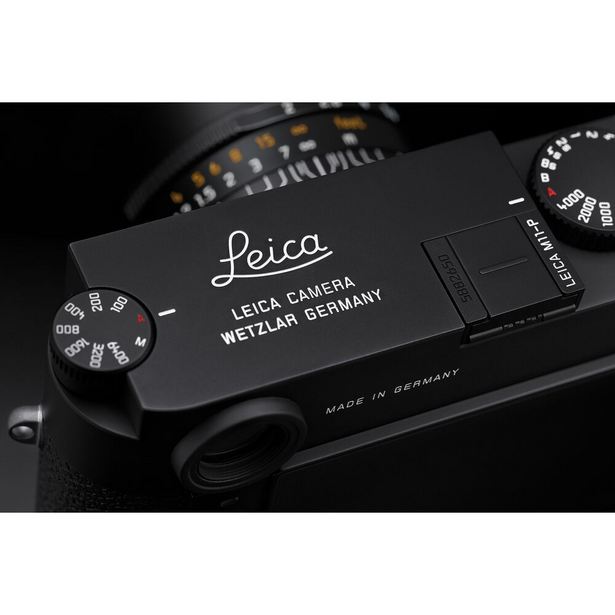
Leica led on Content Credentials and is now the trust brand in photography. The Leica M11-P, launched in October 2023, was the first camera in the world to embed C2PA Content Credentials at the point of capture. When the Content Credentials function is activated, images taken with the M11-P receive a cryptographic digital signature recording the camera, lens, and timestamp. Location data can be included when the camera is paired with the Leica FOTOS app via Bluetooth, but it is not captured independently by the camera itself. The provenance chain can then be verified. The Leica SL3-S extended this capability to the company's mirrorless system in January 2025.
In an era where AI-generated imagery is eroding trust in visual media, Leica positioned itself as the camera brand that cryptographically verifies provenance and makes later edits traceable. Content Credentials do not prove that a photographed scene is truthful or unstaged, but they do establish an authenticated chain from capture through publication, which is more than any other camera offered at the time. Nikon and Sony have since engaged with the C2PA ecosystem, but Leica was first, and being first matters in branding. The M11-P's Content Credentials feature was covered by IEEE Spectrum, Adobe's official blog, and the Content Authenticity Initiative itself, generating press coverage that no spec-sheet update could have produced. The message was clear: if provenance matters to you, Leica thought about it before anyone else did.
Leica's smartphone partnerships extend the brand without diluting it. The ongoing Xiaomi partnership (the Xiaomi 14T series in September 2024, the Xiaomi 15 series with Leica Summilux lenses in March 2025) and the Leica LUX iPhone app serve as entry points to the Leica ecosystem for people who will never buy an M-series body. This is the luxury playbook executed precisely: a fragrance from a fashion house costs $150 and introduces the brand to customers who will never buy a $5,000 suit. Leica's mobile imaging partnerships function the same way, generating revenue and brand exposure in a market segment (smartphones) that is growing, while the core camera products remain exclusive.
The Contrast With the Rest of the Market
The strategic clarity of Leica's positioning becomes sharper when compared to the challenges facing other manufacturers.
Nikon posted a record net loss of approximately ¥86 billion (roughly $570 million) for FY 2026, the worst annual result in the company's history. The losses came primarily from a write-down on Nikon's metal 3D printing division, not from cameras; the imaging division earned ¥16.7 billion in operating profit. But the imaging division's margin dropped from 14% to 5.8% year over year, driven by increased promotional costs, changes in product mix, and tariff impacts. Nikon is still making money on cameras. It is making less money, under more pressure, in a tighter competitive environment.
Canon and Sony face different versions of the same pressure. Canon is splitting its product line between stills-focused and video-focused variants. Sony dominates full frame mirrorless market share but competes in a segment where spec-driven buyers will switch brands for a meaningful autofocus or resolution advantage. Both companies are in a features arms race where each generation of improvements is harder to differentiate and easier for competitors to match.
Leica does not participate in this arms race. It does not need the best autofocus because its customers do not buy on autofocus. It does not need the highest burst rate because its customers are not shooting sports. It does not need to match Sony's sensor resolution because its customers evaluate images on rendering character, not pixel count. The features race is a treadmill, and Leica stepped off it decades ago.
The Honest Counterargument
Leica's positioning is enviable, but "best-positioned" is not the same as "most relevant." Leica's total revenue of €596 million is small next to Canon's imaging division, which reported ¥1,054.9 billion (roughly €6.6 billion) in sales for its most recent fiscal year. Leica's market is small in volume terms. Its lenses are priced beyond what the vast majority of photographers will ever spend. Its cameras are not practical tools for most working professionals who need weather sealing, fast autofocus, and high burst rates. A nontrivial part of the revenue story is outside traditional camera bodies: mobile imaging partnerships, apps, accessories, watches, home cinema projectors, eyecare, and brand goods.
Leica is also not immune to economic reality. Luxury goods are more resilient in downturns than mid-market goods, but they are not invulnerable. If the global economy contracts significantly, even Leica's buyers will tighten spending. The brand's growth has been strong for four years, but four years is a trend, not a guarantee.
Why It Matters
The reason this matters beyond Leica's own balance sheet is what it reveals about the camera market's future. Every camera manufacturer is facing the same fundamental question: in a world where smartphones provide "good enough" image quality for most people, what is the value proposition of a dedicated camera?
Canon, Nikon, and Sony are answering that question with capability: better sensors, better autofocus, better video, better lenses. That answer works, but it is expensive to maintain, difficult to differentiate, and subject to diminishing returns as each generation of improvement gets smaller.
Leica is answering the question with desire: a camera you want to hold, want to be seen with, want to own as an object and not just as a tool. That answer is harder to replicate because it depends on brand heritage that cannot be manufactured, design philosophy that cannot be rushed, and a customer relationship that is built over decades rather than product cycles.
In a market that is shrinking at the consumer end and commoditizing at the professional end, Leica's position is the one that is hardest to disrupt. Nobody will build a better Leica. The question is whether the rest of the industry can learn anything from a company that stopped competing on specifications and started competing on meaning.



Join the Fstoppers community for free
-
Post comments and join in the discussions
-
Browse the site ad-free
-
Share your work and get featured in the community
-
Compete in the photo contests for fun and prizes
18 Comments
Leica thrives because PT Barnum was right.
https://fstoppers.com/gear/leica-m-ev1-just-entered-spec-war-it-cant-wi…
Love the back and forth on positions. Keeps the reading entertaining..
Leica will never win a "spec war." Their customers don't care. They want that name...period. If that works for them, have at it. While I could afford a Leica, well, they're not for me. Not since my M6, anyway. Now *that* was a camera.
The article wasnt about the spec war.. it was about Leica destroying their value by releasing the EV version of the M11.
“Brand suicide”. That was the take away of the article..
If you'd ask me two years ago would I ever entertain the idea of a leica camera? I would've laughed at you and said no way too expensive not for me. Two years later I own the Q3 28 and 43 for different reasons but my photography business took off and I've always wanted these two cameras and they are phenomenal. I'm not a manual focus guy so the M system isn't for me. The one thing that leica camera does.... And it's got nothing to do with the image quality is they make you want to take photos? They feel amazing in your hands and you want to go out and shoot more. The other thing I love about this camera system is the menu system and please can every other camera manufacturer. Just have a look at this menu system and copy it. It is the easiest camera to set up and use that I've ever used in my life my goodness the other camera manufacturers have a long way to go.
Interesting essay. A couple of notes:
- what is the role of Leica's non-photo equipment - Microscopes, geometry rangefinders... - in their overall business?
- Leica used to sell slide projectors, so the beamer thing is not totally new.
I had no idea Leica was actually selling more cameras. This is shocking to me.
A Leica is a statement piece - similar to a Rolex watch. A far better photographic tool with similar handling would be the Sony A7Cr. Save thousands and spend that money traveling to take awesome photos :-)
Here in NYC Leica has built a community, something no other camera company has done. They have a gorgeous store in the meatpacking district and the primary purpose is more gallery than store, showing off amazing pieces from Leica photographers. They sponsor photowalks and events that draw thousands of photographers, and every time they interact with a photographer, they leave that photographer wanting a Leica a little more (even those who can't afford one).
Their equipment spans the film and digital. You can buy instant film Leicas, and people do.
Sony, Nikon, Canon, Fuji? Still relying on paying influencers to do Instagram reels.
We're in an era where any camera is good enough. Nit-picking megapixels and readout speed don't actually make anyone's pictures better. In fact, your phone really is good enough for most things.
People don't *need* to upgrade in 2026. They don't *need* a Leica. But Leica makes them *want* a Leica. Even an old used body.
It's a luxury, yes, but most of our purchasing choices are luxuries, and when you consider resale value, they don't cost much at all. My M10-D sells for about 25% more than I bought it for many years ago.
I'd love to visit that store. Very afraid I'd walk out with a Leica.
Leicas are jewelry. People want them because they're expensive, not because of their capabilities. Kind of like diamonds. Ask anyone who likes diamonds if they'd still want one if they were the less expensive than cubic zirconia.
Great article. Leica is an over-priced luxury brand, but their cameras give photographers something other brands don't. Simplicity. Other than Hasselblad, they are the only camera company making cameras for photographers. Everyone else is making cameras for "content creators" (whatever that means) with video and annoying fold-out screens, loaded with techy crap most people don't need or want.
The reason I really enjoy mine Simon is that I can just grab one camera one battery an SD card and go take photos. I don't have to worry about tripod. I just have one bag and the Q3 in that bag and it produces phenomenal image quality so the form factor the convenience and the fun factor of this camera is what makes me shoot even more. The GFX sits at home a lot now now the GFX does produce better quality images. It's 100 megapixels of beauty with beautiful lenses but I can tell you now the Q3 is not far behind so that's why I'm loving photography again. It doesn't feel like a grind to shoot with. I would not say it so overpriced. I would say it's expensive yes but not overpriced and it's a photographers camera.
Beautiful photo. Was that taken with the Q3?
I just can't see them making inroads into the wedding, event, and sports markets anytime soon, and there are a LOT of pro and semi-pro event shooters out there. Sure, Leica makes nice fashion accessories, and some PJs might like the rangefinders, but there are now lots of options for silent shooting, and pros measure cost against a bottom line. Leica just doesn't make any sense for this corporate event shooter or the many wedding shooters I know. High-end portrait and product shooters are probably using medium format. And, as Tony noted above, image quality is no longer a practical differentiator - pretty much every modern camera, from Micro Four Thirds on up, is good enough when your images are going on social media or maybe in a coffee-table album.
As far as simplicity goes, there are somewhat obscure features of my Sonys that make my work easier, more efficient, and less stressful, and I would not give them up. I did "simplicity" decades ago with my all-manual Yashica FX-3, several Contaxes, and a Pentax 67. Fine for landscapes, a nightmare for event work.
Also, I use five zooms and nine primes in my work. In LeicaLand, that would be a second mortgage.
Leica cameras are a tool for personal photographic enjoyment, not designed for paid wedding, event, and sports markets. It is up to us to pick the right tool for the task 🤷🏻♂️
So, somewhat ironically, Leica is the brand for "enjoyment" while Sony and others are the tools of real working pros. No argument there.
Sure they may seem overpriced and a bit ostentatious. But style is a real thing and Leica has it; the cameras just look so cool and competent, in subtle ways. I've never held one - is the tactile experience similar?