

Photography in 2025 looks different from what it did even five years ago, and not just because of sensors, codecs, or computational tricks. I think the biggest shift has been economic. For the first time in decades, access to truly capable photographic tools is no longer reserved for people with disposable income or institutional backing.
That change did not happen by accident, and we all know it didn’t happen overnight like my clickbait title implies. It happened because companies like Viltrox decided to challenge the idea that quality photography gear has to be expensive or riddled with compromise.
Viltrox earns my personal MVP label in 2025 because it has consistently delivered something the industry long failed to prioritize: high-performance, native-mount autofocus lenses at prices that ordinary people can actually afford. The kind of specs I would have drooled over 15 years ago in a camera shop I couldn’t afford to shop at—just not made by the big OEMs or industry players.

I feel like this all started with early waves of super affordable Chinese-made manual-focus lenses. I have owned dozens of them, and I still use some to this day—like the 9mm Laowa Zero-D for Fuji X-Mount in my real estate work. But it was Viltrox that really stepped up the game with the production of multiple lens models in a variety of focal lengths and respectable aperture options, with extremely usable native autofocus.
They’ve been at it a while now, and as of Jan. 2026, the lineup has gotten impressive enough to me that I am willing to risk being called a shill because I think they have earned the shout-out.
These are not novelty optics or “good for the money” compromises. They are sharp, fast, well-built lenses with real autofocus support for modern mirrorless systems, and often at a fraction of OEM pricing. Even Viltrox’s own “Air” subcategory of lenses is an effort to make their own glass more affordable, and they offer multiple tiers for different budgets and applications.
For years, entry into serious photography was quietly gated by money. A beginner could buy a camera body, but the lenses that unlocked shallow depth of field, reliable autofocus, and professional rendering were financially out of reach for me for years, and some of them still are—but who cares. Viltrox broke that pattern. By offering prime lenses that perform well enough to grow with a photographer, not just introduce them, the company opened doors that had been closed to students, working-class creatives, rural shooters, and anyone outside major media markets.
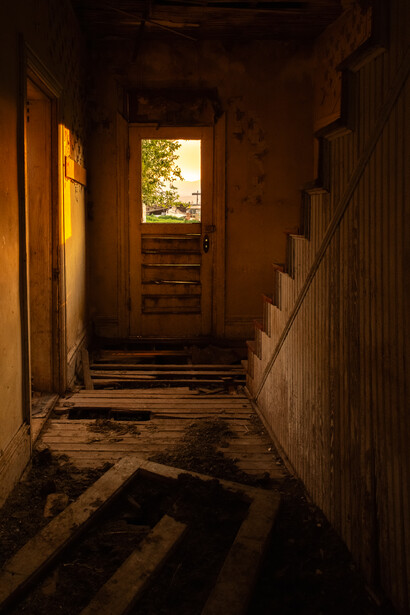
The Viltrox 13mm f/1.4 was the second I purchased, and it became invaluable for my handheld Urbex and rural decay exploration.
I have been working in the industry for a decent while now, and between rentals, personal collections, newsprint photo departments, gear reviews on Fstoppers, working with my workshop students’ gear, and shameless camera shop fondling, I have played with a lot of glass. It used to be real fancy or real cheap, with very little middle ground. Sure, we already had Sigma, Tamron, and Rokinon, and I am grateful for them all, but all those still come with substantial price tags when you’re getting into that f/1.2 territory and your subject is moving—until Viltrox.
This shift mirrors what Godox did for off-camera flash already. Before Godox, lighting meant expensive proprietary systems or unreliable third-party workarounds. Godox changed that by producing dependable strobes and radio triggers at accessible prices, effectively creating an entire generation of photographers who learned lighting because they finally could afford to (myself included). The result was not lower standards. It was more experimentation, more skill development, and more voices entering the field. If you want a structured on-ramp to lighting, Fundamentals of Lighting is a strong starting point.
Viltrox is doing the same thing for lenses. So are some other third-party glass makers like Sirui and TTArtisans, but they are not operating at this intersection of performance, product range, and accessibility yet.

That does not mean OEM manufacturers deserve no credit this year. Canon deserves a clear shout-out in 2025 for releasing the Canon RF 45mm f/1.2 STM at that sub-$500 price point. While still premium gear, its intent matters. Canon has increasingly shown a willingness to rethink focal lengths, pricing strategies, and product positioning in ways that expand creative access rather than reinforce exclusivity. That philosophical shift matters, but in the end the Canon ecosystem is still basically a walled garden; the release of one value-oriented lens for peasants like me isn’t going to fix it all.
The larger point is this: the era where wealth determined photographic potential is ending. That is healthy for the medium, and it could not come at a better time.
Photography now competes with a flood of generative imagery. Gen AI can produce endless visuals, but it cannot replace lived experience, local perspective, or human intent. The best counterbalance to AI saturation is not regulation or outrage. It is participation. More cameras in more hands means more authentic work, more unexpected ideas, and more images rooted in real places and real lives.
I try hard not to go full-stan with any brand, and I know I am laying the glaze on here a little thick, but that has become increasingly difficult to avoid as I see young, previously priced-out creatives benefit so much (not to mention myself).
By lowering the financial barrier to entry without lowering the bar for quality, companies like Viltrox are not just selling lenses. They are also investing in photography’s future, and making a lot of fans in the process.





Join the Fstoppers community for free
-
Post comments and join in the discussions
-
Browse the site ad-free
-
Share your work and get featured in the community
-
Compete in the photo contests for fun and prizes
11 Comments
Viltrox is not breaking new ground here. Samyang was the first to this party by a very long lead.
Samyang only recently offered AF lenses. While very good for the price, Samyang has never tried to compete head to head with flagship level lenses. Viltrox is offering optics that exceed first party image quality. That's a first.
Viltrox only recently offered lenses of any sort. Samyang has been making AF lenses for about 10 years now, and has been making MF lenses since 1972. And, some of Samyang’s lenses have, ineed, matched OEM quality at roughly half the cost. The 135/1.8 is one such. Further, Samyang makes the smallest and lightest AF 135/1.8, 85/1.4 and 35/1.4 FE available at any price, whereas many Viltrox lenses are heavier than their competitors.
I like my Viltrox 14/4 Air and applaud the company’s rep for IQ, but their heavier lenses aren’t for me, as I prize portability for my event kit. And, in any case, they are traveling the path that was blazed for them a decade ago by Samyang.
I agree that companies like Viltrox are producing great value, and I'm happy to hear an experienced pro like yourself validating the quality of their products. Like you, I'm also a real estate photographer, and I love using a tilt/shift lens. However, for my Nikon cameras, a Nikon tilt/shift has long been out of my price range. Luckily, I found a Laowa shift (only) lens that provides acceptable quality for a good price. (Yeah, it gets bad reviews, but it works.)
On the other hand, I'm also sentimental about what companies like Viltrox are going to do to the profit margins of companies like Nikon. Nikon, Canon and Sony make a killing off of lenses, and that's what keeps their imaging divisions in business. Yes, competition is a good thing, no doubt about it. I've benefitted from it with my Laowa lens. But I'm afraid these Chinese companies are going to make my favorite Japanese companies much less profitable in an age where those Japanese companies are already facing lots of challenges from cell phones and other imaging technologies. I see your point about lower prices allowing more folks into photography, and I support getting more people involved. I'm just an old sentimentalist who wants things both ways--I want the camera icons to stay healthy somehow while we also enjoy lower prices. Sigh.
There has been a flood of articles on Fstoppers recently praising Viltrox lenses. I can't help but think Fstoppers gets some revenue from Viltrox for all the positive press. If that is the case, the articles should be labeled as advertisements.
For Nikon users, Viltrox I believe are in the process receiving a law suit, which if it favoured Nikon could mean issues for Nikon users of Viltrox. Also then if they are sponsoring these articles I think that should be clearly stated in the articles. If they are not sponsoring them, then the question of why so many articles on just one manufacturer arises...
For Nikon users, Viltrox I believe are in the process receiving a law suit, which if it favoured Nikon could mean issues for Nikon users of Viltrox. Also then if they are sponsoring these articles I think that should be clearly stated in the articles. If they are not sponsoring them, then the question of why so many articles on just one manufacturer arises...
For Nikon users, Viltrox I believe are in the process receiving a law suit, which if it favoured Nikon could mean issues for Nikon users of Viltrox. Also then if they are sponsoring these articles I think that should be clearly stated in the articles. If they are not sponsoring them, then the question of why so many articles on just one manufacturer arises...
They make great lenses ... I had the 13 mm and a 75 1.2 in the X amount. Now I did sell most of my X lenses to fund my GFX gear.... but those lenses are impressive as for the Nikon controversy I've got zero time for Nikon especially in Australia. I'll just say that they can get ...f...d...... Nikon in Australia they only support about 10 photographers and no one else can get a look in. That's why I jumped over to Fuji and I can tell you what Fuji support everyone. They don't care whether you are at the bottom of the pile or you're the best photographer on the planet, they will support you nikon. I'll say it again NIKON LOL .... yes you mate great camera gear but your company is full of not very nice people. Let's just say that and yes I'm prepared to say it and I had direct dealings with Nikon Australia and I can tell you what they are not nice people to deal with they are shoddy in their repairs of their gear and they don't support photographers. They care about one thing and that's dollars.....LETS hope VILTROX wins in court!!
You talk of being a pheasant, ok, fine, you're a flightless bird that lives in the underbrush and sits silently until spooked by a special type of hunting dog. Then the hunter takes aim... BLAM!!! You're now some rich dudes dinner. Lesson? Don't be a pheasant.
I read this and what is failed to be noted is the great glass of Japan way way back in the film days and that Sony when entering the ring of fire did what no one thought about and give the info on it cameras to lens adapters the reason Sony did not have many lenes to offer at the time. For myself in 2014 going to Sony A7SM1 mainly it bracket 5 at +/- 3EV, it was the era of HDR due to low dynamic range of cameras at the time. But the adapter makers made adapters for all lens makes from other camera makers. I had a bag and a half of Canon FD film lenses and some Canon EF lenses from my Canon T2i. Yes the FD lenses were all MF but Sony had a thing that highlight the focus area and most have never heard of the on camera apps one that did a lens correction that could be saved in the app that could be selected when using that lens. Also yes there were no chip on the lenses to put info in the Metadata but there was LensTagger, also used for the Rokinon/Samyang lens that were unchipped but also no LC in Lr for a year or two in Lrc or any other editor.
FD lenses are what is called "FAST Glass" like a 14mm f/2.8 when that beginning FE lenses where f/4, a 24mm f/1.4, 28mm f/2, 35mm f/2, 50mm f/1.2, 55mm f/1.2, 85mm f/1.2, 100mm f/2, 135mm f/2, 200mm f/1.8, 300mm f/2.8, 400mm f/2.8 that is just the prims but continues in the Telephoto not as fast but faster that most DSLR makers lenses back in 2014 and 2015 when putting down big bucks for a new camera system and able to wait a save and save till some Sony lenses come out with chips and AF.
All the lenses are for now called full frame, 35mm, and few if any need LC's.
How many photographers have had to give up all lenses with a new mirrorless camera system when they came out and also had to wait for new lenses to be made September 2018 when the their Full Frame mirrorless camera came out and how many big photo companies had to get rid of their big stock pile of lenses just to go to mirrorless. By 2018 Sony had just about all Lenses to fill every hole in in the prime as well as Telephoto and now with Nikon and Canon still at the basics Sony is making mod 1 and 2 lenses.
So why all the big deal a low cost China lenses maybe the new mirrorless makers are loosing their new buyers at the cost they are selling theirs for!!
I was so clad to have my FD lenses from the early 70's still in great no fog lenses, I even captured my first Lunar eclipse the next month after getting my A7SM1 using a FD Telephoto.
One unsung hero of Sony 2013 APS-C E E 10-18mm (15- 27mm in 35mm) f/4 OSS with up front threads for filters but can be used in Full Frame Mode at 12mm -18mm (18mm if you remove the rear light shield) that is way smaller and lighter than Sony's FE 12-24mm f/4 G or f/2.8 GM or the FE 14mm f/1.8 all requiring external filter holders that are $1K more in cost. With it you can do MW Arch Panorama with the less than $100 pano rig and do a 200+ pano in less than 90sec. Where the FE 12-24mm need constant relitigating while checking leveling over and over. Like I say "Unsung hero" of before the A7/R/S models.