
OM Digital Solutions has announced the OM SYSTEM PEN, a new Micro Four Thirds interchangeable-lens camera built around a 20.4-megapixel Live MOS sensor, TruePic IX processor, 5-axis in-body image stabilization, and a compact rangefinder-style body. It is the first PEN-series camera released under the OM System brand, as well as the first model in the series to combine an electronic viewfinder with a dustproof and IPX1-rated splashproof design.
The camera is aimed primarily at everyday, street, and travel photography, but its feature set extends well beyond a basic compact body. Alongside phase-detection autofocus and computational photography modes, the PEN offers extensive in-camera color and monochrome controls, high-resolution shooting, Pro Capture, 4K and C4K recording, OM-Log400, vertical video, and slow and quick-motion recording.
The OM System PEN is scheduled to ship in late October 2026 in silver and black. The suggested retail price is $999.99 in the United States and $1,399.99 CAD in Canada.
A PEN With an Electronic Viewfinder and Weather Sealing
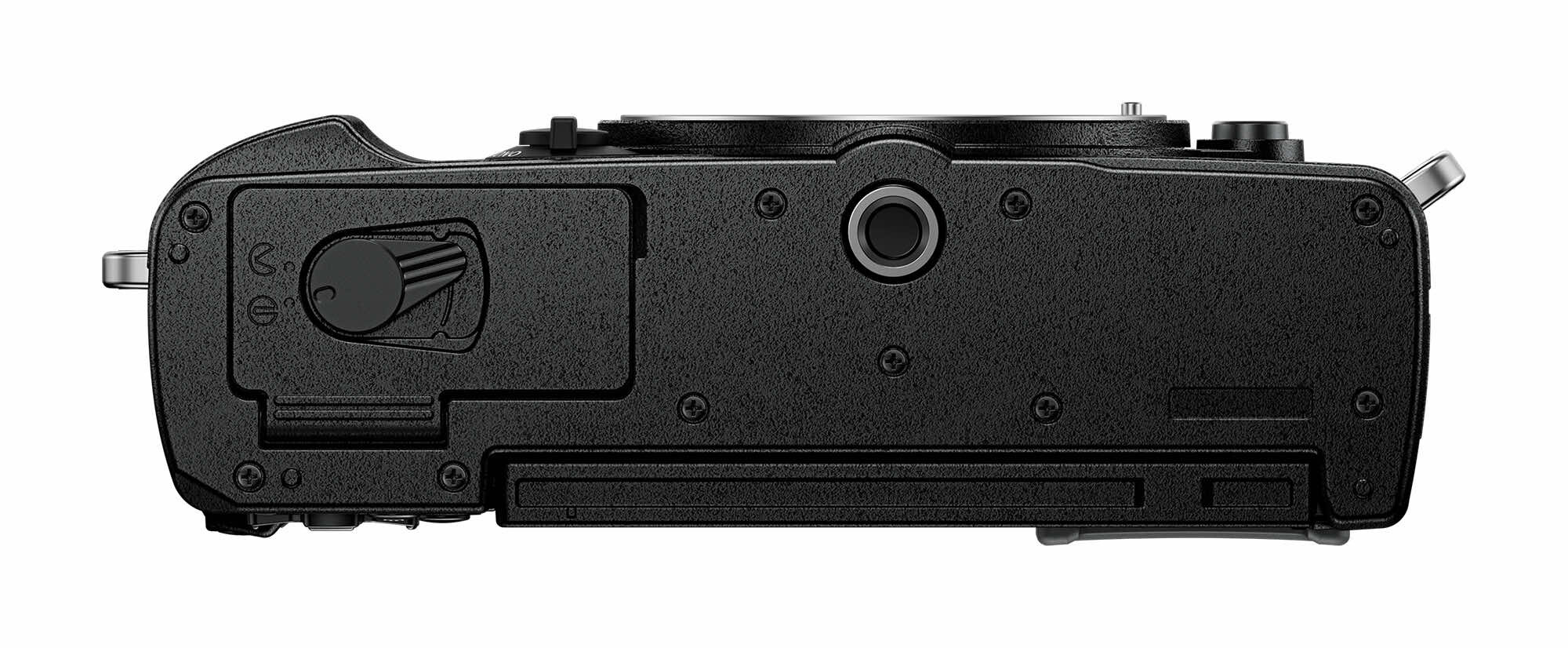
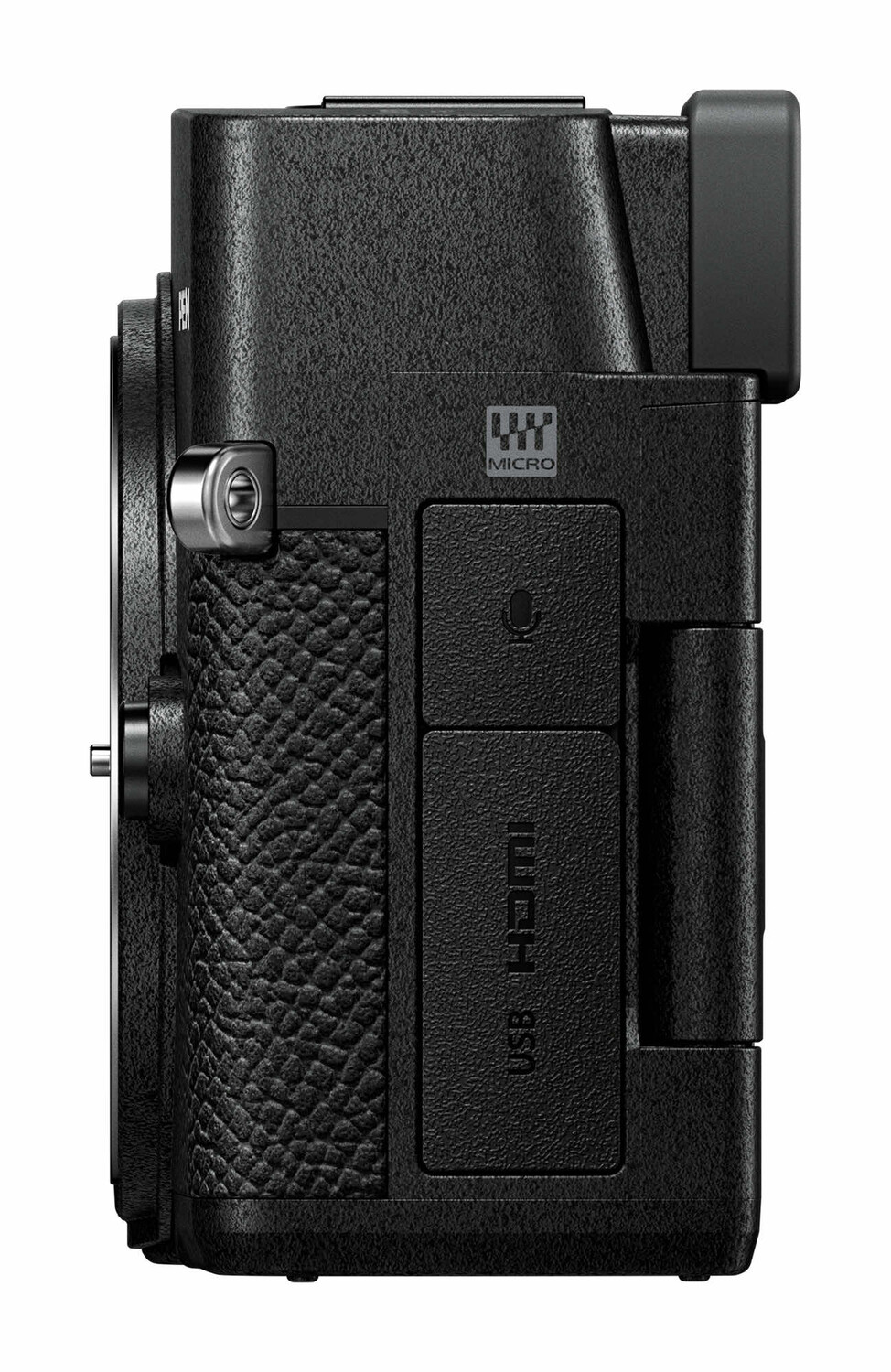
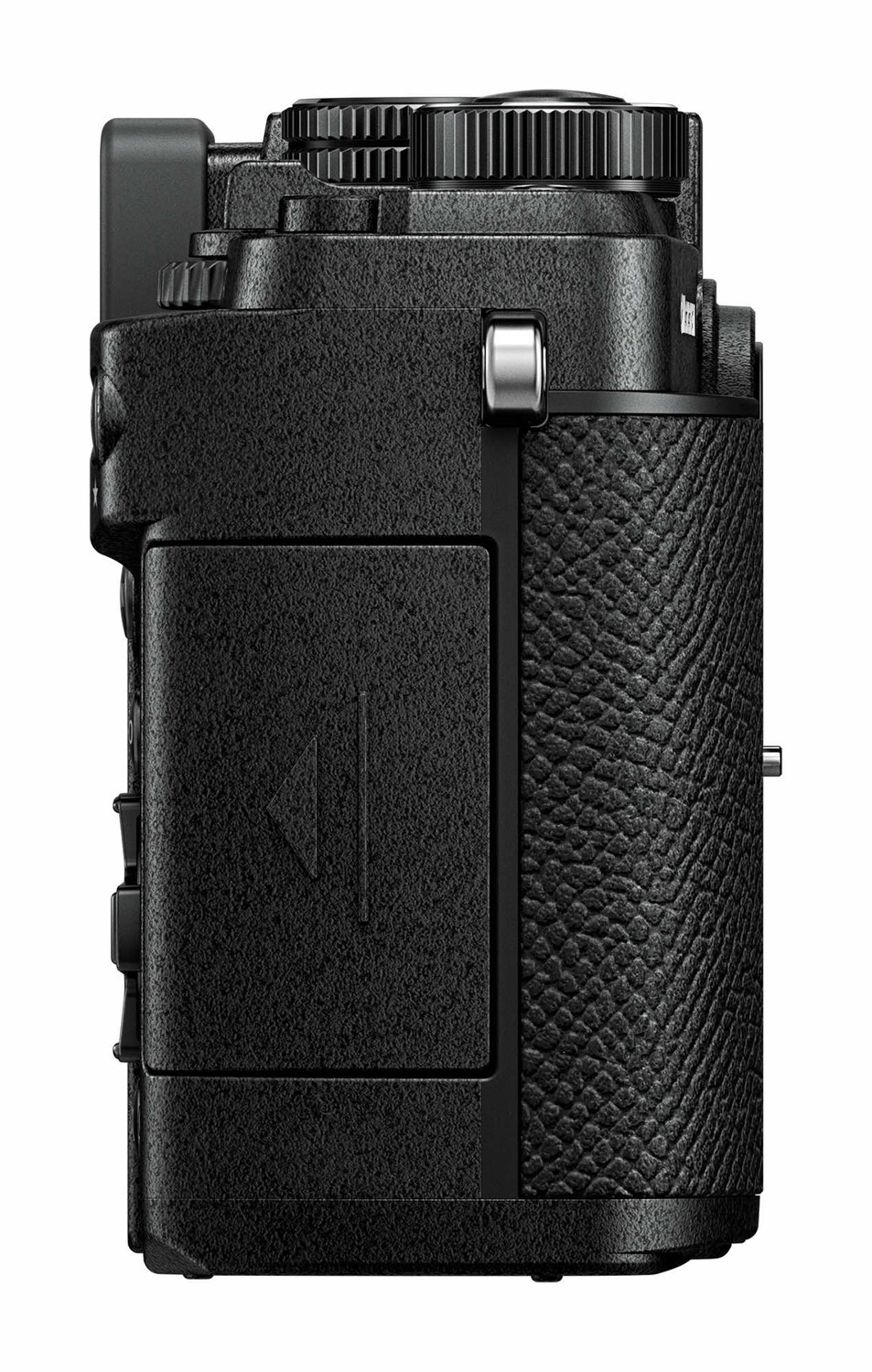
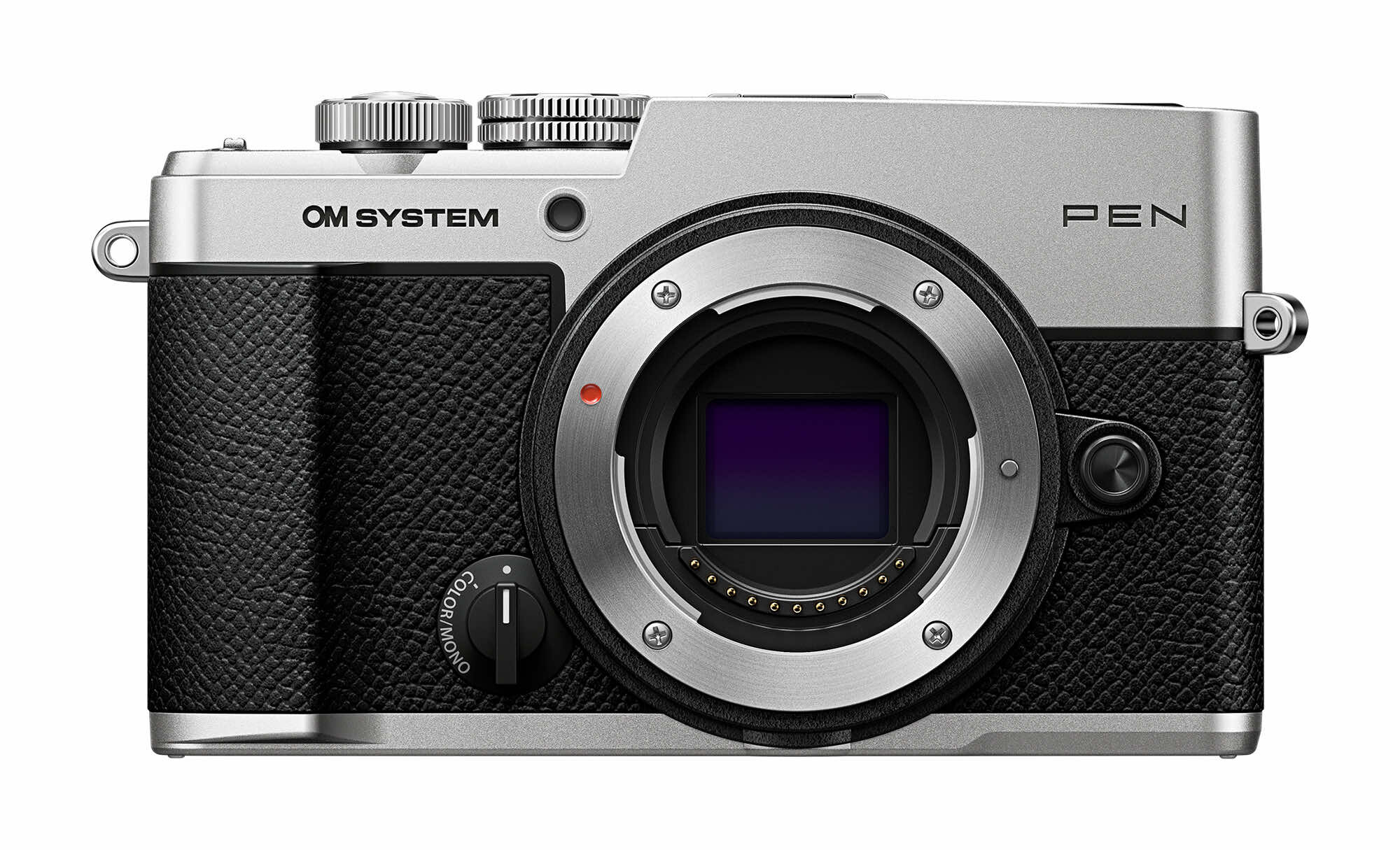
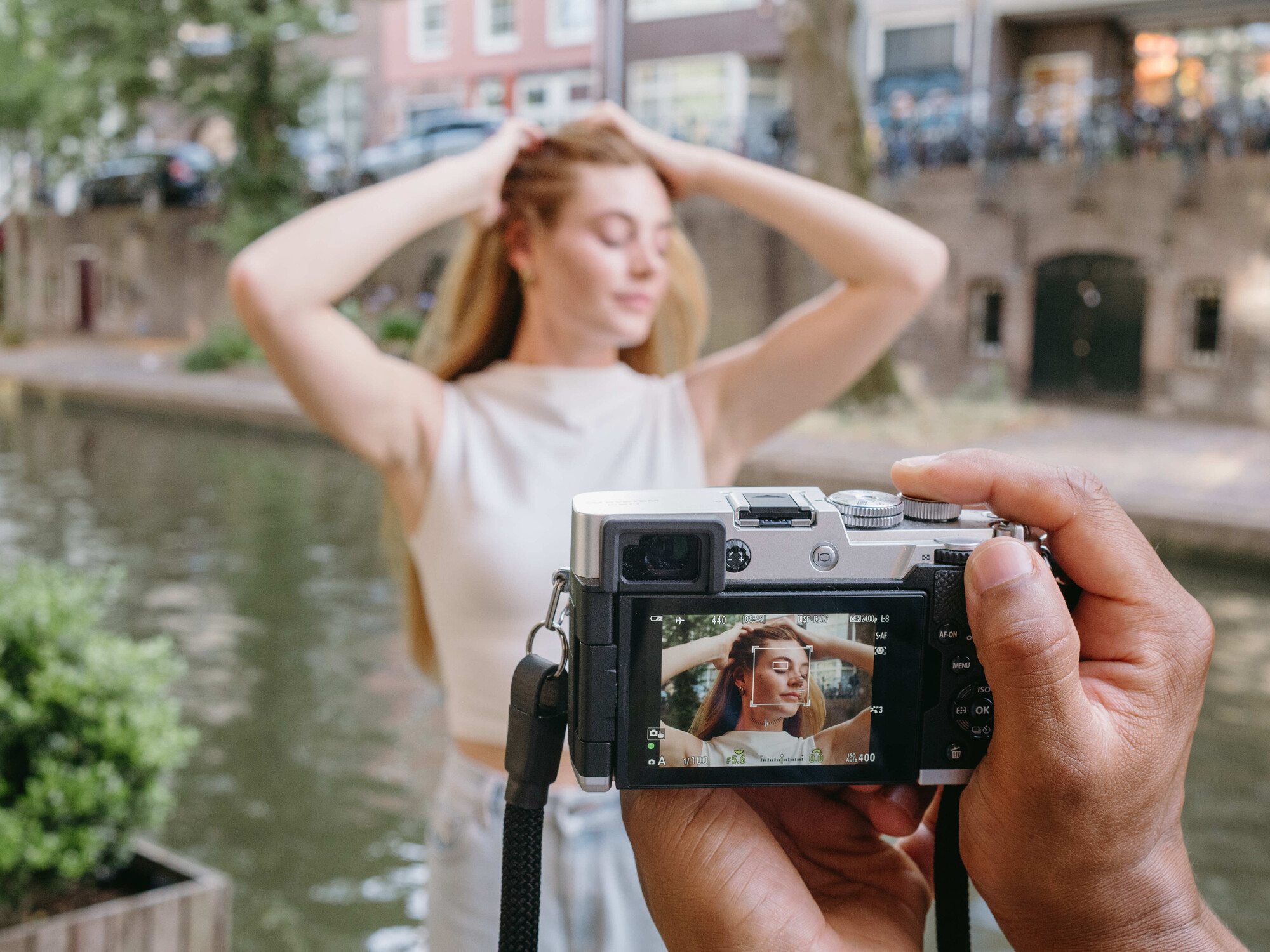
OM System has retained the compact, rangefinder-style approach associated with previous PEN cameras while adding a built-in eye-level OLED electronic viewfinder with approximately 2.36 million dots. The rear of the camera has a 3-inch, 1.04-million-dot vari-angle touchscreen.
More significantly for photographers who regularly work outside, this is the first PEN-series body with an IPX1-rated splashproof and dustproof construction. The rating applies when the camera is paired with an OM System splashproof lens. The protection does not apply while charging or when an HDMI connection is in use.
Despite the weather sealing and built-in viewfinder, the body remains relatively small. It measures approximately 125.8 x 74.5 x 43.3 mm and weighs 344 g body only, or 393 g with a BLS-7 battery and memory card.


20.4-Megapixel Sensor and 5-Axis Stabilization
At the center of the PEN is a 17.4 x 13.0 mm Four Thirds Live MOS sensor with approximately 20.4 million effective pixels, paired with OM System's TruePic IX processor. The camera uses the Micro Four Thirds lens mount and accepts SD, SDHC, and SDXC UHS-I memory cards.
The sensor is paired with built-in 5-axis sensor-shift stabilization. OM System rates the system for up to 5.5 stops of compensation at the center of the frame and 4.5 stops toward the corners under its stated CIPA 2024 test conditions.
The PEN also incorporates OM System's Supersonic Wave Filter sensor-cleaning system for reducing dust on the imaging sensor.
Still images can be recorded as JPEG, 12-bit losslessly compressed raw files, or JPEG+raw. Native still-image resolution is 5,184 x 3,888 pixels.
Phase-Detection Autofocus Comes to the PEN
The autofocus system combines phase-detection and contrast-detection AF, with 121 cross-type phase-detection points and 121 contrast-detection points.
A range of AF-area configurations is available, including single-point, small single-point, 5-area cross, 9-area, 25-area, and custom targeting. Four custom AF-area arrangements can be saved.
The camera also brings AI Subject Detection AF to the PEN series for the first time. Subject recognition supports people as well as cats and dogs, while Starry Sky AF is included for astrophotography. Additional options include continuous AF, tracking, manual focus, AF limiting, focus peaking, magnified focus assistance, and five levels of continuous-AF tracking sensitivity.
Color and Monochrome Profiles
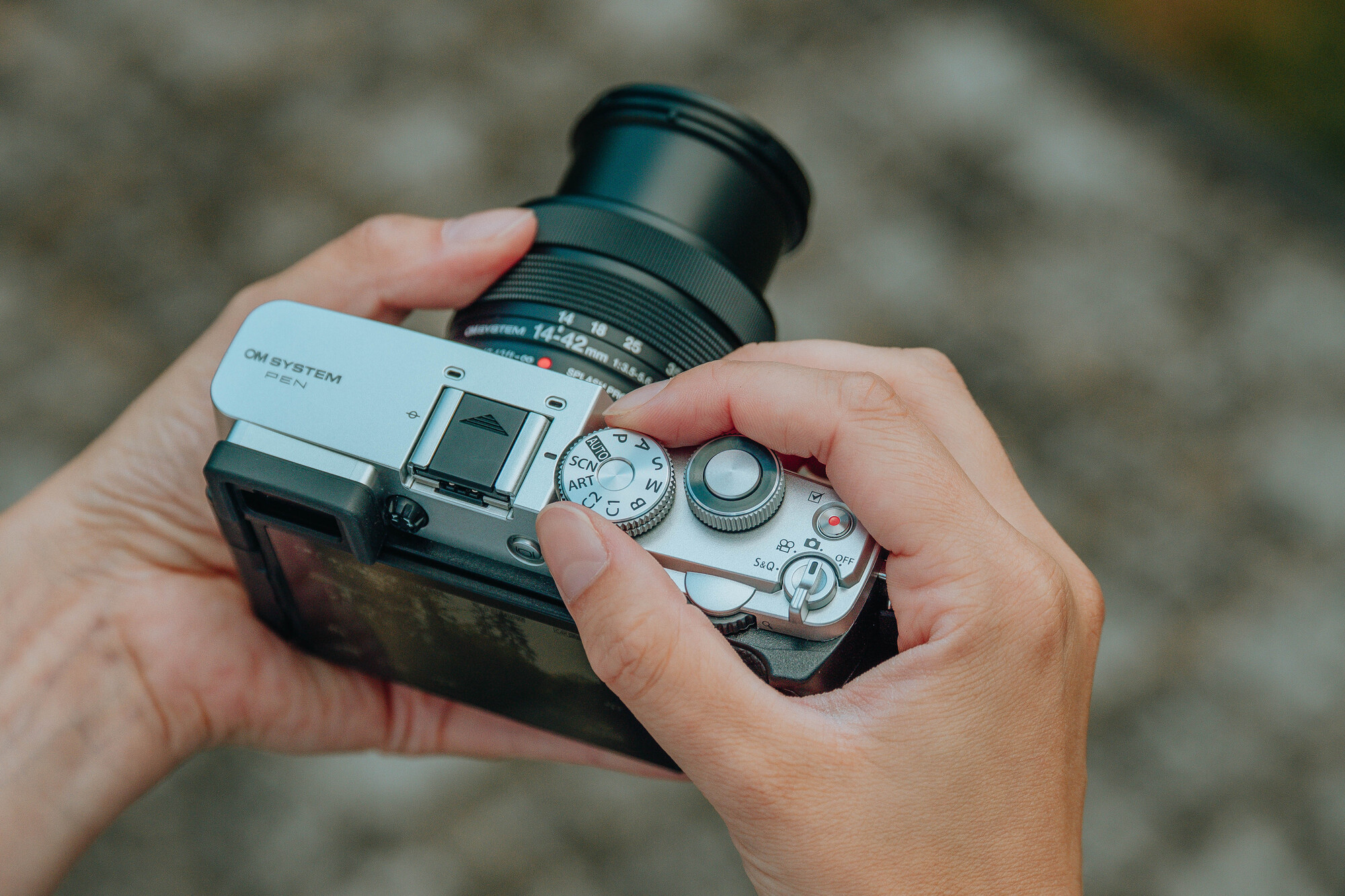
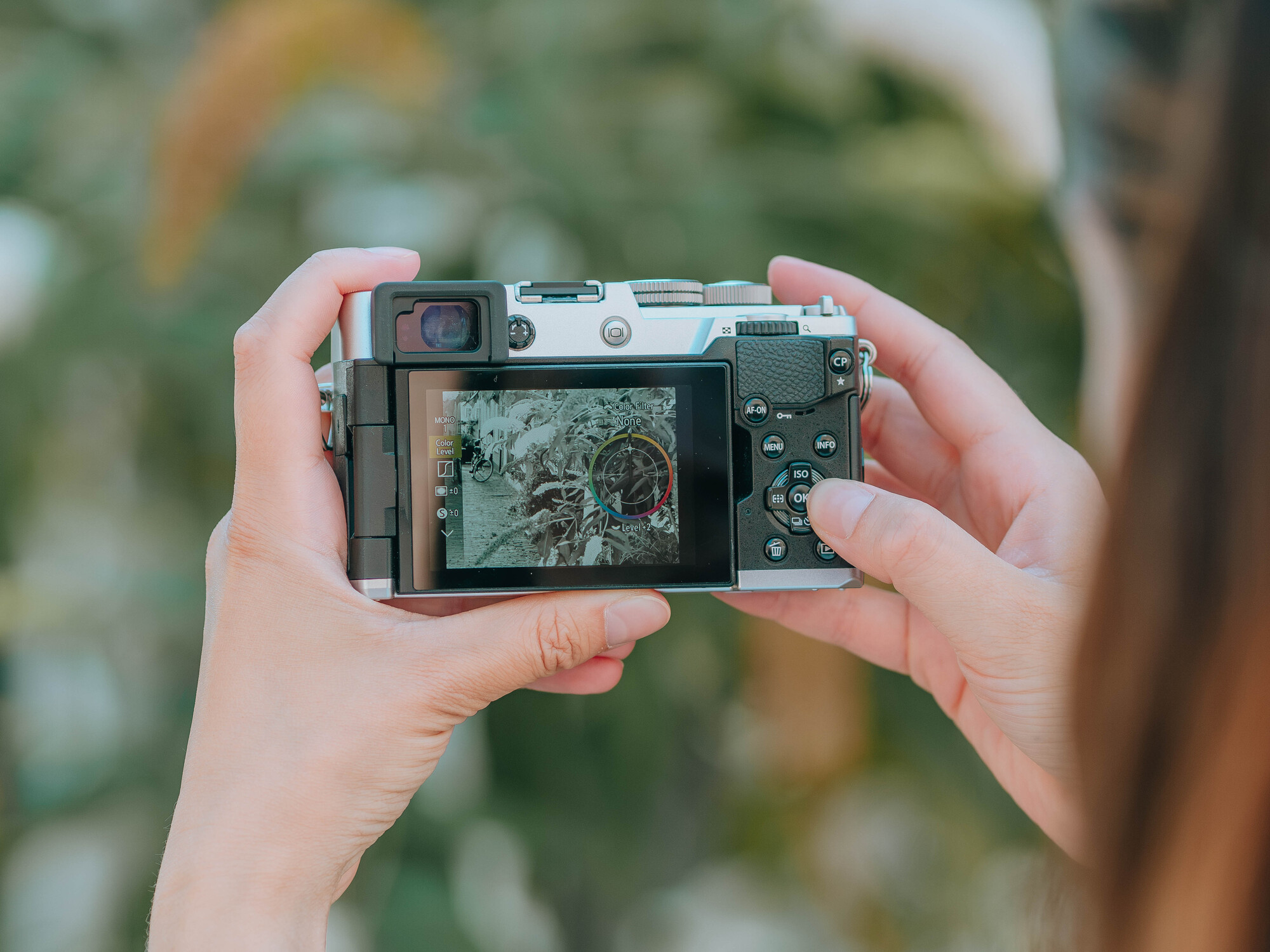
One of the more prominent features is the dedicated Profile Control system. A switch on the front of the camera provides direct access to Color Profile Control and Monochrome Profile Control.
Color Profile Control allows users to independently adjust the saturation of 12 colors across 11 levels, from -5 to +5. Shading and highlight-and-shadow adjustments can be incorporated as well, and four custom color configurations can be stored.
Four supplied color treatments are included: Film Rich Color, Film Vivid, Film Soft Tone, and Standard (Natural).
Monochrome Profile Control provides adjustments for color filtration, shading, film grain, monochrome toning, and highlight-and-shadow rendering. Eight filter colors are available, along with sepia, blue, purple, and green toning. Four monochrome presets are supplied: Film B&W, Film IR, Film Low Contrast, and Standard (Monotone).
Profile Control can also be applied while recording normal video, though it is not available in S&Q mode.
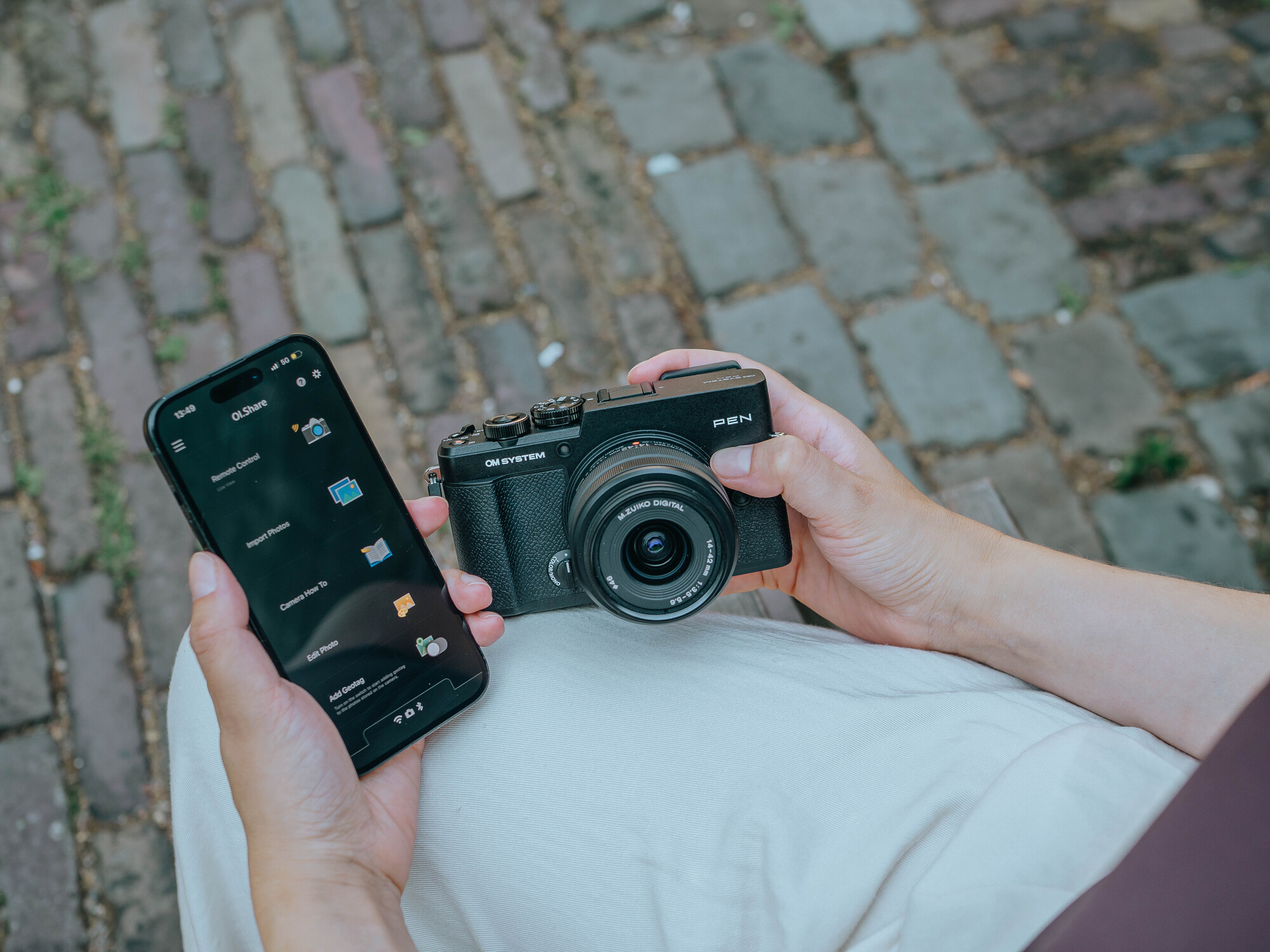
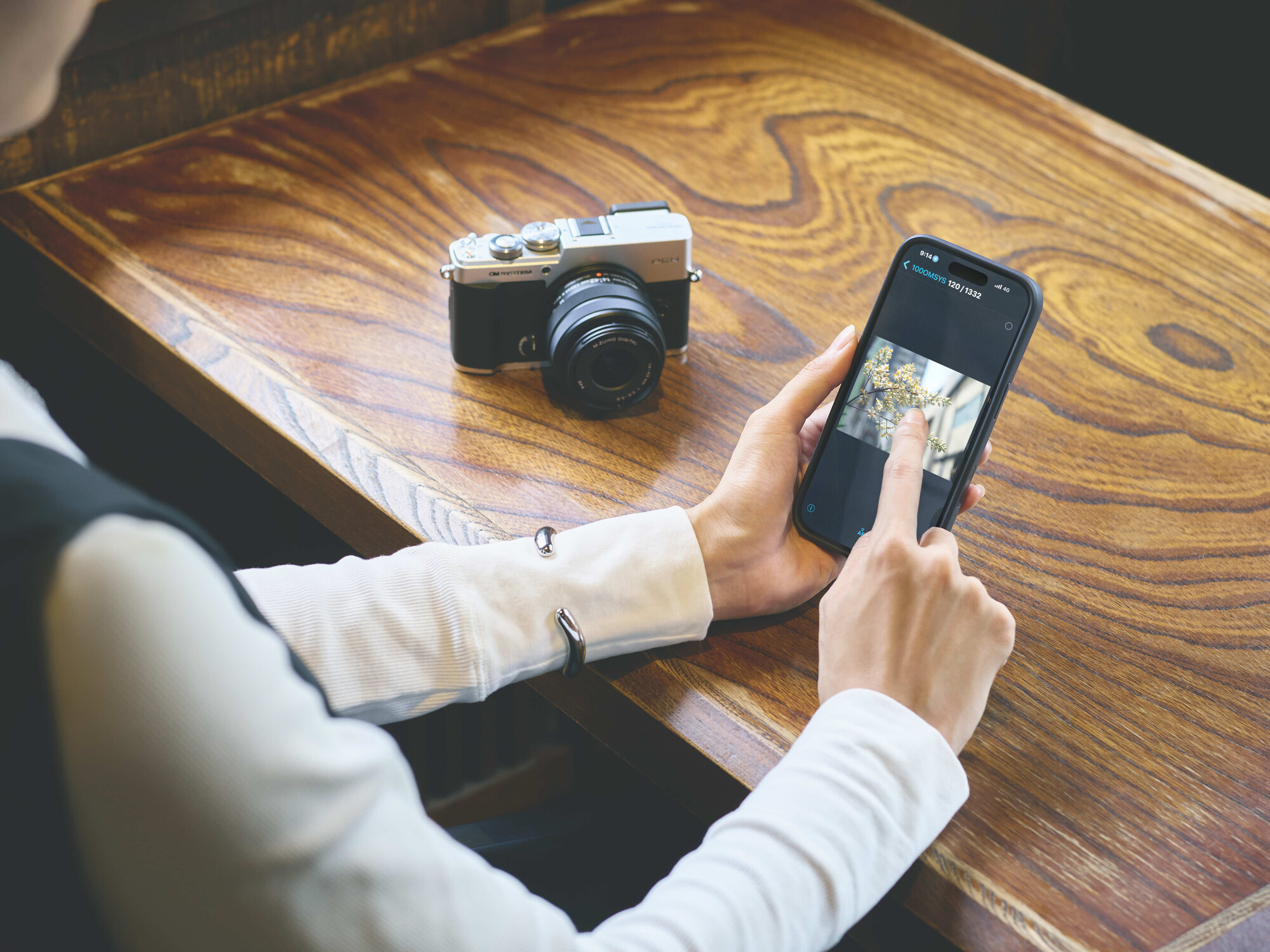
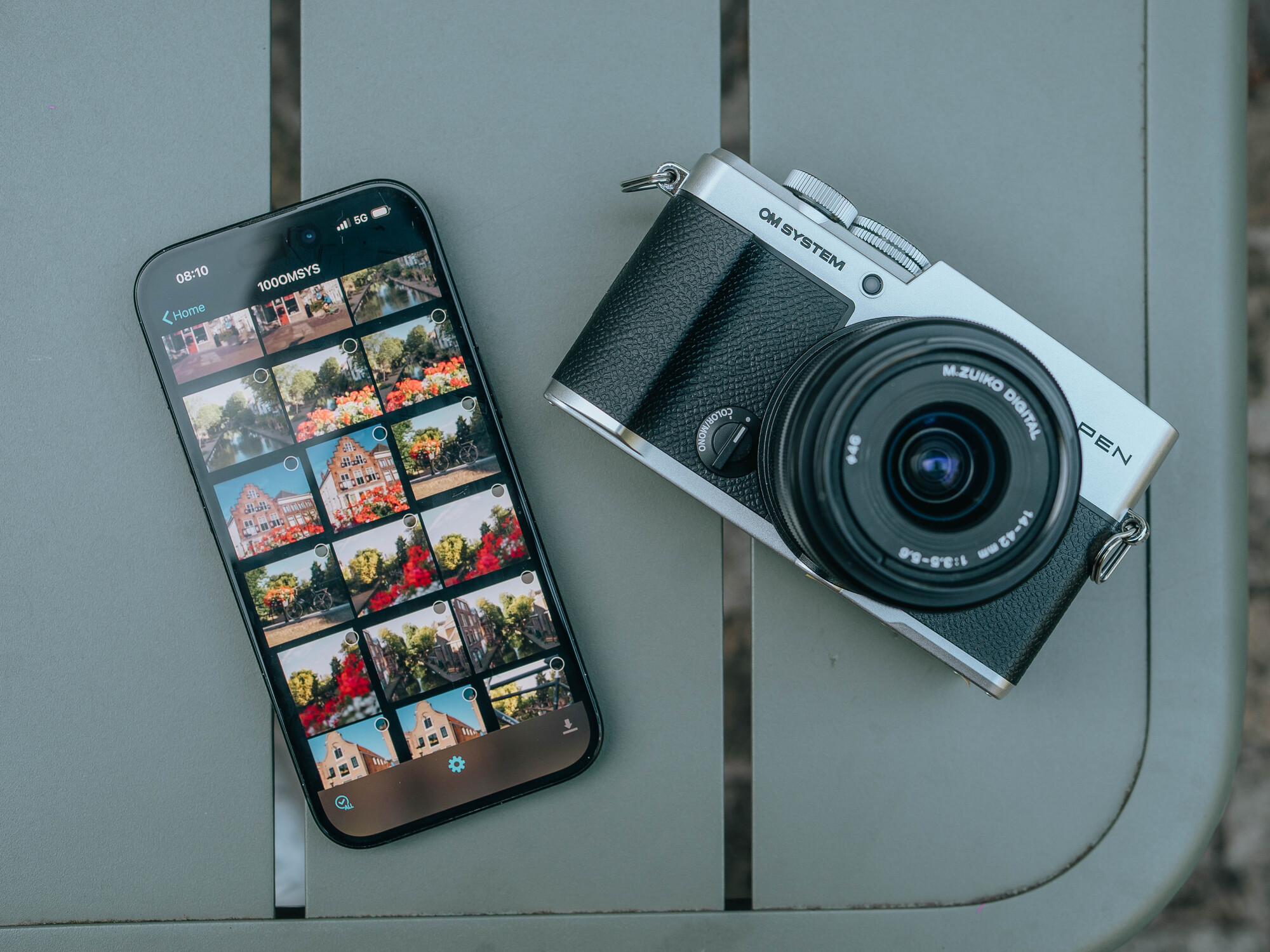
The updated OI.Share app adds a Profile Library feature that can read color, tone, and other settings from compatible images stored on a smartphone and register those settings to the camera's preset slots. The app also supports image transfer, remote shooting, firmware updates, and camera-setting backup and restoration.
Computational Photography Without a Computer
OM System has also placed a dedicated CP button on the PEN for quicker access to several of its computational photography tools.
Holding the button while turning the control dial allows users to select Tripod High Res Shot, Handheld High Res Shot, Live ND, Focus Stacking, HDR, and Multiple Exposure.
Handheld High Res Shot can create 50-megapixel JPEG files measuring 8,160 x 6,120 pixels, with a 25-megapixel option also available. Raw files from the mode are recorded at 8,160 x 6,120 pixels.
Tripod High Res Shot offers the same 50- and 25-megapixel JPEG options while producing raw files measuring 10,368 x 7,776 pixels.
Live ND provides simulated ND2, ND4, ND8, and ND16 effects. The camera additionally supports Live Bulb, Live Time, Live Composite, focus bracketing of up to 999 frames, HDR, keystone compensation, multiple exposure, interval shooting, and a 2x digital teleconverter.
Pro Capture and 30 fps Shooting
The PEN offers a maximum electronic-shutter speed of 1/32,000 second, while its mechanical shutter reaches 1/4,000 second.
Standard sequential shooting reaches approximately 5 fps. Silent sequential shooting is available at up to approximately 8 fps, while Silent Sequential Shooting H reaches approximately 30 fps with focus and exposure locked to the first frame.
Pro Capture H also reaches approximately 30 fps and can retain as many as 12 frames from immediately before the shutter button is fully pressed. Raw sequential recording is supported.
At maximum shooting speed, OM System rates the standard mechanical sequence for approximately 29 raw images or 154 JPEG LF images under its stated test conditions.
Video Features Include C4K, OM-Log400, and 24-Bit Audio
Although the PEN is positioned heavily around still photography, its video specification is fairly extensive.
C4K recording at 4,096 x 2,160 is available at 24p, with a bitrate of approximately 237 Mbps when using 48 kHz/16-bit audio or approximately 240 Mbps with 96 kHz/24-bit audio.
UHD 4K at 3,840 x 2,160 can be recorded at 30p, 25p, or 24p at approximately 102 Mbps with standard audio or approximately 105 Mbps with 96 kHz/24-bit recording.
Full HD supports frame rates up to 60p, while 30p, 25p, and 24p can be recorded using either Long GOP or All-I compression. All-I Full HD reaches approximately 202 Mbps with 48 kHz/16-bit audio and approximately 205 Mbps with 96 kHz/24-bit audio.
Movie picture profiles include Flat, OM-Log400, OM-Cinema1, and OM-Cinema2. The camera also supports vertical video and an S&Q mode with capture rates ranging from 1 fps to 120 fps, depending on the selected recording and playback settings.
Video stabilization can combine sensor-shift and electronic stabilization in M-IS1 mode or use sensor-shift stabilization in M-IS2. A red frame can be displayed during recording, and a two-level tally light is built into the camera.
HDMI monitoring and recording output are supported through the Micro HDMI connector. In recording-output mode, 4K and C4K cannot be selected, but uncompressed YCbCr 4:2:2 8-bit output is available.
For audio, the PEN includes a stereo microphone and a 3.5 mm stereo microphone input. Standard recording uses 48 kHz/16-bit stereo linear PCM, while high-resolution audio recording is available at 96 kHz/24-bit.
Key Specifications
- 20.4-megapixel effective 4/3 Live MOS sensor
- Approximately 21.8 million total pixels
- 17.4 x 13.0 mm sensor
- Micro Four Thirds lens mount
- TruePic IX image processor
- 5,184 x 3,888 maximum standard still-image resolution
- JPEG, 12-bit losslessly compressed raw, and JPEG+raw recording
- SD, SDHC UHS-I, and SDXC UHS-I memory-card support
- Supersonic Wave Filter sensor dust-reduction system
- Built-in 5-axis sensor-shift image stabilization
- Up to 5.5 stops of center stabilization and 4.5 stops at the corners under specified CIPA 2024 test conditions
- 2.36-million-dot OLED electronic viewfinder
- 3-inch, approximately 1.04-million-dot vari-angle touchscreen
- IPX1-rated splashproof and dustproof construction when used with a compatible splashproof lens
- Hybrid phase-detection and contrast-detection autofocus
- 121 cross-type phase-detection AF points
- 121 contrast-detection AF points
- AF operating range down to -3.5 EV under specified test conditions
- AI Subject Detection AF for people, cats, and dogs
- Starry Sky AF
- Face and eye detection AF
- Focus peaking with white, black, red, or yellow display options
- ISO 200-25,600 standard manual range
- Extended Low settings equivalent to approximately ISO 64 and ISO 100
- Auto ISO range from approximately ISO 64 equivalent to ISO 6,400
- ±5 EV exposure compensation
- Mechanical shutter range from 60 seconds to 1/4,000 second, plus bulb functions
- Electronic first-curtain shutter range from 60 seconds to 1/320 second
- Electronic shutter range from 60 seconds to 1/32,000 second
- Standard sequential shooting up to approximately 5 fps
- Silent sequential shooting up to approximately 8 fps
- Silent Sequential Shooting H up to approximately 30 fps
- Pro Capture H up to approximately 30 fps
- Pro Capture can retain up to 12 frames before full shutter-button depression
- Approximately 29 raw frames or 154 JPEG LF frames in the standard maximum-speed sequence under specified test conditions
- Color Profile Control with independent adjustment of 12 colors over 11 levels
- Four Color Profile slots
- Monochrome Profile Control with filter, grain, shading, tone, and highlight/shadow adjustments
- Four Monochrome Profile slots
- 16 Art Filter types
- 24 Scene modes across six themes
- Handheld High Res Shot with 50-megapixel and 25-megapixel JPEG options
- Tripod High Res Shot with 50-megapixel and 25-megapixel JPEG options
- Live ND with ND2, ND4, ND8, and ND16 simulation
- Focus Stacking
- Focus Bracketing from 3 to 999 frames
- HDR1 and HDR2
- Live Bulb
- Live Time
- Live Composite
- Multiple Exposure
- Interval shooting for up to 999 frames
- C4K 4,096 x 2,160 at 24p
- UHD 4K 3,840 x 2,160 at 30p, 25p, or 24p
- Full HD recording at up to 60p
- Full HD All-I recording at approximately 202-205 Mbps, depending on audio mode
- S&Q capture rates from 1 fps to 120 fps, subject to selected resolution and playback frame rate
- Vertical video recording
- Flat, OM-Log400, OM-Cinema1, and OM-Cinema2 movie picture modes
- M-IS1 sensor-shift plus electronic movie stabilization
- M-IS2 sensor-shift movie stabilization
- Recording tally light
- Recording red-frame indicator
- Timecode with record-run/free-run and drop-frame/non-drop-frame options
- Micro HDMI Type D output
- HDMI monitor and recording modes
- YCbCr 4:2:2 8-bit HDMI output in recording mode
- Built-in stereo microphone
- 3.5 mm stereo microphone input with selectable plug-in power
- 48 kHz/16-bit stereo linear PCM audio
- 96 kHz/24-bit high-resolution stereo linear PCM audio
- Built-in Wi-Fi supporting IEEE 802.11b/g/n
- Bluetooth 5.2 Low Energy
- USB Type-C
- USB 2.0 Hi-Speed data interface
- USB bus power
- In-camera USB charging while powered off
- USB Power Delivery is not supported
- UVC and UAC webcam support
- BLS-7 lithium-ion battery
- Approximately 410 still images per charge using either the EVF or rear monitor under CIPA testing
- Approximately 80 minutes of video recording under CIPA testing
- Approximately 130 minutes of video when zoom and other operational functions are not used
- Dimensions: approximately 125.8 x 74.5 x 43.3 mm
- Weight: 344 g body only
- Weight: 393 g with battery and memory card
- Operating temperature: 0 °C to 40 °C
- Silver and black body options
Sample Images





Kit Options and New Accessories
In addition to the $999.99 body, OM System will sell a kit combining the PEN with the M.ZUIKO DIGITAL 14-42mm f/3.5-5.6 III for a suggested retail price of $1,099.99 in the United States and $1,549.99 CAD in Canada.
A double-lens kit adds the M.ZUIKO DIGITAL ED 40-150mm f/4.0-5.6 R. That kit is priced at $1,299.99 in the United States and $1,799.99 CAD in Canada.
The revised 14-42mm lens is also being introduced separately. It uses eight elements in seven groups, has a retractable mechanism, supports Focus Stacking, and gains an IPX1-rated splashproof and dustproof construction. Its suggested retail price is $349.99 in the United States and $499.99 CAD, with shipping scheduled for late October.
The camera uses the new BLS-7 Lithium Ion Rechargeable Battery, a 1,285 mAh battery rated for approximately 410 images under CIPA testing. One battery is included with the PEN. Separately, it carries a suggested retail price of $99.99 in the United States and $139.99 CAD.
OM System is also introducing the BCS-7 Battery Charger, which can charge a BLS-7 in approximately 90 minutes when used with an F-7AC AC adapter. Its suggested retail price is $119.99 in the United States and $159.99 CAD.
Why It Matters
Along with being a legend, the PEN is notable because OM System has combined several features normally associated with its more photography-focused bodies with a smaller rangefinder-style design. The addition of an electronic viewfinder and weather sealing addresses two practical limitations that can matter when a compact camera becomes a primary travel or everyday body rather than simply a secondary camera.
For still photographers, the combination of 5-axis stabilization, phase-detection autofocus, 30 fps electronic shooting, Pro Capture, Live ND, high-resolution modes, Focus Stacking, and the dedicated color and monochrome profile controls gives the camera considerably more capability than its understated exterior might suggest. The Profile Control switch is particularly relevant to photographers who want to create a finished look in-camera rather than treating every image as the starting point for substantial post-production.
The video side is broader than might be expected from a PEN-series camera as well. C4K and 4K recording, OM-Log400, 24-bit/96 kHz audio, microphone input, slow and quick motion, vertical recording, a tally light, and timecode support make it possible to use the camera for short-form filmmaking, travel video, social content, and hybrid assignments. There are limits, including 8-bit HDMI output and the inability to use 4K or C4K while operating HDMI in recording-output mode, but the overall feature set makes the PEN more of a hybrid camera than its still-photography-oriented styling initially suggests.
Conclusion
The new OM System PEN represents a substantial update to the PEN concept rather than simply another compact Micro Four Thirds body. The built-in EVF, weather sealing, 20.4-megapixel sensor, 5-axis stabilization, phase-detection autofocus, computational photography functions, and extensive profile controls give it a feature set suitable for considerably more than casual snapshots.
At $999.99 for the body, it enters a competitive part of the interchangeable-lens market, but its combination of small size, weather resistance, in-camera creative tools, and a relatively extensive photo and video feature set gives it a distinct position. The OM System PEN is scheduled to begin shipping in late October 2026.


Join the Fstoppers community for free
-
Post comments and join in the discussions
-
Browse the site ad-free
-
Share your work and get featured in the community
-
Compete in the photo contests for fun and prizes
No comments yet