Sony just released a camera that outperforms their own flagship model and costs $2,000 less. That's not a headline you expect to write, but here we are.
The a7R VI comes in at under $4,499.99. The a1 II sits at $6,500 and is supposed to be the best Sony has to offer. After spending a week with the a7R VI, using it for family documentary work and studio sessions, and comparing it spec-for-spec against the a1 II, the conclusion is hard to argue with: the a7R VI beats the a1 II in almost every meaningful way.
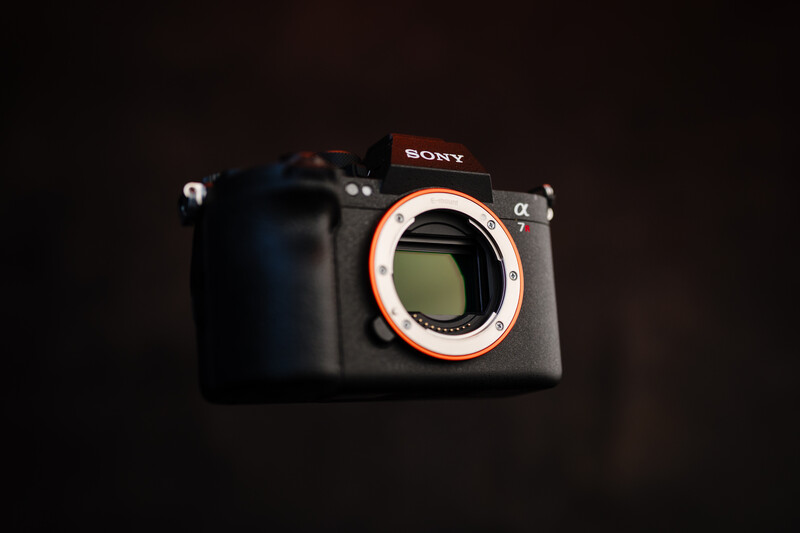
A Sensor That Actually Works With Silent Shutter
The a7R VI is built around a newly designed, fully stacked 66.8-megapixel sensor, and this single change fixes the most frustrating problem with the a7R V. The a7R V's sensor was, and still is, one of the best sensors ever made in terms of image quality. But its electronic shutter had a slow enough readout speed that it was essentially useless for any subject with motion or in mixed lighting conditions, where banding became a real problem. That limitation made a significant portion of real-world shooting situations unusable.

The new stacked sensor in the a7R VI eliminates that issue. The readout speed is fast enough that the electronic shutter is actually usable now, not just a setting you avoid.
Beyond fixing that problem, the new sensor also brings more dynamic range. The a7R VI measures in at 16 stops, compared to the 15 stops found on both the a1 II and the a7R V. That extra stop gives you more latitude in post, particularly in high-contrast scenes.
Processing Power That Matters
Sony paired this sensor with the updated BIONZ XR2 processor with its integrated AI processing unit. The practical result is more accurate subject recognition, more stable tracking when shooting in crowded or busy scenes, AI-based auto white balance, and improved exposure accuracy through subject-aware exposure controls. What this new processing setup enables at a hardware level is also worth paying attention to. The a7R VI can shoot 14-bit lossless raw files at its maximum 30 frames per second. The a1 II can also hit 30 fps, but only with lossy raw. If you want 14-bit lossless raw out of the a1 II, you're capped at 20 fps. So the camera that is supposed to be the flagship is actually giving you less at the limit of what matters most for image quality.

Low-Light Focus That Changes What's Possible
Autofocus performance in low light has long been one of the more meaningful areas of competition between camera systems, and the a7R VI makes a significant jump here. The camera can focus down to -6 EV under standard operation, and down to -11 EV when using the bright monitoring function (and bright monitoring does let you use AF on this camera). The a1 II can only focus as low as -4 EV. Even without the bright monitoring feature, the a7R VI can lock focus with two full stops less light than Sony's flagship. That's not a marginal improvement. The a7R VI also covers more of the sensor with its autofocus system: 759 points covering 94% of the frame, compared to 92% coverage on the a1 II.

The Other Specs Worth Knowing
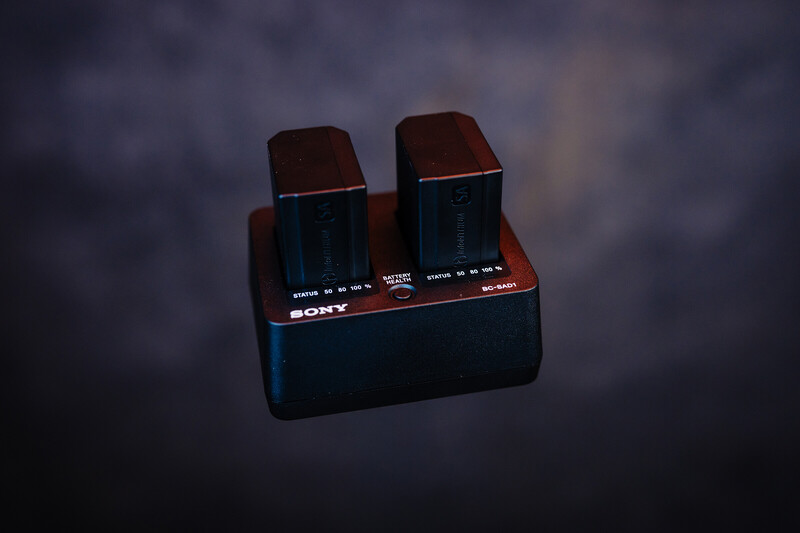
Beyond the headline features, the a7R VI includes pre-capture, 8.5 stops of in-body image stabilization, and a newly designed higher-capacity battery that supports quick charging and allows you to monitor battery health both through the camera body and the charger. High-ISO performance is also improved compared to the a7R V, though no direct comparison to the a1 II was made during my testing. The vari-angle display, which offers both tilt and full flip-screen functionality, is also carried over from the a7R V (which was the first camera to get this amazing screen setup).
Video Specs for Those Who Use Them
This is primarily a stills camera, and that's how the a7R VI was tested. But for anyone who shoots video, the specs are worth listing:
- 8K at 30 fps
- 4K at 60 fps with no crop
- 4K at 120 fps with a crop
- 10-bit 4:2:2 internal recording
If you add the new Sony XLR-A4 handle, you can also now record 32-bit float audio.
Where the a1 II Still Holds Ground
The a7R VI is not a straight win across the board. There are areas where the a1 II has a clear edge, and if any of these matter to your shooting, they're worth taking seriously.
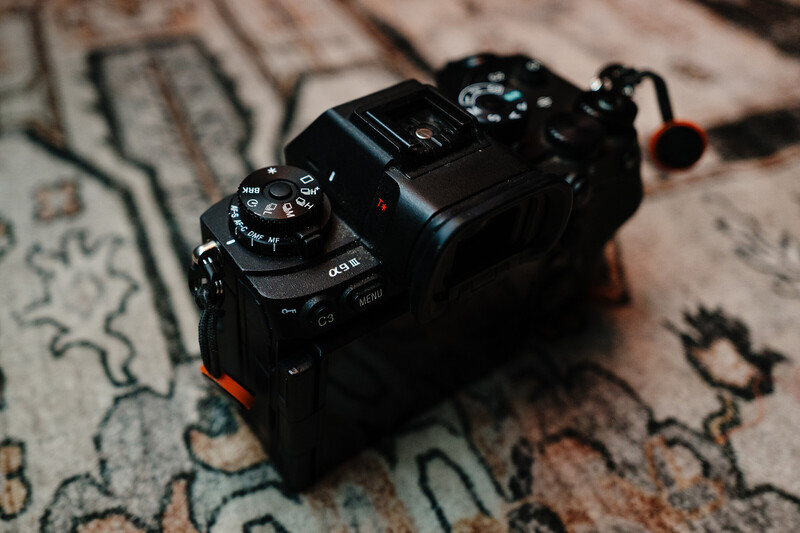
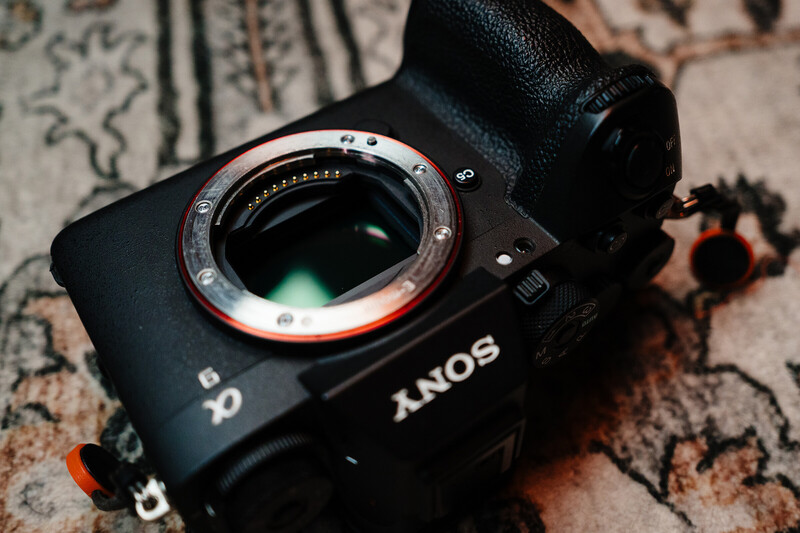
The Body
The a1 II shares its body design with the a9 III, including a left-side drive dial, a dedicated AF dial, and a C5 button on the front of the camera. The a7R VI has a redesigned body with a deeper grip, a small tally light for video recording, and a new dedicated button for the backlight feature.
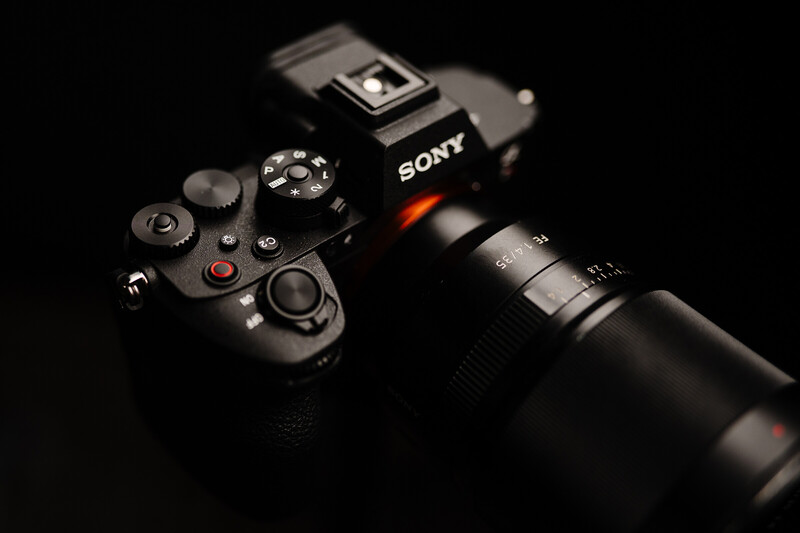
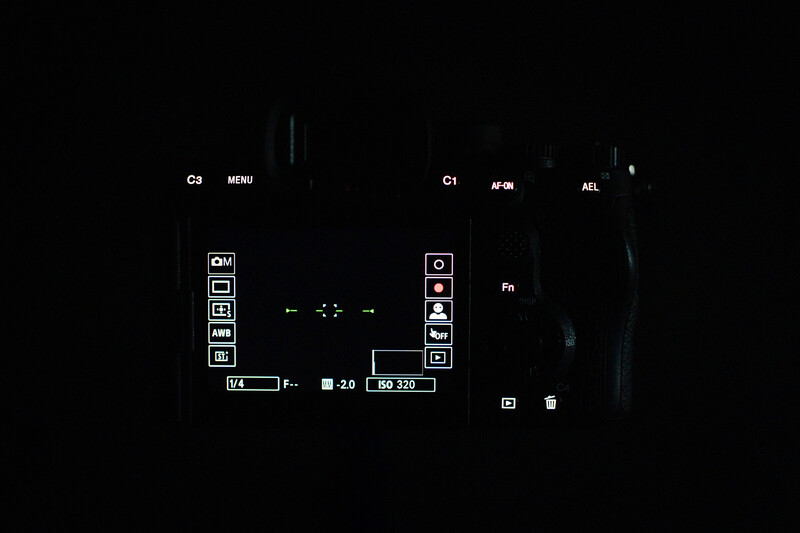
The backlight itself is a welcome feature, but a dedicated button for it is hard to justify when the camera could have used that real estate for something more versatile. You can reassign the button to whatever you want, but doing so means the only way to access the backlight is through the Fn menu. When it's accessed that way, the auto-timeout behavior goes away, so you have to go into the menu to turn it on and then go back into the menu again to turn it off. It's clunky. A camera at this level should handle that more cleanly.
Shutter Speed and Flash Sync
The a7R VI has a maximum shutter speed of 1/8000 for both mechanical and electronic shutters. The a1 II matches that with mechanical but extends to 1/32000 with the electronic shutter. If you regularly shoot in bright conditions and rely on high shutter speeds for exposure control, this is a real difference.
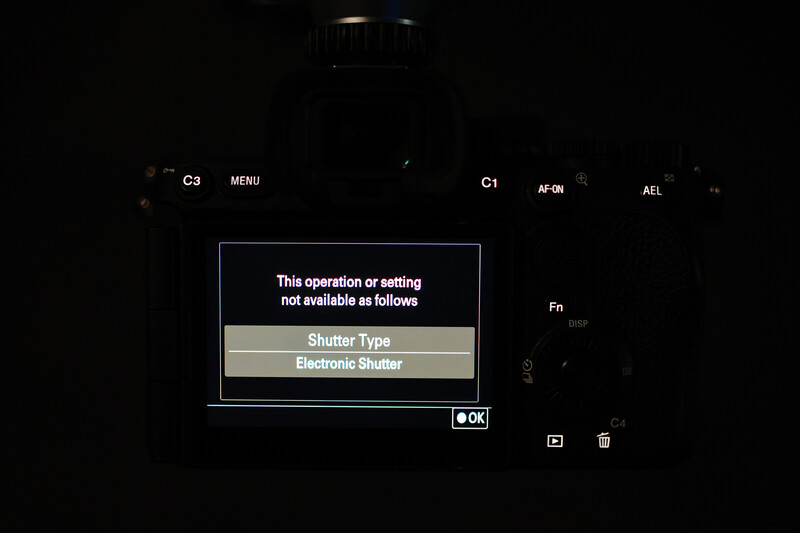
Flash sync is also limited on the a7R VI. The sync speed is 1/250, compared to 1/400 on the a1 II. More significantly, flash will not work at all when using the electronic shutter on the a7R VI, while the a1 II allows flash sync up to 1/200 with the electronic shutter. For photographers who rely on flash in mixed conditions or outdoor daylight, this matters.
The EVF
The a7R VI's electronic viewfinder runs at 120 fps. The a1 II's runs at 240 fps. For photographers who use the EVF heavily while tracking fast movement, the difference could be noticeable. That said, for general shooting, 120 fps is not something that will get in the way.
Autofocus Calculation Speed
The a1 II performs 120 autofocus and exposure calculations per second. The a7R VI does 60. At 30 fps, that works out to four calculations per frame on the a1 II versus two on the a7R VI. Most shooters will never need four calculations per frame. Two is sufficient for nearly every real-world scenario. But if you are shooting something fast enough that every calculation counts, you probably already know that. This is one of those specs where the people who need it will recognize it immediately, and everyone else shouldn't worry about it.

What I Liked
- 66.8 MP stacked sensor with a fast enough readout to finally make the electronic shutter useful
- 16 stops of dynamic range, one stop more than the a1 II
- 14-bit lossless raw at 30 fps, something the a1 II cannot do
- Low-light autofocus down to -6 EV (or -11 EV with bright monitoring), compared to -4 EV on the a1 II
- Improved autofocus coverage at 94% of the sensor
- The vari-angle display remains one of the best on any camera body
- $4,499.99 for a camera that outperforms a $6,500 flagship in most categories
What I Didn't Like
- The body design is a step back from the a1 II and a9 III
- Flash performance is noticeably limited, both in sync speed and the complete inability to use flash with the electronic shutter
- The backlight button implementation creates more friction than it solves when reassigned
- Maximum electronic shutter speed of 1/8000 falls well short of the a1 II's 1/32,000

Looking Ahead
One of the more exciting things about the a7R VI is what it signals for the rest of Sony's lineup. The a7CR is a genuinely great everyday-carry camera in its current form, but pairing this new stacked sensor with that compact body would make it something else entirely. If Sony follows the pattern of trickling flagship sensor technology down into the smaller bodies, the next generation of the a7CR line could be one of the more interesting cameras in the market.
For now, the a7R VI stands on its own as the most capable Sony camera available for the way most photographers actually shoot, at a price that makes the a1 II a harder sell than it has ever been.
If you've been shooting with the a7R V or considering the a1 II, what's the one feature that would finally push you to make the move?




10 Comments
Great photos! You should consider doing an article on the technique you're using for the light drag shots -if that is what it is.
The launch of the A7R6 has dealt a significant blow to the A12, and is likely to put downward pressure on its price
I kind of doubt it. the A1 II is still faster, and more manuals controls on the top plate. Much easier to change AF and motor drive settings. And is the new can as robust as the A1 II? I guess we'll find out.
Thank You for your take and info on this new camera! I have watched several YouTube videos also and the camera is a WOW in every breath. I am a Hobbyist not a Pro but for someone who will be able to do anything the Mad Scientist of Light Capturer would like think of trying this would be it but as Pro's are basically a one genre capturer yes they may find that one thing to use forever but all things never used.
I got the A7RV for mainly for the Eye AF and other things. the problem with so much packed into a camera today is you need to buy a 600+ book or PDF just to lookup some things. One thing few know about is Sony wed site not yet on line for the A7RVI yet
I spent time on rainy days reading my A7RV book to learn some find things but also to see if it could do things the old A7/R/S mod 1 and 2 models could do that are shown in the old books by Brian Smith. Why do i still use my A7R2 the panorama selection on the dial, the on camera apps mainly the "Digital Filter" no need to have or carry a bunch of filters that has presets there are more but too long for here, the key is that you can get for a way lower price a mirrorless camera that will use any Sony lens even your old Film lenses using adapters made back in 2013 just saying no matter the Sony camera you choose to by is so far ahead that it will be way ahead of any camera made by others and yes this is the very top, just get what you can afford and this one will be there at a good price later.
Get the 600+ page book and dream some.
For info even the A7RV can do Astro Milky Way and due to the 61MP it does it with a faster SS meaning faster capture at night.
With Sony you can want and dream while living with the best and learn more before.
Another how great the lenses of old I still use 2013 APS-C and 2015 full frame that are just as good as the new maybe not as fast as the newest but get the capture done!!!
Looks nice, but I'm not switching. I love the manual controls on the A1 II. Looks like the new cam doesn't have them, correct?
The A7RVI is not intended to replace the A1 II. It's competing with Canon, Nikon, Fuji, etc and even Hasselblad. A fast 68mp fullframe camera for $4500 US with its features and available Sony and 3rd party lenses is a tempting choice for those thinking medium format. Which competitor will react 1st? I predict Nikon.
After recently migrating to a pair of original a1s, I'm really liking the controls on the left shoulder and am now loathe to give them up.
"The readout speed is fast enough that the electronic shutter is actually usable now"
I'd love to know what the readout speed actually is, and I haven't yet seen this information anywhere. When I learned that the partially-stacked a7V's readout, while 4x faster than the a7IV, was still 4x slower than that of the a1, I chose a pair of used a1s for the same price, because the ability to shoot e-shutter without banding in event venues is becoming increasingly important to my business as clueless AV lighting vendors and venue outfitters seem bent on making still photography almost impossible. Don't get me started...
Is the a7RVI readout speed more in line with the a7V or the a1?
Per Sony, the readout speed if the A7R V is 99.3 ms. The readout speed of the A7R VI is 17.7 ms (5.3 times faster).
The readout speed of the A1 II is 3-4 ms. While not near as fast than the A1 II keep in mind the camera is about $2000 cheaper and has 33% more pixels. Sony has choices for every need. For me who shoots landscapes, portraits, street, and some wildlife, the new camera is on my wish list.
Thanks for the info. Yeah, I loved my a7RV, but changes in venue lighting are increasingly requiring fully-stacked sensors for event shooters. Seems like the a7RVI is more in line with the a7V. I've read good comments about the a7V's resistance to banding, but I'm glad I went with the 4x faster a1.