You keep hearing that the Sony a7 V is a “safe” update, and that’s exactly why it’s worth a closer look. If stills pay the bills, the details around speed, handling, and reliability matter more than another round of spec-sheet arguments.
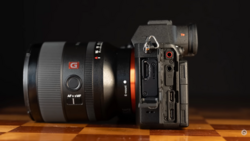
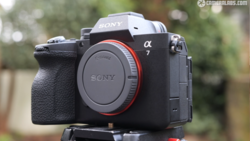
Coming to you from Lee Zavitz, this blunt video breaks down the Sony a7 V mirrorless camera in a way that feels closer to a working debrief than a lab report. Zavitz starts where this body is clearly aimed: photography that moves fast and doesn’t get in your way. He talks about the new partially stacked full frame sensor and what it changes in day-to-day shooting, especially when you lean on the electronic shutter. He also compares the feel of the camera’s responsiveness to higher-end bodies, including the first bursts and how quickly the camera seems to hit its limits. You get enough context to decide whether this is a real step up or just a nicer version of what you already own.
The most useful parts are the small operational details that don’t show up in headline lists. Zavitz walks through burst shooting behavior, buffer reality, and how that plays out when shooting action. He also points out a control approach borrowed from faster models, referencing bodies like the Sony a1 II and the Sony a9 III. There’s a practical note about file options too, including what you may not find in the menus and what he ended up using instead. If the current body is a Sony a7 IV, the upgrade question becomes less abstract and more about how you actually shoot on a deadline.
Key Specs
-
Effective resolution: 33 MP (7,008 x 4,672)
-
Sensor: 35.9 x 23.9 mm full frame partially stacked CMOS
-
Image stabilization: 5-axis sensor-shift
-
ISO (photo, native manual): 100 to 51,200 (extended 50 to 204,800)
-
ISO (video, native manual): 100 to 51,200 (extended 100 to 102,400)
-
Internal video: UHD 4K up to 120 fps, 10-bit options, H.264 and H.265 variants
-
Media slots: 1x CFexpress Type A / SDXC (UHS-II), 1x SD (UHS-II)
-
Ports: full-size HDMI output, 3.5 mm mic in, 3.5 mm headphone out, USB-C
-
Wireless: Wi-Fi 6, Bluetooth 5.3
-
Screen: 4-axis tilting 3.2" touchscreen LCD
-
Battery: NP-FZ100, approx. 630 shots
Where the video gets more pointed is when Zavitz shifts from “photo-first improvements” to the compromises that matter if video is half the workload. He describes a setting that can change how 4K 60p behaves, and why the default can surprise you. He also talks about higher-frame-rate shooting and how noise and crop can team up in ways that look fine on paper but feel different in real footage, comparing expectations set by cameras like the Sony a7S III and the Sony FX3. Then he moves into the part you’ll want to hear in his own words: the social-media pile-on, what criticism is fair, and what’s just performative. He pulls competing options into the conversation, including the Panasonic LUMIX S1II and the Canon EOS R6 Mark III. Check out the video above for the full rundown from Zavitz.




Join the Fstoppers community for free
-
Post comments and join in the discussions
-
Browse the site ad-free
-
Share your work and get featured in the community
-
Compete in the photo contests for fun and prizes
1 Comment
Cameras got to the point where we don't really need updates anymore, because they already cover every possible shooting situation.
The A7IV was already great and most people can live with 10 fps or one stop less dynamic range. If you can't get a decent picture with 11.5 stops of dynamic range, you won't get it with 12.5.
The things that matter today are ergonomics and usability.