
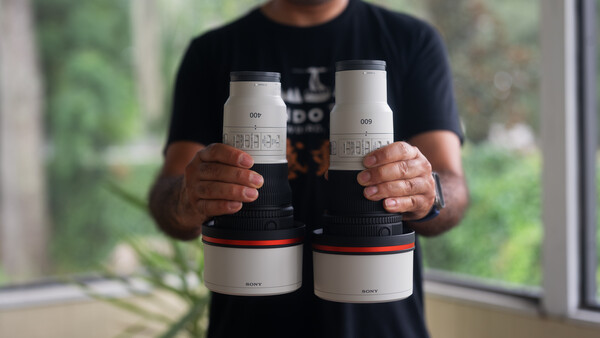
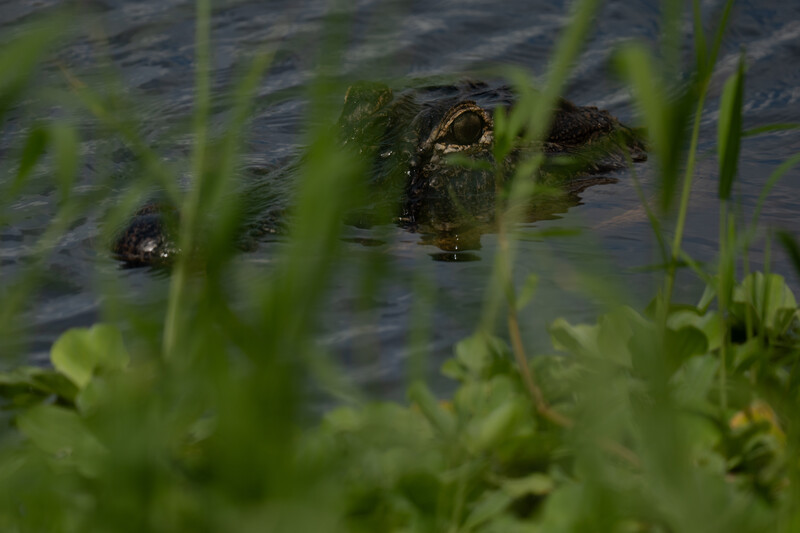
Shooting wildlife from the passenger seat of a car usually means wrestling with a massive lens that takes up half of the cab. I recently took a slow cruise through the Lake Apopka Wildlife Drive to put two new, unreleased Sony GM lenses to that very test.
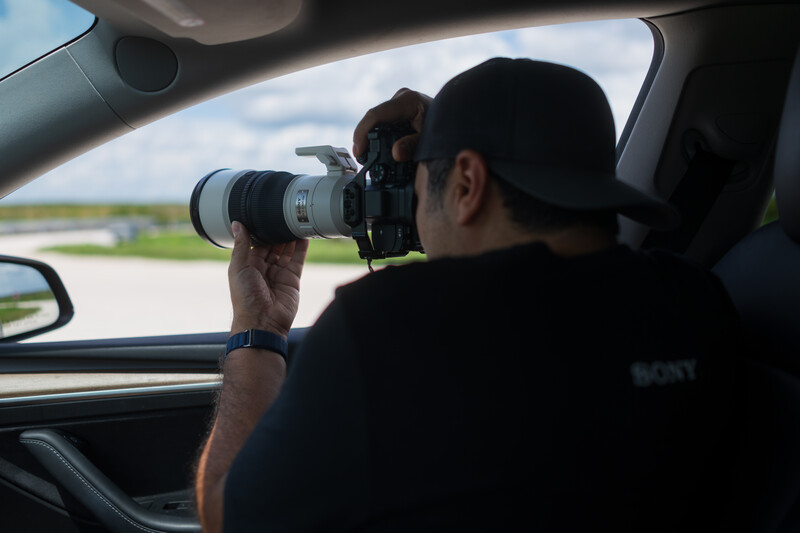
Lake Apopka Wildlife Drive is an amazing 11-mile loop packed with gators, herons, and ospreys, but you’re mostly confined to your vehicle. Usually, capturing wildlife in this scenario means dealing with the significantly greater weight of traditional Sony 400mm f/2.8 or 600mm f/4 primes.
Trying to pan a heavy lens inside a car is usually super frustrating, but that frustration is no longer an issue with the upcoming Sony FE 400mm f/4.5 GM OSS and FE 600mm f/6.3 GM OSS lenses. They offer a highly capable, lightweight alternative for serious shooters who want mobility and image quality over faster apertures.
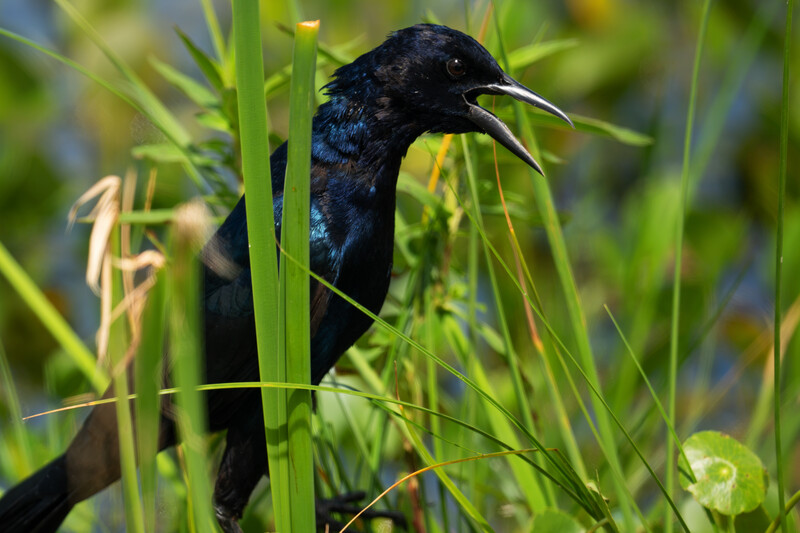
A Small Footprint for Better Efficiency
When you're pinned in the passenger seat of a car tracking an osprey in flight, it helps to have gear that's easy to manage. These two new Sony GM primes claim the title of being the world's lightest super-telephoto primes in their class.
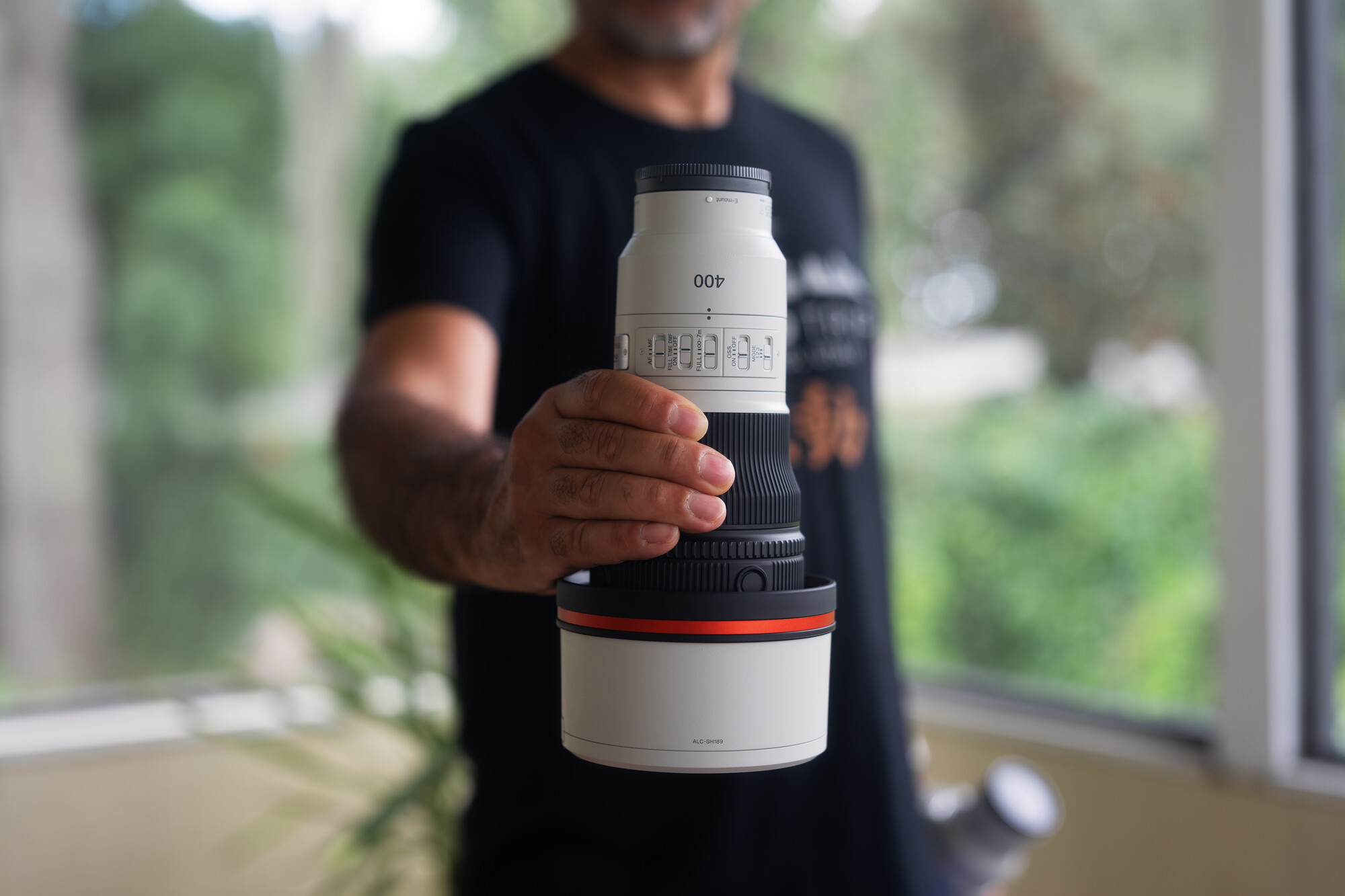
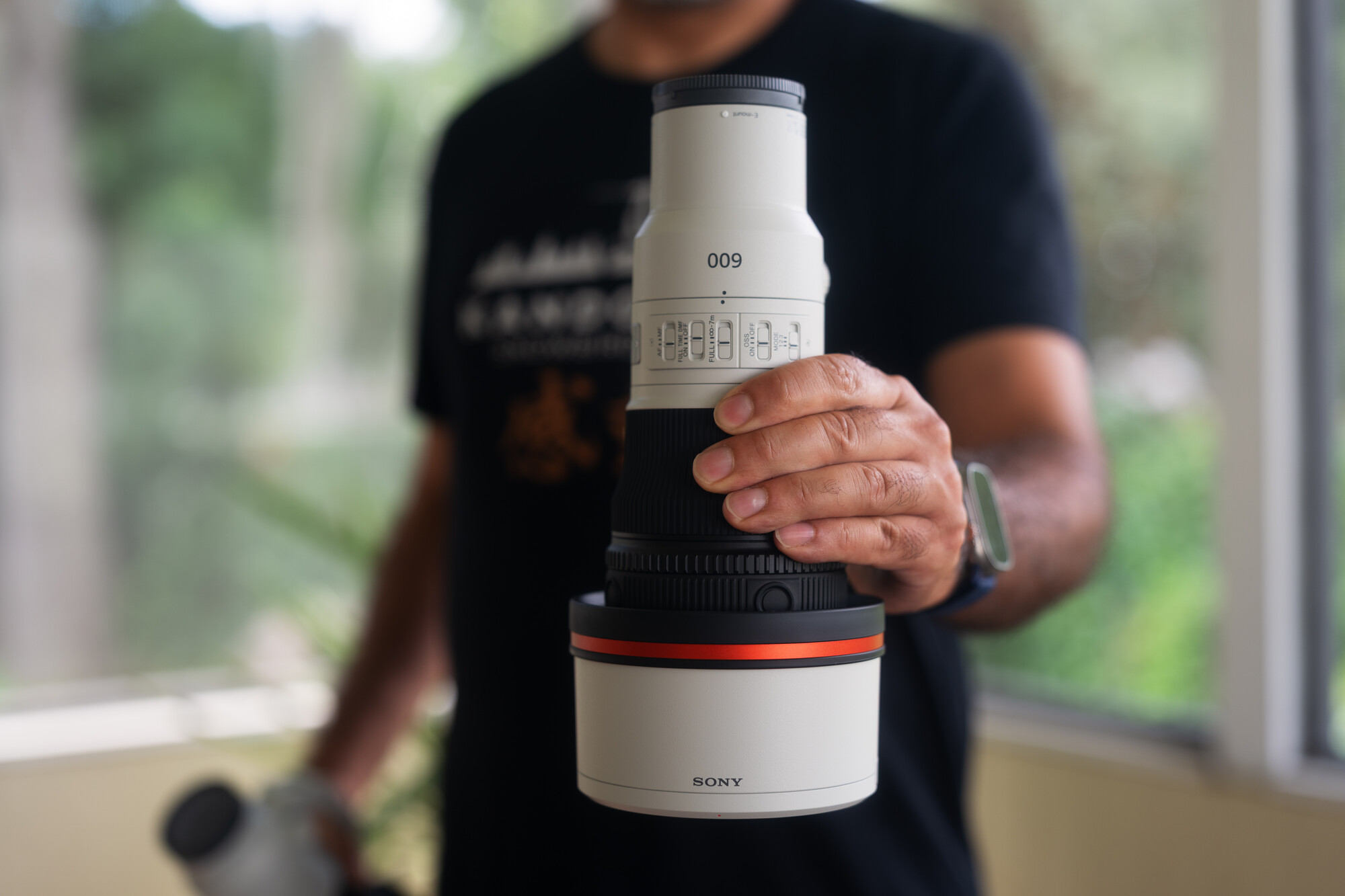
Incredibly, both lenses weigh under 1,000 grams. The 400mm f/4.5 comes in at approximately 994 g, while the 600mm f/6.3 sits right at 995 g, excluding the tripod foot. To make things easier, Sony used a new optical design with a single front lens element that shifts the center of gravity back toward the camera body. This improved handling makes it comfortable to shoot handheld out the window for extended periods.
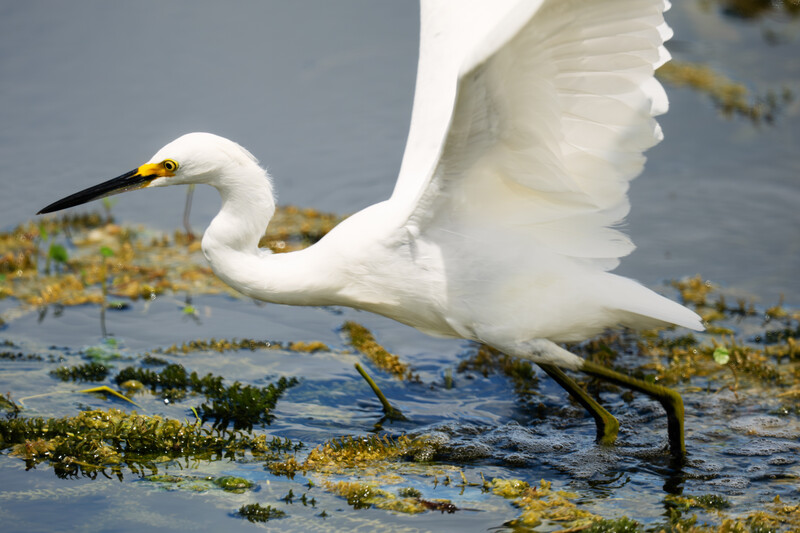
Precision Focus and Beautiful Rendering
Photographing sudden, irregular movements from birds and wildlife requires an autofocus system that locks on consistently. Both lenses are powered by two XD (extreme dynamic) Linear Motors, with one motor driving each focus group. Because they feature internal focusing, the physical dimensions of the lenses never change during shooting.
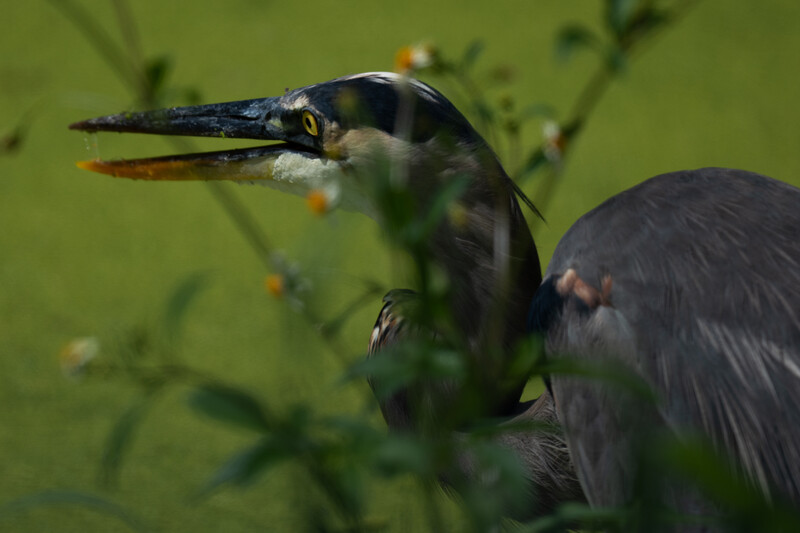
Optically, both lenses feature three Super ED elements and one ED element, effectively suppressing chromatic aberration for high resolution across the entire frame. When you do isolate a subject, the 11-blade circular aperture, combined with individual lens calibration, delivers smooth, refined G Master bokeh. Both lenses also feature Nano AR Coating II to suppress flare and ghosting when you're shooting backlit subjects across the water.
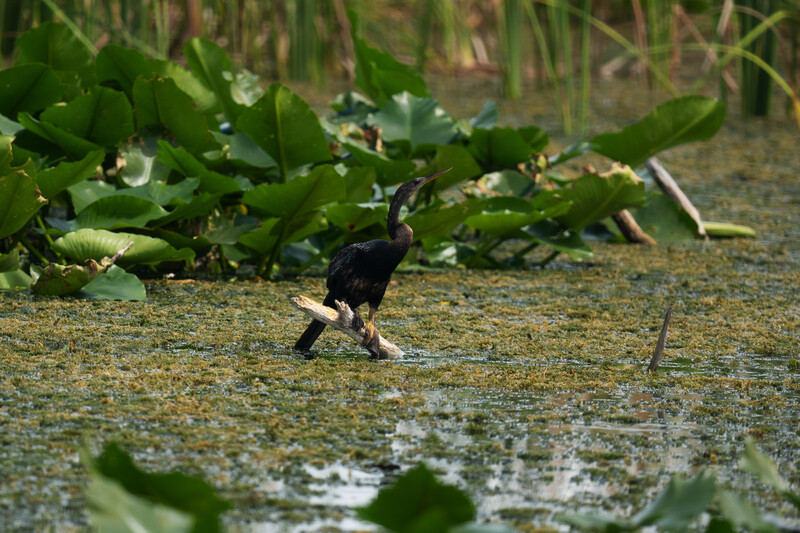
Stabilization and Extending Your Reach
Shooting handheld at these focal lengths requires reliable stabilization, and both lenses feature Optical SteadyShot with three selectable operating modes. I found Mode 3 to be especially useful for tracking and panning at the wildlife drive.
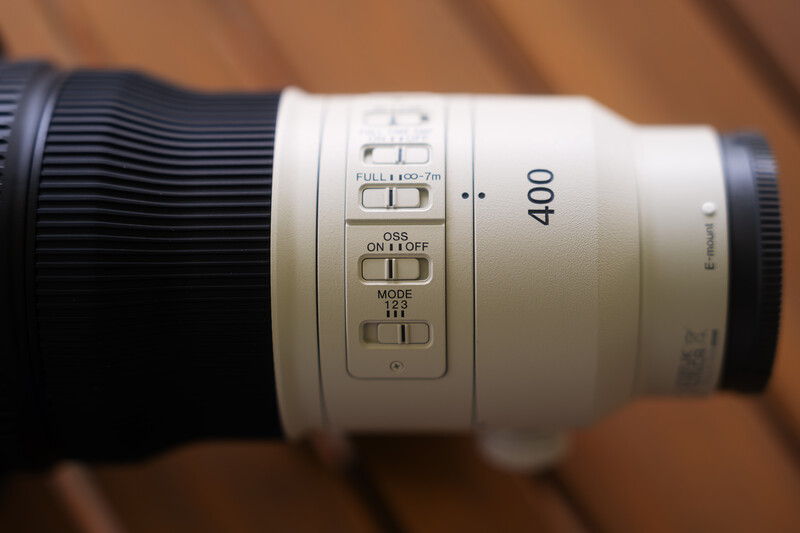
If you need even more reach to fill the frame with a distant heron, both primes are fully compatible with Sony's SEL14TC 1.4x and SEL20TC 2.0x teleconverters. Throwing a 2.0x teleconverter on the 600mm f/6.3 turns it into a 1200mm f/13 setup, while the 400mm f/4.5 becomes an 800mm f/9.
Final Thoughts
The Sony FE 400mm f/4.5 GM OSS and FE 600mm f/6.3 GM OSS are amazing lenses for hybrid shooters who want true super-telephoto reach without the traditional size and weight. Available in October 2026, the 400mm is expected to be priced around $2,699 to $2,899, while the 600mm will sit approximately between $3,699 and $3,899. Having the ability to comfortably handhold G Master glass from the front seat of a car makes these lenses a dream addition to any wildlife shooter's kit.
Are you leaning toward the 400mm for its slightly faster aperture, or the 600mm for maximum native reach? Share your thoughts on these lightweight primes in the comments below!





Join the Fstoppers community for free
-
Post comments and join in the discussions
-
Browse the site ad-free
-
Share your work and get featured in the community
-
Compete in the photo contests for fun and prizes
2 Comments
Compare to inside a car get real.... To compare is to compare to already lenses!
I started with the Sigma Canon 150-600mm f/5-6.3 dg OS HSM Contemporary in 2016 then and in 2019 Sony FE 200-600mm f/5.6-6.3 G OSS Lens for $2K both the same hook in price. The Sigma needed an adapter for Sony cameras that did not do well with Metadata and made longer. On Sony camera there was no problem with the adding a Teleconverter and being f/8 + like on a Canon/Nikon just some tracking at f/11. The Sony FE 200-600mm f/5.6-6.3 G OSS Lens no adapters and no problems with tracking at f/11 and above and at a great price of $2K I sold the Sigma for that and got the Sony win win!! And still around that price a WOW!
Now they want you to get 2 new lenses for $2k and $4k that the 200-600 has in it and yes the faster focus and all but Bokeh is all about focus area but Eye focus gets the best at distance.
One note no need for the 1.4X teleconverter due to APS-C mode is a 1.5X so save some. The 2x teleconverter in APS-C mode at 600mm will get you 1800mm very sharp moon that will fill the sensor fully but some advise just stay with the 600 to get some stars around to tell a better story.
Also a note what Sony user really worries about the f/# and seed or noise foe it is the editor that resizes, NR, etc..
Now for a shocker for the handiest lens to have on your camera/bag is the FE 24-240mm and in APS-C 36-360 almost 400mm just to have and a 2015 lens.
1. Sony FE 200-600mm f/5.6-6.3 G OSS Lens great tracking
2. Sigma Canon 150-600mm f/5-6.3 dg OS HSM Contemporary
3. Sony FE 200-600mm f/5.6-6.3 G OSS Lens
Thanks for taking the time to write all that out. It's clear you've put a lot of miles on your long glass, and it sounds like your setup works well for you.
On the car, though: shooting from a vehicle isn't a gimmick. It's how a huge amount of wildlife photography actually gets done, since the car works as a blind and animals tolerate it far better than someone on foot. It's also exactly the scenario these lenses were designed for. At under 1 kg each, with the balance pulled back toward the body, I could hold them steady out a window for long stretches without fatigue. That's the real-world use case Sony built them around, so that's where I tested them.
A couple of technical notes. APS-C crop mode gives you the framing of a 1.5x converter, but it does it by discarding pixels. On the A7 V I shot with, crop mode drops you from about 33MP to roughly 14MP, while a teleconverter keeps the full sensor resolution. So the "1800mm" figure is an equivalent field of view, not actual reach with full detail behind it. And editing software can clean up a lot of noise, but a faster aperture still gives you more shutter speed in-camera, which matters with birds at dawn and dusk, when no amount of noise reduction will fix motion blur.
This was a hands-on first look focused on what these lenses are like to use in the field, and not a comparison to the 200-600, which isn't in the same class as these lenses. GM vs G, and prime vs zoom.