Open gate recording, in-body stabilization, and anamorphic desqueeze have become the most requested features on compact cinema cameras, and the Sony FX5 is the first Sony to offer all three in one body. Whether those features can run at the same time affects how you rig, monitor, and shoot, especially if you work handheld with anamorphic glass.
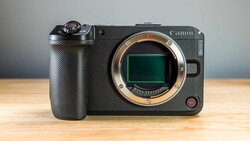
Anthony Gugliotta spent a week with the Sony FX5 and measured it against the Canon EOS C50, which has been his main camera for the past year. His first surprise was that open gate only works in Cine EI mode, and only when you record raw. Cine EI locks the camera to one of its three base ISOs (800, 4,000, or 12,800), and any higher number you dial in only brightens the monitor view without changing what gets written to the card. On the C50, he can shoot open gate in a compressed H.265 codec. On the FX5, open gate means raw, which means bigger files every time you use it.
Sony gives you two other ISO modes, and choosing between them depends on how you work. Cine EI Quick rolls over to the next base ISO as you climb past each threshold. Flexible ISO applies real gain as you change the setting, which is much closer to how Canon handles it. On a larger production, a hard-locked base ISO protects the footage when someone bumps a dial between takes. If you shoot alone and move fast, setting 1,250 and getting a file at that exposure saves a step in the edit, where Cine EI would leave you pushing 800 footage up by two-thirds of a stop yourself.
Open gate used to be reserved for high-end cinema bodies like the Sony Venice. Over the past couple of years, it has spread into far smaller and cheaper cameras: the C50, the Panasonic Lumix S1II, the Panasonic Lumix GH7, and soon the Nikon ZR, which Nikon says will gain open gate and anamorphic desqueeze through firmware. As manufacturers pack more modes into compact bodies, those modes share the same processor, heat budget, and sensor readout, so turning one on can change what the others are allowed to do. Treat your shooting setup as a stack rather than a list. Write down the exact combination you'd use on a typical day, such as codec, aspect ratio, stabilization, autofocus, and monitoring, and test that full combination on a rental before you buy.
Turning on anamorphic desqueeze switches off both the FX5's sensor-shift stabilization and its digital stabilization, and it also disables autofocus through the Tilta autofocus PL adapter he was testing. The C50 keeps digital stabilization and autofocus with desqueeze on, so the three features that drew Gugliotta to the FX5 don't actually work together. On the raw side, he runs the numbers carefully. The most compressed of Sony's new raw options writes about 429 Mb/s at 5K open gate, which works out to roughly 1 bit of data per pixel. That's less data per pixel than any of the C50's raw options, even after accounting for the Canon's larger 7K sensor. His own clips from a trip to Vancouver Island came in around 435 Mb/s, about three times the 150 Mb/s you'd get from typical 4K H.265. He found that the most compressed option was more than enough for his work. The FX5 can also record raw below full sensor resolution, while the C50 records raw only at its full 7K.
Gugliotta's take on the FX5's 16-bit raw files is in the video above.



Join the Fstoppers community for free
-
Post comments and join in the discussions
-
Browse the site ad-free
-
Share your work and get featured in the community
-
Compete in the photo contests for fun and prizes
No comments yet