
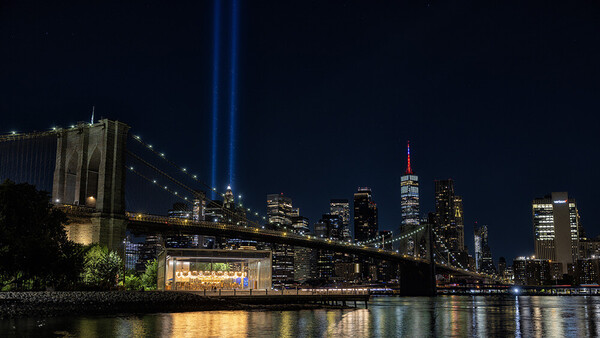
Whenever I've photographed weddings, world events, landscapes, or anything else, it's not been uncommon for other photographers to come up and start a chat about gear. And as someone who's worked for a major camera company and taught photography for almost two decades, I've always been happy to engage in talks about megapixels, autofocus, and dynamic range.
But then the other day, when photographing the 9/11 Tribute in Light in New York City, it happened, and it hit me: I don't really think about this stuff anymore. I haven't for a long time.
The photo above from just this past Sept. 11 (well, 12th by the time this frame was made) was shot with a Canon EOS R5 and the RF 24-70mm f/2.8 L IS USM Lens, a camera body that was released in 2020 and a lens that was released in 2019. Not old by any stretch of the imagination, but certainly, in digital camera years, six or seven years can be considered long in the tooth.
While I had the camera on a tripod, taking in the gravity of the tribute and the 25 years since the 9/11 terrorist attacks on the city, a man with a Sony a7R V walked up to me and started asking me what I was shooting with. When I answered with Canon, he started talking to me about how much better Sony is at most things. There was some talk of sensors, global shutters, autofocus, etc. in there. All the while, I really wanted to get back to my photography, as there were several times in the night when the lights would go out for 20 minutes and I'd have to wait for my next chance to come back. I was relieved when he walked to another section of Brooklyn Bridge Park that he hoped would be better than where we were.
It got me thinking, though. I've used every Canon R-system camera from the EOS R50 all the way through the R3, and while of course there are differences in controls, weather sealing, etc., ultimately, the two most fundamentally important things, autofocus and image quality, are fundamentally the same. Sure, the R3 definitely focuses faster, as its $4,400 price would suggest, but I haven't exactly been missing when I shoot fast action with my R5/R6 II either. I couldn't recall the megapixels on each of these cameras either, but I know that all of them are enough.
Ten years ago, I made pictures of the same Tribute with much "lesser" gear:
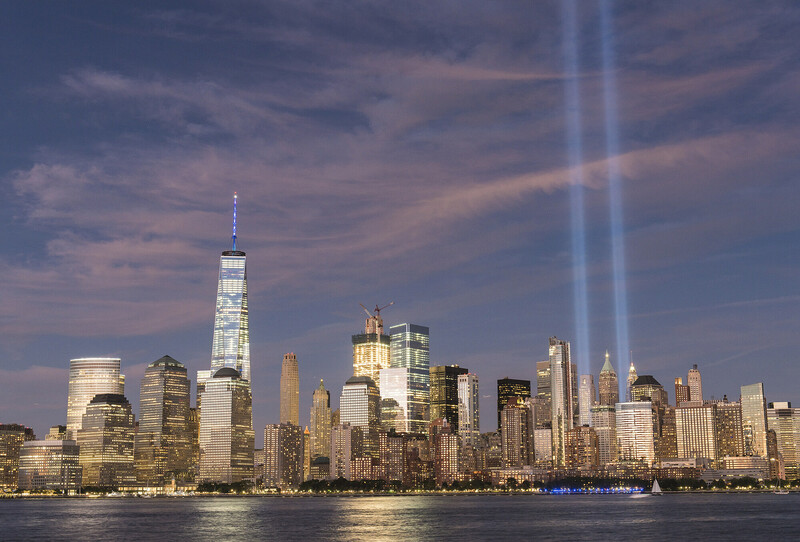
I can't say that, to my eye, this picture is better or worse than what I got this year. And while autofocus is certainly better in the mirrorless age, the D750 and other cameras of the day ("the day" being 2014, when the D750 was released) were certainly better than even the high-end professional cameras of a decade before.
But for the sake of argument, here's another Tribute in Light, photographed five years earlier in 2011 with a Canon EOS-1D Mark IV, a 2009 release with an APS-H (1.3x crop) sensor and the Canon EF 70-200mm f/2.8L IS II USM lens:
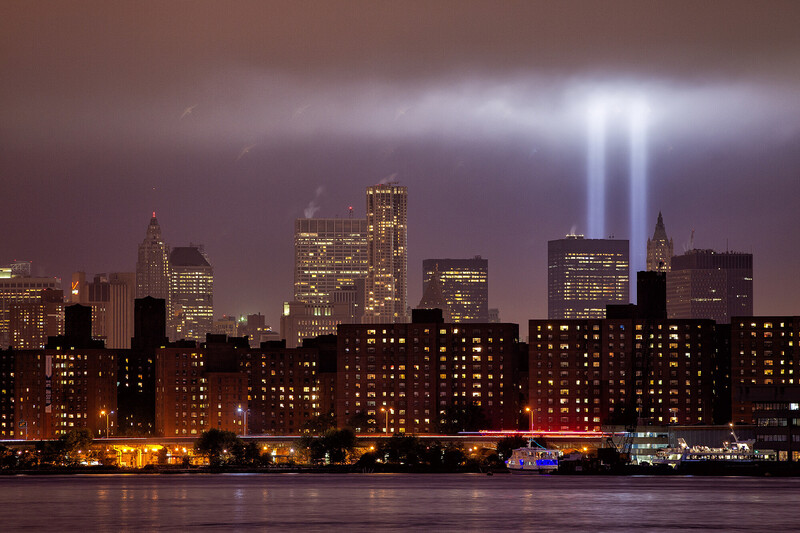
While I can certainly see that over the years my skill level increased, the quality of the camera has more or less stayed about the same, give or take some megapixels.
Which brings me back to my original point. While specialized photographers may need the most cutting-edge, boundary-pushing gear, most generalist photographers, myself included, could do a lot better shooting with what they've got rather than chasing megapixels. There hasn't been a bad camera made in the better part of a decade, and more important than debating gear is to shoot with it.
Is that a hot take? Maybe, but if you think so, or don't, leave your thoughts in the comments below.





Join the Fstoppers community for free
-
Post comments and join in the discussions
-
Browse the site ad-free
-
Share your work and get featured in the community
-
Compete in the photo contests for fun and prizes
9 Comments
Totally agree with your points, in the past 5+ years, we are now way past the point where any camera system has fundamental issues in any of the metrics you have called out.
The only negative aspect of camera ecosystems that is left, and is fundamental, is the closed versus open ecosystems for lenses and accessories.
This is the one aspect of todays camera ecosystems in which Canon and Nikon fail miserably, and one in which they persist to push this boomer era business model, which is something contemporary photographers do not need to accept, when considering that the alternatives today are of equal quality, and that flexibility and choice are actually also primary when selecting a system to join.
It should be clear to all, that being locked into one companies lenses, or bodies today is just a bad deal for any consumer.
What we need is USB levels of flexibility, so that the photo market as a whole grows through real competition in features, designs, and principally prices. something like the L-Mount or MFT but even more flexible. those mounts show the potential of multi manufacturer open markets but need more backbone to push it all forward.
If starting from scratch, it is hard to select these 2 companies offerings when you recognize them for what they are. Sure their cameras have been synonymous with professional photography for the past 60years but there is absolutely no reason today to get locked into their nonsense.
Hopefully they see the light before DJI (an LMount and MFT member) or other Chinese companies GoPro/Blackberry/Nokia’s them —i.e. passes them in the market because of their hubris…. (as that competition is coming in hot, fast and without care for “tradition” ha ha ha)
". . . boomer era . . ." I resemble that remark. FYI, third party lenses were available and pushed just as hard in the "boomer era" as today. You can verify this by leafing through old photography magazines. The main difference is there were no Chinese lenses to back back then, but plenty of Japaneses ones, East German (cheaper than West German), and of course the occasional Russian lens.
Then and now I only use Nikkor lenses (plus a couple of Series E) on my Nikon bodies. That is my preference, boomer or not.
This is a strong point - I do hate how-third party lenses are limited to the APS-C sensor in Canon, and that many companies are filing lawsuits to stop third-party lenses. That said, as interesting an idea and concept L-Mount and MFT are, whenever I'm at the sidelines of any sporting event or wedding, or something else, it's always Canon/Sony/Nikon I'm seeing, and so there just might be too much inertia to change things. I say this as a longtime MFT shooter that loved the small form-factor and competitively priced lenses.
Interestingly I was shooting next to some birders in China recently (with my OM1 and 300/4 w. and w/o the x1.4) and they asked many questions regarding the kit. A few weeks later I received a message from one of them (using a new Canon body and 600mm), he had swapped his kit for the OM1ii and 150-400.
Whilst pro sports shooters at major events can use the top 'loaner' gear from OEMs there are many wedding togs using Sigma/Tamron lenses. And Viltrox will for sure be making inroads with their superb Lab and Pro lenses. I mainly use just 3 Viltrox primes on my Sonys now, having sold off older Sony lenses for brand new Viltrox and made a profit !
Nikon now licence Viltrox prime lenses - and they are amazingly good. Even better when you check the price tag and it's ca. ⅓ of an OEM. I have three and they form the basis of my 'updated' Sony kit.
It goes to show that if the image is strong, it doesn't matter what camera was used to make it.
And it's much easier to talk about technical things, like number of mega pixels, than images, what makes one work or how one could be improved etc.. Sure, newer cameras will be better e.g. with noise, but much of that can be taken care in post processing.
I agree, and why shouldn't I? I shoot Nikon Df, a camera released in 2013. I have four AF-D lenses for them, all 1990s lenses. But most of the time I prefer to use much older pre-AI, AI and AiS lenses. Why? 1) I enjoy their superb metal & glass build quality, 2) I like the tactile feel of handling them, 3) I like the control manual focus gives me, and last but not least, I like the images they produce.
Interesting conversation on Camera Technology – thank you Wasim. When I am asked about such things usually after giving a Talk (e.g., what camera should I buy; how many MP; what lens is better ...etc.) – I first speak about the type of photography one is most engaged with; landscape, portraiture, nature, whatever, as there are so many older cameras and associated lenses that are still capable of providing satisfactory (or better) images.
For example, up until very recently, I was still using the amazing breakthrough tech wrapped in the 2009 5D Mark II. Why? For the work I do – which does not include sports related photography – autofocus is useless for me. I argue, for most other photography genres (outside of sports, and perhaps chasing your kids around the yard in quest of a good composition) manual focus is most efficient. Also, the 5D Mark II's 23MP sensor has always been enough for me to compose and register outstanding visual imagery. Only recently did I inherit my wife's 5D Mark III (She moved up to a Mark IV) as a lot of my work now involves scenes often shrouded in shadow – the Mark III's ability to register shadows with very little or no noise better than the Mark II is what now matters most to me, while the Mark III's resolution is still remarkable!
So, with all the advancements in camera and lens tech, I still use "old" tech, as it is referred to, with as much success (or better) than others using the latest/greatest. Thank you.
Lance A. Lewin - visualizingart.com
WOW someone else has woken to all cameras can give the same image (somewhat) depending on only function that are really needed for a particular image.
I was a Canon T2i user when I went from point and shoots in the mid 2000's to a digital camera with changeable lenses from 2009 to 2014 then to the new mirrorless Sony A7SM1 chose it mainly for the Bracketing of 5 at +/- 3EV, why that you may ask is it was the HDR ERA type of editing and I had been using the Promote Control to experiment with different selections also the biggest hook for me was Capture ONE for $20 where I had been using the Canon editor that went away in 2013 to a newer model T4i and even then Adobe Lr and PS each cost $800 + and for each full update. But not till January 2015 did I read about the A7SM1 was the best for Astro Milky Way or night photography with no idea of MW's not till finding PhotoPills info in a Magazine and then their web site did I know how. Basically it is all about discovery of new photography genres that back for a need for a camera that will capture that new genre. My only failure was not waiting just a few months for the A7SM2 with IBIS. The nice thing was Sony had let adapter companies now spec's and my old Film Canon Ftb FD lenses could be used till Sony came out with more lenses, yes unchipped but a on camera app allowed for making your own LC's. I still had to carry a tripod around!!!!
In the article the author states he could not wait to get back to processing the images. What few even those who use it most is the fact that a new technology in cameras started being added to cameras "ISO-invariant" around 2015 with the Sony A7RM3 but other makers also "Dual Native ISO" all for NR in camera, many have no idea they are using in the software they are using to edit and many never check for these in Spic's.
Not many photographers go back to the very old images of the point and shoot days and reedit with the new editing software like Lrc comes out almost weekly with new things. Also editors even do non cartoon looking results of HDR's today. I have found the new look of a reedit awesome like a new look as though just captured. With new NR and with LC 's for many unchipped lenses you now get clean sharp images. We now even crop images and after upsize to larger images for those bigger prints.
I do not know about other makers but Sony A7RV and A7SM3 get updates that are letting one do Focus stacking even hand held as well a doing a macro, yes a reason to go newer. I will point out that the A7RM2 will do bracketing 3 at +/- 2EV hand held found with just an experiment while on a tour of Antelope Canyon and forgot my tripod plate for my camera. We play and learn.
1. my first MW image but edited with newer SW
2. 2015 A7SM1 image that was bracketed 3 at +/- 1EV that resulted in NR turned off when longer than 1 sec. but also Hot and Dead pixels and also a unchipped lens, Yes Lrc years latter brought back like new image in the future.
3. A7RM2 hand held Bracketed 3 at +/- 2 EV no tripod.
All can be done today with most other cameras and SW, mirrorless has made newer options few even know about Spec.'s.