Shedding a few pounds of camera gear changes how far you actually hike, and it decides which moments you catch and which ones you miss. Bird photography rewards patience and mobility in equal measure, so the size and feel of the camera in your hand can matter as much as its sensor.
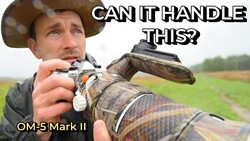
Across two months in forests, grasslands, wetlands, and even a backyard blind, Todd DeWald put the OM System OM-5 Mark II through real fieldwork instead of a spec sheet. Coming from the OM-1 Mark II, the first thing DeWald noticed was the feeling of a camera he could carry with three fingers. A pouring, wind-driven May morning at the grasslands gave him an unplanned weather-sealing test, and the camera worked fine even after his hands got too cold to continue. On that outing he found a pair of eastern whip-poor-wills hunkered on a cut stump, then reached for the computational modes through the quick-access button to grab high-res shots and focus-stacked frames.
The biggest adjustment came at the autofocus. This camera lacks the Bird Detect AF that DeWald leaned on with the OM-1 Mark II, so he switched to placing the target box himself, working mostly with the single and small target areas to pinpoint focus through grass and vegetation. He expected to hate the change and found the opposite: no guessing about whether tracking would grab the right thing, just a box over the subject and consistent focus. Battery life also beat his expectations, with a single battery running two to four hours of a morning session that included heavy video and Pro Capture. Down at the wetlands, he handheld a common grackle family at the nest and used Pro Capture to nail an eastern kingbird's takeoffs and landings, all without a tripod tying him down. He paired the body with the OM System 40-150mm f/4 to photograph a field sparrow family in early sunrise light, moving through wildflowers in a way a heavier rig would have made harder.
Not everything worked in his favor. DeWald points to the lack of a rear joystick as his biggest frustration, since without Bird Detect he had to constantly reposition the target box, and doing that with the keypad on such a small grip felt slow and awkward. His workaround was to keep the box centered, focus, then recompose, which falls apart on moving subjects. He also wanted at least 60p video; the camera tops out at 4K 30p, which he found good but limiting given everything else the body can do. Even with those complaints, he estimated he captured around 90 percent of what he wanted over his time with it.
The Micro Four Thirds pitch here is really about reach and load. A smaller sensor and compact lenses let you carry a longer effective focal length for less weight, which is why birders keep circling back to this system. That trade shows up most clearly in the kind of shooting DeWald describes: long hikes, all-day sessions, and multiple pieces of gear like trail cameras and drones already weighing you down. If you're a birder with binoculars who now wants photos, someone retired and traveling light, or a hiker who wants one camera and a couple of lenses to cover wildlife, landscapes, and night sky, this body fits the way you actually move. Understanding that mobility-versus-outright-speed balance helps you decide where a camera like this earns its place, whether as a primary tool or, as DeWald plans, a capable backup alongside a faster body for intense action.
That backup role is where DeWald landed personally, keeping the OM-1 Mark II for demanding wildlife while using the OM-5 Mark II for vlogging with human detect and for having a second lens ready during busy activity. He liked it enough to ask OM System to extend his loan, and he says he didn't really miss his main camera while shooting it.
Watch the full field test above to see the footage DeWald came home with and hear where the OM-5 Mark II earned its keep.
Join the Fstoppers community for free
-
Post comments and join in the discussions
-
Browse the site ad-free
-
Share your work and get featured in the community
-
Compete in the photo contests for fun and prizes
No comments yet