
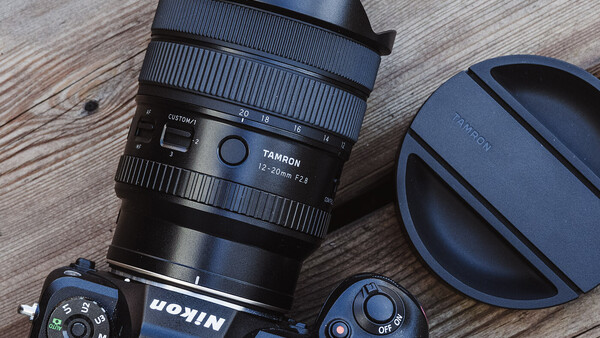
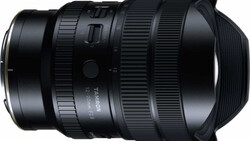
I’ve been playing with Tamron’s new ultra-wide 12-20mm zoom for a couple of months now. When I first peeled away the plastic wrap and held it, I thought, “Wow, very compact and light.” My next thought was that the glossy finish looked surprisingly smudged straight out of the box. I checked the marketing materials and found that this is part of Tamron’s new “Toned Profile Next” design language. It certainly gives the lens a distinctive appearance, although I’m not convinced it’s an improvement.
If you’re a Sony or Nikon owner who photographs interiors, architecture, landscapes, and astro, your choice for a fast ultra-wide lens has been limited. For Sony shooters, there’s the 847 g Sony FE 12-24mm f/2.8 GM Lens that will set you back $3,248. For Nikon shooters, you have the 650 g Nikon NIKKOR Z 14-24mm f/2.8 S coming in at $2,397.
Tamron has now entered the same territory with an offering that’s even wider, lighter, and cheaper. But does that make it the better option?
The new 12-20mm f/2.8 for Sony shooters weighs 570 g and will cost $1,699. For Nikon shooters, the lens weighs 585 g and will cost $1,799.
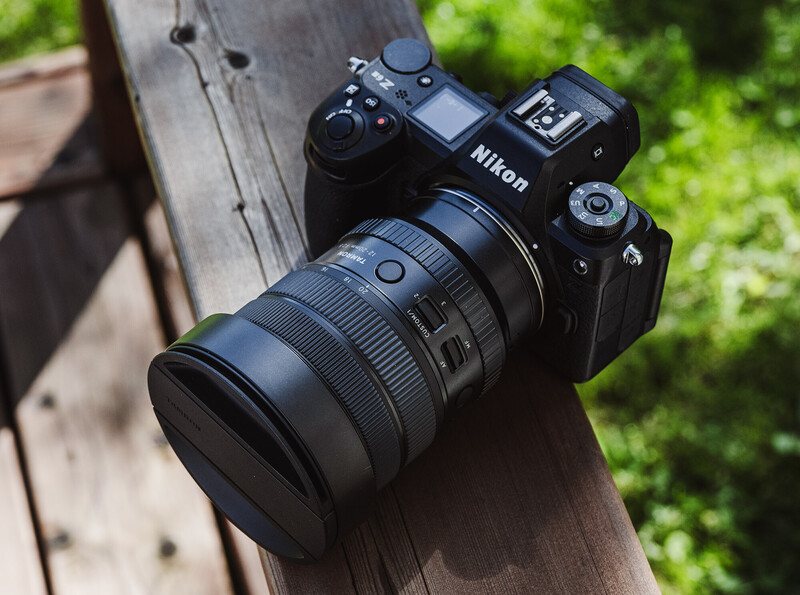
This new ultra-wide zoom lens is one of the smallest and lightest in its class, which will please landscape photographers who lug heavy backpacks around. With an aperture that opens up to f/2.8, this will appeal to astro photographers. I don’t do astronomy, so I can’t comment; but for landscape photography, I really enjoyed using this lens. A lot.
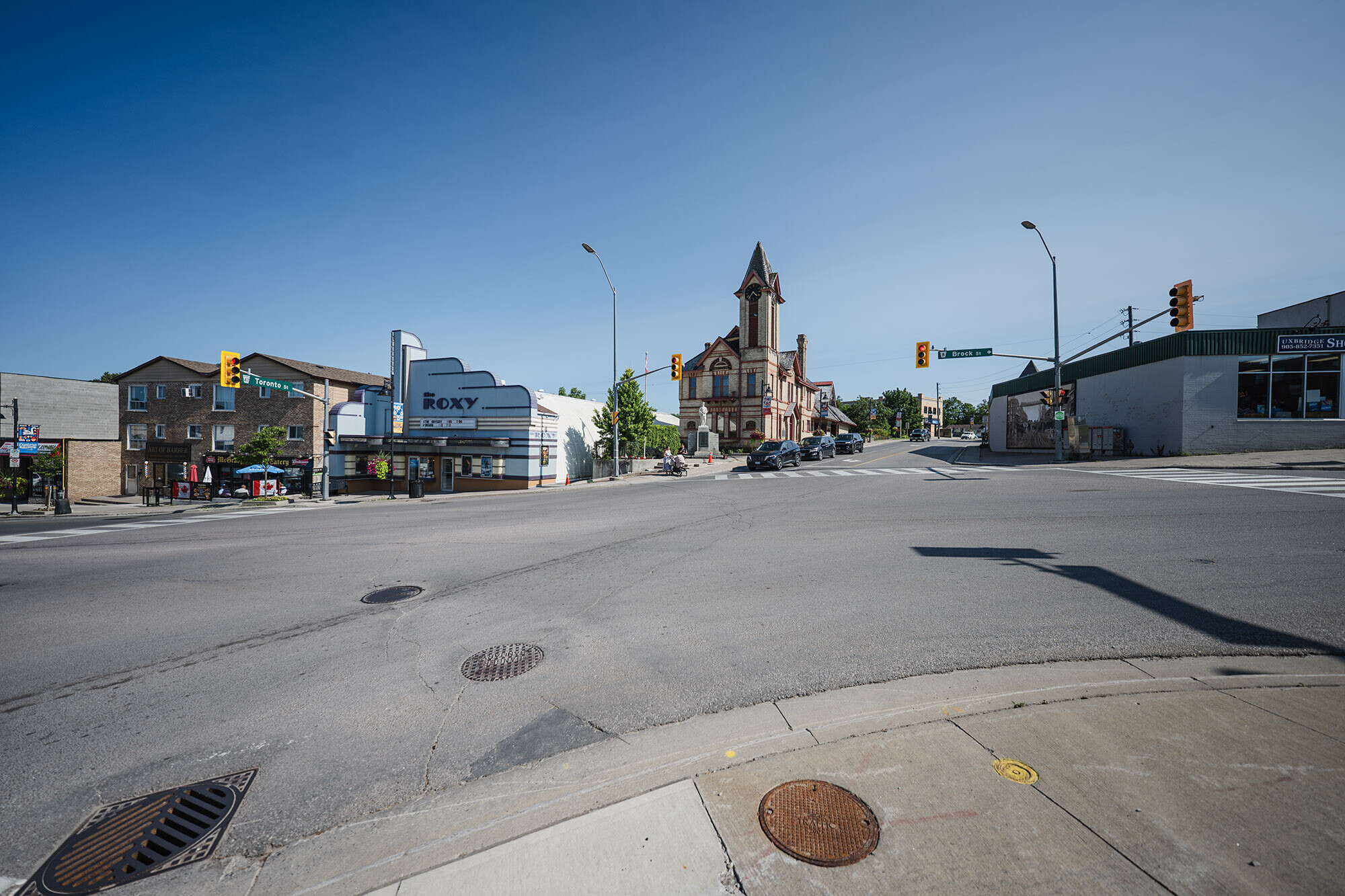
Tamron's marketing materials inform us the design suppresses peripheral blurring and color fringing while correcting sagittal coma flare—a common challenge in astro photography. I didn't test the coma, but everything else I did test lived up to the claims. High sharpness from the center to the extreme edges of the frame is achieved by incorporating an XGM (eXpanded Glass Molded Aspherical) lens element, three GM (Glass Molded Aspherical) lens elements, and multiple special lens elements. Whatever is happening inside, it works—images are incredibly sharp. I was impressed.
The lens features VXD (Voice-coil eXtreme-torque Drive), a high-speed, precise autofocus mechanism. The name may be a mouthful, but it works very well. The minimum focus distance of 7.1” (0.18 m) at the 12mm wide end offers impressive close-up performance for creative versatility. I found this really useful, particularly when shooting at 12mm and being able to include a foreground element so close.




Key Features and Specs
- Focal Length: 12-20mm
- Maximum Aperture: f/2.8
- Minimum Aperture: f/16
- Optical Construction: 17 elements in 12 groups
- Minimum Focus Distance: 7.1” / 0.18 m at 12mm, 11.1” / 0.28 m at 20mm
- Filter Size: Integrated rear filter holder
- Length: 4.7” / 119.3 mm (Sony E-mount), 4.8” / 121.3 mm (Nikon Z-mount)
- Weight: 570 g (Sony E-mount), 585 g (Nikon Z-mount)
- Aperture Blades: 12
First Impressions—There’s a Significant Limitation
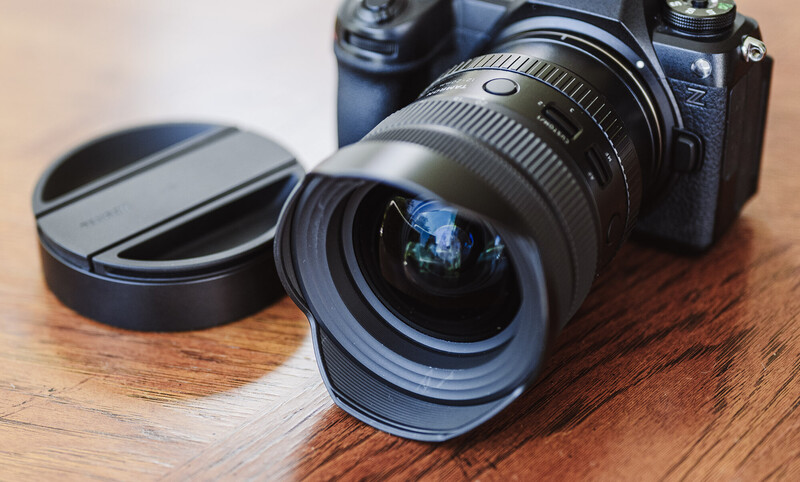
This lens is marketed for architectural and interior photographers, but you can’t attach a conventional filter to the front. I’ve shot architecture and interiors of buildings and cars commercially, and a polarizing filter can be essential for controlling reflections. I find it surprising that this lens wasn’t designed to accommodate a circular polarizer, particularly given how much attention has gone into other aspects of the design.
There is a rear filter holder, so photographers can use cut-to-size sheet filters behind the lens. That works for some types of filtration, but it is less convenient than a conventional front-mounted system and, crucially for my work, it doesn’t solve the circular polarizer problem.
Nikon’s NIKKOR Z 14-24mm f/2.8 S supports front screw-on filters, which makes it a more practical choice for Nikon shooters who regularly rely on a circular polarizer.
Maybe this isn’t the best option for interior and architectural photographers who depend on front-mounted filters, but for astro and landscape photographers, the extra width and smaller, lighter form factor are huge bonuses.
The lens has an integrated petal-shaped lens hood that is going to have a bit of a challenge protecting the bulbous front element from getting scratched when the lens cap is off. Now, about that lens cap—it looks rather nice, although it’s an inch thick and 3.70 inches in diameter. Usually I take a lens cap off and pop it in my jeans pocket, but doing that with something this large is awkward and uncomfortable.

















Conclusion
Once I got past my reservations about the glossy finish, I realized I’d grown to really like this lens. Just not for every one of the uses it is marketed for.
The size and weight mean it was a perfect lens for my Nikon Z6III. I found the setup relatively small and light enough to walk around with as an EDC. I took it for walks, and it was fun to use because having this wide focal range isn't something I would normally consider with the larger pro ultra-wide zooms available. They feel like specialist lenses; this lens doesn't. I could certainly see myself using it for travel and urban photography, and even street photography.
I’m going to rate this lens a 7/10. If the ability to add a CPL is addressed, add another 2.5 points. And switch to a more sophisticated matte finish, add another half point. Yes, those two things would make this lens a 10/10! It has so much promise.



Join the Fstoppers community for free
-
Post comments and join in the discussions
-
Browse the site ad-free
-
Share your work and get featured in the community
-
Compete in the photo contests for fun and prizes
No comments yet