Anamorphic lenses have moved from niche cinema tools to real options you can mount on a mirrorless camera right now. If you shoot video and want a wider frame, stronger background blur, and a different kind of character, this is a choice that changes how your footage feels.
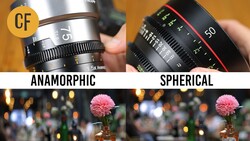
Coming to you from Christopher Frost, this practical video breaks down what sets anamorphic lenses apart, using the SIRUI 35mm T2.9 1.6x Anamorphic Lens as a working example. Frost shows how a 1.6x squeeze factor affects field of view, and the difference is not subtle. A 35mm anamorphic lens can give you a horizontal view close to what a 20mm spherical lens captures, while keeping the vertical field tighter. That changes composition in a way you notice right away. You get width without the full distortion of an ultra-wide angle. If you care about how your frame uses space, this alone is worth understanding.
He also compares depth of field in a way that might surprise you. Even at T2.9, the SIRUI’s backgrounds look nearly as blurred as a 20mm lens shot at f/1.8. The exposure does not magically get brighter, but the rendering of out-of-focus areas feels stronger and more pronounced. That gives faces and foreground subjects more separation without stepping back or switching to a longer focal length. On paper, the numbers seem similar. In footage, they look different enough to rethink how you light and block a scene.
The video goes further into the traits people either chase or avoid. Anamorphic lenses often have softer corners and more distortion. With still images, that would be a flaw. In motion, it creates a subtle tunnel toward the center of the frame. Frost points out that you can stop down to f/11 to tighten up sharpness if needed, though low light will limit that choice. Then there is flare. Many anamorphic lenses produce long, horizontal streaks when bright light hits the glass. Some versions offer neutral flares, others lean blue. You have likely seen this look in movies for decades without thinking about the lens behind it. The oval-shaped bokeh is another tell. Specular highlights stretch vertically once the image is de-squeezed, and night scenes take on a tone that standard lenses rarely mimic.
Frost does not ignore the tradeoffs. Spherical lenses are usually sharper across the frame, transmit more light, offer autofocus, and cost less. They are smaller and easier to manage on gimbals. You also get more choices in focal lengths and mounts. Anamorphic lenses focus first on look, and that comes with weight, complexity, and sometimes manual focus. That said, newer options are shrinking in size, and even autofocus anamorphic lenses now exist. The market has expanded, and you no longer need a massive cinema rig to try this style.
If you are weighing a clean, natural image against something with more personality baked in, this comparison lays it out clearly and visually without hype. Check out the video above for the full rundown from Frost.




Join the Fstoppers community for free
-
Post comments and join in the discussions
-
Browse the site ad-free
-
Share your work and get featured in the community
-
Compete in the photo contests for fun and prizes
No comments yet