Shooting wide angle looks easy until your photos come back flat, distorted, or full of tripod legs. The 16-35mm range is one of the most popular focal lengths in landscape photography, and it's also one of the most commonly misused.
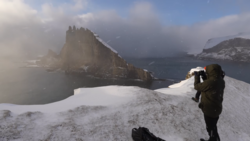
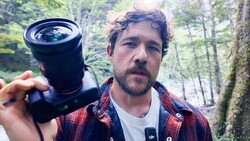
Coming to you from Mads Peter Iversen, this practical video walks through nine specific mistakes you're likely making with a wide angle zoom, and how to fix each one. Iversen opens with something that catches a lot of people off guard: stepping back to fit more into the frame almost always produces a worse photo. At 16mm, even objects a few meters away shrink dramatically. Getting the camera down low, close to the foreground, whether that's heather, water, or ice, does far more for the image than trying to capture the whole scene from eye level. This lens rewards proximity, not distance.
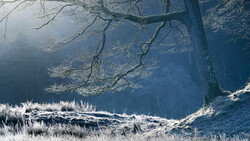
He also covers the polarizing filter problem, which is something many people don't anticipate until they see the results. Because a 16-35mm lens sees roughly 107 degrees of sky at the wide end, a polarizer won't affect the entire sky evenly. You'll end up with a dark blotch across the middle while the edges stay light. Iversen's fixes are straightforward: either zoom in to isolate the polarized portion of the sky, which compromises your composition, or correct the uneven tones in post. Neither is perfect, but both are workable.
The video also gets into dead space, specifically the midground problem. When too much of the middle of the frame lacks visual interest, it creates a zone that doesn't lead the eye anywhere. The fix is the same as for most wide angle issues: get closer to the foreground. As you close the distance between the lens and the nearest subject, the midground compresses within the frame and stops competing for attention. Iversen demonstrates this clearly with side-by-side examples, and the difference is significant. He also covers keystone distortion and how to correct it in Camera Raw or Lightroom using the geometry controls, as well as the option of using a tilt-shift lens in the field, something he admits he's never done himself.
There are a few more mistakes covered in the video that go beyond what's here, including a focus stacking technique for when depth of field isn't enough at close focusing distances, and a simple approach to shooting wider than 16mm without buying a new lens. Both are worth understanding if you're shooting landscapes at the wide end. Check out the video above for the full rundown from Iversen.

No comments yet