The Most Important Camera of Every Generation

Fstoppers Original
Four young adults smiling at a food truck window while holding takeout containers.

Every generation has its lens. Picture a child in 1905 clutching a Kodak Brownie, the first camera their family could afford, suddenly able to freeze a moment that would have otherwise vanished into the fog of memory. The family gathering instantly captured on Polaroid 1973. The night out captured on iPhone and uploaded to Facebook in 2010. These were the cameras of your time. 

The Greatest Generation (1901–1927): The Kodak Brownie

For the Greatest Generation, the camera that mattered most was the Kodak Brownie, which ruled photography from the 1900s through the 1930s. At just one dollar, this simple box camera was affordable to almost anyone. Its operation was so straightforward that Kodak marketed it to children. You didn't need a dark room, technical knowledge, or expensive equipment. You just pointed and shot.
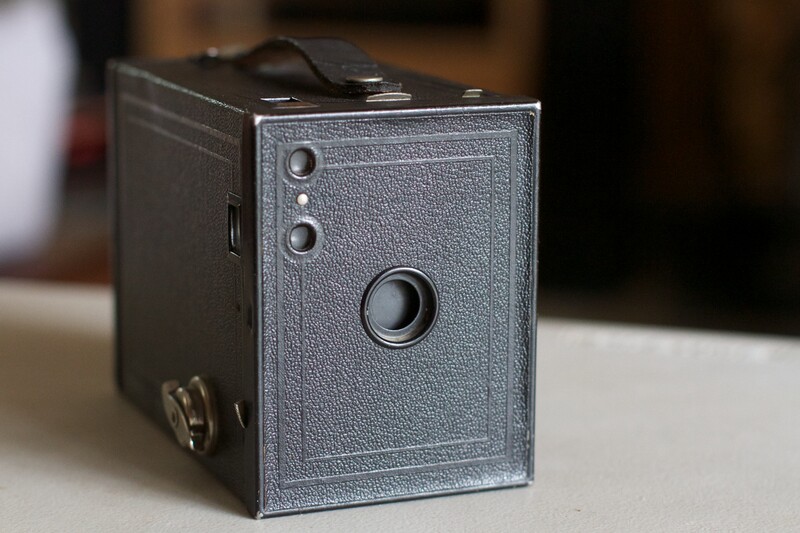
Vintage box camera with textured gray body and single large lens element.
The Kodak Brownie (cogdogblog, CC0, via Wikimedia Commons.)
The impact was seismic. Family gatherings, everyday moments, travels to new places, and eventually the horrors of World War I were all captured by people wielding their own Brownies. This generation didn't just pose for history anymore. They documented it themselves, creating an unprecedented visual archive of lived experience. The Brownie transformed photography from a specialized craft into something anyone could do, and in doing so, it changed how we think about memory itself.

The Silent Generation (1928–1945): Leica Rangefinders

The Silent Generation came of age during the Depression and World War II, and their camera was the Leica rangefinder, particularly models like the Leica III and later the iconic M3. Where the Brownie was democratic and accessible, the Leica was precise, sophisticated, and serious. It was the photojournalist's weapon of choice, compact enough to carry into war zones yet capable of capturing images with surgical sharpness. The rangefinder's near-silent shutter made it perfect for candid photography, allowing photographers to document reality without disturbing it.
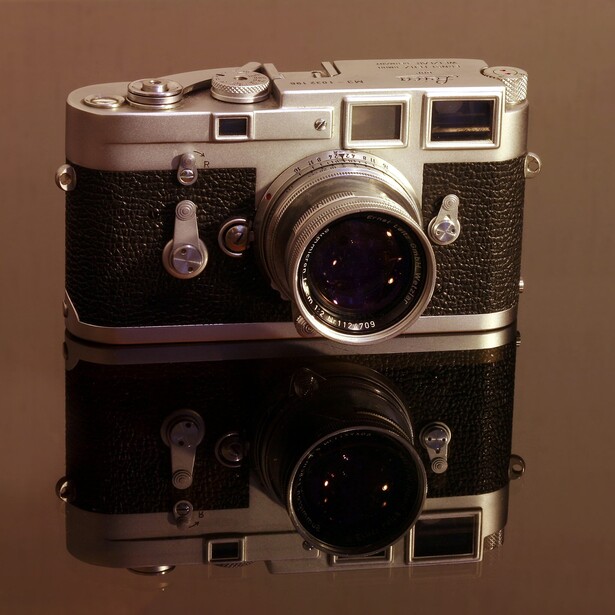
Vintage rangefinder camera with chrome top plate and black leather body, shown with its mirror reflection.
The Leica M3 (Rama, CC BY-SA 2.0 FR, via Wikimedia Commons).
This was the camera that captured some of the twentieth century's most defining images. Robert Capa helped define war photography's intimacy through the 35mm rangefinder. Henri Cartier-Bresson defined the decisive moment through its viewfinder. The Civil Rights Movement, post-war Europe, the birth of modern photojournalism itself, all filtered through these beautifully engineered German machines. The Silent Generation was contemplative, restrained, and often stoic, qualities that mirrored the Leica's design philosophy. These cameras were never flashy or democratic in the way the Brownie was. They were tools for serious observation, built for people who had something important to say and wanted to say it with clarity and precision.

The Baby Boom Generation (1946–1964): The Polaroid 

Baby Boomers lived through an explosion of consumer culture, youth rebellion, and the cult of self-expression, and no camera embodied these shifts better than the Polaroid. This wasn't just a camera; it was a magic trick. You took a photo and watched it develop in your hands within minutes, the image slowly materializing like something from a science fiction novel. Photography suddenly became instantaneous, tactile, and social in ways that had never been possible before. Even as a kid in the 90s, I thought my grandparent's Polaroid was magic.
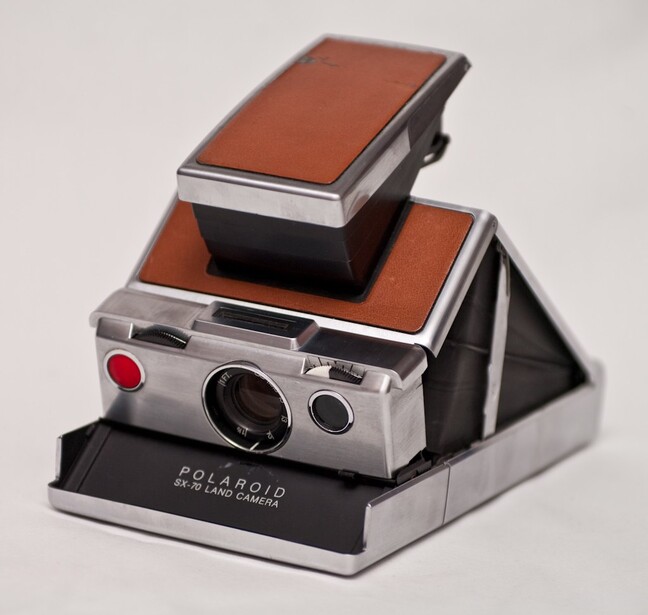
Vintage Polaroid SX-70 instant camera with tan leather covering and flash cube, displayed on its original stand.
The Polaroid SX-70 (Thomas Backa from Turku, Finland, CC0, via Wikimedia Commons).
The Polaroid transformed what photography meant. It wasn't just about remembering anymore. It was about performing, experimenting, sharing in real time. You could take a Polaroid at a party and pass it around while people were still laughing about the moment it captured. Artists like Andy Warhol and Ansel Adams used it as a creative medium. Teenagers used it to document their lives with an intimacy and immediacy that felt revolutionary. The Boomers were the first generation to truly embrace photography as a form of self-expression rather than just documentation, and the Polaroid was their instrument. It made memory instantaneous and photography spontaneous, anticipating the digital revolution that would come decades later.

Generation X (1965–1980): The Canon AE-1

Generation X grew up in the strange borderlands between analog and digital, and their defining camera was the Canon AE-1, released in 1976. This was the SLR that brought professional-grade photography to the masses. Before the AE-1, single-lens reflex cameras were expensive, complex machines reserved for serious photographers. Canon changed that by introducing microprocessor-controlled automation and manufacturing techniques that dramatically reduced costs. Suddenly, a high school student could afford a camera that produced images as good as anything a professional might shoot.
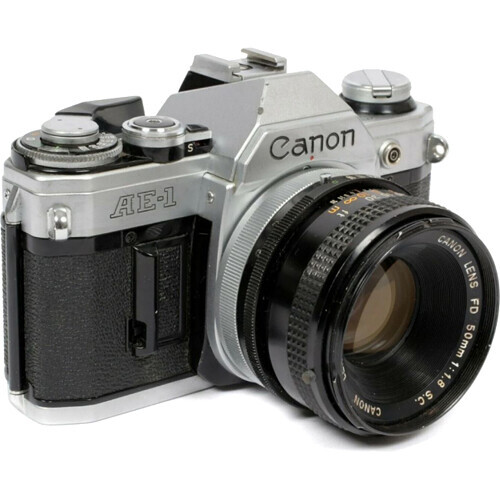
Canon AE-1 35mm SLR camera with standard lens attached, shown in three-quarter view against white background.
The Canon AE-1.
The AE-1 became the tool of choice for a generation that defined itself through DIY culture and aesthetic independence. If you look at the visual language of the 1980s and 1990s, much of it was shot on cameras like the AE-1. Punk zines, skateboard photography, indie album covers, the gritty documentary style of alternative culture, all of it owed its existence to accessible, reliable SLR cameras that Gen X could actually afford. This was a generation that often felt cynical about institutions and mainstream culture, and they used cameras like the AE-1 to create their own visual vocabulary, one that was personal, raw, and unpolished. The camera became a tool of cultural resistance as much as documentation.

Millennials (1981–1996): The Apple iPhone

For Millennials, everything changed with the iPhone in 2007. Apple didn't just put a camera in a phone. They folded an entire camera industry into a device that fit in your pocket and connected to the internet. The sound of a shutter click became a digital simulation, a nostalgic echo of the real thing. Photography stopped being a separate activity and became woven into the fabric of daily life. You always had a camera because you always had your phone, and every photo you took could be instantly edited, filtered, and shared with the world.
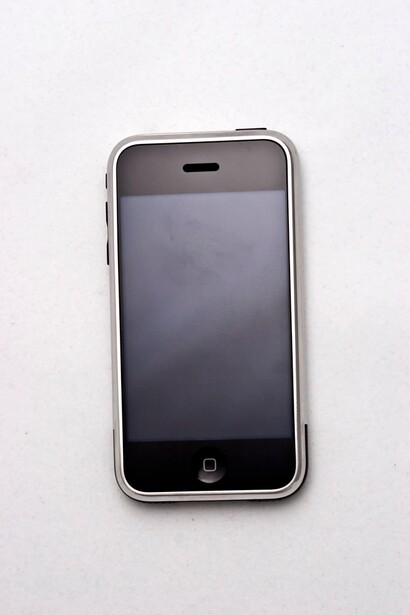
First-generation iPhone with silver bezel and black screen displayed on white background.
Carl Berkeley from Riverside California, CC BY-SA 2.0, via Wikimedia Commons.
This generation made images the primary language of identity. The selfie, the Instagram filter, the Snapchat story, the carefully curated feed, these were all inventions of a generation for whom the boundary between life and media essentially dissolved. But something else changed too. The iPhone's Live Photo quietly altered how we think about a single instant. Suddenly memory had motion, and the decisive moment became a short loop you could scrub through, searching for the perfect frame. Photography became simultaneously more democratic and more performative than ever before. Everyone was a photographer, but they were also a curator, an editor, and a brand manager of their own visual identity. The iPhone camera wasn't just a tool for capturing memories. It was a tool for constructing and broadcasting a version of yourself to an audience that could span the globe.

Generation Z (1997–2010): The Front-Facing Camera

While Millennials made photography social, Generation Z made it performative, interactive, and algorithmic. Their defining camera isn't a specific device but rather a feature: the front-facing smartphone camera, coupled with platforms like TikTok, Instagram Reels, and BeReal. This generation didn't just adopt the selfie; they transformed it into an entirely new medium. Their camera is a portal to an audience, a feedback loop, a stage, and a mirror all at once.

Group of five smiling people wearing sunglasses taking a selfie outdoors.
Gen Z grew up with the assumption that anything worth doing is worth documenting, not as an afterthought but as an integral part of the experience itself. Watch someone film a concert through their phone screen, never looking directly at the stage, and you're witnessing a fundamental shift: the event matters less than the proof of attendance, the content it generates, the story it becomes. Vertical video, face filters, duets, reactions, these are the native formats of their communication. They've weaponized the front-facing camera in ways previous generations never imagined, using it for activism, comedy, connection, and commerce. The camera is no longer something you look through; it's something you look at, constantly, as you perform your life for an algorithm that decides what gets seen and what disappears.

Generation Alpha (2010–2024): AI and AR Cameras

As the mirror turns into a mind, the act of photography shifts from reflection to prediction. Generation Alpha is still being formed, but we can already see the contours of their relationship with cameras. They're growing up with AI-assisted and augmented reality cameras embedded in everything. For this generation, cameras won't just record; they'll interpret, enhance, and blend realities in ways that would have seemed like pure science fiction just a decade ago.
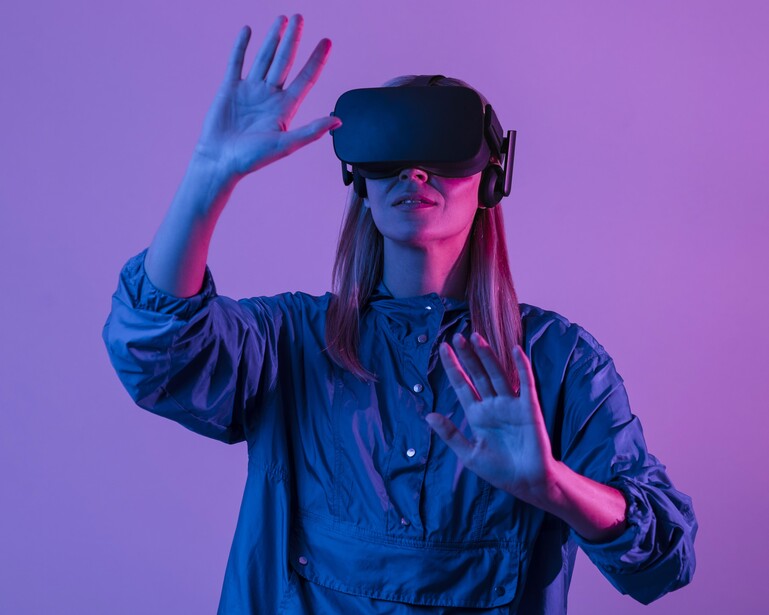
Person wearing VR headset with hand raised against purple and blue neon lighting.
These kids are learning to interact with cameras that recognize faces, read emotions, identify objects, and overlay digital information onto physical space. Their "photos" may not be static images at all but rather living, interactive memories that can be experienced from different angles, annotated with contextual information, or even regenerated by AI based on prompts. The distinction between what's captured and what's created will continue to blur. Where previous generations used cameras to document reality, Alpha may use them to augment or even replace it. Their relationship with photography will be fundamentally different because the camera itself has evolved from a recording device into something closer to a collaborative intelligence, a tool that doesn't just see but understands and responds.

The Evolution Continues

Looking across these generations, a pattern emerges. Each new camera technology didn't just change how we took photos; it changed how we thought about ourselves, our memories, and our relationship to the world around us. The Brownie made us all documentarians. The Leica made us witnesses. The Polaroid made us performers. The AE-1 made us artists. The iPhone made us curators. The front-facing camera made us content creators. And whatever comes next for Generation Alpha will likely transform photography into something we don't yet have words for.

It's the device that shapes how a generation sees, remembers, and shares their world, the one that becomes so embedded in daily life that it stops being just a tool and becomes an extension of how we experience reality itself. The next generation's camera may not just record or predict, it may collaborate with the person behind it. Every generation deserves the camera that allows them to tell their story in their own way.

Alex Cooke is a Cleveland-based photographer and meteorologist. He teaches music and enjoys time with horses and his rescue dogs.

Related Articles

No comments yet