
For years, the phrase “the best camera” was practically shorthand for a math equation. Reviewers and gearheads would line up spec sheets side by side, comparing megapixel counts, autofocus points, ISO charts, and dynamic range graphs as though the entire art of photography could be boiled down to who had the biggest number in the right column. Not anymore.
A new model was crowned the champion if it offered a fraction of a stop more shadow detail or a modest increase in burst rate. That mindset dominated the early days of digital, when each generation of hardware genuinely pushed into new territory. But as the technical ceiling has risen, the differences between flagship cameras have become smaller and smaller. The result is a spec war that feels more exhausting than exciting, a race that photographers no longer care to watch because the margins of victory are so trivial.
In the midst of this, something interesting has happened. The cameras that photographers actually carry, cherish, and evangelize aren’t the ones dominating spec charts. They’re the ones that feel good to use, that make photography fun again. The Fujifilm X100VI, Ricoh GR IV, OM System OM-3, Fujifilm Instax, Nikon Z fc, and even Pentax’s cult DSLRs all tell the same story. They are not the sharpest or most powerful tools on the market, but they are the ones people reach for when they want to enjoy the act of photography. In 2025, fun has quietly become the most important spec.
Fun as a Spec
Fun is not a technical measurement you’ll find on a chart or in a marketing brochure. Yet it’s the hidden metric that determines whether a photographer uses their camera daily or leaves it on the shelf. Fun means different things depending on the photographer, but it almost always comes down to immediacy and character. A fun camera invites you to pick it up. It feels light enough to toss in a bag without worry. It has tactile controls that beg to be twisted and dials that make you feel like you’re actively shaping an image rather than scrolling through menus. It provides creative flourishes like film simulation modes, quirky focusing options, or in-camera filters that turn photography into play rather than a clinical exercise.
The industry has long assumed that specs drive sales, but cameras that prioritize fun prove otherwise. Photographers may buy a body for its resolution or frame rate, but they keep using it because it feels good. The emotional connection is not a bonus; it’s the core. Fun is as much a spec as megapixels or aperture, just harder to quantify. And many of the cameras thriving right now are the ones that embrace that truth.
Joy vs Technical Perfection
There’s a graveyard of technically brilliant cameras that failed to inspire. Heavy DSLRs with clinical ergonomics, mirrorless flagships with menu systems that read like software manuals, high-resolution monsters so demanding they felt more like workstations than creative companions. These bodies won awards in reviews and dominated spec comparisons, but once the hype faded, they languished in closets because they were not joyful to use.
Joy, by contrast, is the ingredient that creates loyalty. It’s the reason some photographers still carry around cameras with decade-old sensors because they love how they feel. A joyful camera doesn’t demand justification; it makes you want to take it along even when you don’t strictly need to. Photographers don’t reminisce about the extra stop of dynamic range that a newer model gave them. They reminisce about the small camera that made them smile while capturing those files.
Pentax exemplifies this dynamic. The brand hasn’t won a spec war in years. Its cameras often lag behind in autofocus, video features, and high-resolution sensors. They only make DSLRs. Yet Pentax owners are some of the most loyal in the industry. Why? Because Pentax builds cameras that emphasize experience: rugged designs that feel indestructible, unique features like AstroTracer that encourage play, and a sense of independence from the mainstream spec race. Owning a Pentax isn’t about bragging rights on paper; it’s about the joy of using a tool that feels like it was made for you, not for the review charts. That loyalty is proof that joy beats technical perfection over the long haul.
Cultural Echoes: Experience > Perfection
This shift is not isolated to photography. Across cultures, people are gravitating toward formats that privilege experience over perfection. Vinyl records continue to thrive not because they measure better than digital, but because the ritual of lowering a needle and the warmth of analog sound create an emotional connection. Analog film is in the midst of a renaissance despite being slower, grainier, and less flexible than digital. Why? Because it feels human, unpredictable, and alive.
There’s also a generational angle. Younger photographers are growing up in a world where social media and immediacy are the norm. For them, photography is as much about experience and expression as it is about documentation. A camera that feels like an extension of that creative lifestyle, one that is playful and characterful, is far more appealing than a sterile machine built to impress reviewers. This cultural shift ensures that fun will remain a spec that matters long into the future.
The Cameras That Prove the Point
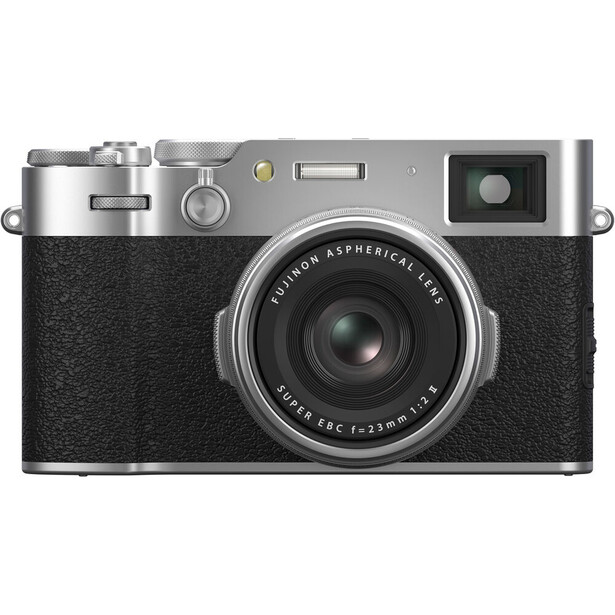
The Fujifilm X100VI is the poster child of this movement. On paper, it’s not Fujifilm’s most powerful camera: no interchangeable lenses, no massive sensor leap, no pro-grade zooms. But its retro styling, compact body, and film simulations made it a cultural phenomenon. TikTok made the X100VI a viral sensation, and waiting lists stretched around the globe. People don’t buy the X100VI because it wins spec shootouts; they buy it because shooting with it feels cool, nostalgic, and inspiring. It is proof that fun sells, sometimes more powerfully than specs.
The Ricoh GR IV tells a similar story. Street photographers are some of the most demanding shooters in the world, yet they adore the GR precisely because it prioritizes simplicity and quirks over perfection. Snap Focus, pocketability, and minimalist design make it a camera that disappears in use, allowing photographers to immerse themselves in the moment. The GR is not trying to be perfect; it’s trying to be fun and responsive, and that’s why it’s a cult icon.
The OM System OM-3 leans into computational creativity. Features like Live Composite, which allows you to stack exposures in real time for stunning long exposures, or Live ND, which simulates neutral density filters in-camera, make experimentation addictive. You don’t need extra gear or complicated post-processing; you just need the willingness to play. Its rugged build and compact size reinforce the message: this is a camera designed to go everywhere with you, ready for spontaneous creativity.
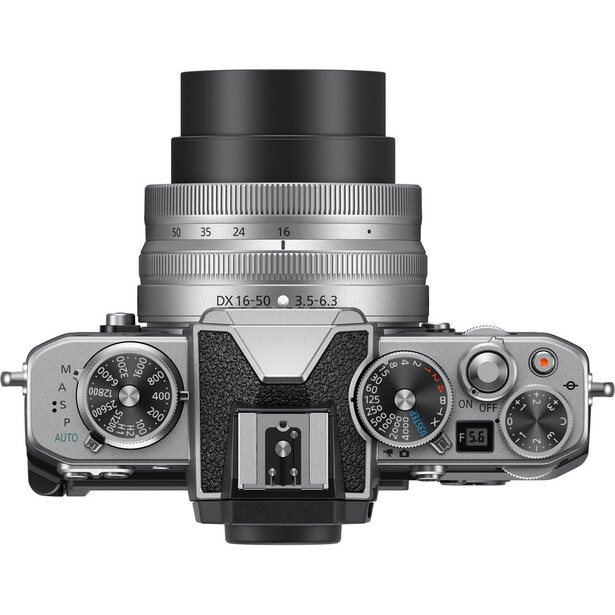
The Nikon Z fc adds another layer. It is, at its core, a modern mirrorless camera. But Nikon wrapped it in retro styling, complete with tactile dials and classic design. Using it feels like stepping back into the analog era while enjoying the benefits of modern sensors and autofocus. It’s a reminder that character and personality can be just as valuable as cutting-edge specs. The Z fc is fun to shoot with, fun to carry, and even fun to show off, which explains why it has become a beloved choice among photographers looking for something with personality.
The Fujifilm Instax series is the most blunt example of fun winning over perfection. Instax cameras are technically primitive compared to digital gear. Their prints are small, their lenses basic, their control minimal. But none of that matters, because instant prints turn photography into a social act. Handing someone a physical photo moments after taking it is pure joy, and no spec sheet can compete with that feeling. Instax proves that the most fun feature of all might be instant gratification.
Rethinking 'Best'
Despite all of this, the camera industry continues to market around traditional specs. Product launches emphasize megapixels, autofocus algorithms, and frame rates, as though photographers are still making purchasing decisions based solely on numbers. But if you look at what people actually carry when they want to enjoy the act of photography, the gap between marketing and reality is glaring. Increasingly, the question photographers ask is not “What’s the sharpest?” but “Which camera makes me want to shoot?”
That’s a profound shift. It means the definition of “best” itself is changing. The industry could cling to the old metrics, but in doing so it risks irrelevance to a generation of photographers who care more about joy than perfection. Imagine if manufacturers leaned into this reality, advertising not just lab results but the sheer fun of using their cameras. Specs would still matter, but they’d be framed in service of experience rather than as ends in themselves. Maybe “best” should mean “most fun.”
The Fun Factor Wins
Specs will always be part of the equation, but they no longer define greatness. A camera that looks unbeatable in a lab test but isn’t fun will gather dust. A quirky, joyful body with limitations will be carried, used, and loved. That’s the difference between theoretical superiority and lived superiority.



Join the Fstoppers community for free
-
Post comments and join in the discussions
-
Browse the site ad-free
-
Share your work and get featured in the community
-
Compete in the photo contests for fun and prizes
17 Comments
What happens after the novelty of a fun camera wears off in a year or two? After you've looked at the same camera buttons for awhile, will photography still be fun? Amateurs shoot for fun. Professionals shoot for results, although devoting one's life to the craft should hopefully be fun too. I'd hate to think of committing so much time and effort to something that wasn't fun. And as I said in an article you posted a week or so ago concerning pretty much the same subject, I can't imagine my love of photography being conditional upon the design of the camera. It's been fun for over 20 years regardless of the camera I've been using, and nothing that new technology comes up with will change that.
I agree with you Ed.
For me, photography is for results ..... but it is also so much fun! But the things that make photography fun for me are the subjects themselves - the deep research that goes into learning about a species, and then the trip to whatever place it is where that species lives. And then the hiking into the habitat searching for the species, and ultimately finding it and photographing it.
So the fun of photography is all generated by the subjects that I am photographing and the adventure travel that eventually leads me to them. The gear itself? Hmmmmmm. It never occurred to me that a camera or a lens could be "fun". They are just tools. Using a lawnmower isn't fun. Using a toaster or a blender isn't fun. Using a chainsaw isn't fun. So if tools in general aren't necessarily fun to use, why would I expect a camera to be fun? Sure, I have fun when using the camera, but the fun isn't derived from the gear itself, it is derived from the adventure that I am living out.
A reasonable parallel would be my car. I go on extensive road trips all over the country, and have a blast traversing the highways and byways of the US. I drive over alpine mountain passes, through deserts, into remote forests, and along meandering rivers, and all of that road tripping is so much fun! But the car that I use to take myself through all of these places? No, the car isn't fun at all, because the car is only a tool. Same with photography - it is a freaking blast, but the tool that I use to do it is not fun at all because it is no more than a tool, the means to an end.
Cars are bad examples of purely practical means of getting from here to there. Especially when 145mph, steep and rugged terrain, or knee deep in mud is part of the experience. That's when the vehicle itself is a lot of fun.
Too much emphasis on the camera. I wonder if a woodworker feels the same way about his chisels? Although I enjoy using my cameras it is ultimately what I point it at that excites me. The camera is a tool not the objective.
Some do. Depends on the craftsmanship made into the tools.
So well said! I feel the same way - the things that I photograph excite me to no end! But the tool that I happen to use to record the images is, well, just a tool.
I love your parallel of a woodworker and his chisels. When a woodworker is finished making a gorgeous, intricately designed table or headboard, he is not looking back, reflectively, at what a joy the chisels were to use. He is thinking of the object that he created and thinking about the details of it and the design of it, not the tools that were used to fashion it.
If one thinks that a camera means more to photographers than tools mean to people who do other things, then that is misguided thinking that needs to be corrected.
I could sound silly or maybe just funny, but I've worked many years as a car mechanic, a photographer, and as a database manager. I worked in a communications company and my hobbies include old radios restoration. And yes, I've feel a very emotional relationship with my tools, especially with hand tools.
It's not difficult to understand, if you have had a Snap-on wrench in your hand and have used it for work or hobby (for just an example), you can feel the love and care the maker of this tool put in the making of it. You could try any (for example) Chinese wrench that do the same function and immediately you'll feel it soulless and it will never feel right in your hand. Try to work with an old (very old) HP or Tektronics oscilloscope or just an older keyboard and you can really enjoy hours of work.
That's the fun factor!
And, as always, to each its own, I love to have my 1n or 1Dx or 1Ds, etc. cameras in my hands and truly enjoy my work, but I've never feel the same with a Sony camera, their viewfindes are horrible (to me, and it's just an example, nothing against them), it's a genuine pleasure just looking the world through a Canon 1 viewfinder and a real pain to try the same on a mirrorless viewfinder (for me, I insist). In the Canon, or Nikon, or Leica, or Hasselblad, or any other good viewfinder, you can "see the light" and you create your image with this light, in the mirrorless you see only a poor video "representation" of the real world (it doesn't matter if is a high resolution LCD or Oled screen, with almost zero retard, you are not seeing the light).
Of course, I'm old, but all the younger photographers that I've meet working alongside at any events (social events, concerts, field expeditions, etc.) with their Sony (or other brands) mirrorless cameras, asking "why you haven't upgrade to mirrorless?", I respond "just hold my camera and see", everyone, ever, have agreed that the optical viewfinder is just the best way to see the light. Maybe they are too courteous to begin an argument with an old man, but nobody had responded "my mirrorless viewfinder is better".
Thank you for reading and best regards to you all!
For me it’s always about the prospect of creating the next photo(s) for my portfolio. I have cameras and lenses that help me realise my vision and I’ve never really thought about ‘best camera’ or ‘fun camera’. As someone else said, novelty will wear off eventually. If I’m not capturing any satisfactory photographs, owning a camera considered ‘fun’ won’t make up for that. It’s always the photos that keeps me motivated rather than the cameras. Having a couple of lenses with focal lengths that suits my vision does help.
"Consider Fujifilm’s decision to build a dedicated film simulation dial into the X100VI." Maybe you thinking about a different Fujifilm camera?
Yes, I was. Thank you!
I’m an amateur and I shoot for fun. Every time I take a nice photo with my cellphone my wife says, see you don’t need all those cameras. At least she understands that the tiny rx100 vi for travel saves the battery on the phone. Trying to get her to understand that photographing BIF requires more reach, speed and light than a phone can deliver ….
Landis wrote:
"Trying to get her to understand that photographing BIF requires more reach, speed and light than a phone can deliver …."
It should be very easy to get her to understand that. Take a bunch of BIF photos with your cell phone, and a bunch with your real gear, and then show her the 12 best BIF images that you got with the cell phone and the 12 best images that you got with the real gear ...... and then the reasons should be quite obvious to her.
I believe in the adage - the best camera is the one you have in your hand.
In Amsterdam there were queues around the block to get a stroopwafel from a certain shop, just because some influencer on TikTok said that it was the best stroopwafel. There was nothing special about the stroopwafel. In my opinion there’s a same mechanism behind the Fujifilm hype (not a bad camera though)
How many photographers will tell a bride/groom or school grad or family when asked what camera gear they are using "oh, the latest fad on Tiktok?"
One of the joys of any hobby or occupation is having something you can hold and treasure.
Cameras are something you can hold and treasure, whether they're made like little jewels or are a no nonsense work horse.
Some manufacturers have worked that out. The fact they can all produce excellent results in the right hands is an added bonus.
As a guitarist friend of mine once said, 'You can never have too many guitars'.
G.A.S. isn’t confined to photographers.
I swear the managers or owners of this site demand that articles like this MUST be written periodically every month just to keep engagement up. Such a truly teeth grittingly "done to death" none topic. How utterly pointless to conflate professional commercial photography - where our ONLY concern is the very best image quality/output is relevant (unless doing sport/journalistic reportage), with amateur/hobbyist photography, where "casual" use can indeed be influenced by the desire to use a particular camera based on how that camera's functionality appeals to you, and yes...is FUN to use. Pro photographers do not give a single crap if a camera is "fun" to use. Every single day, I grab my ancient bohemoth Nikon D800, with extra grip, two flashes, a couple of primes and a tele zoom, and a tripod, pack into my bag and travel miles to a studio shoot or location. The camera weighs the same as a small dog, it's an absolute pig to hand hold for any length of time, it's slow, the autofocus is really abysmal in most circumstances, and at the end of the day I even sometimes need to do wrist exercises to release tension. But would I swap it for a mirrorless that can lock onto an eye at 30 meters? Weighs less than a bag of sugar, and can shoot off myriad images per second? No, 100% NO. That old Nikon of mine produces the most exquisite files (raw and jpg) of any camera I've ever used, superior even to a Fuji GFX I loaned once. The optical viewfinder is massive. And, I have an entire history of old Solid F lenses to choose from, that can be purchased for next to nothing, and when I want to be more meditative I can swap them out onto my Nikon F2 film body. As others have said, shoot with whatever makes you happy. If a particular camera makes you pick it up and go shoot, use it. But can we PLEASE stop churning out these ridiculous articles over and over "debating" the topic of "fun cameras" and why it's relevant - like durgh? Really? Working pros are not in the business of choosing our equipment based on "fun factor". Groan. Groan. Groan.