
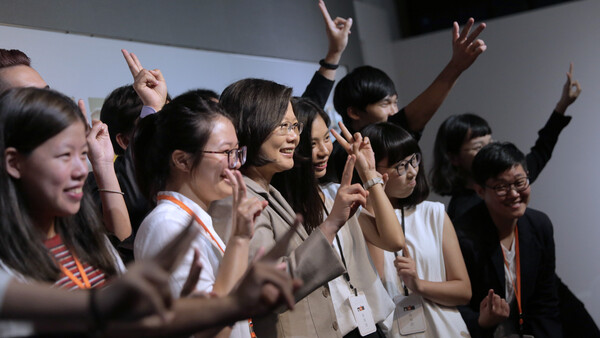
Hand a phone to a group of teenagers in Osaka and start counting. You will rarely reach three before the first two fingers go up beside a chin, while the same camera pointed at strangers in Moscow gets a level, unsmiling gaze that an American would read as hostility and a Russian would read as basic composure. The way a body arranges itself in front of a lens is not instinct but a dialect, learned young and specific to place, and this is a tour of how it changes as you cross borders.
The Camera Turns You Into a Performer
The moment you know a lens is on you, something switches. The critic Roland Barthes described the feeling exactly in his 1980 book on photography. "Once I feel myself observed by the lens, everything changes," he wrote. "I constitute myself in the process of 'posing,' I instantaneously make another body for myself, I transform myself in advance into an image." That second body, the one you build for the camera, is not a raw readout of your inner state. It is a performance, and every performance follows a script.
The scripts are cultural, and psychologists have measured how far apart they sit. In one well-known experiment, Paul Ekman and Wallace Friesen showed Japanese and American students a stressful, graphic film. Watched alone, the two groups reacted almost identically, faces creasing into the same disgust and distress. Then an authority figure came into the room and asked them about what they had seen. The Americans kept showing the negative feeling. The Japanese students masked it, covering the grimace with polite smiles. Same footage, same species-wide muscles, two different rules about which face you are allowed to wear in front of another person. Ekman and Friesen called those rules display rules, and posing for a photograph runs on exactly the same machinery.
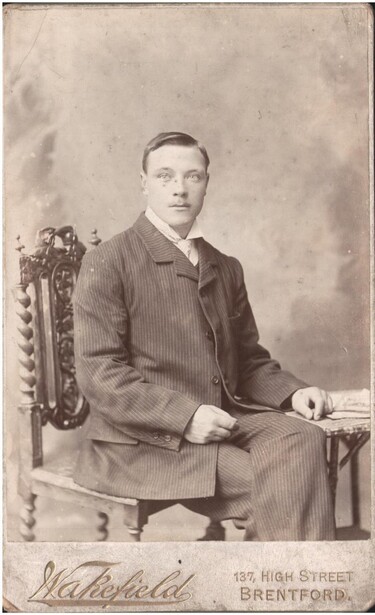
This is why a portrait travels so badly as evidence of character. The unsmiling farmer in a hundred-year-old plate was not colder than you. The grinning tourist in the next frame is not warmer. Each is obeying a local instruction about what a face is supposed to do when it is being recorded. Once you know the instruction changes by country, the whole planet's snapshots start to read like phrasebooks.
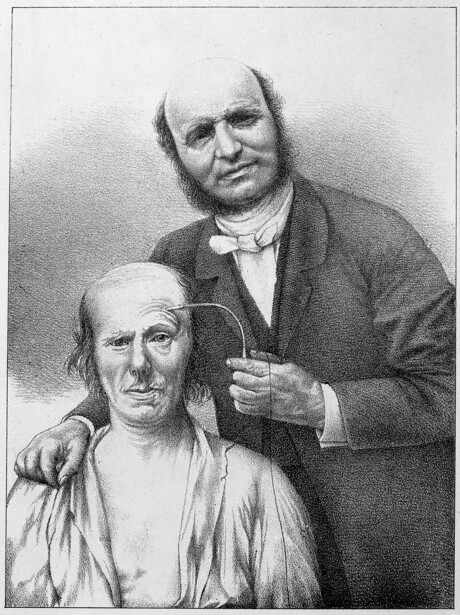
How Two Fingers Conquered Asia
The most recognizable pose on Earth right now is two fingers held up in a V. Across Japan, South Korea, China, Taiwan, and much of the rest of East and Southeast Asia, it is the default thing a hand does when a camera appears, thrown by schoolchildren, grandmothers, and prime ministers alike. It looks timeless. It is not. You can watch it arrive.
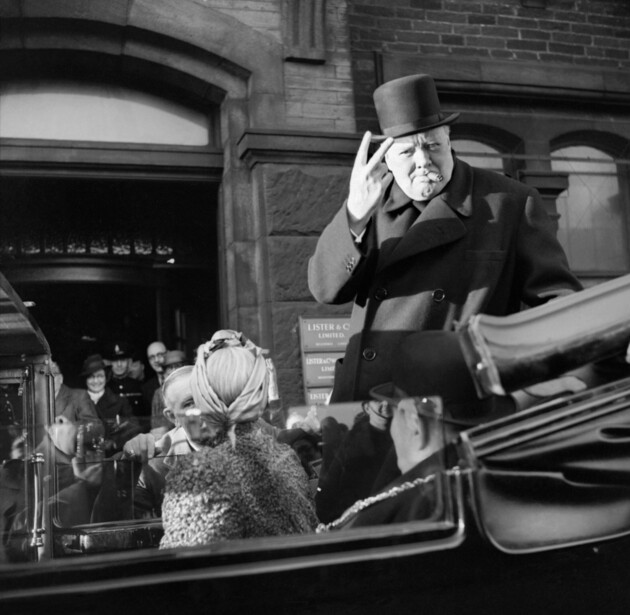
The gesture itself came out of World War II, and it started as text, not a hand. In January 1941, a Belgian broadcaster named Victor de Laveleye, working for the BBC's French-language service, told occupied Europe to chalk the letter V everywhere as a shared sign of resistance. V stood for victoire in French, vrijheid in Dutch, and victory in English. The idea caught, the BBC hammered the Morse code for V into its broadcasts using the opening bars of Beethoven's Fifth, and by that summer Winston Churchill had made the two-finger salute his own trademark. That is the ancestor of the peace sign that later spread through the 1960s counterculture in the West.
How it became the reflexive pose of Asian photography is a separate and more recent story, and the honest answer is that nobody can pin it to a single source. Two origins get repeated most. One credits the American figure skater Janet Lynn, who arrived at the 1972 Winter Olympics in Sapporo as a gold-medal favorite, fell during her routine, and then did something that captivated Japan: she kept smiling. Lynn, an outspoken peace activist, toured the country flashing the V afterward and became a media sensation. The other credits Jun Inoue, singer of the band the Spiders, who was a spokesman for Konica cameras and is said to have thrown a spontaneous V while shooting a commercial around the same year. Time traced both threads and found no clean winner, with popular manga of the era like the volleyball series "Sain wa V!" pushing the same shape into circulation.
What is clear is what happened next. Through the 1980s the gesture fused with Japan's rising kawaii, or cuteness, culture and the boom in women's magazines, until it hardened into a rule of the snapshot. Photographers and stylists still recommend it as a framing trick, since a V held near the jaw narrows the visible width of the face and reads as cuter in the frame. A pose invented for wartime defiance had, within a few decades, been fully repurposed into an accessory for looking adorable.
The Same Two Fingers Can Get You Punched
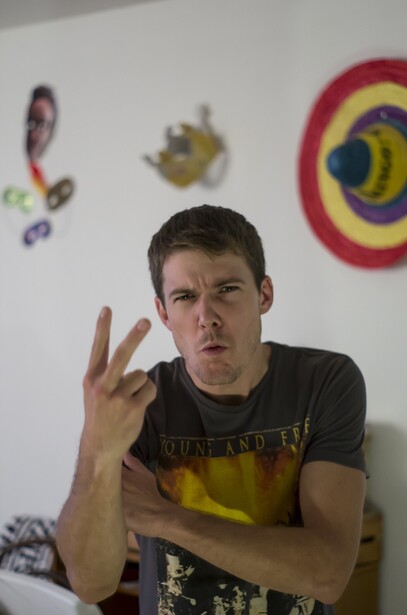
Flip the hand around and the meaning inverts. Palm out, the V is victory or peace. Palm in, with the back of the hand facing the person you are aiming it at, it is one of the oldest insults in the English-speaking world. In Britain, Ireland, Australia, New Zealand, and South Africa, that inward V is roughly the equivalent of the raised middle finger in the United States, and pointing it at the wrong stranger really can start a fight.
This is the trap waiting for a traveler who has only ever seen the friendly version. An American cheerfully ordering "two, please" with the palm turned inward at a London pub is, without knowing it, telling the bartender to get lost. The two gestures are separated by nothing but the rotation of a wrist, and the line between them is invisible unless you grew up on the right side of it.
You will hear a tidy origin story for the insult, usually involving the Battle of Agincourt in 1415, where French forces supposedly threatened to cut the bow-drawing fingers off captured English longbowmen, who then waved those same fingers in defiance. It is a great story and almost certainly a myth. There is no contemporary evidence for it, and it appears to have been circulated much later. The real lineage of the rude V is murky, which is its own kind of lesson: gestures rarely come with paperwork, and a shape that means friendship on one continent can carry more than a century of documented contempt on another.
The Smile Is Not Universal Currency
Americans treat the smile as the correct resting face for any photograph, warm, open, and slightly aggressive in its insistence. Much of the world does not. In a study of 44 cultures published in the Journal of Nonverbal Behavior, the psychologist Kuba Krys and a large team of collaborators showed people around the world the same faces, smiling and neutral, and asked them to rate the person. In some countries a smile bought exactly what an American would expect, a bump in perceived intelligence and honesty. In others it cost the sitter. Across cultures including Japan, India, Iran, South Korea, and Russia, the smiling face was rated less intelligent than the identical neutral one.
Two patterns came out of the data, and they are worth keeping apart. The intelligence penalty tracked uncertainty avoidance, and it was largest in societies scoring low on that GLOBE measure, the ones where social conditions are widely regarded as unpredictable. The authors' proposed reading is that smiling in such a place broadcasts a confidence the situation does not support, and that inconsistency reads as a lack of sense. The honesty judgment tracked something else entirely, societal corruption, with the trust advantage a smile usually earns shrinking as corruption indicators rose. Both are correlations across countries rather than demonstrated mechanisms, and the paper says as much. Russia states the case in a single proverb, roughly, that laughing for no reason is a sign of foolishness. Smiling there is reserved for something specific and earned, aimed at someone you actually like or triggered by a real joke. A blank grin handed to a stranger, or held for a passport officer, marks you as either insincere or dim.
This is why so much of the world's formal portraiture stays sober. The neutral, self-possessed face in a Russian or Korean studio portrait is not a failure to relax. It is the appropriate face, chosen for the same reason a Victorian sitter chose gravity, because the image reads as a document and a document should look composed rather than delighted. (The blank passport face is a weaker example than it looks, since biometric standards now require a neutral expression almost everywhere, including the smiling United States.) The American default, the full open smile, is itself a local custom, one that Hollywood and a century of advertising exported so successfully that its owners mistake it for human nature.
Distance, Touch, and Where the Eyes Go
Gestures and grins are the loud part of photographic body language. The quiet part is how bodies arrange themselves in space, and that varies just as sharply. The anthropologist Edward T. Hall built an entire field, proxemics, around the observation that cultures carry different rules about personal distance. Hall split the world loosely into contact cultures, where people stand close and touch easily, and non-contact cultures, where they keep a buffer. He sorted Latin Americans and Arabs into the first group and Northern Europeans and Japanese into the second. Treat that as a hypothesis rather than a finding. It rested on anecdote for decades, and when a 2017 study finally compared 42 countries systematically, preferred distance turned out to track age, gender, and even local temperature rather than falling into clean regional blocks. What survives is the part that matters behind a camera: the distance people expect between bodies is learned, it varies, and no setting on it is warmer or colder than another. Each is a different answer to how much room a body is owed.
Touch varies the same way and just as unevenly. In some rooms a friendly group shot means contact, a hand on a shoulder, an arm around a waist, faces leaned together. In others that same casual grip registers as an imposition, and the picture composes itself with everyone standing on their own square of ground. The variation is real and it is worth anticipating. What it is not is predictable from a passport, and the version you can actually use is the one you read off the people in front of you, who will tell you with their shoulders long before they tell you with words.
Then there is the gaze. The Western portrait convention is a subject looking straight down the barrel, eyes locked on the lens, because directness reads to a Western eye as confidence and candor. In many other cultures a direct stare carries a different charge. Aimed at an elder, a teacher, or anyone of higher status, a lowered or averted gaze can be the respectful choice, and a portrait that honors that will not have the sitter facing the viewer down. The averted eyes in an old portrait are not always shyness or a flinch from the lens. Sometimes they are good manners, frozen in silver.
The Studio Was Always a Stage
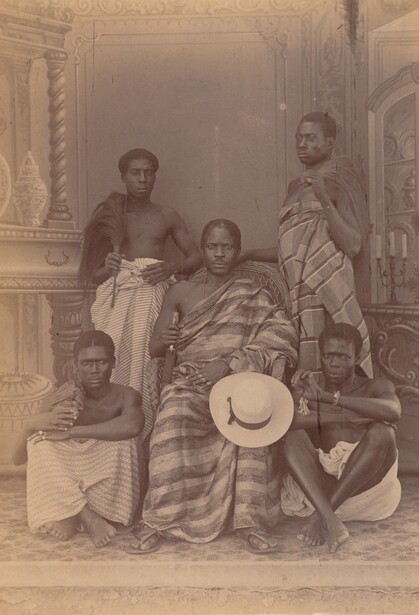
Where formal portraits happen, whole grammars of posing grow up around them, invented locally and passed down like recipes. The clearest example sits in Bamako, Mali, in the years around independence from France in 1960. In the studios of Seydou Keïta and, a little later, Malick Sidibé, ordinary Malians came to be photographed as the people they wanted to be seen as, and the pose was half the picture.
Keïta ran his studio like a theater. He kept a wardrobe of props and lent them out to sitters who could not afford their own: wristwatches, fountain pens, radios, plastic flowers, European suits, even his own Vespa, one of the first scooters in the neighborhood. He arranged the drape of a robe, angled a hand, chose the camera position, and posed his subjects against patterned cloth backdrops with a precision closer to a portrait painter than a snapshooter. The results announced modern, cosmopolitan, arrived. A Harvard museum exhibition of their work took its title, "You Look Beautiful Like That," from the thing a photographer says to settle a sitter into the pose.
Sidibé bent the same tradition the other way. He made his name in the nightclubs and river beaches of 1960s Bamako, and he never cared for stiff, frozen figures. He chased movement, catching young people mid-dance and mid-laugh, and even inside the studio he wanted a body doing something rather than merely holding still. Two photographers, one city, one decade, and already two competing dialects of how a Malian should stand in front of a lens. Multiply that by every studio tradition on the planet, from the painted backdrops of a colonial-era portrait house to the vinyl seamless of a modern headshot bay, and you start to see how much of "natural" posing is just local house style.
The New Poses Travel at the Speed of the Feed
New dialects still get invented, and now they spread in months instead of decades. The clearest recent one is the Korean finger heart, a tiny heart pinched between the pad of the thumb and the side of the bent index finger. Its exact origin is disputed, with an early public use often traced to the actress Kim Hye-soo around 2010, but its engine is not in doubt. K-pop idols adopted it as a shorthand for love aimed at fans, threw it in every concert and fan meeting and promo photo, and the global machinery of Korean pop culture carried it to phones worldwide inside a few years. A gesture that would once have needed a generation to cross an ocean now does it in a news cycle.
The lesson for anyone who photographs people is practical. The pose your subject reaches for is a piece of cultural information, not a mistake to be corrected. If you shoot travel or documentary work, expect the reflex to change every time you cross a border, and expect your own instincts to be just as local. Whether you hand someone a phone, a Fujifilm X100VI on a market street, or a Sony a7 IV in a rented studio, the body that arranges itself in front of the glass is running a script you did not write.
Directing that body is a real skill, and the hard part is not making a subject smile, it is reading the difference between the face they are performing and the one they actually own. That gap between the manufactured expression and the genuine one is the entire subject of Peter Hurley's headshot course, and it exists in every culture even though the default masks differ from one to the next. The mask is where the local dialect lives. Learning to see past it, and to know when to leave it exactly where it is, is what separates a portrait that flatters a stranger from one that actually shows them.
So the next time a group throws up two fingers, or holds a flat neutral stare, or pinches a thumb and finger into a heart, you are not watching a quirk. You are watching a place teach a body how to be seen. The instruction is centuries old in some countries and only a few years old in others, but it is never nothing, and it is never yours alone. Every border you cross rewrites it, and the camera, indifferent and precise, records whichever version it is handed.

Lead image: award-winning designers and guests throwing the V sign for a group photograph in Taipei, 2017, by the Office of the President, Republic of China (Taiwan), CC BY 2.0. Source.
Get more Fstoppers in your Google feed: follow us on Google, and add us as a preferred source in Search.






.jpg)

_member_with_finger_heart_in_2015.jpg)
.jpg)
Join the Fstoppers community for free
-
Post comments and join in the discussions
-
Browse the site ad-free
-
Share your work and get featured in the community
-
Compete in the photo contests for fun and prizes
4 Comments
Your example for palm-outward V sign with Winston Churchill, is, um, palm inward.
Maybe he was sending a message to the Germans, rather than to the British.
It was probably aimed more at the journalist/press!
Ah darn, no more late-night writing. Thanks!