
The question becomes: how does a photographer think? I don’t know how everyone else thinks, but I can tell you my process.
Go Where You're Familiar
First, I consider my location. Where do I want to go? Do I want to return to a place I’ve worked in before? In my experience, there is great virtue in revisiting the same location, since a new place rarely reveals all its secrets in the first visit—kind of like making a new friend. To quote Georgia O’Keeffe, “…in a way—nobody sees a flower—really—it is so small—we haven’t time—and to see takes time like to have a friend takes time.” Only after many visits—and sometimes a lot of hard work—do we find the details that make a place unique. I seek out those details.
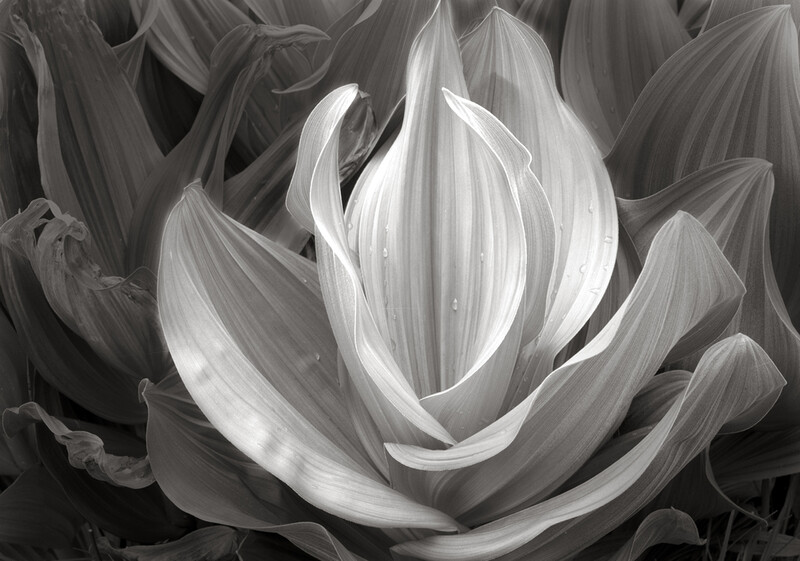
I’d been to this area dozens of times and hadn’t found this meadow with such beautiful early spring plants. A short distance away was a grove of small aspens whose buds were just beginning to emerge. The challenge then was to show the same material in a different way, so I didn’t end up making the same photograph over and over—just of different material.
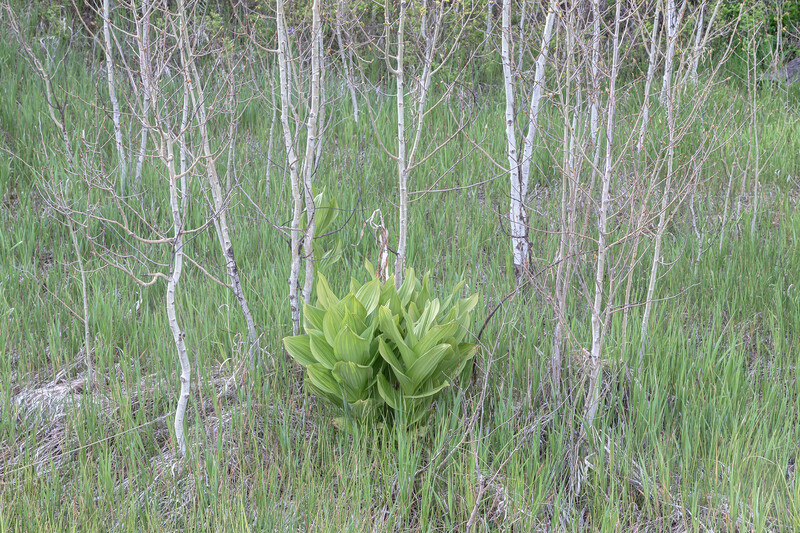
These little aspens were directly uphill from the previous subject. Never be satisfied with just one image of an area. Look around for more! I don’t often use color in my work, but this felt like a moment when the soft greens had to be shown.
Find a New Location
There also is great wisdom in committing yourself to explore new areas and to see new things. A lot of time doing that will help to brush the cobwebs out and force you into a new way of seeing things. When I was teaching, one of my favorite assignments to give my students was to find an object that was fairly complex and then to find a way to photograph it 24 or 36 different ways—to make 24 or 36 completely different images of the thing, and to only show the complete image one time. I usually did the same assignments myself that I assigned to my students. I would present my images alongside theirs, and mine would be critiqued by them, and that without mercy. That single exercise forced me to grow my vision, and the bleed-over was that when I went to a new location, it trained me to see and to really look at what I was portraying.
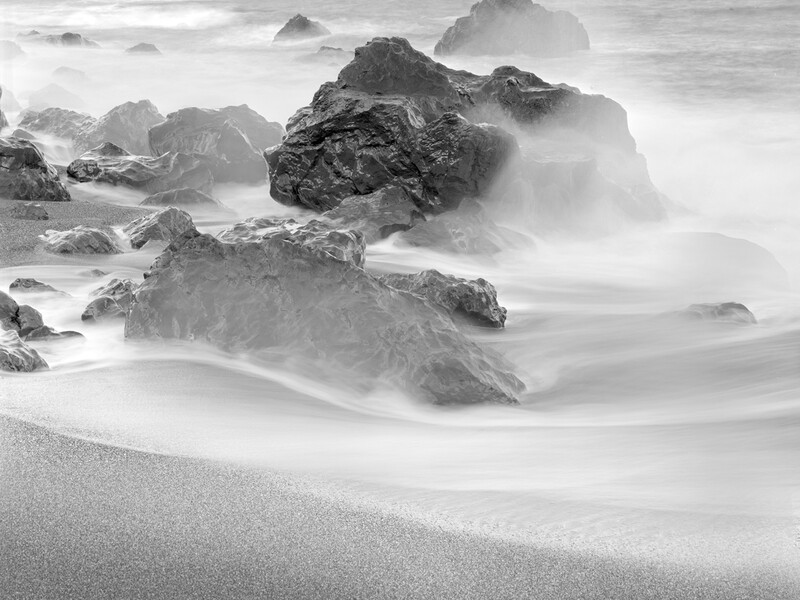
What will you add to the volume of photographic literature that hasn’t been said exactly the way you have said it? I am definitely a nonconformist—at least I aspire to be that. So, with that said, how do I approach this material that is different than I have done it before, and the bigger question is how I portray this in a way that is unique and interestingly different from the literally tens of thousands of similar images? For that reason, I avoid the photographic hot spots. The arch in Arches National Park, for instance, or the overlook in Yosemite where Adams created the immortal image, or the chapel at Hernandez, New Mexico. Find your own voice, and sing your own song! If I go to a location and what I see are the derrieres of a hundred shutter poppers, I move along—no interest there.
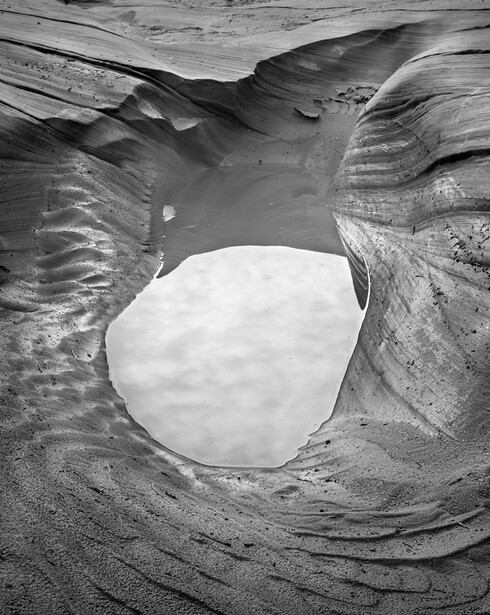
Perhaps I can’t show it as completely unlike everyone else. But at worst, I can make mine different. More interesting by adding a unique twist to it. Here is an image made in an extremely high-traffic area—now, it wasn’t at the time—that, I think, gives a unique twist in an area that is absolutely overrun with photographers and photo-wannabes. Everyone else in the group was looking up, and I was watching for patterns in the floor.
When Should You Go, Timing Is Everything!
Next, consider the time of the year, or the season, you want to be there. There are times to be in the mountains other than when the aspens are in full color. In fact, other seasons might be just as beautiful as fall, and even more expressive.
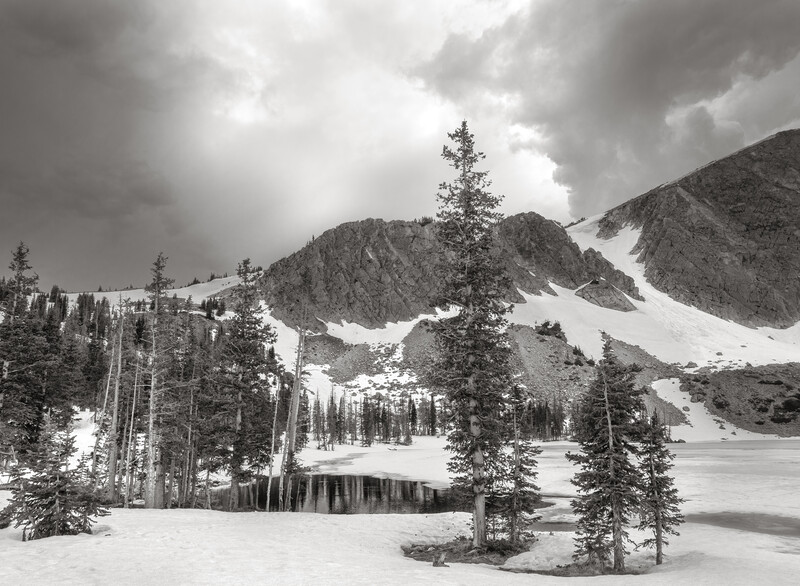
In this image, “Frozen Lake Marie,” I was driving to Montana to teach a workshop in film photography for the Photographers’ Formulary. That’s a substantial drive from my home, and I knew that even the most direct route could take me through the Medicine Bow in Wyoming and right past this little lake that I had become familiar with over the course of several years. Also, it was in very early spring, and I knew that the lake, Lake Marie, would probably still be frozen over. As it happened, the ice had begun clearing out, and there was a giant mountain late-winter snowstorm brewing, so everything about it worked out. Also, on that trip, I learned about a wild horse preserve that my wife and I would visit the following fall—which is one of the great memories of my life.
Be Patient, This Isn't the Daytona 500!
Next, take your time. The old saying “Rome wasn’t built in a day” is true. It will take time to do anything of significance. If I had chosen to fly to Kalispell, Montana—since it was MUCH faster—it would mean that I wouldn’t have seen Lake Marie when it was frozen over, nor experienced the near whiteout conditions that happened as I drove down the hill to spend the night in Saratoga, Wyoming. Take time. Exercise patience. We have all seen the guy with the brand-new CanoNikoSony camera that runs up and down the hill with his motor drive (I know digital cameras don’t have motor drives like my old Canon F-1s, but you get the idea) making 500 images a day that all look just alike. Take the time to search out that one detail, or that one point of view, and make the photograph. My background is in film photography, and using large cameras like I do, making two or three photographs in a day that have uniqueness and beauty was a full day’s work. Getting five or six was extraordinary. In my view, it is very counterproductive to think of your photography in terms of how many images you can get in a day’s time. So, take your time. This is not a timed event.
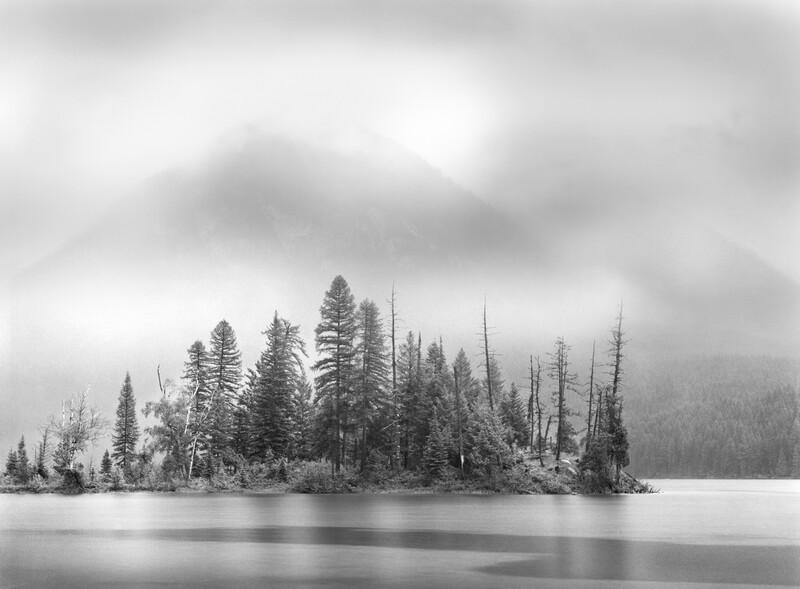
When I made this image, on the north shore of Holland Lake, Montana, I had been hiking towards Holland Falls, just looking for interesting material and finding none. It had been raining all day—sometimes a drizzle, sometimes fog, and sometimes a full-on toad strangler. I stopped for a few minutes under a giant cedar tree. I was watching the mountain on the isthmus and thinking, "Wouldn't it be amazing if the clouds settled down around the mountain in the background to separate the isthmus of land from the mountains behind it?" In just a minute, it did exactly that. And good fortune caused a temperature stratification so that there was a slick spot on the surface of the water, lending an element of interest to the water. If I had been in a hurry, I would have missed this moment when everything came together.
Look for Patterns That Are Interesting
I look for patterns and forms that I can use to build a photograph. Many times, the image that is made will be an extract of the scene as a whole. I want to find forms and shapes that are interesting and tell a story, but not the whole story.
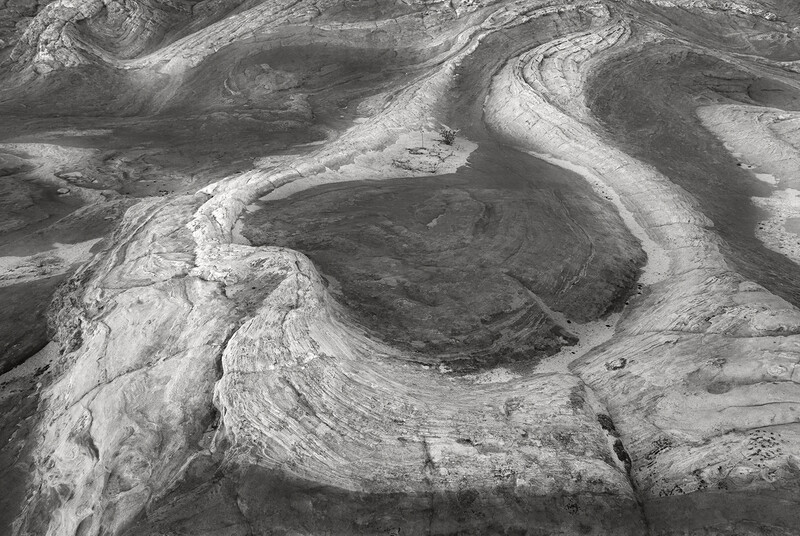
One of the funny things that happened—not so funny at the time. I had been camping in a very nice spot for a couple of nights, with no neighbors. Late evening, the night before, a tour group moved in. They were not courteous people—loud, obnoxious, assertive, etc. All the things you don't want in a neighbor. I had been up well before sunrise and walked to a place I wanted to portray. Walking back, I saw this form, and there was a man standing there saying he couldn't find anything to photograph. I saw this and began setting up my tripod, getting my camera out—all the things we have to do. As I began loading film, he started walking right through my composition. I stopped him, of course. One thing I can say that we must do when we are out is to be observant. Look for shapes, patterns, the way light falls over a subject. Find a way to portray that and make it interesting and unique.
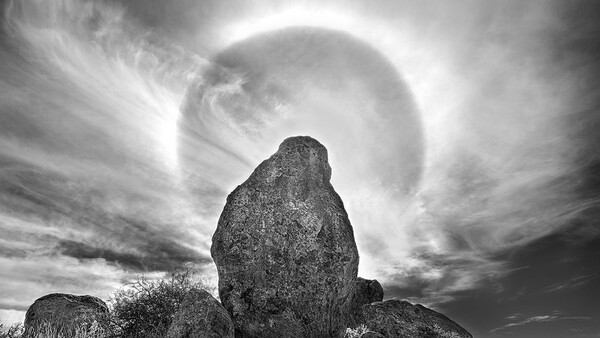
There will be times when a composition will present itself as if by accident. However, circumstances always favor the prepared. Ansel Adams once remarked that “it seemed like God had put him in a place at just the time when he needed someone to open a shutter.” And indeed, I will often be driving, and I begin to see something extraordinary in the landscape. So try to always have a camera nearby. The image at the head of this article is an example. We were driving out to the Phoenix area to be with our son and his family over a Thanksgiving holiday and decided to take a break in the City of Rocks in southern New Mexico since we were way ahead of schedule for our arrival. When I walked a short distance from my truck, I noticed that there was a sun dog and this standing rock. I grabbed my camera and a tripod and moved to a location where the sun dog would appear as a halo around the rock. Thus, the title: “Madonna Stone, City of Rocks.”
Occasionally, a truly interesting image will present itself. However, most often they are the result of careful planning to put yourself in the right location at the right time. One of the most beneficial things you can do as an image maker is to think ahead and plan ahead to be in the right place at the right time. Figure out where you want to be generally, and avoid the overdone, cliché places. I, personally, don’t want to be in a place where there are a bunch of camera fiends arguing over which new camera model has the highest pixel count, which lenses are the sharpest, and—Lord, please help me—arguing about which lens has the best bokeh. I have zero interest in those things. I want to talk about the art and which places in town have the best green chili burgers.
When you get to the right place at the right time, try to clear your mind of preconceptions. Try to see something you’ve never seen before, or see it in a new way, with new eyes. Most of all, get out of that sheet metal, fiberglass, and window-glass-enclosed coffin, and go for a walk. Take your camera with you, walk slowly, and look carefully. You never know what will pop out and surprise you.
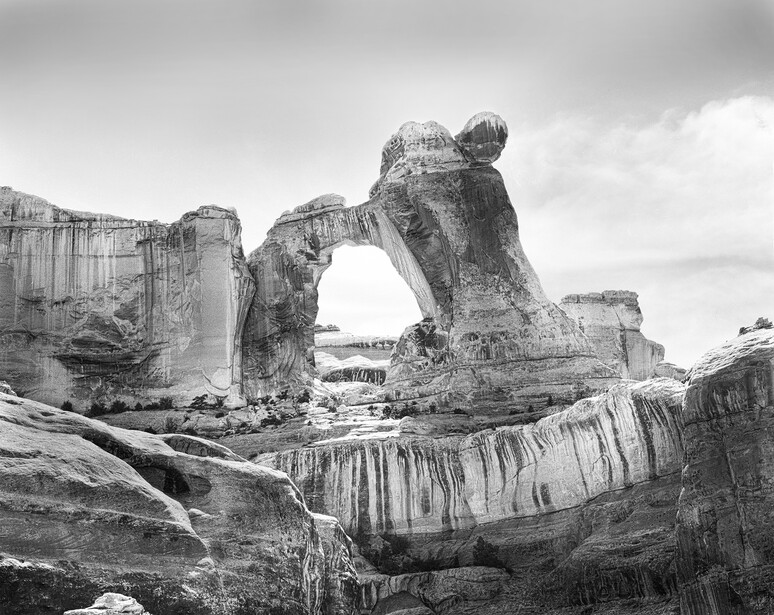
I leave you with the image above. About 10 miles in over a lot of blow sand and no water. What doesn't try to stick you or bite you will try to kill you and eat you. Southwest deserts are a tough, unforgiving mistress. But it is beautiful and mysterious beyond measure. Have a great life.


Join the Fstoppers community for free
-
Post comments and join in the discussions
-
Browse the site ad-free
-
Share your work and get featured in the community
-
Compete in the photo contests for fun and prizes
1 Comment
Great article Mr. McCreery. I started with film in the 1960 and 127 film and learned how to be very selective in pressing the $hutter. I learned a 'little' over the years and I love experimenting, but to this day it is still only one photo per shutter depression.