
Look around any expanding city today. Warehouses rise where fields stood five years ago. Housing developments stretch toward dry hills. Highways carve through fragile terrain. Data centers replace factories. The landscape is no longer something we visit. It is something we continuously build, erase, and rebuild. It is progress, they say.
If photography once sought the sublime in untouched nature, our era demands something else: a sustained, critical observation of the man-altered world.
Over fifty years ago, the exhibition New Topographics: Photographs of a Man-Altered Landscape, held in 1975 at the George Eastman House and curated by William Jenkins, articulated this shift with remarkable clarity. The photographers included did not dramatize the land. They described it. Tract houses, industrial parks, standardized architecture, infrastructural grids. The American West was no longer a mythic frontier. It was subdivided property.
The implications were profound. Documentary. Social. Political.
Against the Sublime
Writers such as J.B. Jackson had already argued in the 1950s and 1960s that the vernacular landscape — highways, motels, subdivisions — was as culturally significant as monumental architecture. The New Topographics photographers translated this insight into visual form.
Robert Adams, in works such as The New West (1974), confronted suburban sprawl in Colorado with a clarity that was neither sentimental nor cynical. Adams wrote that the job of the photographer was to describe "what is happening to us." His images are quiet but morally charged. The land appears simultaneously luminous and wounded. It was as if the heart of Ansel Adams's research was shattered by a reality that was no longer just the soothing one of nature. There is a photograph by Adams in which the frame is practically split in two, where the mountains in the background are contrasted by the urban landscape advancing in the lower section. There we begin to understand that this was no longer just landscape photography but something else, something that opened up toward a social criticism that, perhaps, ignited in Robert Adams upon his return from California, when in his hometown he observed the advancement of brick (progress) to the detriment of the nature where he used to go walking with his parents.
Lewis Baltz reduced industrial facades to almost abstract planes, exposing the anonymity of late-capitalist architecture. Bernd and Hilla Becher systematized industrial structures into typologies, revealing repetition as a defining visual condition of modernity.
This was not neutrality. It was an ethics of restraint.
The refusal of spectacle forced viewers into confrontation with banality itself. The landscape had become bureaucratic, modular, optimized.
Color, Culture, and the Everyday
At roughly the same moment, Stephen Shore and William Eggleston were redefining the cultural legitimacy of color photography. Shore's Uncommon Places (1973–1981) mapped the American vernacular with analytical spaciousness. Eggleston's saturated palettes transformed parking lots and interiors into fields of chromatic tension.
If Adams and Baltz emphasized structural critique, Shore and Eggleston foregrounded perceptual experience. The ordinary was not merely documented. It was intensified.
Together, these approaches expanded what landscape photography could mean. It was no longer about wilderness. It was about systems, surfaces, and cultural memory. And the landscape is not empty; there is the human being taking a portion in the story. It is the border between landscape and street photography.
And it is here that we begin to observe a landscape as a trace of existence, in a first metaphysical reference, of the state of mind and perception of place, of ourselves existing and observing the place before us. If we think about it, before these two authors, landscape had never been perceived as an opportunity to encounter and propose stories.
The Long View: Camilo José Vergara
Any discussion of the urban landscape as social document must also include Camilo José Vergara. Beginning in the 1970s, Vergara repeatedly photographed the same neighborhoods in cities such as Detroit, Camden, and Chicago over decades. His method was longitudinal rather than typological.
Vergara's work demonstrates that landscape is not static space but historical process. Buildings decay. Storefronts change. Murals appear and disappear. What he offers is not a single decisive image but accumulated time. The idea of repetition and its importance for an urban landscape photographer acquires meaning and awareness precisely by observing Vergara's meticulous research work.
In this sense, New Topographics was only the beginning. Vergara radicalized its premise by introducing duration as a structural element. The man-altered landscape is not only constructed. It is continuously transformed by economic policy, migration, abandonment, speculation, and resilience.
The Metaphysical Turn
While the American strand of New Topographics often reads as sociological, the European response — with the Italian photographers — introduced another layer: metaphysical reflection.
Luigi Ghirri approached the built environment as a labyrinth of representations. Billboards depicting idealized landscapes stood against actual horizons. Windows framed other images. Maps and photographs appeared inside photographs. For Ghirri, landscape was inseparable from perception itself. Reality was already mediated. The filter was the photographer and his presence, his experience of the place.
Guido Guidi extended this inquiry through slowness and attention to marginal spaces. Empty lots, rural edges, quiet industrial zones. His work resists spectacle in favor of presence. The landscape becomes a site of existential reflection. What does it mean to inhabit a place that seems provisional, transitional, unfinished? Guidi's work is also particularly representative of a method in which the photographer does not leave a closed message but rather allows the observer to "finish" the composition. Guidi sometimes puts a tree in the foreground to wake up your attention at the entrance. The viewer lives the experience.
This metaphysical dimension is crucial. Urban landscapes are not only economic diagrams. They are psychological environments. They shape how we experience time, isolation, proximity, belonging.
To photograph a peripheral zone is to photograph a condition of existence.

Why It Matters Today
Today, the man-altered landscape is no longer a Western phenomenon. It is planetary. Logistics corridors, gated communities, informal settlements, renewable energy fields, surveillance infrastructure. The scale has expanded.
In places experiencing rapid urban growth, the relationship between environment and development is especially visible. Cities expand into dry terrain. Mountains become backdrops to speculative housing. Infrastructure cuts across fragile ecosystems. The visual field is charged with tension between aspiration and erosion.
To photograph these spaces is not simply to aestheticize them. It is to register transformation.
And perspective is never innocent. A frontal composition can imply typological critique. A saturated palette can amplify cultural energy. A distant viewpoint can suggest alienation. A close one can imply complicity.
Landscape photography, when practiced with awareness, becomes political without slogans. It asks who benefits from development. Who is displaced. What is erased. What persists. It is a way to know the evolution (or involution) of a society.
An Open Discipline for Photographers
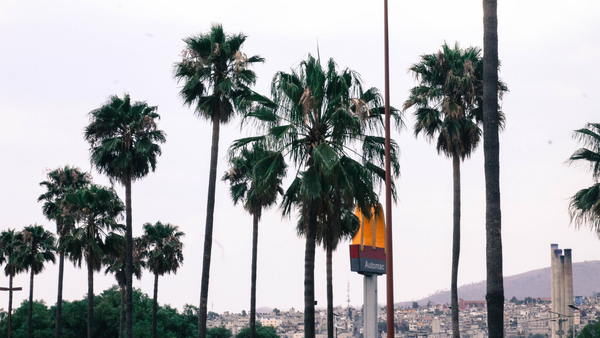
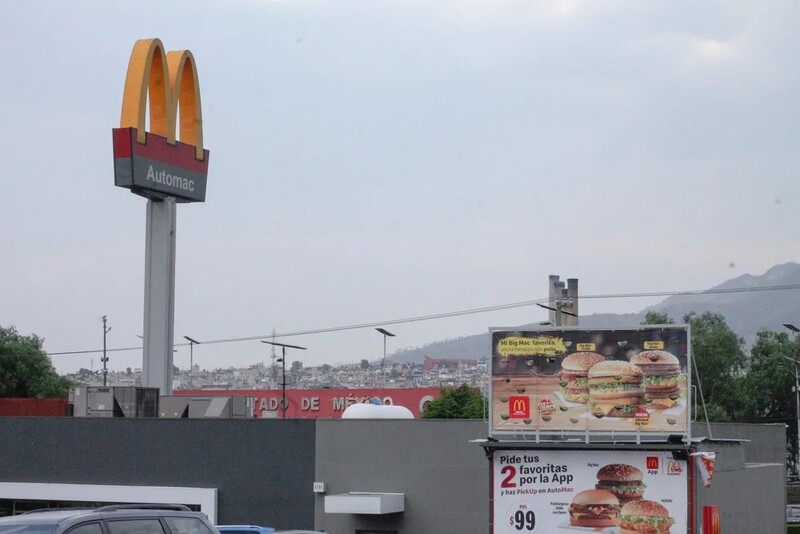
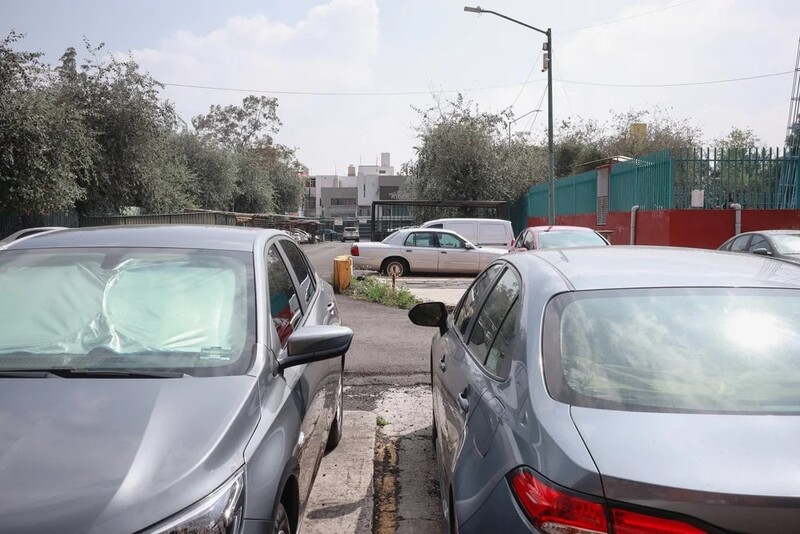
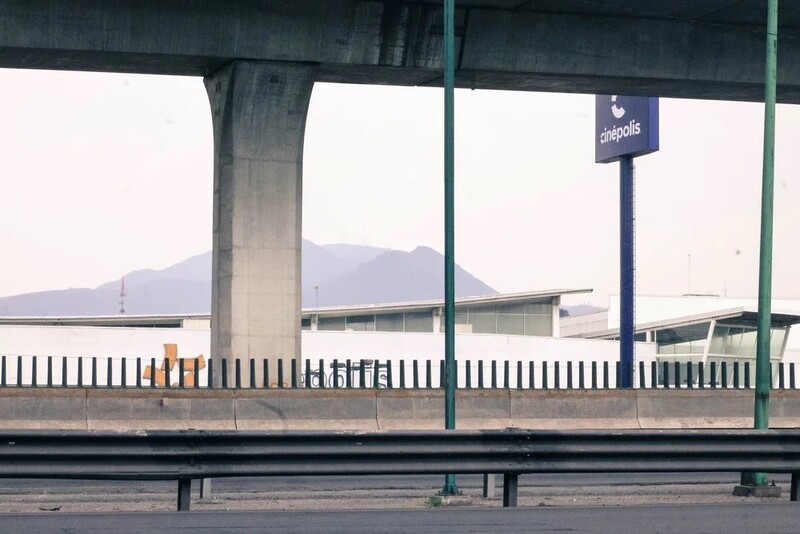
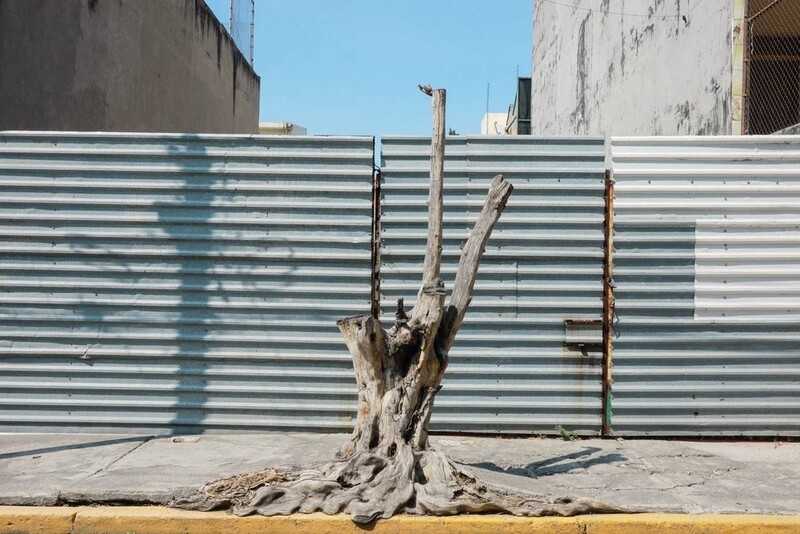
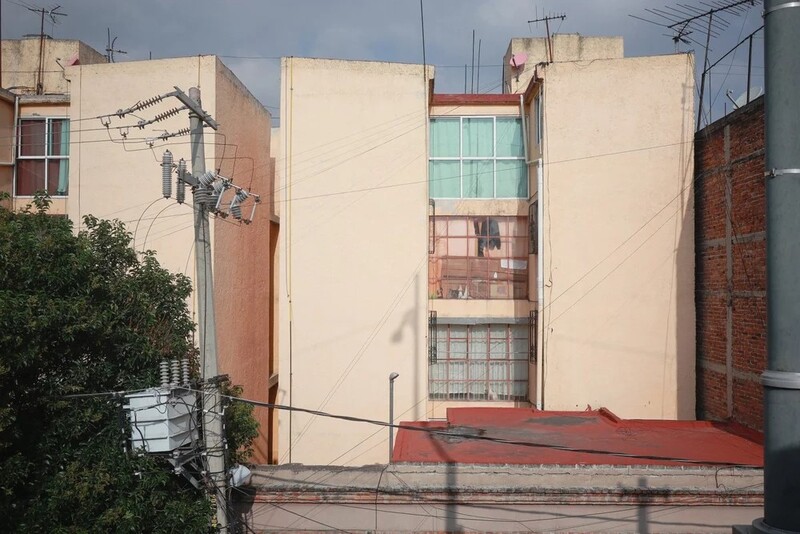
The photographs accompanying this article were made in Mexico, on the north side of Mexico City, at the border with Edomex (State of Mexico), where I live and am used to working, in landscapes where urban expansion presses directly against fragile terrain. Housing developments emerge abruptly from dry earth. Concrete interrupts fields. Billboards promise permanence in places that still feel provisional. These are not exceptional scenes. They are increasingly common.
What interests me is not spectacle but tension. The quiet friction between aspiration and erosion. Between geometry and dust. Between human projection and environmental limit.
This is where the legacy of New Topographics remains alive. Over all these years, I have documented the change. The change of urban environment here is constant. And that is a great photographic opportunity. Through repetition, I document whatever change is happening.
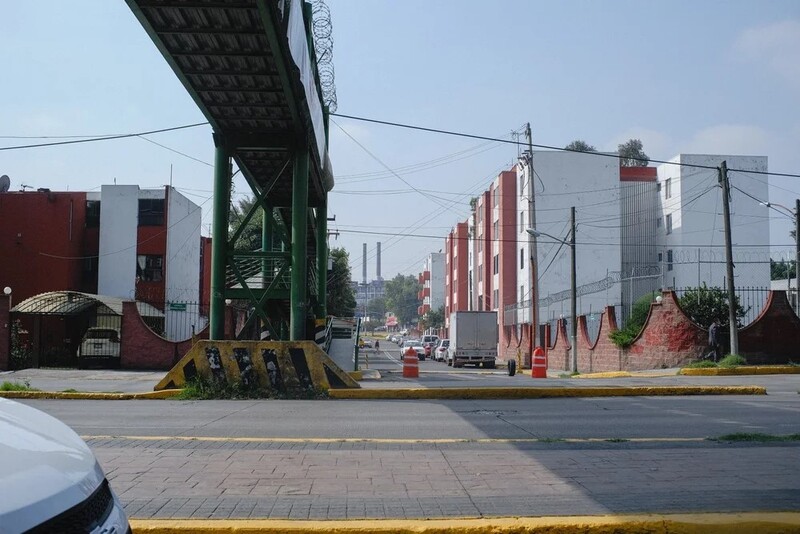
To photograph the urban landscape today is not to imitate a 1970s aesthetic. It is to adopt a position of sustained attention. It means slowing down in spaces that appear visually unremarkable. It means resisting the seduction of the spectacular skyline in favor of the peripheral zone. It means understanding that a warehouse, a road cut, or a half-finished development can carry as much historical and existential weight as a monument.
There is also a deeper layer. The landscapes we construct are mirrors of the societies we build. They reveal our economic systems, our fears, our ambitions, and our blind spots. In this sense, photographing them is not only documentary practice. It is philosophical inquiry.
So you can understand that the question is no longer whether the genre is alive.
The question is whether we are willing to look carefully enough.
As photographers, we have the capacity to create visual memory before transformation becomes normalization. We can register change before it disappears into routine. We can frame the edges, the margins, the unstable zones where future histories are already forming.
The man-altered landscape is not behind us.
It is under construction.
And so is our responsibility to observe it.
And photograph it.




Join the Fstoppers community for free
-
Post comments and join in the discussions
-
Browse the site ad-free
-
Share your work and get featured in the community
-
Compete in the photo contests for fun and prizes
No comments yet