
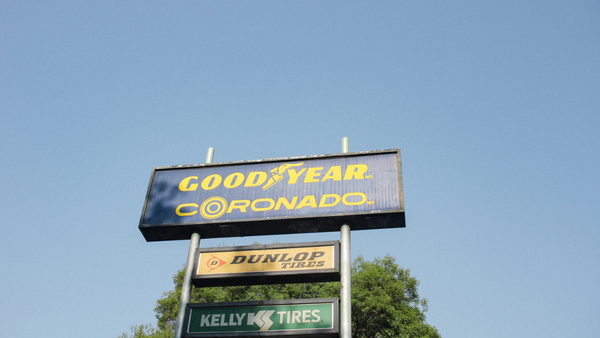
In photography, style is often discussed in terms of subject matter, color, or composition. Certainly important aspects to consider, but much less frequently do we talk about something equally decisive: focal length. Yet if you look closely at the history of urban landscape photography, focal length reveals itself as a kind of quiet grammar.
The way photographers frame cities, suburbs, and built environments is not only a matter of aesthetics. It is also the result of very specific choices about how wide or narrow the lens should see. And this is especially interesting since it concerns us much more than we might think, being photographers.
If we look at the photographers who helped shape the visual language of the urban landscape, particularly those associated with the New Topographics movement and their European counterparts, a surprisingly coherent pattern emerges.
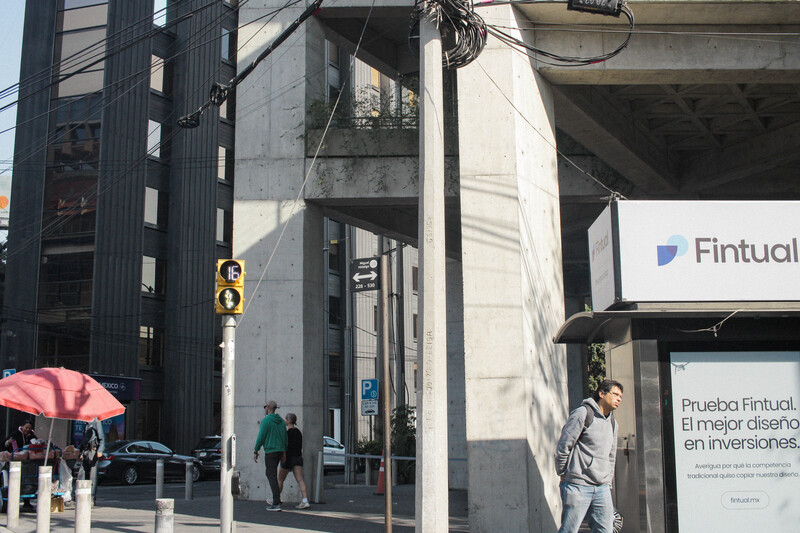
The Neutral Lens
Many of the photographers connected to the 1975 New Topographics exhibition worked with large-format cameras. When translated into the 35mm equivalent, their most common field of view falls very close to what we consider a "normal" perspective.
Let me clarify the translation into 35mm format of large-format camera focal lengths.
The Correct Way to Estimate Equivalence
Field-of-view equivalence depends on the diagonal of the format. Approximate diagonals:
- 35mm full frame: ~43mm
- 8×10 inch film: ~325mm
Conversion factor: 325 ÷ 43 ≈ 7.5. So to convert an 8×10 focal length to a 35mm equivalent, divide by about 7.5.
Correct Equivalents
- 150mm on 8×10 ≈ 20mm on full frame
- 210mm on 8×10 ≈ 28mm on full frame
- 300mm on 8×10 ≈ 40mm on full frame
- 360mm on 8×10 ≈ 48mm on full frame
- 450mm on 8×10 ≈ 60mm on full frame
So 150mm on 8×10 is very wide — not normal.
What Is the "Normal" Lens on 8×10?
A normal lens roughly equals the diagonal of the format. For 8×10, that is approximately 300–360mm. That is why many large-format landscape photographers historically used 300mm lenses as their standard field of view.
Why the Confusion Happens
Some photographers talk about lenses in terms of "normal for the format" rather than strict equivalence. In that sense, 300mm on 8×10 is a normal perspective, while 150mm on 8×10 is wide angle.
Robert Adams frequently used a 300mm lens on 8×10 (a 40mm equivalent in 35mm format), producing a similar natural perspective. The result is a subtle compression that gives his suburban landscapes a quiet sense of structure and order.
Joe Deal followed a comparable approach, often working with lenses that also translate to roughly the normal field of view.
This "neutral lens" became a defining visual strategy: a way to look at the built environment without imposing too much theatricality.
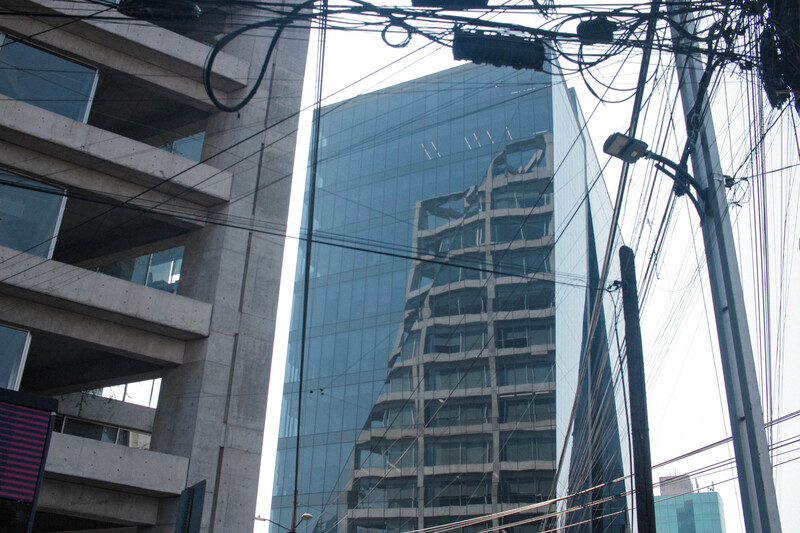
Slightly Wider: The Observational View
Some photographers in the same orbit preferred a slightly wider field of view, closer to what we might call the observational perspective.
Lewis Baltz often worked with lenses on 8×10 that translate roughly to a 35mm equivalent. Frank Gohlke used similar optics. The result is a frame that opens the space a little more, allowing industrial parks, parking lots, and infrastructural landscapes to breathe.
Henry Wessel Jr., who worked extensively with 35mm cameras, often used a 35mm lens. His images move closer to the territory of street photography, yet they remain deeply attentive to architecture and light.
Stephen Shore, for Uncommon Places, primarily worked with a 305mm G-Claron lens on 8×10 — roughly equivalent to a 40mm field of view in 35mm terms, placing it squarely in normal-perspective territory. His photographs present the American landscape with an almost unsettling neutrality. The lens neither dramatizes nor diminishes what it sees.
This slightly wider view invites the viewer into the scene without turning it into spectacle.
The Wide Perspective
A more immersive approach appears in the work of William Eggleston, who frequently used a 28mm lens.
That wider perspective helped redefine color photography in the American South. It allowed everyday environments — gas stations, front yards, roadside details — to feel immediate and present, almost as if the viewer had stepped into the space.
The 28mm lens introduces a subtle sense of proximity and participation.
The Italian Landscape Tradition
Across the Atlantic, Italian photographers developed their own interpretation of the urban and territorial landscape.
Luigi Ghirri frequently worked with a 35mm lens on his Leica cameras. This slightly wider perspective suited his quiet investigations of signs, façades, and the layered meanings embedded in everyday spaces. He also worked with the 50mm focal length.
Guido Guidi, working primarily with medium format cameras, often used lenses around 80mm on formats such as 6×7 or 6×9, roughly equivalent to a 40–45mm field of view. His photographs maintain a delicate balance between analytical distance and observational intimacy.
Gabriele Basilico, known for his studies of cities and industrial architecture, often used a 90mm lens on a 4×5 camera, producing a field of view roughly equivalent to a 28–30mm lens in 35mm terms. This slightly wider perspective helped him capture entire urban structures while maintaining geometric clarity.
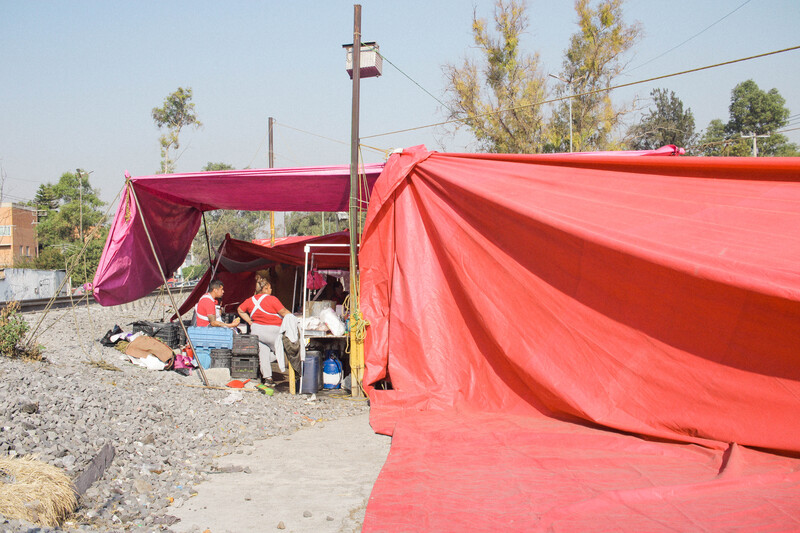
A Hidden Pattern
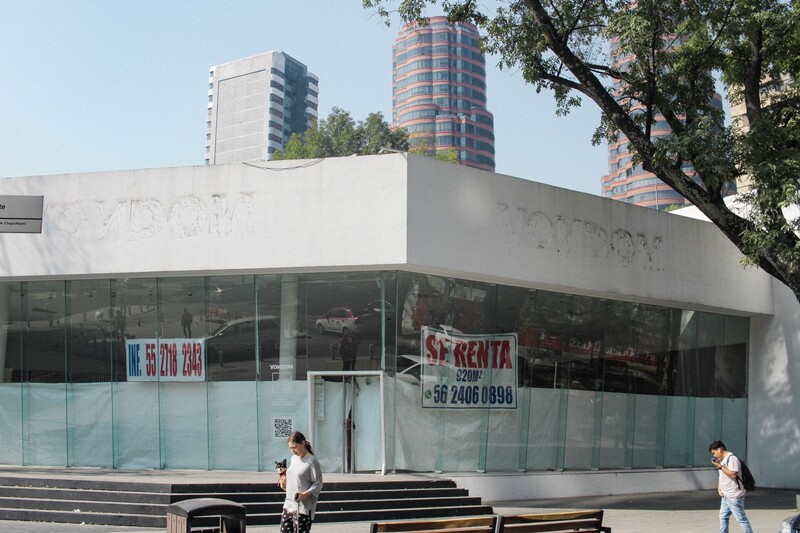
Looking across these photographers, three focal ranges appear again and again: 28mm, 35mm, and 50mm (or their large format equivalents). Very rarely do we see extreme wide angles or long telephoto lenses in this tradition.
This restraint is not accidental. These focal lengths maintain a sense of spatial honesty. They allow the city to appear as it is experienced by the human eye: structured, readable, and grounded.
A Language of Space
Urban landscape photography is often described as objective, even detached. But its visual language is far from neutral.
Behind the calm surfaces of these photographs lies a consistent optical strategy. By choosing lenses that stay close to natural human perception, photographers allow the complexity of the built environment to speak for itself.
In that sense, focal length becomes more than a technical detail.
Thinking About Space
As photographers exploring cities today, this offers us a simple but powerful insight. Instead of reaching immediately for dramatic wide angles or long telephoto compression, it may be worth slowing down and working within the quiet discipline of these focal lengths. Lenses around 28mm, 35mm, and 50mm invite a different kind of attention. They ask the photographer to move, to position themselves carefully, and to build relationships between foreground, architecture, and human presence.
The city does not need to be exaggerated to become interesting. Often it is the opposite: when the lens steps back from spectacle, the subtle tensions of urban space begin to emerge. A sidewalk meeting a façade, a figure crossing an empty parking lot, the rhythm of windows and signs along a street. That is why we can understand that urban landscape photography takes an approach quite similar to documentary photography.
In the end, the lesson from many of the photographers who shaped the language of the urban landscape is surprisingly modest. The most powerful way to photograph the city may simply be to look at it with a lens that sees the world almost the way we do — and then wait for the moment when space, light, and life briefly fall into balance.


Join the Fstoppers community for free
-
Post comments and join in the discussions
-
Browse the site ad-free
-
Share your work and get featured in the community
-
Compete in the photo contests for fun and prizes
No comments yet