Most wedding shooters carry a 24-70mm and a 70-200mm so they never get caught without the right reach. That habit can quietly wreck the consistency of your work, and the fix has nothing to do with which lens you own.
Luke Cleland walks through a full arc of his own thinking, from packing every focal length "just in case" to disciplining himself down to a single prime. Early on, Cleland treated zoom lenses as a safety net, keeping a 24-70mm and a 70-200mm on hand for anything a wedding might throw at him. He admits the coverage was comforting, but the coverage was also driven by fear rather than intention. He shot weddings at random focal lengths, 24mm here, 200mm there, and his galleries lacked any visual thread tying them together. For yearsmm he blamed the zoom itself, before deciding the tool was never the problem.
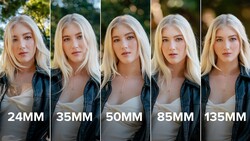
His answer was to swap comfort for constraint. Cleland committed to a 50mm for roughly 95 percent of his weddings across four years, adding a 24-70mm f/4 only for reception wide shots and family groups so he wouldn't lean on it out of habit. That single-lens discipline forced him to understand exactly what a 50mm does in different light and at different times of day, down to how the colors feel. The point he lands on is that intentional lens choices require you to actually know what each focal length does, and a prime is the fastest way to learn that.
The takeaway works whether you shoot primes or zooms. Cleland's advice is to stop treating a zoom as a dial you spin without thinking and start using it to study specific focal lengths one at a time. Put a Nikon 50mm f/1.2 or a 35mm on your camera, shoot a batch, then sit at your computer and look at what that length actually did to the images. He shares a Lightroom trick worth trying: sort your existing catalog by focal length metadata, then pull up everything shot at, say, 50mm versus 40mm and notice which set carries the energy you like.
A single wedding gallery is dozens or hundreds of frames viewed together, and the eye reads consistency across a sequence far more than it reads any single frame. Two shots at 28mm and 35mm might look nearly identical side by side, but a full gallery shot loosely across a zoom range reads as scattered, while a gallery anchored to one focal length reads as a deliberate look. This is why so many photographers with a recognizable style shoot the same handful of lengths over and over. The discipline isn't about limiting yourself forever. It's a training method that builds the muscle memory to make fast, confident choices later, which is exactly where Cleland says he's landed now that he wants to reintroduce wider glass on his own terms.
There's a broader shift here, too. As gear conversations on Instagram push a "new style everyone wants" every few months, the pressure to chase trends pulls photographers away from developing a voice they can defend. Cleland frames the alternative like a painter choosing colors and brushes, making decisions that connect with you and then putting the work out to see who responds. Knowing what you dislike is half the battle, and that knowledge only comes from shooting the same focal length enough times to feel the difference between 85mm and 70mm.
Watch the video above to hear how Cleland ties his four years on a 50mm to the confidence question every wedding shooter runs into.
Join the Fstoppers community for free
-
Post comments and join in the discussions
-
Browse the site ad-free
-
Share your work and get featured in the community
-
Compete in the photo contests for fun and prizes
2 Comments
stopped watching at 5min, this is a neurotic photographer who seems to be using this argument to justify his lack of vision. A zoom is a tool and plenty of good photographers use them, most of them tend to stick to a focal length that they like but will zoom in or out as needed. I know a photographer that shoots fashion with a 24-105 a lens that I don't personally like but she shoots beautiful photos with that lens and she figured out that she shoots more than 85% of her photos at the 52-55mm range but loves the fact that she can zoom in or out at will for a different frame. This isn't a discussion about zoom vs prime its about knowing what you like, not forcing yourself to not have options when you might need them. As a wedding photographer is you build a style around a 35mm lens then have one body with a 35 glued on it and another with a zoom that will be used for the shots that need them.
The article raises a valid point, but the discussion often boils down to image quality versus convenience. In reality, the choice depends a lot on your shooting context and personal constraints.
Modern zooms, especially from Canon and Nikon, have improved so much that the gap with primes has narrowed significantly, particularly for field use and at reasonable apertures. For many photographers, the flexibility and speed they offer outweigh a sharpness difference that's often imperceptible in real-world conditions.
On the flip side, for portrait or low-light shooters, the wide apertures of primes remain a huge advantage. And there's also the "feel" factor: some of us prefer the discipline and intentionality that primes encourage, which can actually improve composition.
Ultimately, this debate is about personal taste and needs. The key is finding the right tool for your practice—and, of course, remembering to charge your batteries!
For more insights on different topics, check out the Ton Cosmos blog: https://blog.toncosmos.fr/. You might find some fresh perspectives to inspire your next creative project.